
Virgin and Child, with Saints and Donor — History & Facts
No other work by Jan van Eyck is surrounded by as much mystery as Virgin and Child, with Saints and Donor. Painted in 1442, the year after the artist’s death, its very existence raises questions: was it completed by van Eyck’s workshop, or does it represent his final brushstrokes? The uncertainty is heightened by the lack of a surviving signature or date, a rarity for van Eyck, who was known for inscribing his presence in his works. Scholars have long debated whether the painting was commissioned as a private devotional piece or intended for a chapel, but the identity of the kneeling donor remains elusive. At the heart of the composition, the Virgin Mary sits enthroned, the Christ Child on her lap, flanked by two saints whose attributes—one with a book, the other with a palm—invite identification as St.
Catherine and St. Barbara. The donor, rendered in exquisite detail, kneels in prayer, his gaze fixed not on the viewer but on the holy figures, drawing us into his act of devotion.
Van Eyck’s meticulous attention to textures—the gleam of gold embroidery, the cool marble floor, the soft folds of the Virgin’s robe—creates a world both tangible and sacred. Light pours in from an unseen window, illuminating the holy group and casting delicate shadows, a technique reminiscent of his earlier Madonna of Chancellor Rolin, yet here the intimacy is heightened, the divine and the mortal brought face to face. The painting’s early history is obscure; no documentation survives to reveal its original location or patron. By the sixteenth century, works in this format—private devotional panels featuring donors—were highly prized across the Burgundian Netherlands, and Virgin and Child, with Saints and Donor stands as a prime example of this tradition.
Over the centuries, the panel has passed through various collections, its attribution to Jan van Eyck sometimes questioned but now widely accepted due to its unmistakable technique and style. Today, it remains a testament to the quiet power of personal faith in the late Middle Ages, and to van Eyck’s enduring legacy as a pioneer of Northern European painting.
More Artworks by Jan van Eyck

Adam
Jan van Eyck
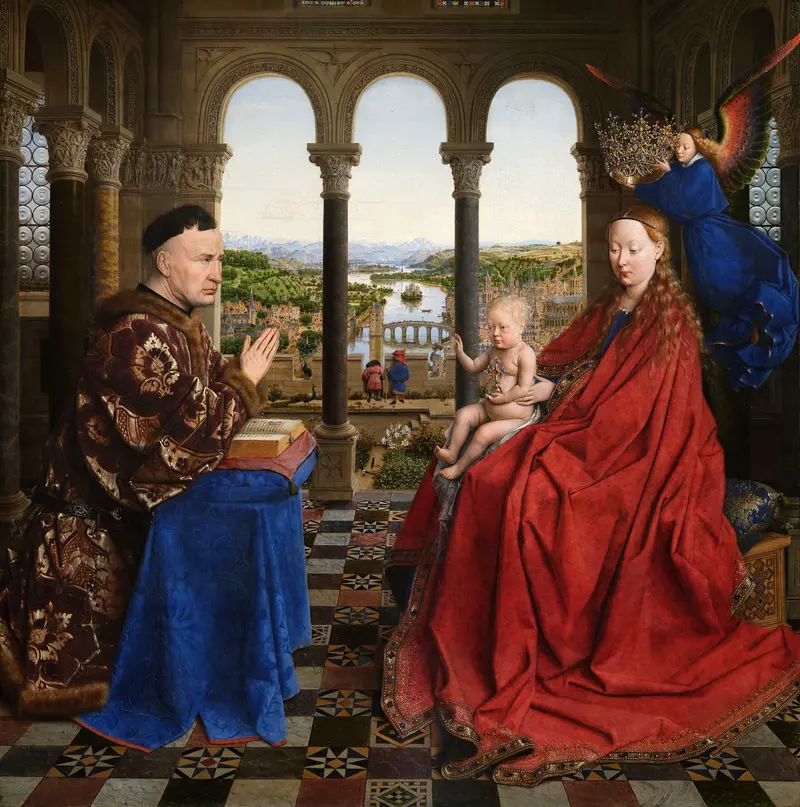
Madonna of Chancellor Rolin
Jan van Eyck
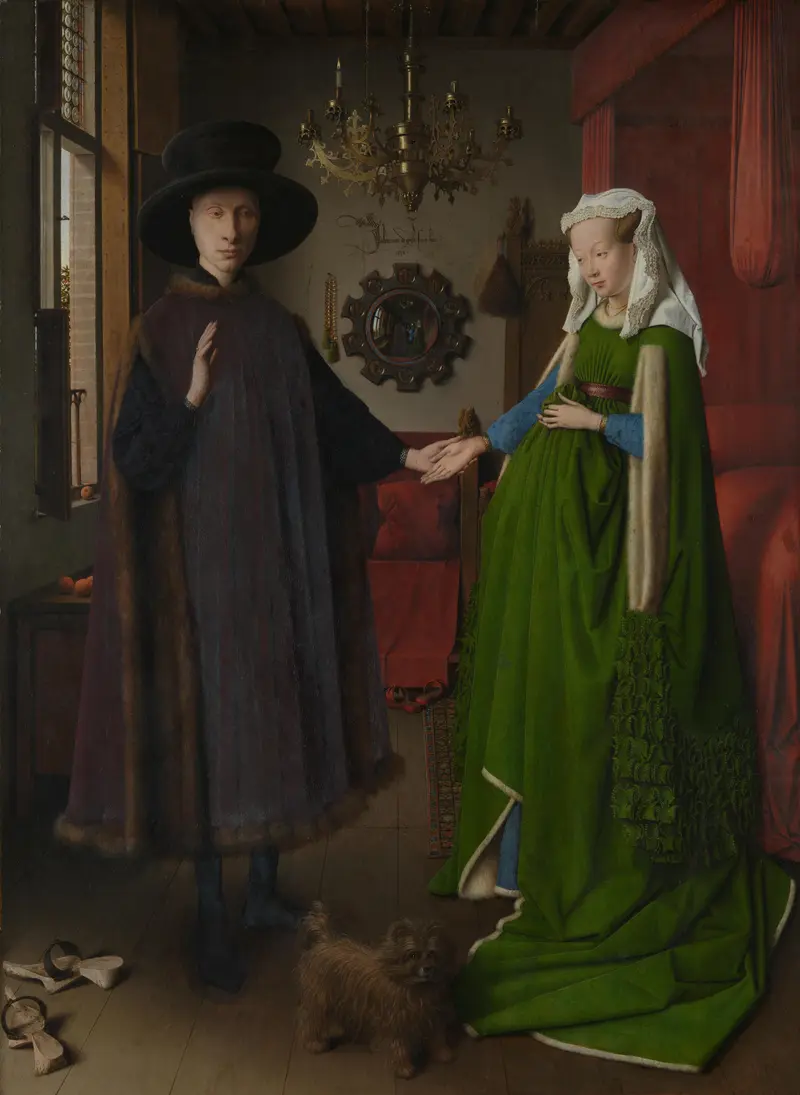
The Arnolfini Portrait
Jan van Eyck
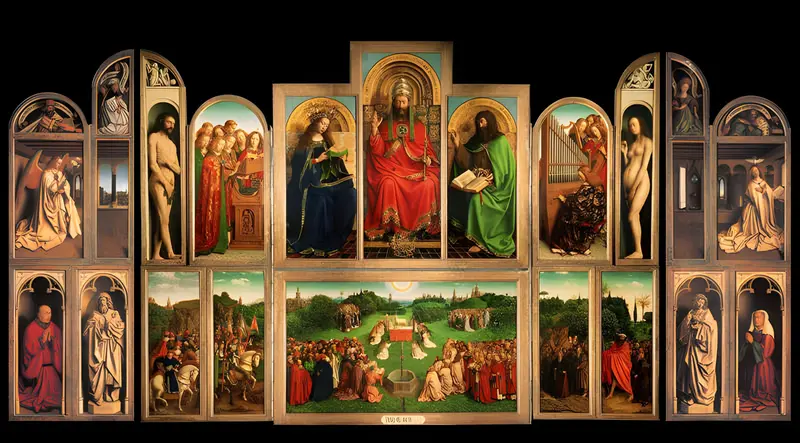
Ghent Altarpiece
Jan van Eyck

Dresden Triptych
Jan van Eyck
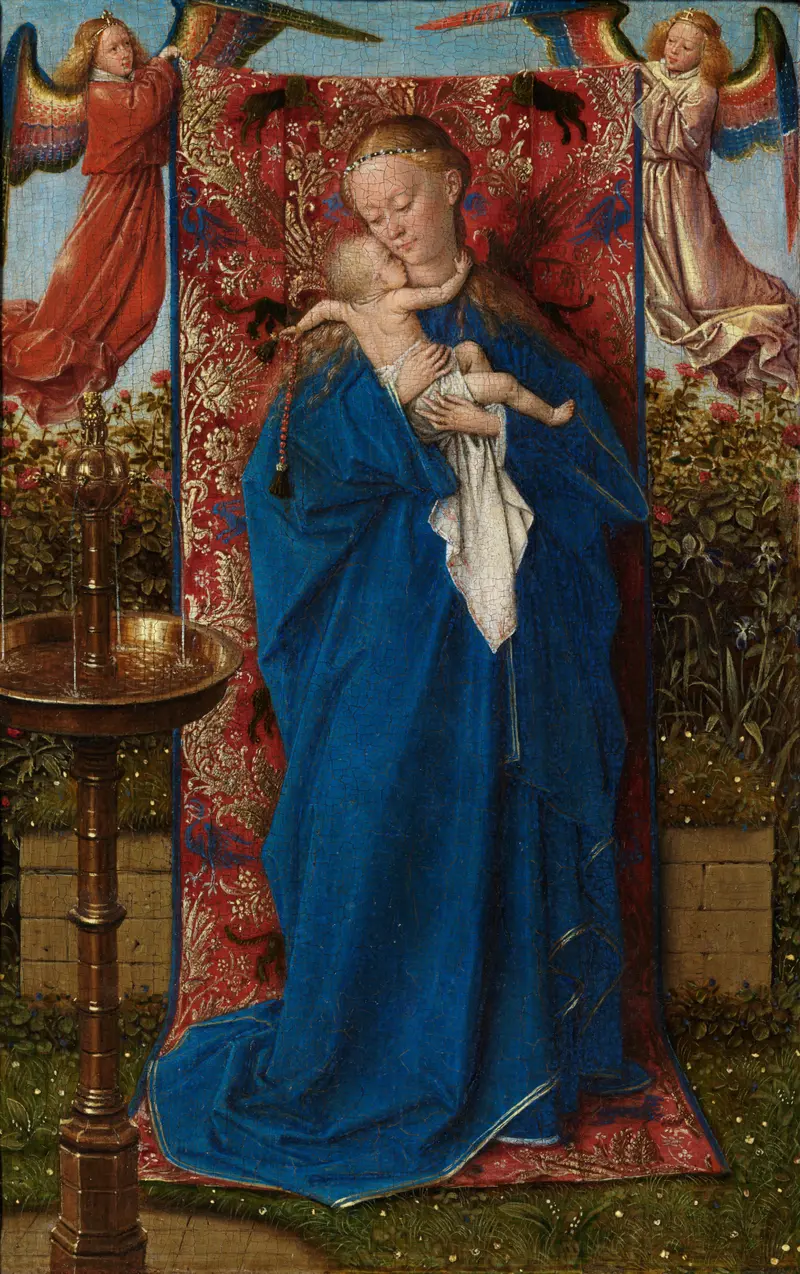
Madonna at the Fountain
Jan van Eyck

Madonna with Canon Joris van der Paele
Jan van Eyck

Prophet Zacharias; Angel of The Annunciation
Jan van Eyck
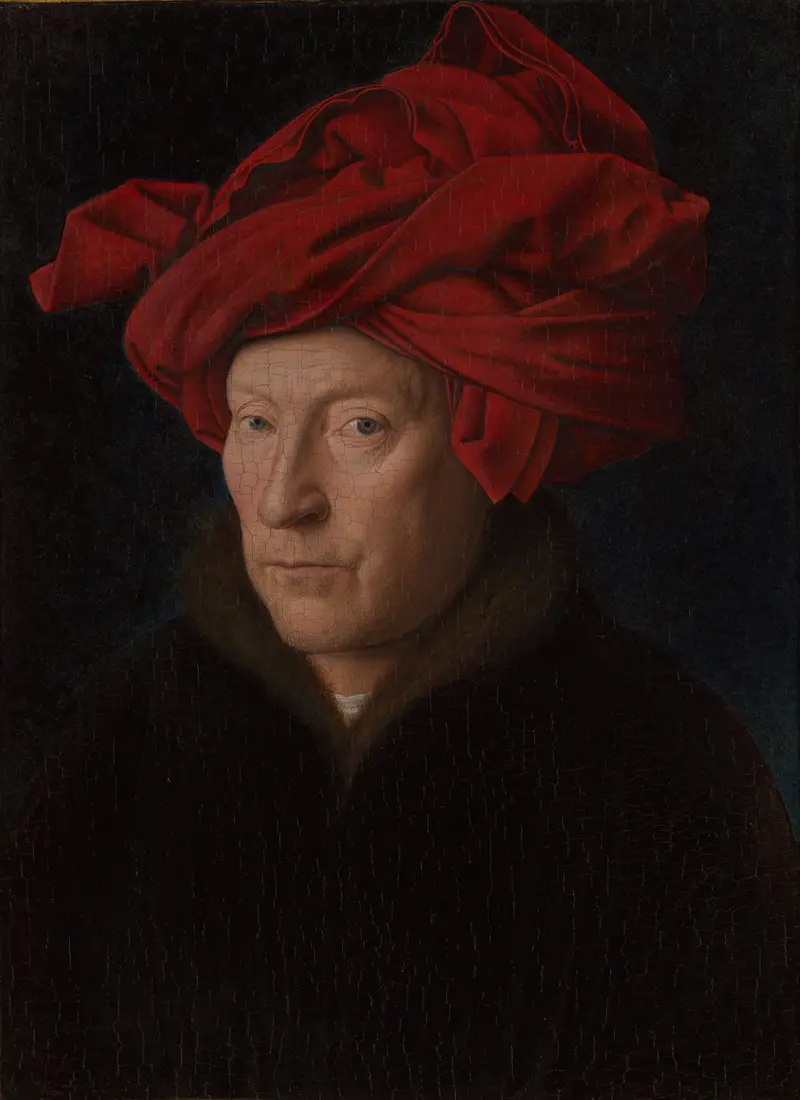
Portrait of a Man (Self Portrait?)
Jan van Eyck
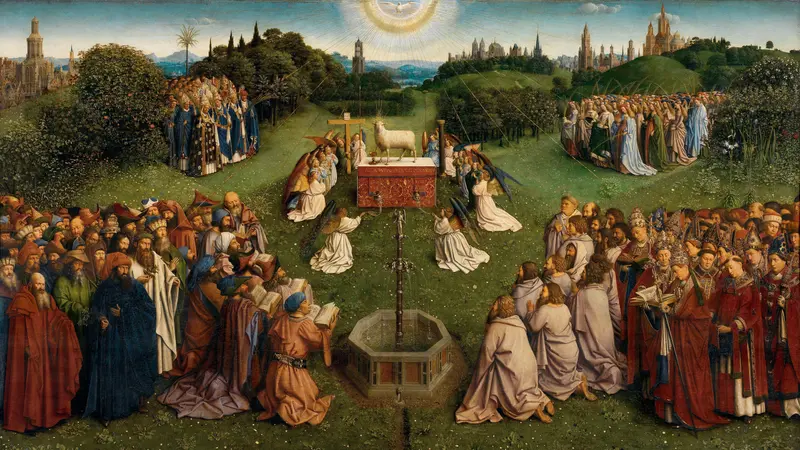
Adoration of the Lamb from the Ghent Altarpiece
Jan van Eyck





