
Winter, study for the Juselius Mausoleum frescoes — History & Facts
What first arrests the eye in Winter, study for the Juselius Mausoleum frescoes is the sheer weight of snow, heaped and draped in thick, sculptural folds across the boughs and trunks. The scene feels close, almost pressed against the viewer, as if one has stepped into the hush of a northern forest after a heavy fall. Each branch bends under its burden, their forms exaggerated and softened by the snow’s grip, while the limited palette of whites, greys, and muted browns creates a world muffled and inward.
The artist’s brushwork gives the snow a sense of slow movement, as if it might shift or settle at any moment, and the eye is drawn along the sinuous lines of branches that snake across the surface, leading deeper into the wintry thicket. Created in 1902, this work belongs to a period when artists across northern Europe were turning to their native landscapes for inspiration, capturing not just the look but the spirit of their environments. Akseli Gallen-Kallela was a central figure in Finnish art, known for his ability to render the stark beauty and mythic resonance of his homeland. Studies like this, intended for the Juselius Mausoleum, reflect a broader movement in which public and commemorative art became a vehicle for national identity.
While the specifics of this study’s journey remain largely unrecorded, its presence in the Kansallisgalleria today invites us to linger over the details of a winter that is both particular and universal—a silent world where nature’s forms are transformed by cold and light.
More Artworks by Akseli Gallen-Kallela
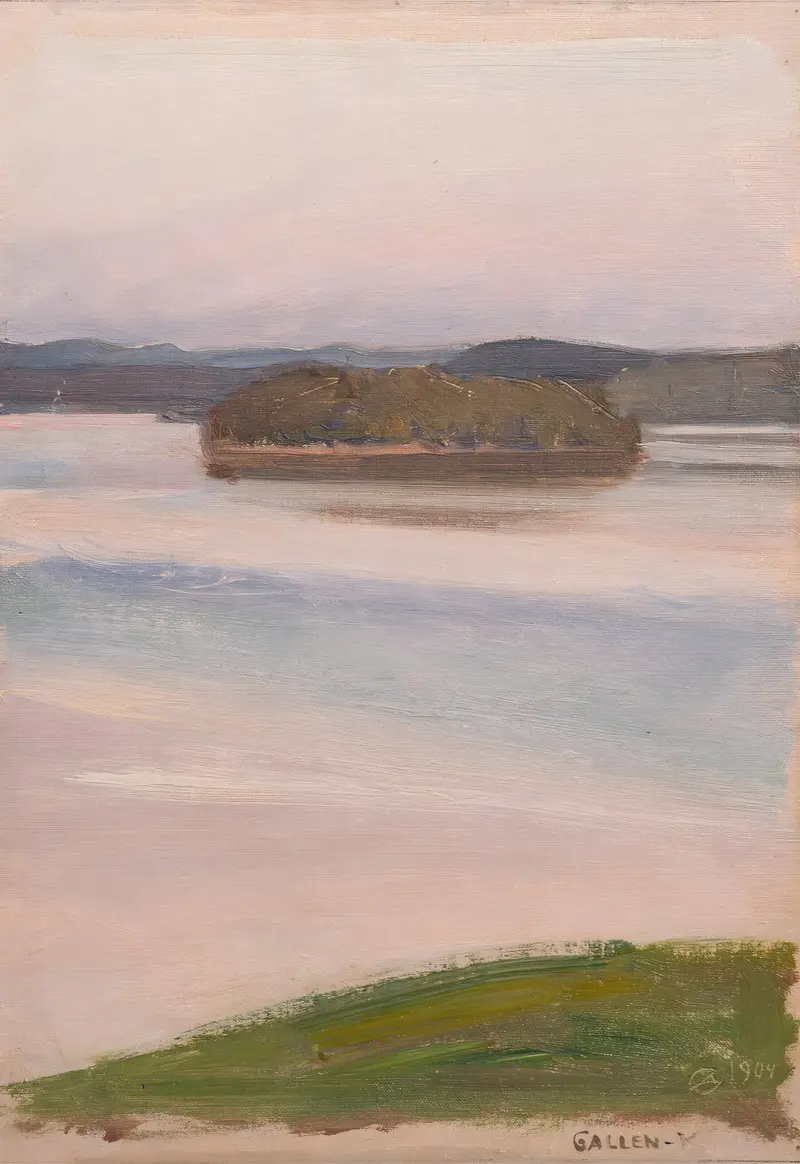
Lake Keitele
Akseli Gallen-Kallela
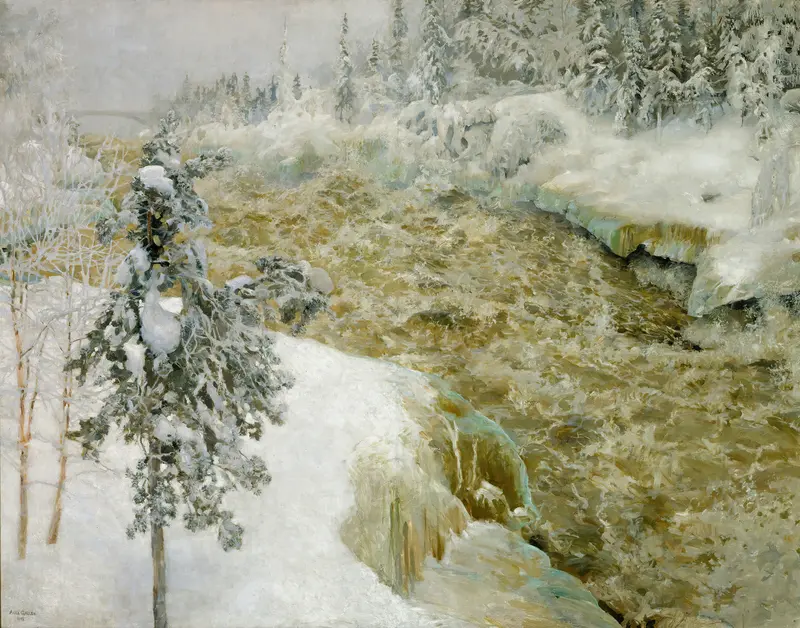
Imatra Falls in Snow ; Imatra in Winter
Akseli Gallen-Kallela
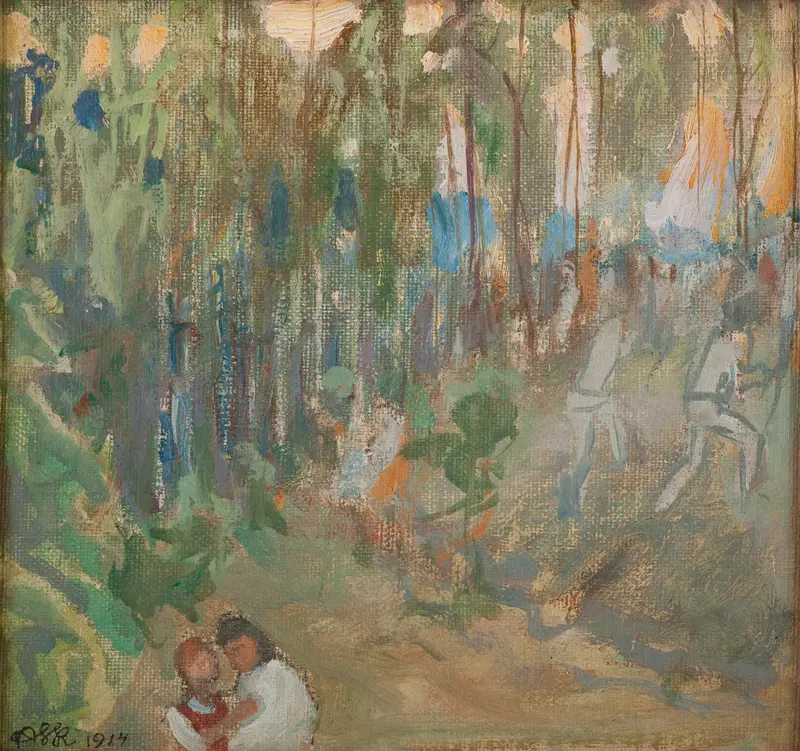
Vainovalkeat
Akseli Gallen-Kallela
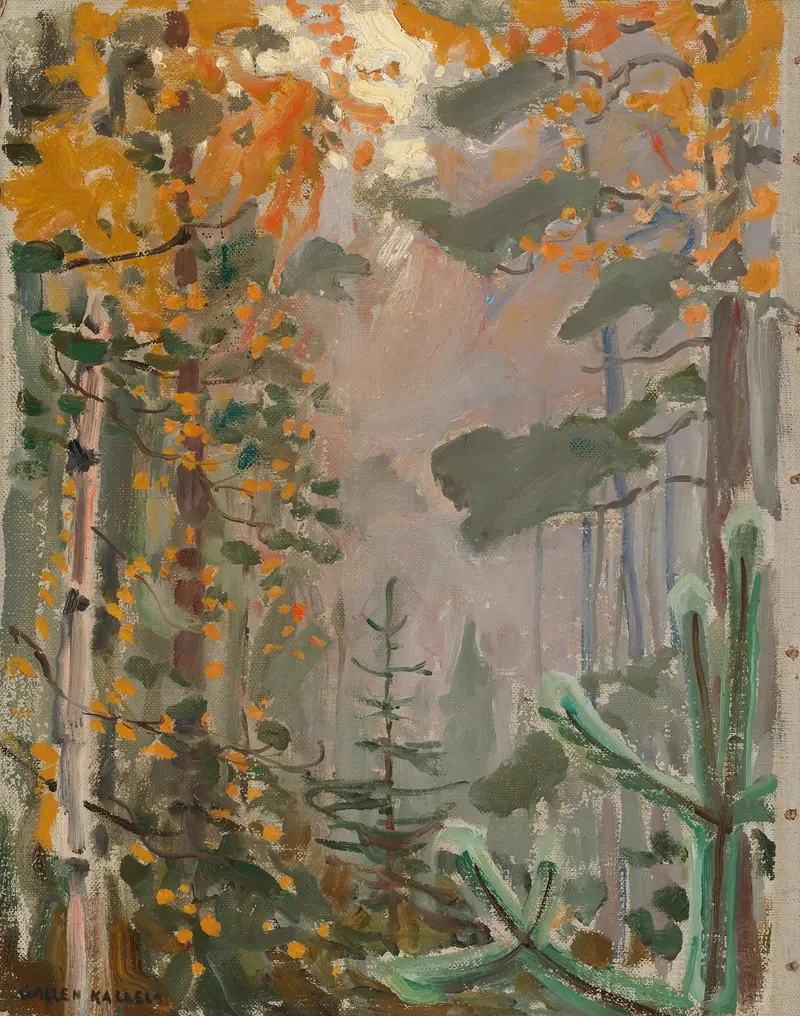
Autumn Landscape
Akseli Gallen-Kallela
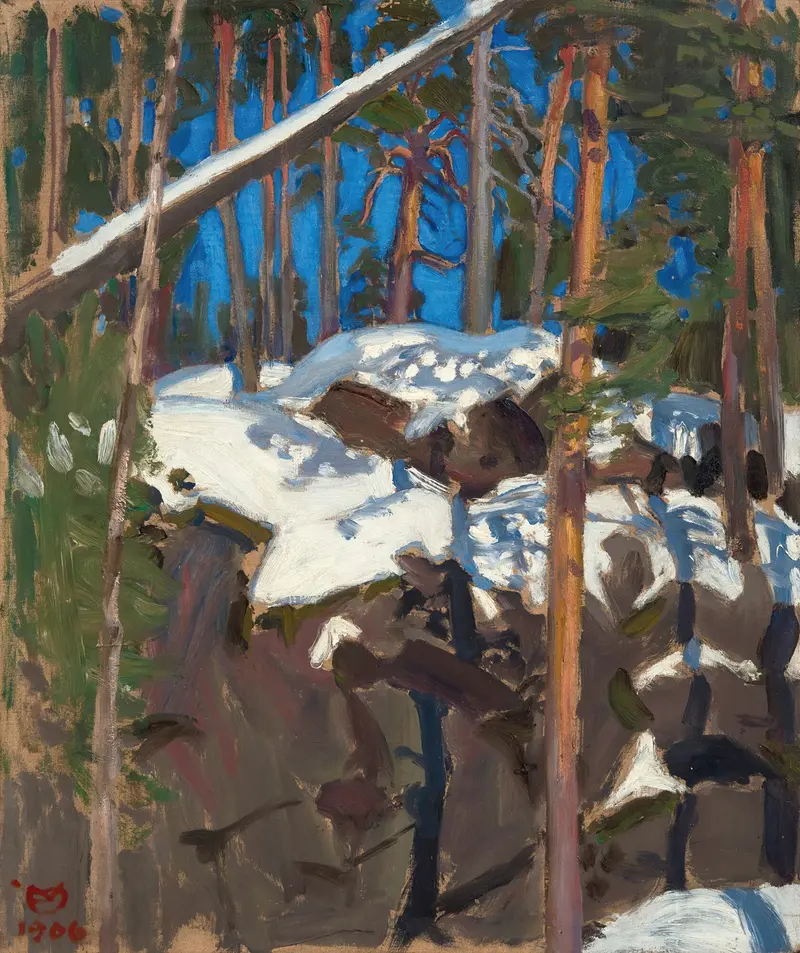
Spring Sun At Konginkangas
Akseli Gallen-Kallela
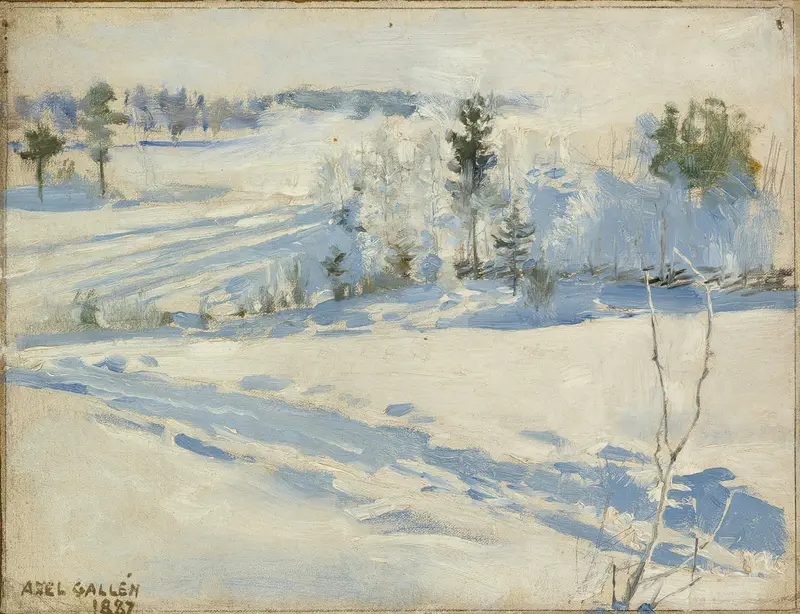
Winter Landscape
Akseli Gallen-Kallela

First Snow
Akseli Gallen-Kallela
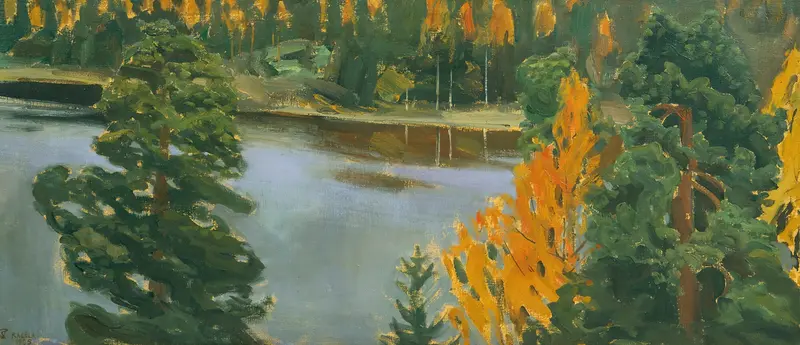
Lake View In Autumn
Akseli Gallen-Kallela
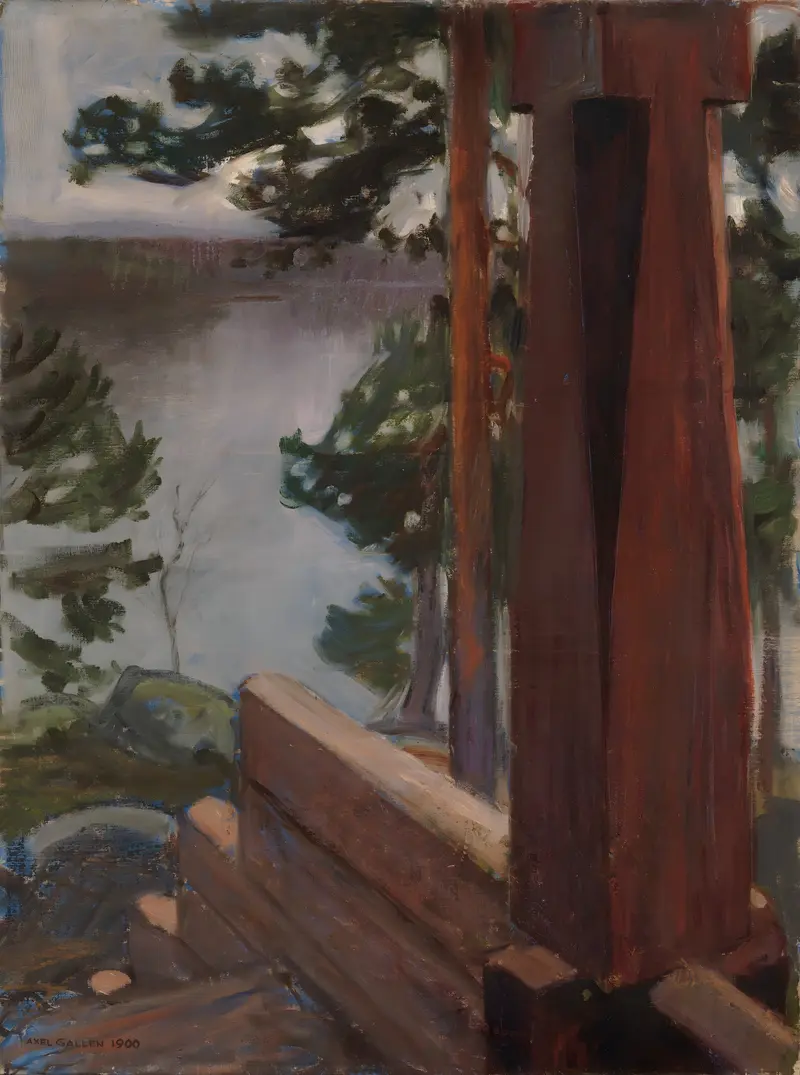
The Kalela Porch
Akseli Gallen-Kallela

Light Behind The Clouds
Akseli Gallen-Kallela
More Landscape Art

The Starry Night
Vincent van Gogh

View of Delft
Johannes Vermeer

Water Lilies
Claude Monet

The Grand Canal, Venice, looking north-west from the Ca' Corner to the Ca' Contarini degli Scrigni, with the campanile of Santa Maria della Carità
Canaletto

Windsor Castle
Canaletto

The Grand Canal looking North-East from the Palazzo Dolfin-Manin to the Rialto Bridge
Canaletto