
Women in the Park — History & Facts
A sudden burst of light cuts through the dense foliage, drawing your eye to a gathering of women whose dresses seem to shimmer with every brushstroke. The scene is alive with movement, not in the figures themselves—who are caught in a moment of elegant stillness—but in the way Adolphe Joseph Thomas Monticelli lets color and texture do the talking. The women cluster near a stone urn, their faces softly blurred, their gestures speaking of quiet conversation and shared confidences.
The rich reds, golds, and blues of their gowns are not just decoration; they anchor the figures in the lush, shadowy park, while the bright sky behind them opens the space, hinting at a world beyond this private enclave. Works like this, painted in the spirit of nineteenth-century France, belonged to a world where leisure and display were themselves forms of art. Monticelli, known for his lush impasto and vibrant palette, often painted scenes of aristocratic leisure that looked back to the fêtes galantes of the Rococo, even as he pushed paint into new, expressive territory. Such paintings were prized by collectors who wanted to evoke the elegance of a vanished age, and today Women in the Park is held in a Finnish collection (http://kokoelmat.fng.fi/app?si=A+IV+3552), its date and commission lost to time.
History has kept few traces of the women themselves, but their luminous presence invites us to linger, searching for stories in the play of light and color.
More Artworks by Adolphe Monticelli

Portrait of a Lady
Adolphe Monticelli
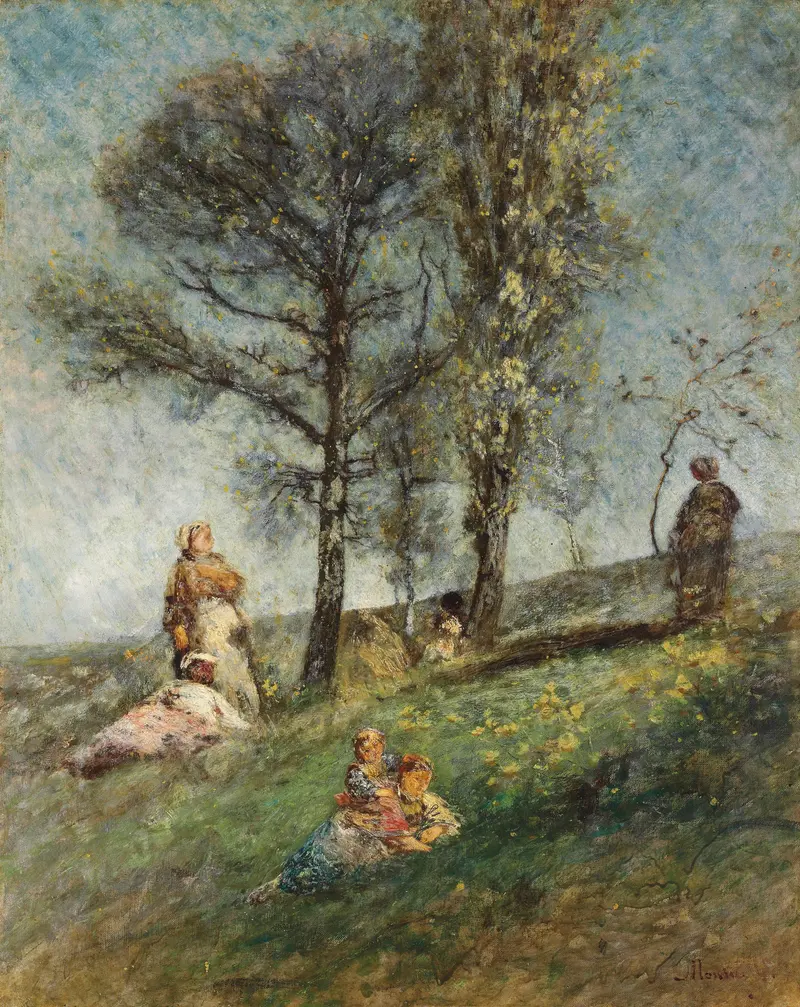
A Young Family Under Trees On A Hill
Adolphe Monticelli

Fête d'Après-Midi
Adolphe Monticelli
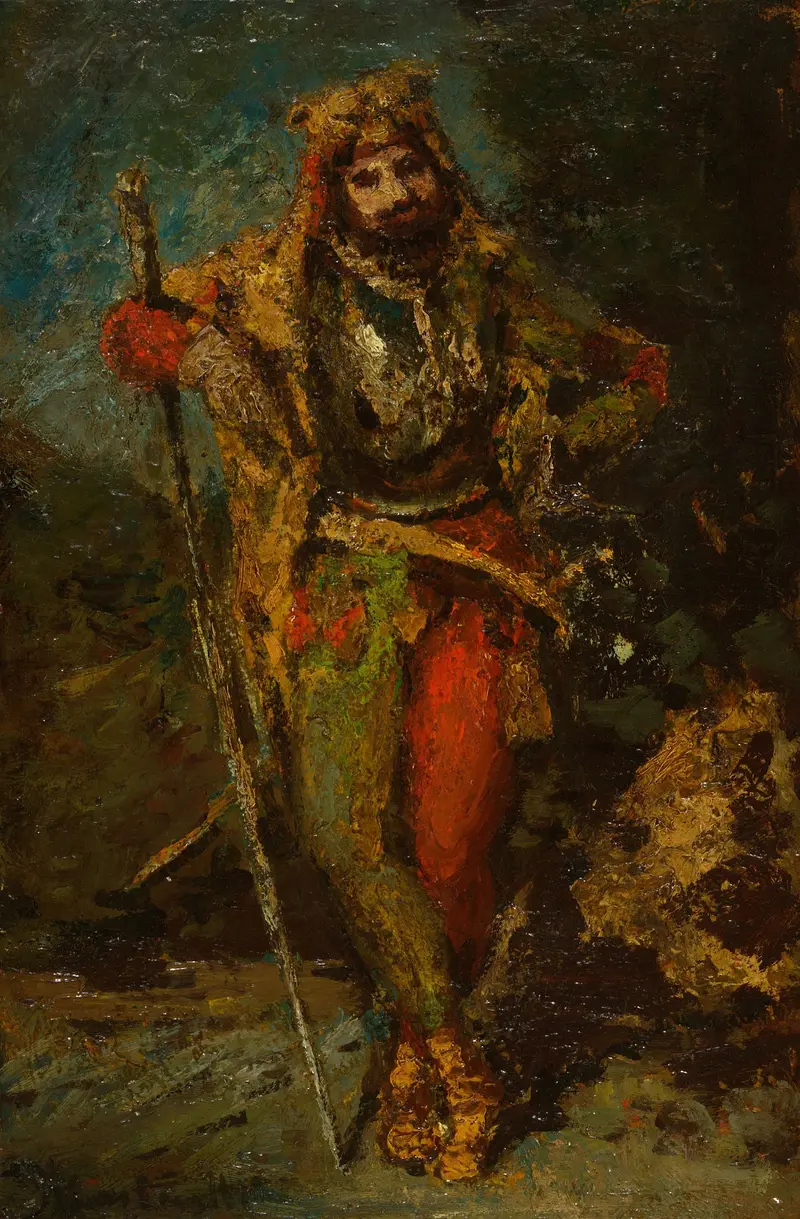
Mephisto from the Opera Faust
Adolphe Monticelli
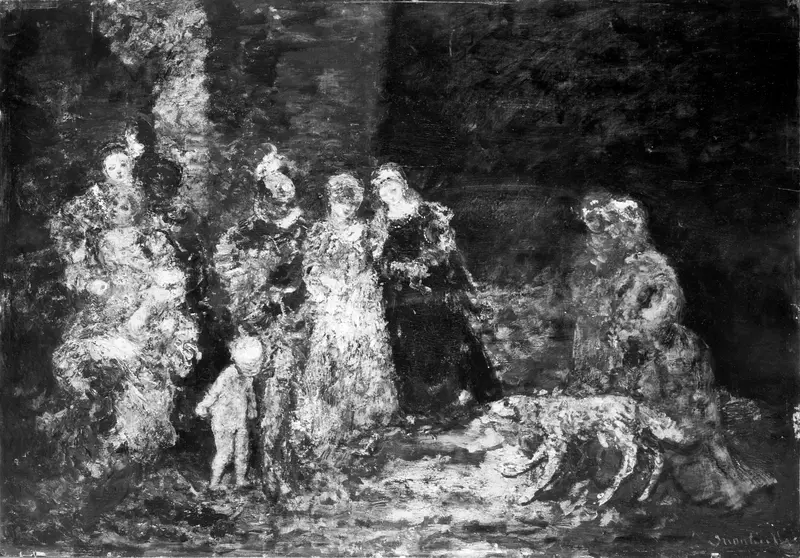
The Fairies
Adolphe Monticelli
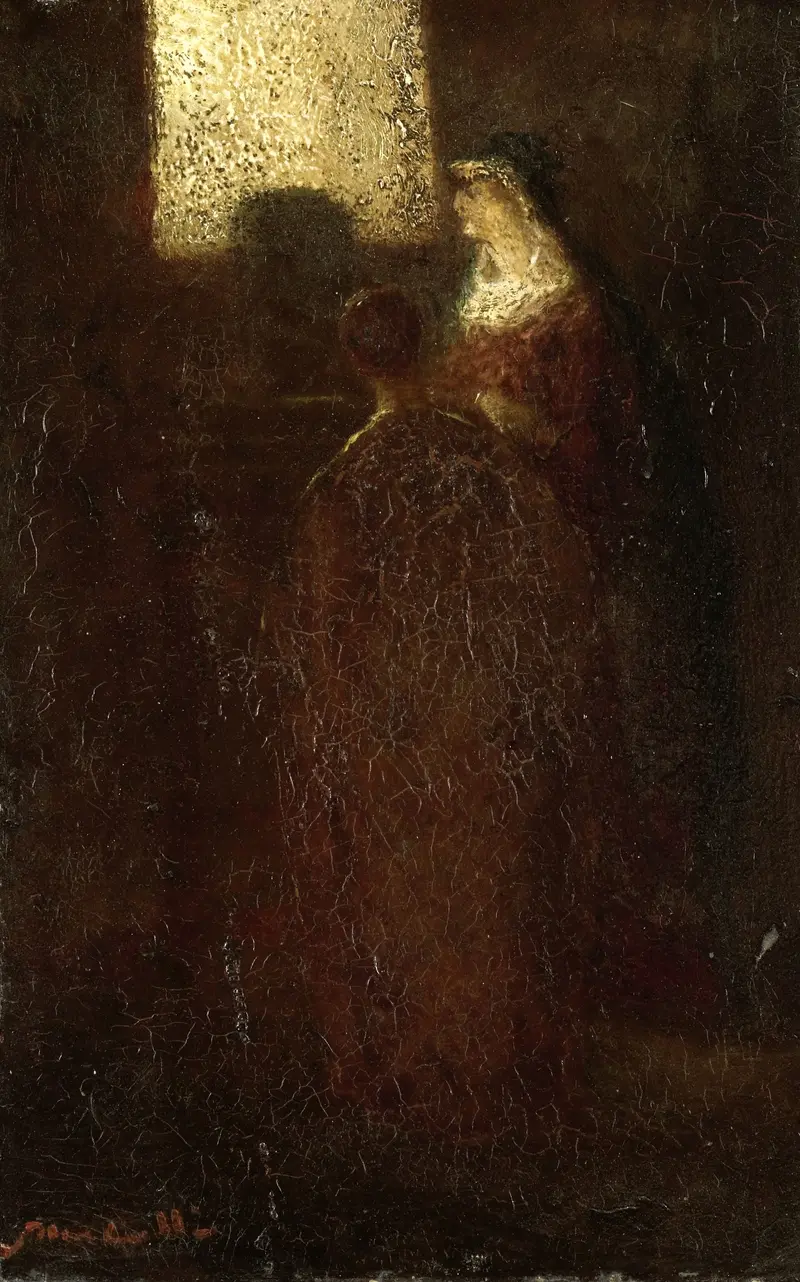
Aan het altaar
Adolphe Monticelli
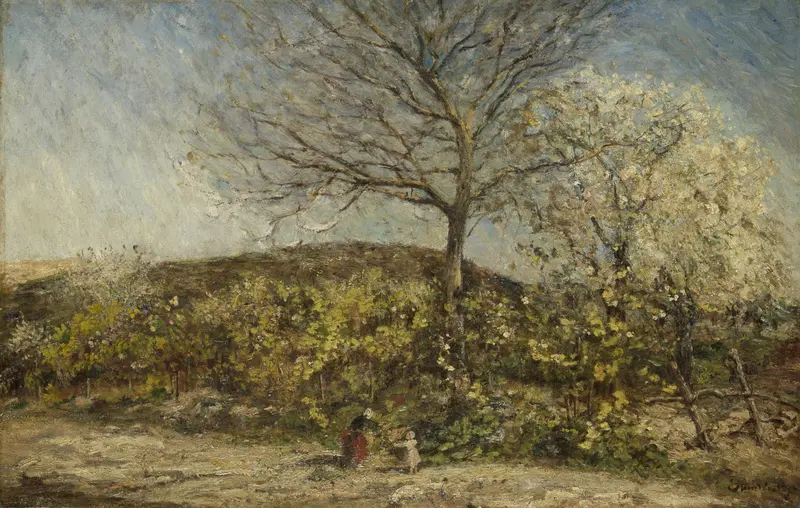
Landschap met bloeiende boomgaard
Adolphe Monticelli
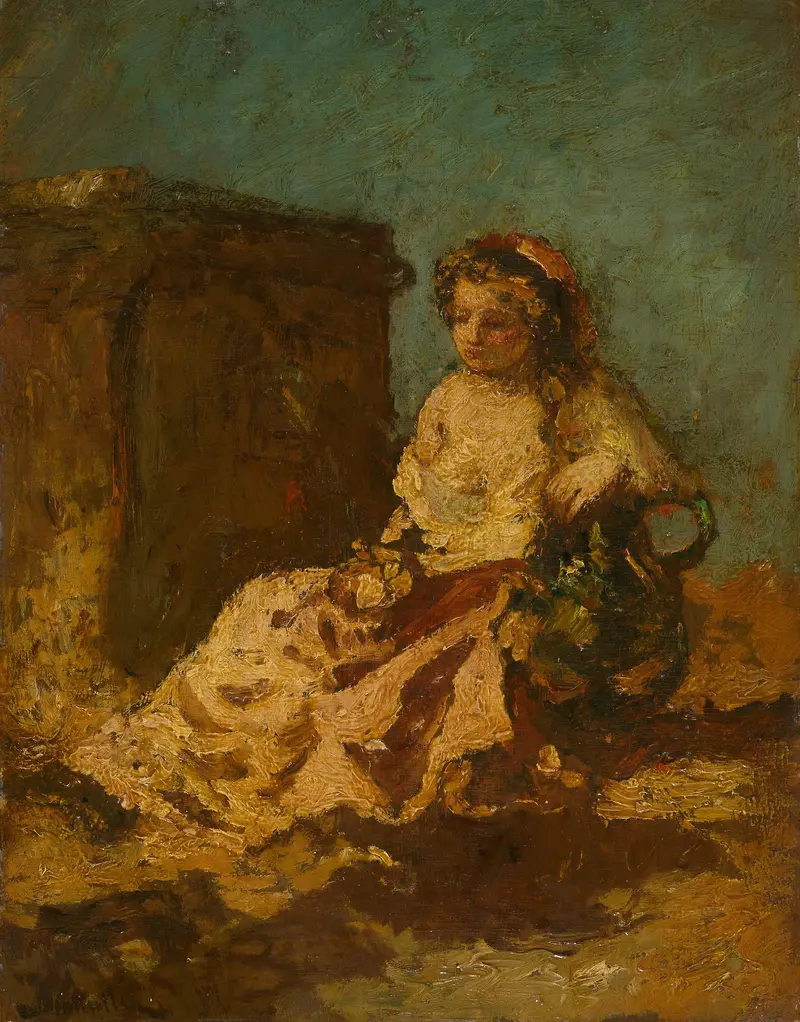
Meditation (Seated Woman)
Adolphe Monticelli
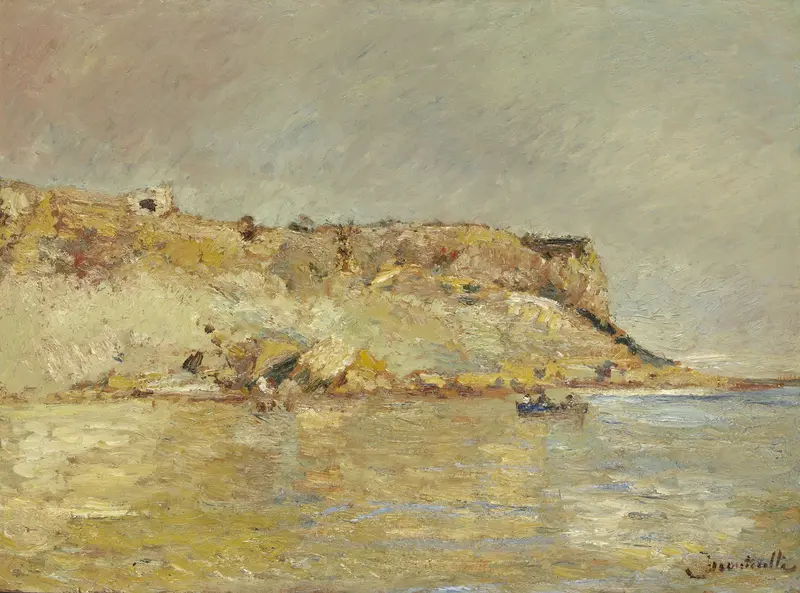
Coastal Mountains
Adolphe Monticelli
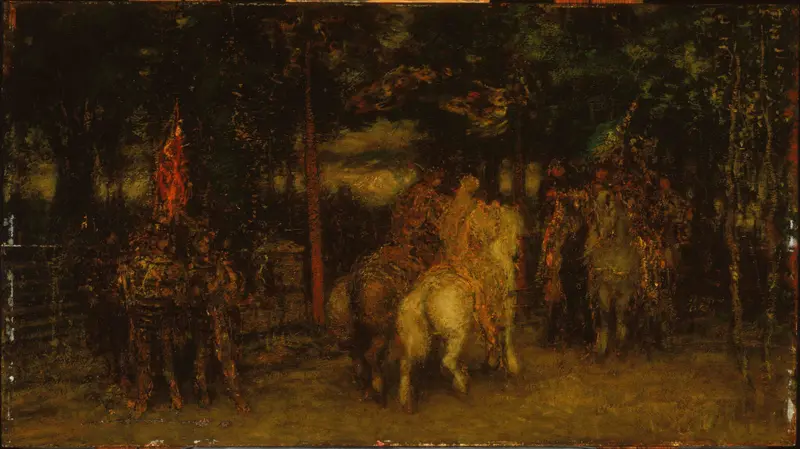
Landscape with Figures
Adolphe Monticelli
More Genre Scene Art

Banquet of the Officers of the St George Civic Guard
Frans Hals

Rembrandt and Saskia in the Scene of the Prodigal Son
Rembrandt van Rijn

Bal du moulin de la Galette
Pierre-Auguste Renoir

Quadrille at the Moulin Rouge
Henri de Toulouse-Lautrec

A Burial at Ornans
Gustave Courbet

When Will You Marry?
Paul Gauguin