
A boor playing a bagpipe in a landscape — History & Facts
What first catches the eye in A boor playing a bagpipe in a landscape is the lively tension between the musician and his small, animated canine audience. The bagpiper, caught mid-stride, glances out with a look of both concentration and faint mischief, his cheeks puffed as he fills the instrument with air. The dog, tail raised and ears perked, seems to dance to the unheard tune, its movement echoing the piper’s rhythm.
The landscape, with its winding river and distant church spire, draws the viewer’s gaze outward, but the warm light and the billowing smoke from the cottage chimney pull us back to the intimacy of this rustic moment. Every detail, from the feather in the musician’s hat to the pink ribbons on the bagpipes, is designed to hold the viewer in this fleeting encounter. Painted by Abraham Teniers sometime between 1644 and 1670, this work belongs to a tradition of Flemish genre scenes that delighted in everyday life’s humor and humanity. Such paintings were often collected by prosperous townsfolk who saw themselves reflected in these lively rural vignettes—part amusement, part gentle satire.
The bagpiper, a familiar figure in seventeenth-century village festivities, is here both comic and sympathetic, a reminder of music’s power to animate even the most ordinary day. History has kept few traces of this particular painting’s journey, but its presence in the RKD-images collection today invites us to step into a world where a simple tune can momentarily command the landscape.
More Artworks by Abraham Teniers

A wedding scene in a village
Abraham Teniers
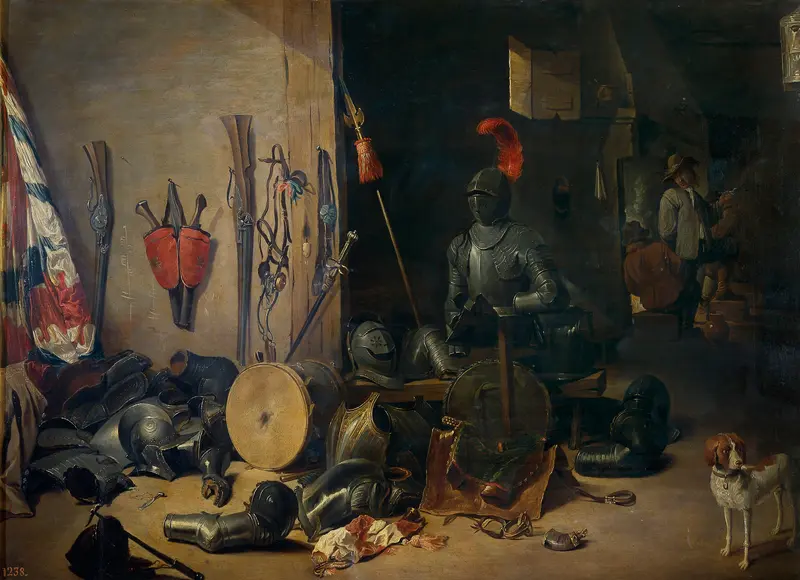
Le Corps de Garde
Abraham Teniers
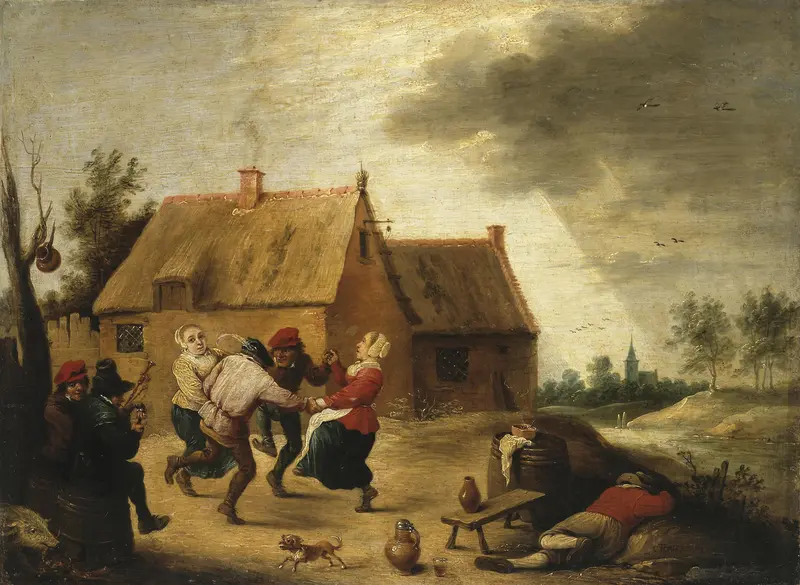
Dancing Peasants
Abraham Teniers
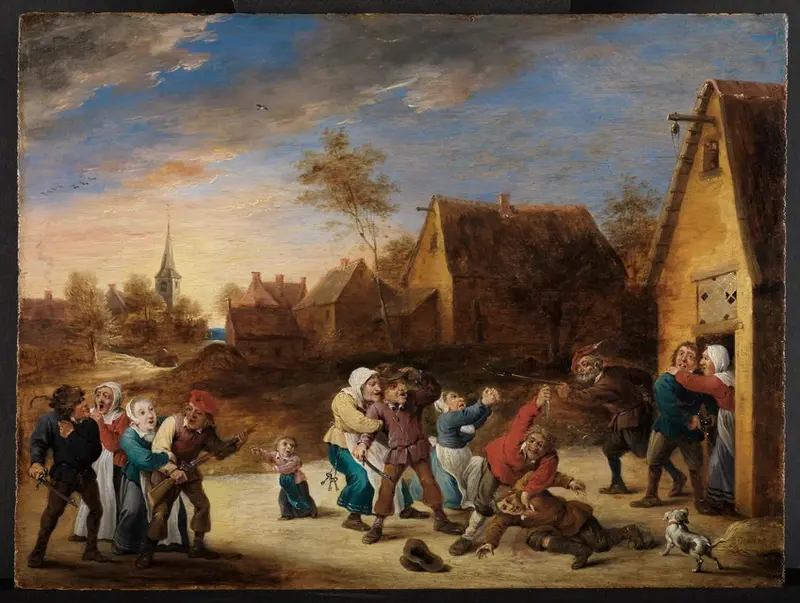
Brawling peasants in front of a tavern
Abraham Teniers
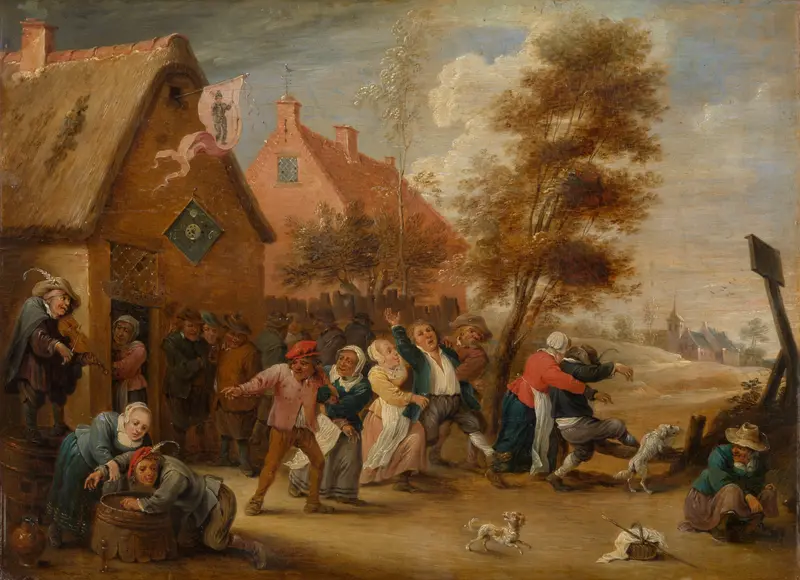
Rural feast
Abraham Teniers
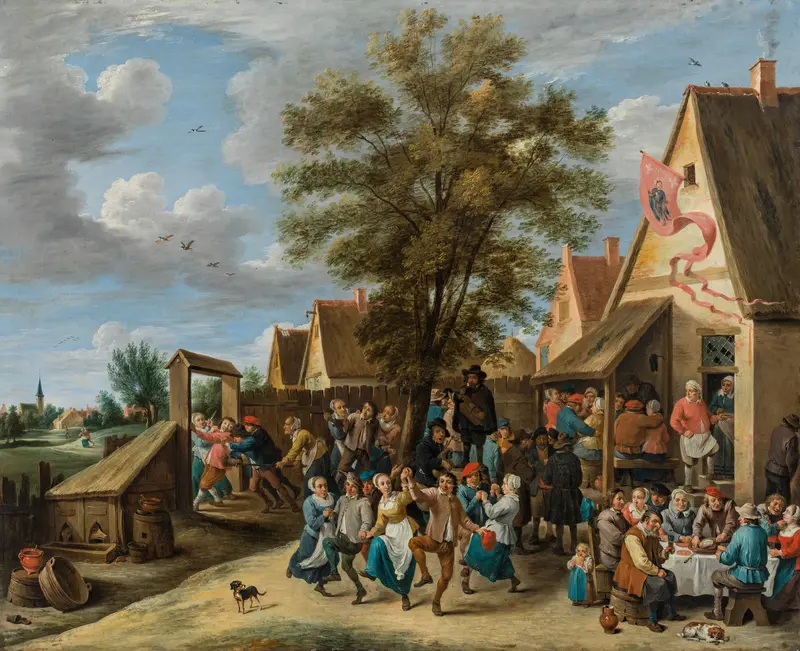
Village kermesse with peasants dancing
Abraham Teniers
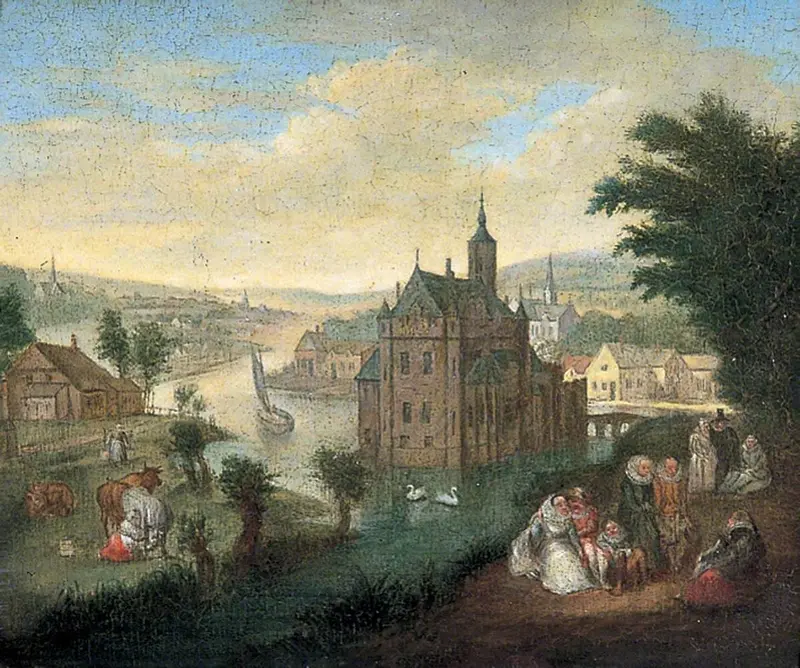
Landscape with Cottages
Abraham Teniers
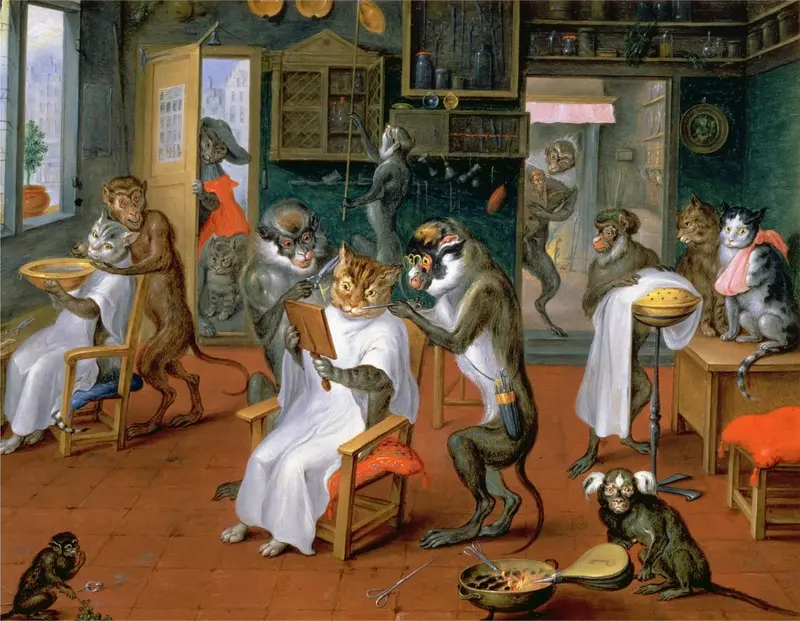
Barbershop with monkeys and cats
Abraham Teniers
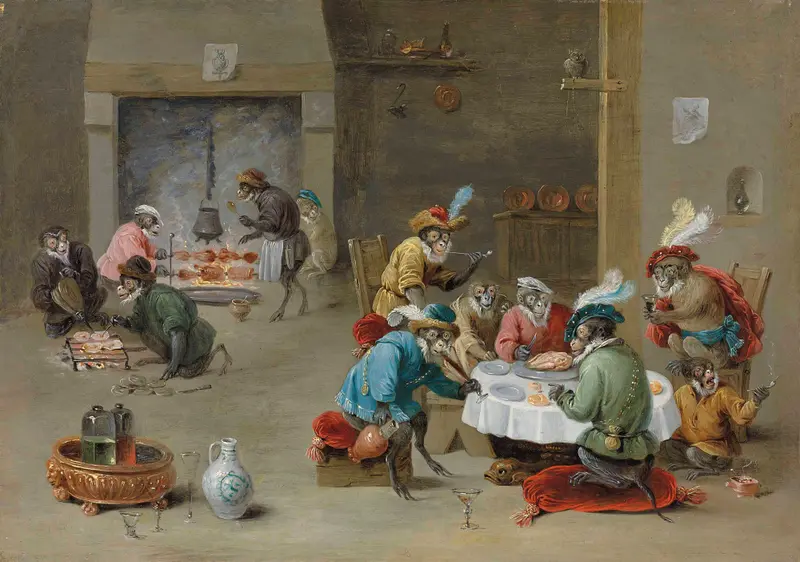
Monkeys smoking, drinking and preparing a meal in a kitchen
Abraham Teniers
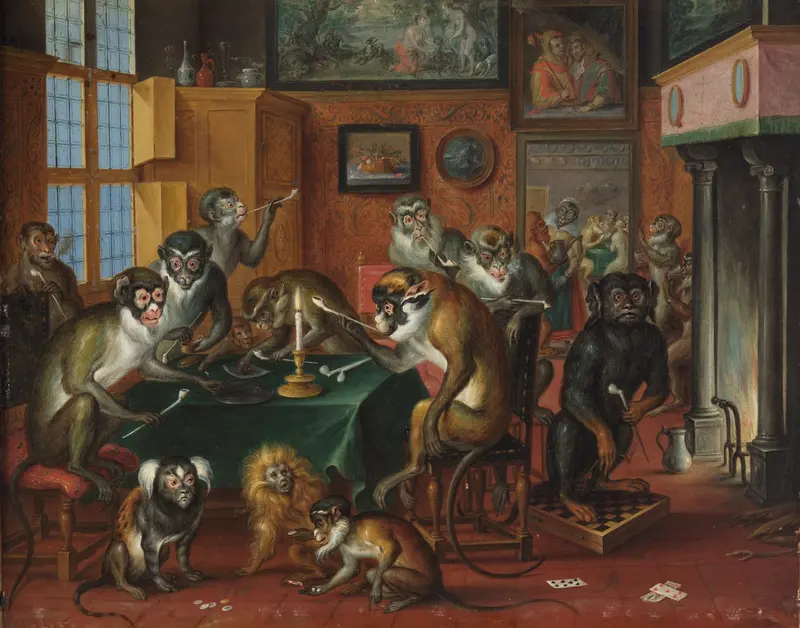
Tabakskollegium with monkeys
Abraham Teniers
More Genre Scene Art

Banquet of the Officers of the St George Civic Guard
Frans Hals

Rembrandt and Saskia in the Scene of the Prodigal Son
Rembrandt van Rijn

Bal du moulin de la Galette
Pierre-Auguste Renoir

Quadrille at the Moulin Rouge
Henri de Toulouse-Lautrec

A Burial at Ornans
Gustave Courbet

When Will You Marry?
Paul Gauguin