
Village kermesse with peasants dancing — History & Facts
What first catches the eye is the swirl of movement: a circle of peasants, hands joined, feet lifted mid-step, faces flushed with laughter and song. The painter, Abraham Teniers, has chosen a moment of pure communal joy, the kind that seems to spill out of the canvas and into the viewer’s own world. The dancers’ bright blue skirts and white caps form a living garland at the center, while every corner of the scene teems with its own stories—a group tugging at a gate, a dog alert in the foreground, a table laden with food and drink.
The light falls gently, illuminating faces and gestures, guiding us from the lively dance to the quieter pleasures of eating, gossiping, and watching. Even the sky, wide and cloud-strewn, seems to echo the sense of freedom and festivity. Painted in 1646, this village kermesse belongs to a tradition that flourished in the Low Countries during the seventeenth century, when scenes of rural merrymaking were both a celebration and a gentle satire of peasant life. Such works, often commissioned for urban homes, let city dwellers imagine the earthy pleasures and rituals of the countryside—sometimes with a knowing wink at their own distance from the revelry.
Abraham Teniers, part of a family of painters, was adept at capturing these bustling gatherings, layering humor, warmth, and a keen eye for social detail. History has kept few traces of this particular painting’s journey, but its survival in a modern collection invites us to linger, searching the faces and gestures for echoes of our own gatherings and festivities.
More Artworks by Abraham Teniers

A wedding scene in a village
Abraham Teniers
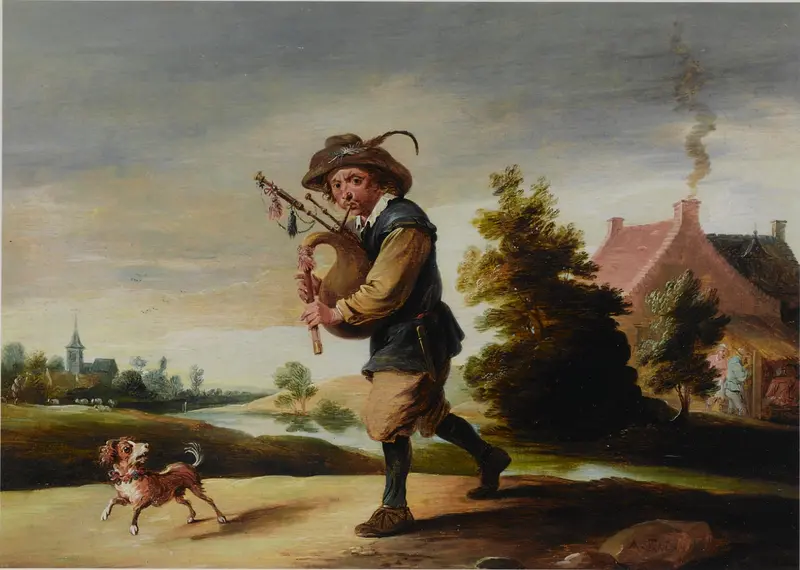
A boor playing a bagpipe in a landscape
Abraham Teniers
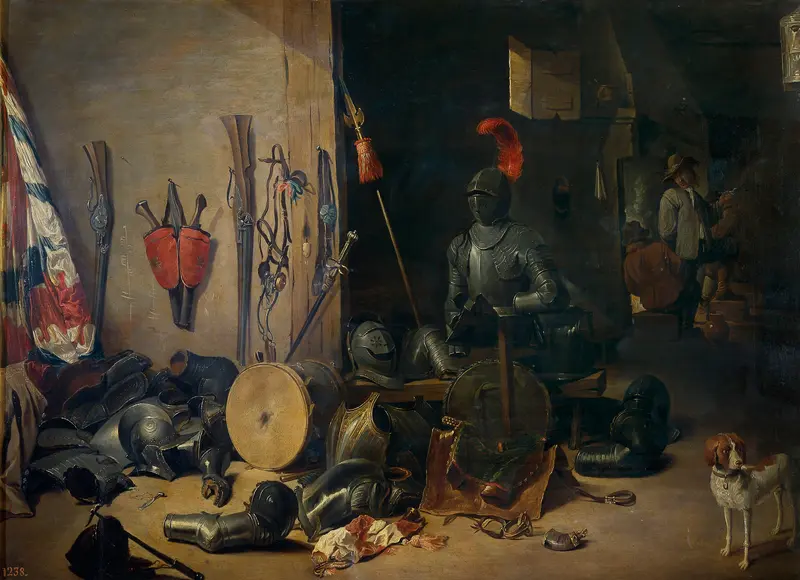
Le Corps de Garde
Abraham Teniers
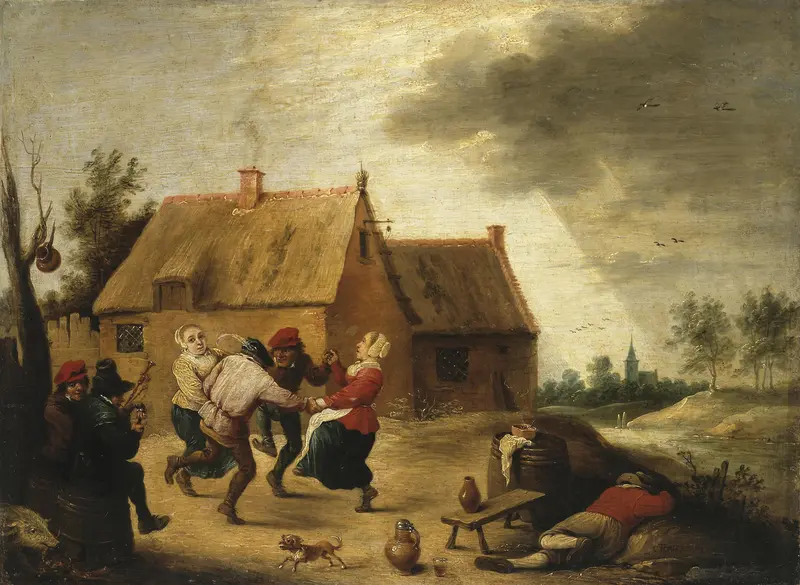
Dancing Peasants
Abraham Teniers
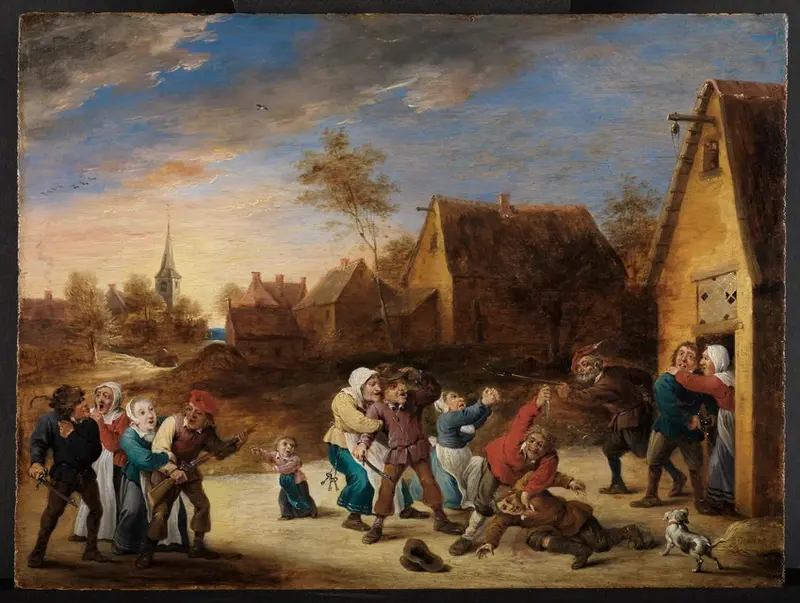
Brawling peasants in front of a tavern
Abraham Teniers
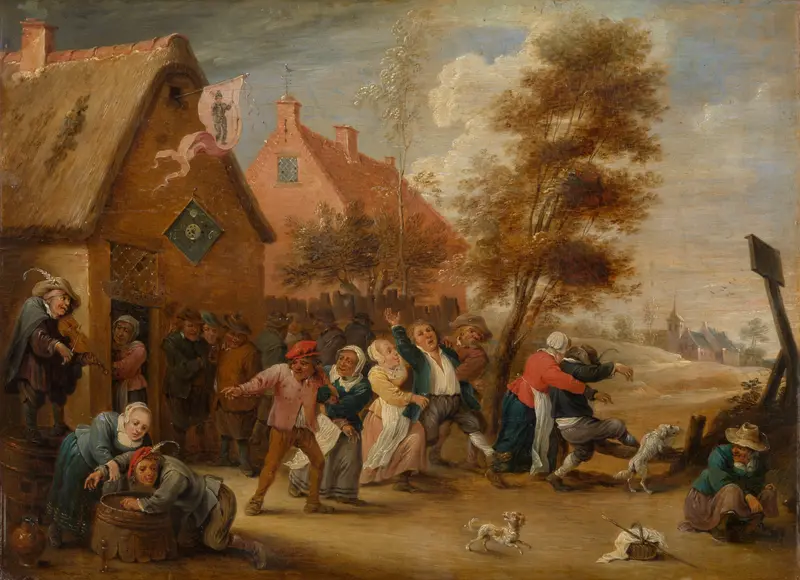
Rural feast
Abraham Teniers
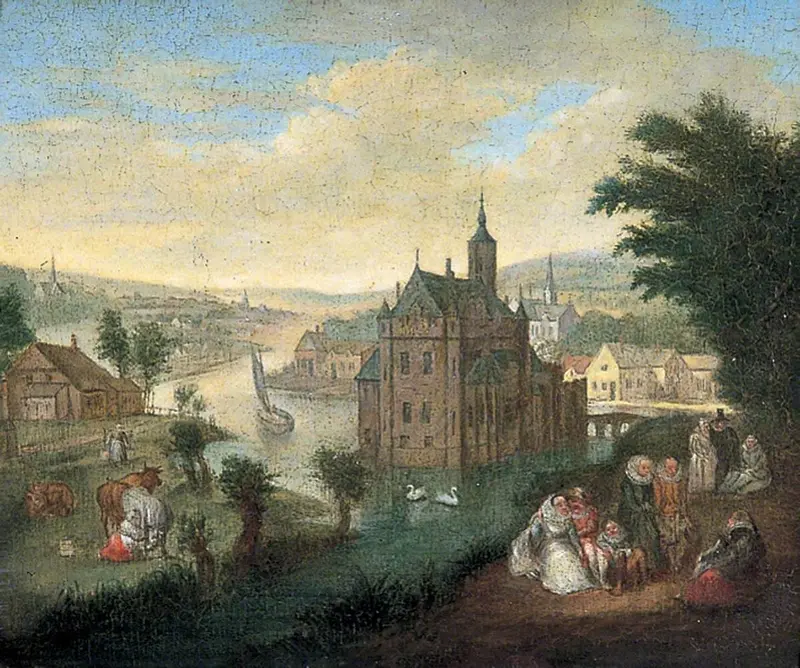
Landscape with Cottages
Abraham Teniers
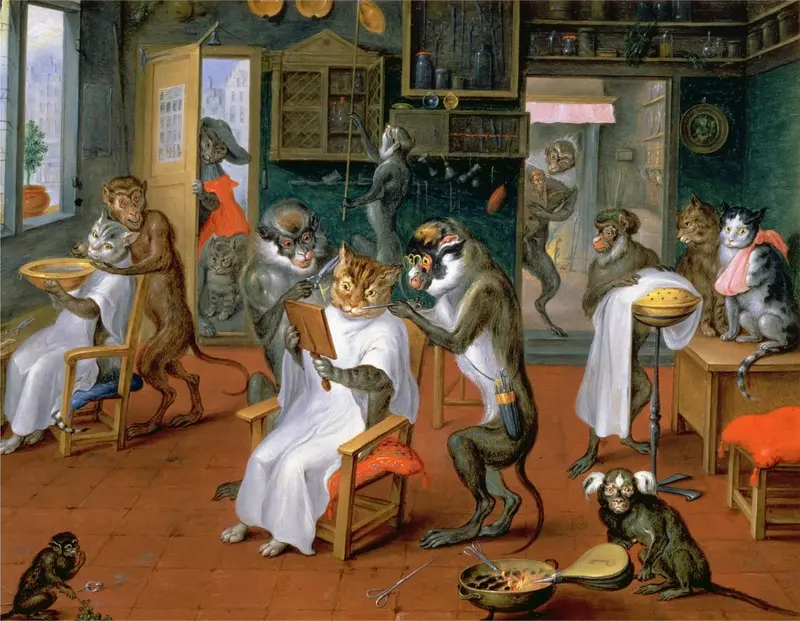
Barbershop with monkeys and cats
Abraham Teniers
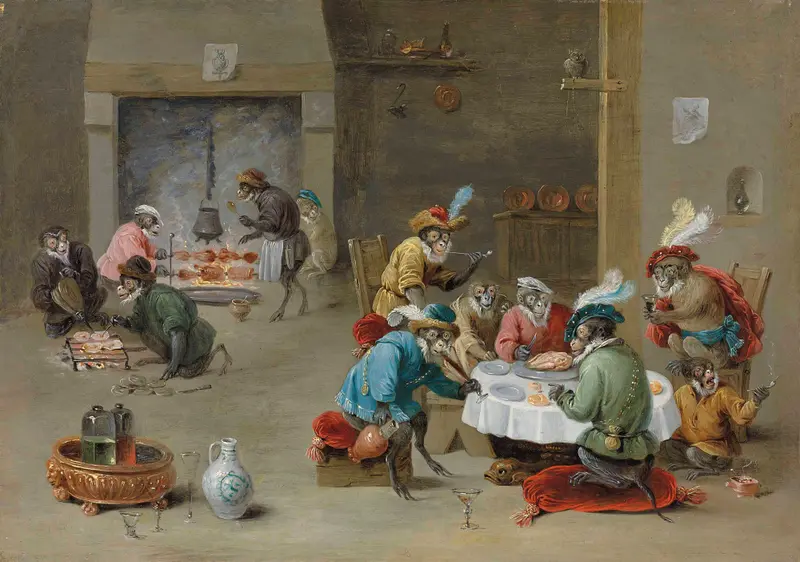
Monkeys smoking, drinking and preparing a meal in a kitchen
Abraham Teniers
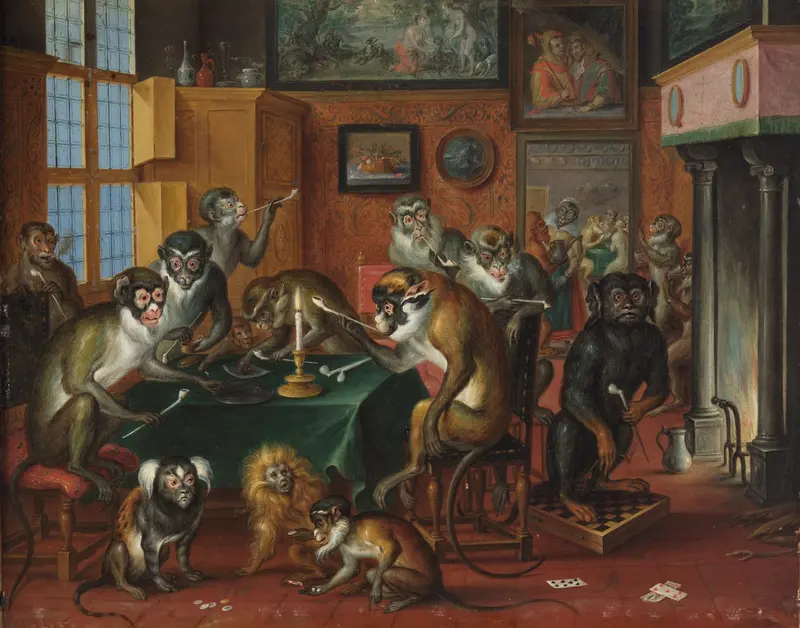
Tabakskollegium with monkeys
Abraham Teniers
More Genre Scene Art

Banquet of the Officers of the St George Civic Guard
Frans Hals

Rembrandt and Saskia in the Scene of the Prodigal Son
Rembrandt van Rijn

Bal du moulin de la Galette
Pierre-Auguste Renoir

Quadrille at the Moulin Rouge
Henri de Toulouse-Lautrec

A Burial at Ornans
Gustave Courbet

When Will You Marry?
Paul Gauguin