
Brawling peasants in front of a tavern — History & Facts
A sudden commotion bursts forth in the heart of a village, where every gesture and grimace is caught in the golden light of late afternoon. The eye is drawn first to the tangle of bodies at the center, where fists fly and tempers flare, but the real drama is in the faces—some twisted in anger, others wide-eyed with alarm, and a few even grinning at the spectacle. A woman in white pulls a man away from the fray, her mouth open in a shout, while a child tugs at her skirts, caught between fear and fascination.
The chaos spills outward: a dog barks at the fallen hats, a pair of men grapple at the tavern door, and a cluster of villagers gathers, half eager, half appalled, to witness the unfolding scene. The slanting light and the warm ochres of the cottages give the riot a strange intimacy, as if the whole village has paused to watch itself unravel. Works like this, painted between 1630 and 1670 by Abraham Teniers, belong to a world where the everyday was worthy of a painter’s attention—especially when it turned unruly. In the Low Countries, scenes of peasant life were prized for their humor, their energy, and their sly social commentary; they were bought by city dwellers who wanted a window onto rural antics, or perhaps a cautionary tale about the dangers of drink and disorder.
Brawling peasants in front of a tavern comes from this tradition, its rough-and-tumble energy echoing the boisterous spirit of the Baroque age. While history has kept few traces of this specific painting’s journey, its survival in a modern collection invites us to linger over every detail—the sidelong glances, the clutching hands, the distant church spire—and wonder what stories the villagers would tell, once the dust had settled.
More Artworks by Abraham Teniers

A wedding scene in a village
Abraham Teniers
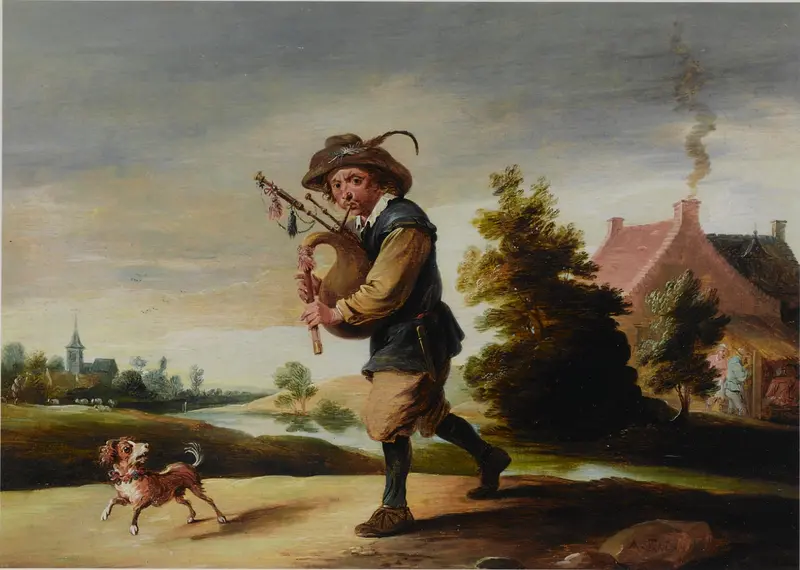
A boor playing a bagpipe in a landscape
Abraham Teniers
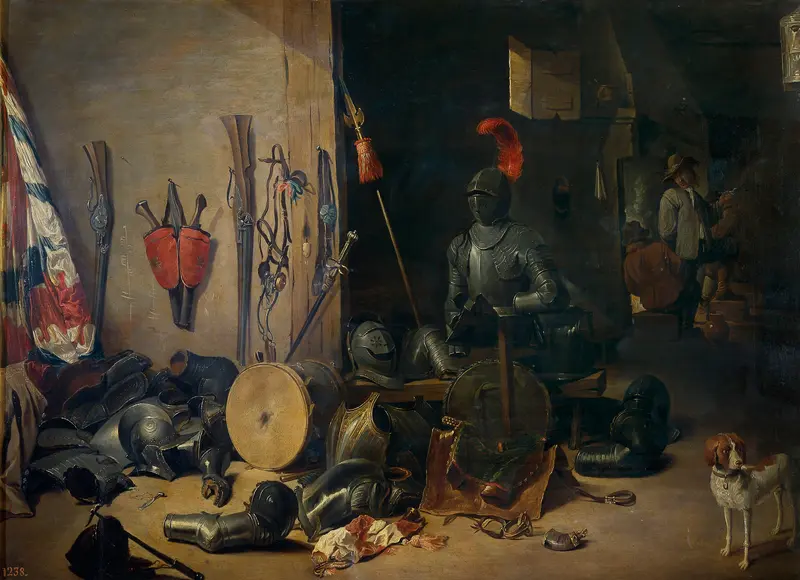
Le Corps de Garde
Abraham Teniers
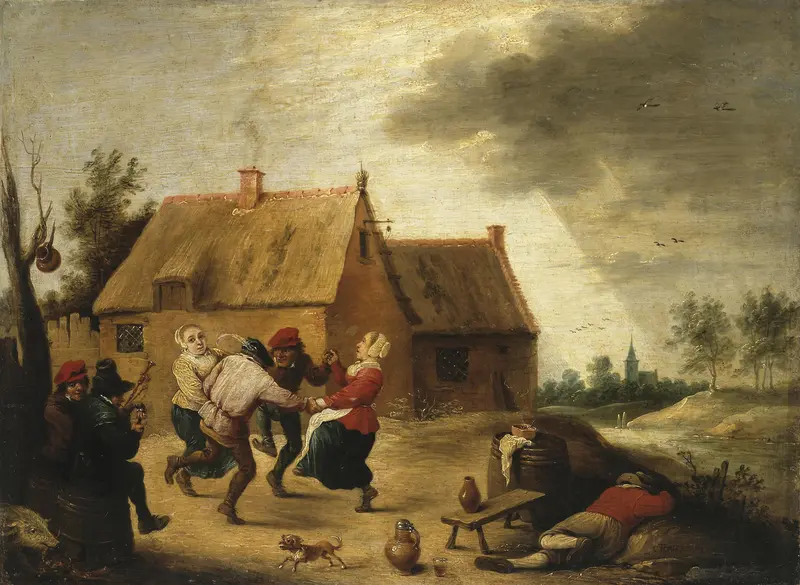
Dancing Peasants
Abraham Teniers
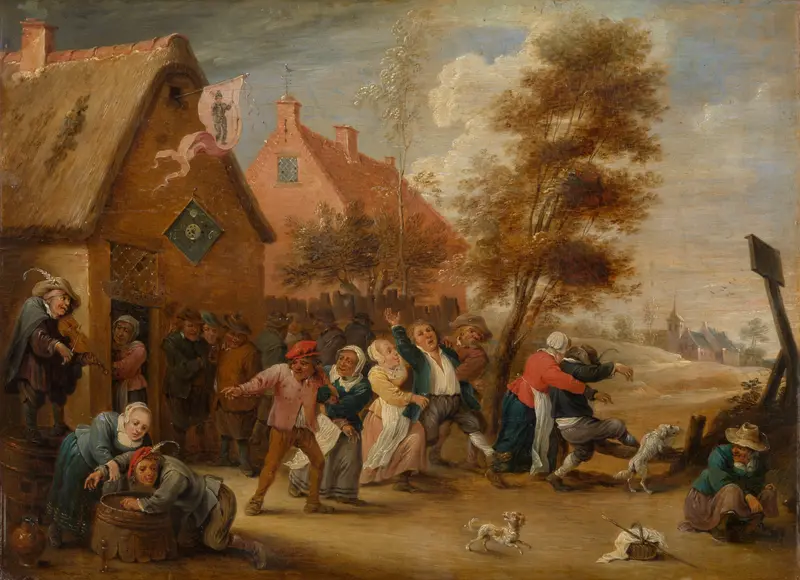
Rural feast
Abraham Teniers
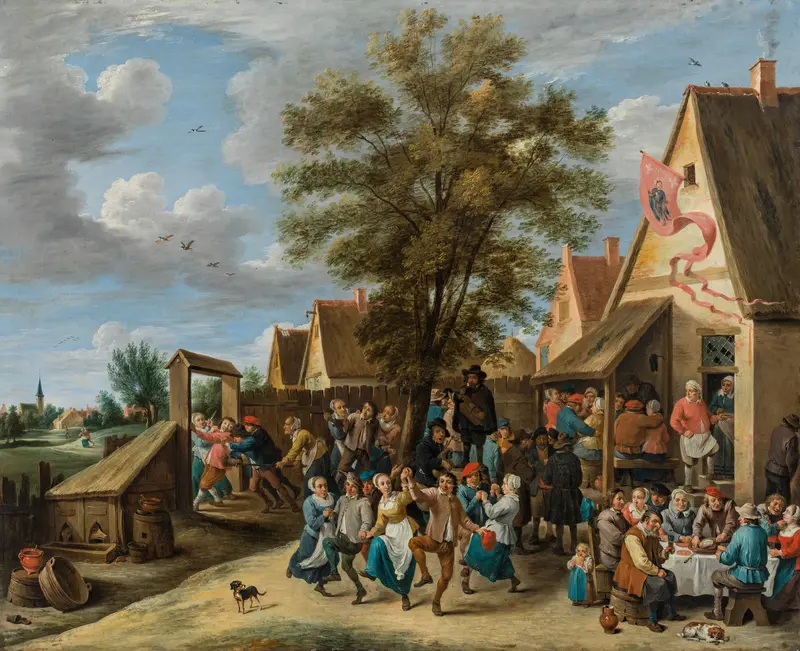
Village kermesse with peasants dancing
Abraham Teniers
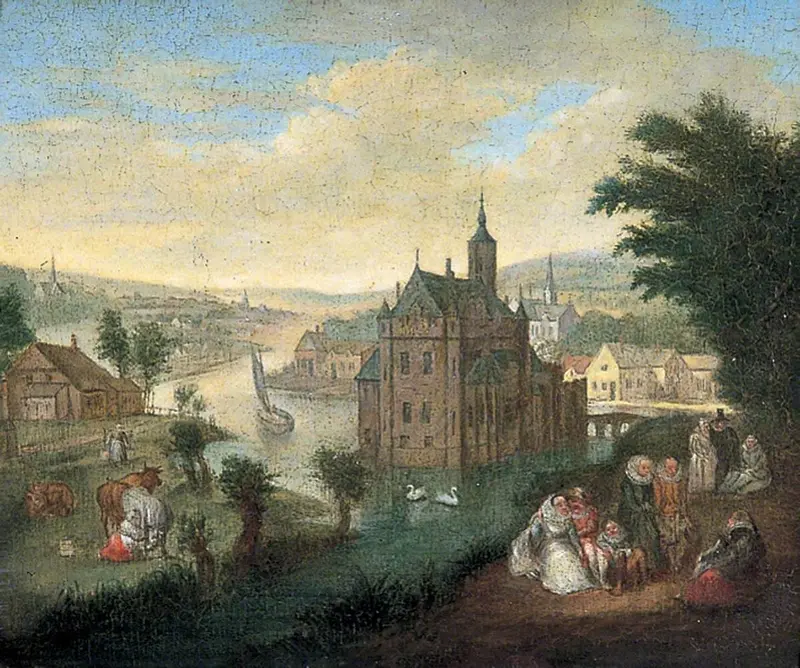
Landscape with Cottages
Abraham Teniers
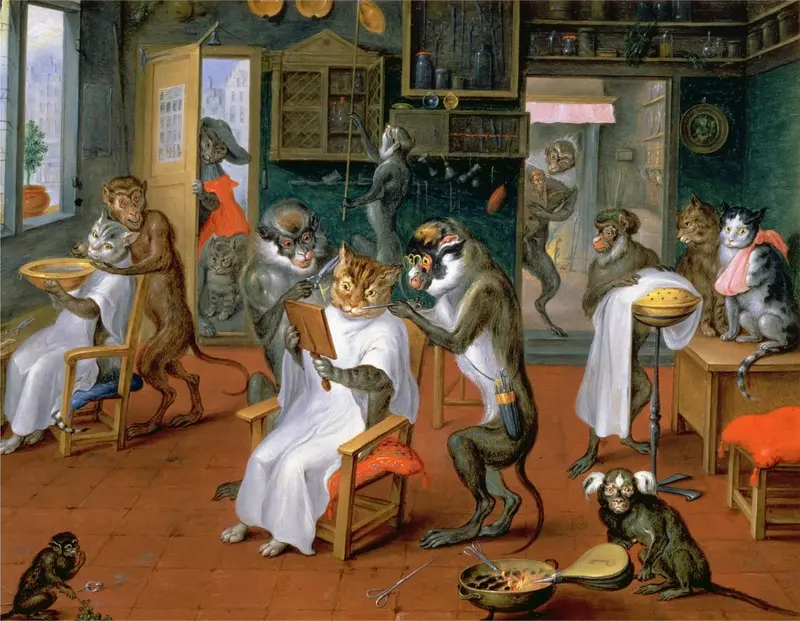
Barbershop with monkeys and cats
Abraham Teniers
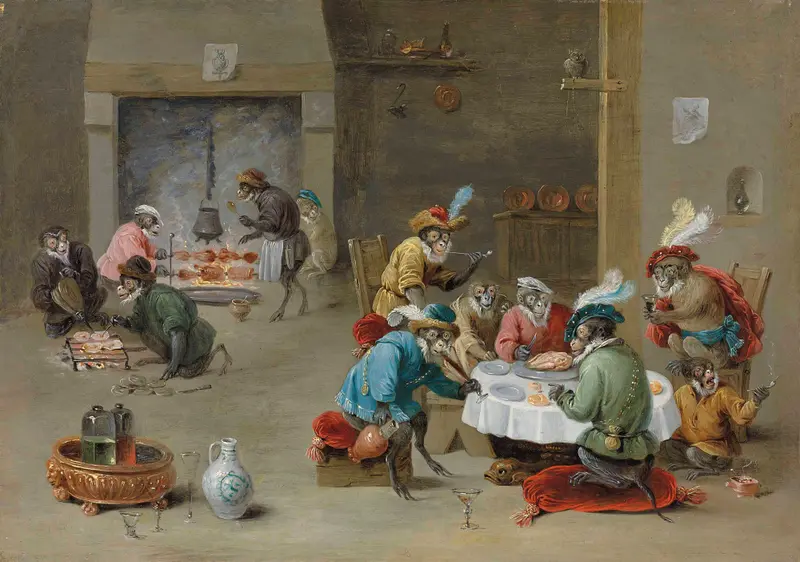
Monkeys smoking, drinking and preparing a meal in a kitchen
Abraham Teniers
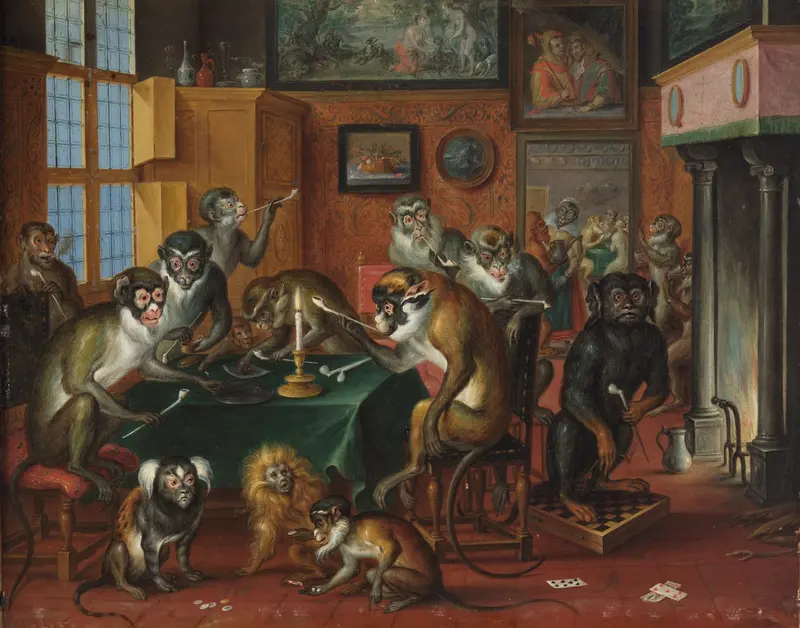
Tabakskollegium with monkeys
Abraham Teniers
More Genre Scene Art

Banquet of the Officers of the St George Civic Guard
Frans Hals

Rembrandt and Saskia in the Scene of the Prodigal Son
Rembrandt van Rijn

Bal du moulin de la Galette
Pierre-Auguste Renoir

Quadrille at the Moulin Rouge
Henri de Toulouse-Lautrec

A Burial at Ornans
Gustave Courbet

When Will You Marry?
Paul Gauguin