
Monkeys smoking, drinking and preparing a meal in a kitchen — History & Facts
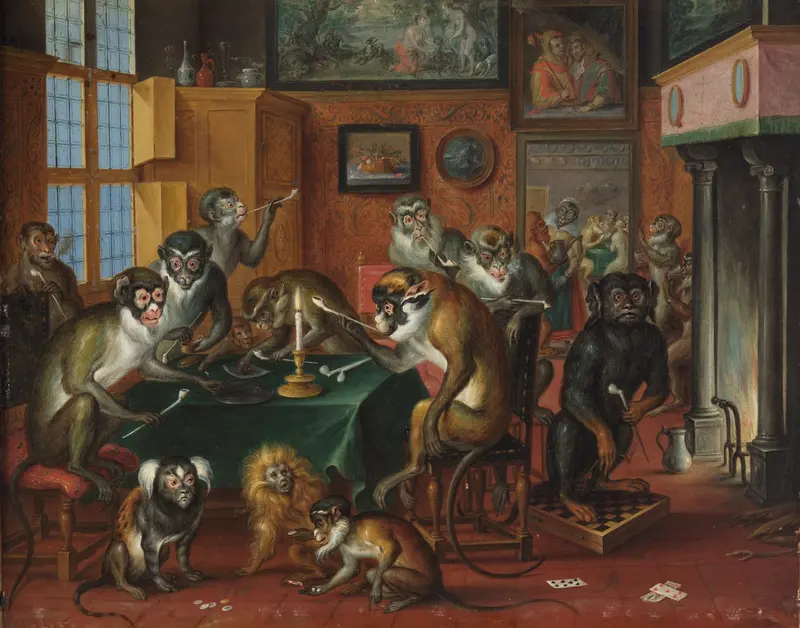
What first seizes the eye in Monkeys smoking, drinking and preparing a meal in a kitchen is not merely the spectacle of monkeys in feathered hats and finery, but the uncanny familiarity of their mischief. The scene is alive with activity, every figure caught mid-gesture: one monkey fans a grill, another stirs a pot, while at the table a group feasts and drinks with all the gusto of a rowdy dinner party. The light falls softly across the kitchen, picking out the glint of glassware and the bright satins of their costumes, drawing the viewer into a world where animal and human folly are barely separated by a whisker.
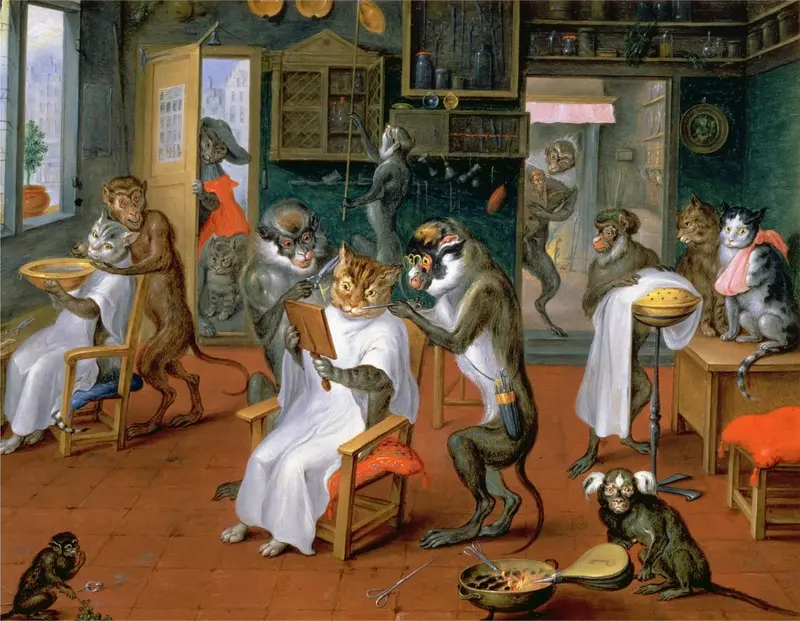
The painter’s wit is sharp—each monkey’s pose is a sly echo of human vanity, from the exaggerated elegance of their outfits to the careless sprawl of their limbs. This is a scene steeped in the playful tradition of the singerie, a genre that flourished in the seventeenth-century Low Countries, where monkeys mimic the vices and pleasures of their human counterparts. Painted circa 1657 by Abraham Teniers, the work revels in detail: the array of food and drink, the kitchen implements, even the art on the walls, all rendered with a miniature’s precision. Such images were more than comic relief—they were sly moral commentaries, poking fun at society’s pretensions and excesses.
In Teniers’ hands, the kitchen becomes a stage for satire, inviting viewers to laugh at the monkeys’ antics, and perhaps at themselves. The world that produced this painting delighted in such clever inversions, and history has kept few traces of the individual lives behind these scenes, but the humor and sharp observation endure—inviting you to linger, and look again.
More Artworks by Abraham Teniers

A wedding scene in a village
Abraham Teniers
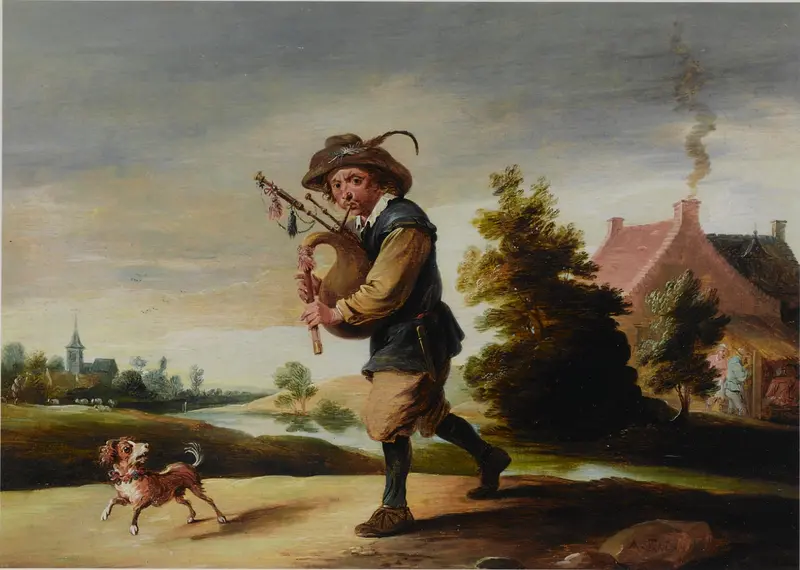
A boor playing a bagpipe in a landscape
Abraham Teniers
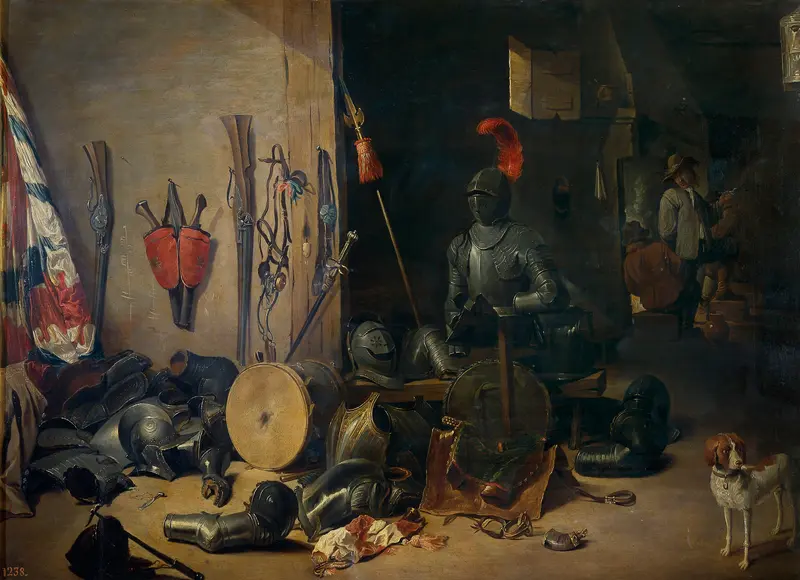
Le Corps de Garde
Abraham Teniers
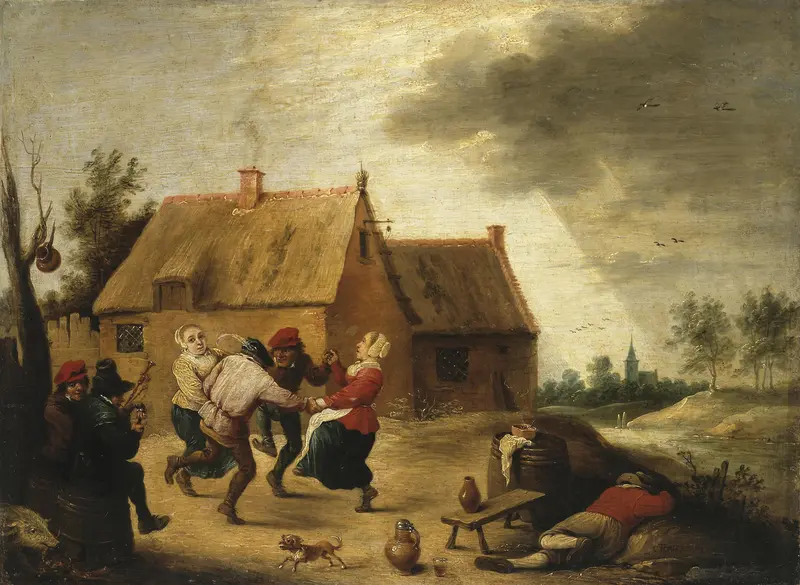
Dancing Peasants
Abraham Teniers
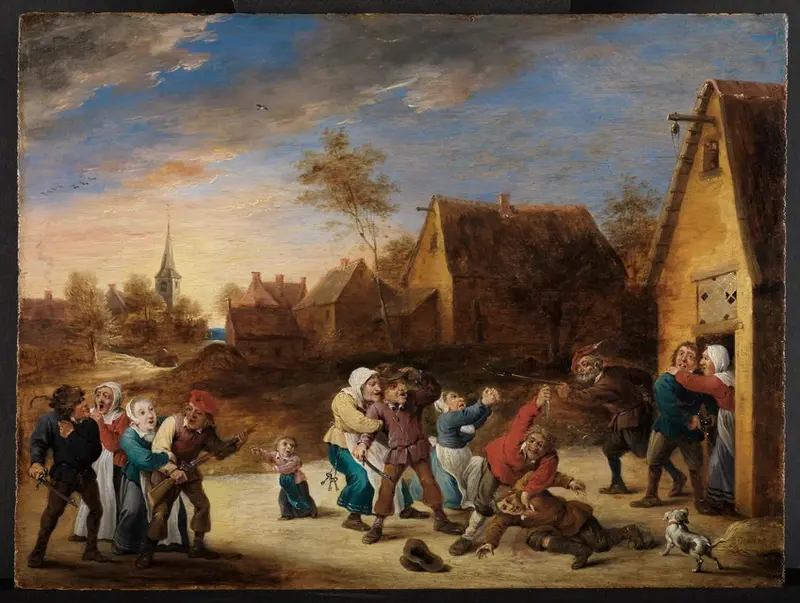
Brawling peasants in front of a tavern
Abraham Teniers
Rural feast
Abraham Teniers
Village kermesse with peasants dancing
Abraham Teniers
Landscape with Cottages
Abraham Teniers
Barbershop with monkeys and cats
Abraham Teniers
Tabakskollegium with monkeys
Abraham Teniers
More Genre Scene Art

Banquet of the Officers of the St George Civic Guard
Frans Hals

Rembrandt and Saskia in the Scene of the Prodigal Son
Rembrandt van Rijn

Bal du moulin de la Galette
Pierre-Auguste Renoir

Quadrille at the Moulin Rouge
Henri de Toulouse-Lautrec

A Burial at Ornans
Gustave Courbet

When Will You Marry?
Paul Gauguin