
Tabakskollegium with monkeys — History & Facts
A room full of monkeys, dressed and gathered as if for a serious gentlemen’s club, instantly unsettles and entertains the viewer. The scene brims with activity: a table set for tobacco and drink, a candle burning at its center, and every corner alive with mischief. The monkeys mimic human rituals—smoking, playing cards, pouring drinks—yet their wide-eyed expressions and restless gestures betray the farce.
The painter’s eye for detail is sharp: the glint of glassware, the scattered playing cards, the checkerboard underfoot. Light pours in from the tall windows, catching the sheen of fur and the folds of velvet, while the rich, patterned walls and pictures within pictures deepen the sense of a world turned upside down. This kind of satirical painting flourished in the 17th century, when artists across Flanders delighted in “singerie”—scenes of monkeys aping human folly. These works poked fun at vanity, greed, and social pretension, often for collectors who enjoyed their wit and moral edge.
Tabakskollegium with monkeys by Abraham Teniers, painted in the 1600s and now in the Kunsthistorisches Museum, stands firmly in this tradition. History has kept few traces of this specific painting’s journey, but its lively cast and layered setting invite us to look closer and laugh—perhaps a little uneasily—at the world it mirrors.
More Artworks by Abraham Teniers

A wedding scene in a village
Abraham Teniers
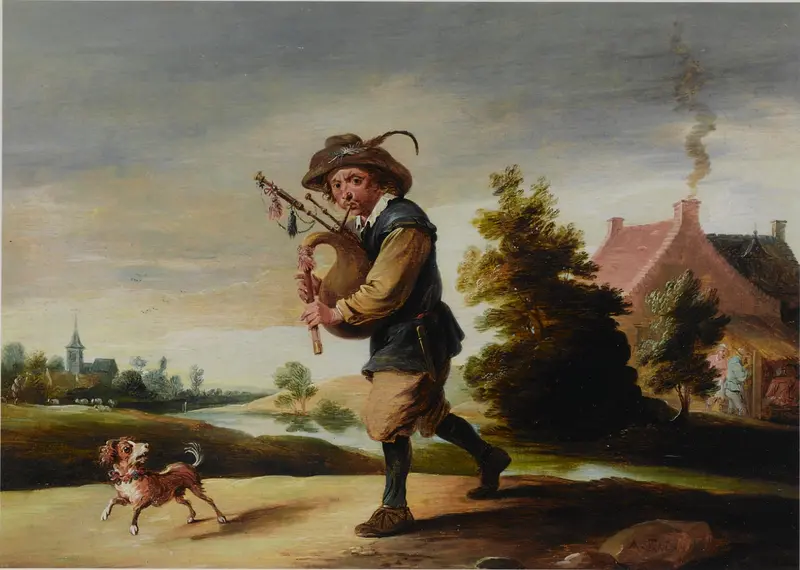
A boor playing a bagpipe in a landscape
Abraham Teniers
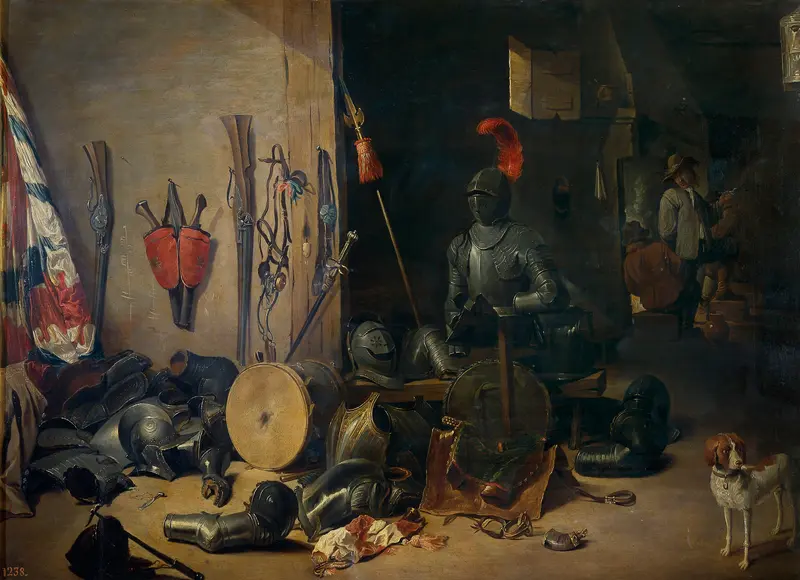
Le Corps de Garde
Abraham Teniers
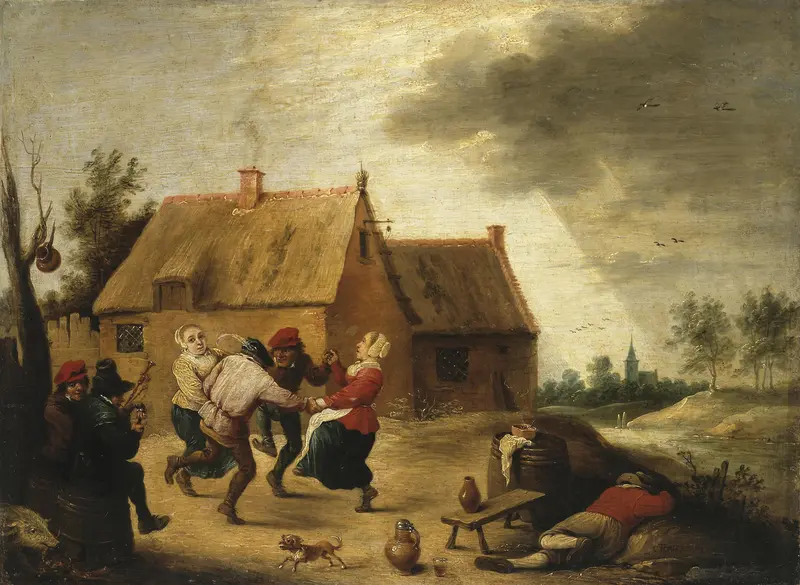
Dancing Peasants
Abraham Teniers
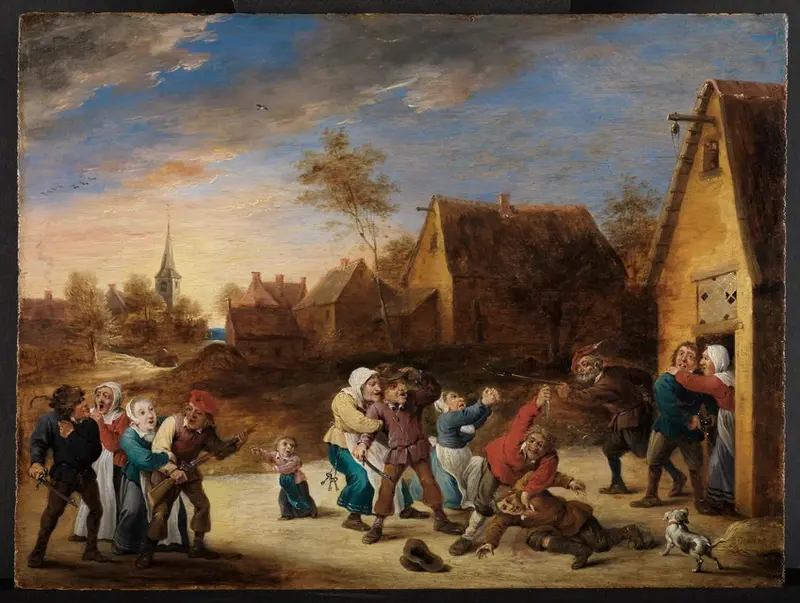
Brawling peasants in front of a tavern
Abraham Teniers
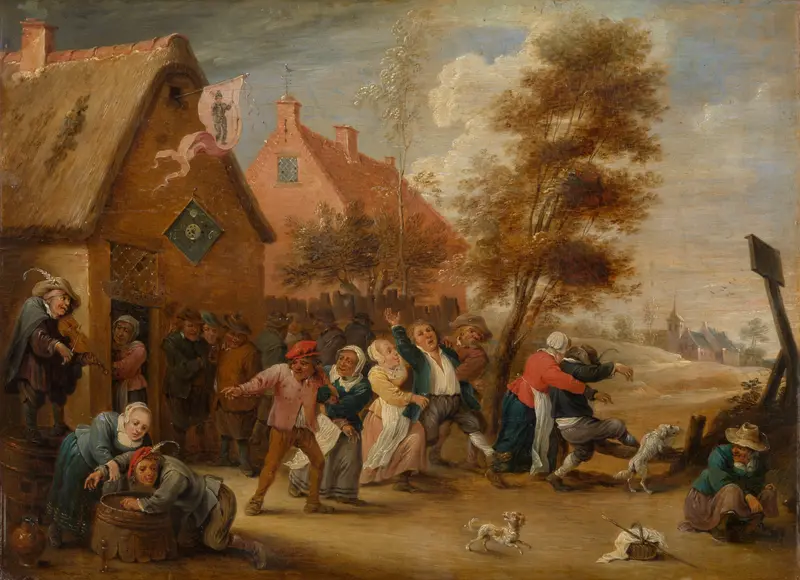
Rural feast
Abraham Teniers
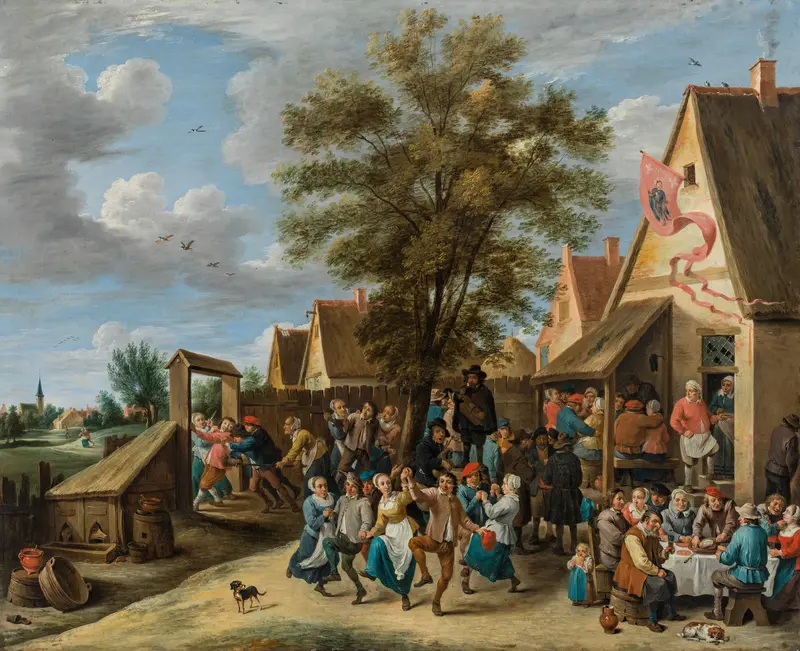
Village kermesse with peasants dancing
Abraham Teniers
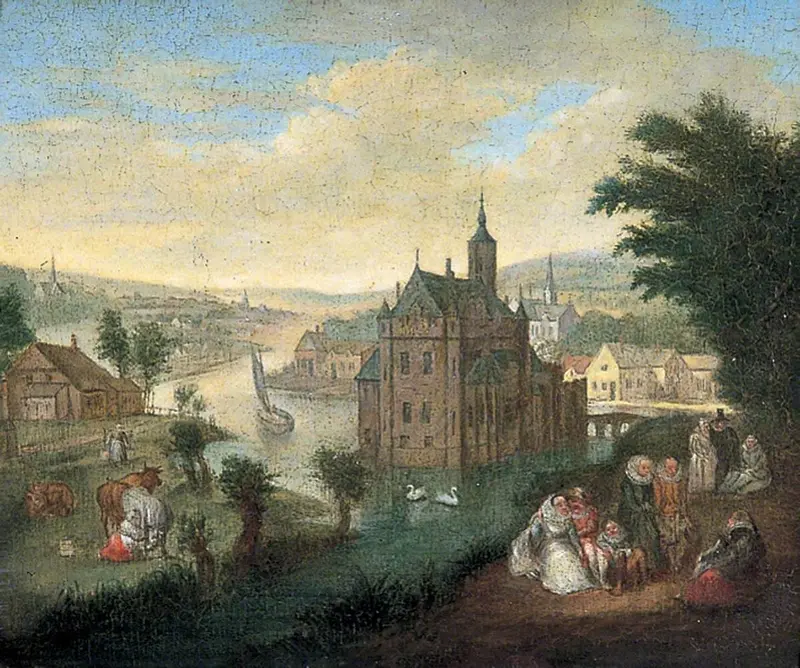
Landscape with Cottages
Abraham Teniers
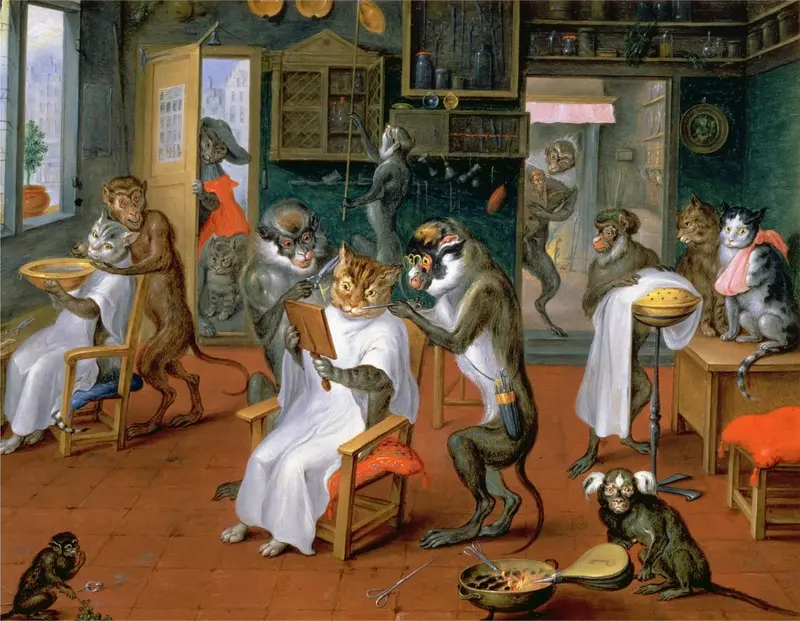
Barbershop with monkeys and cats
Abraham Teniers
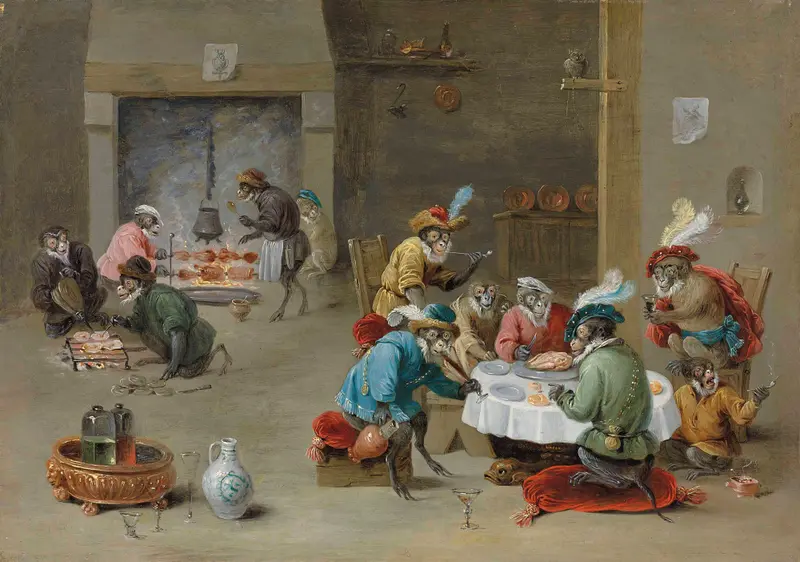
Monkeys smoking, drinking and preparing a meal in a kitchen
Abraham Teniers
More Genre Scene Art

Banquet of the Officers of the St George Civic Guard
Frans Hals

Rembrandt and Saskia in the Scene of the Prodigal Son
Rembrandt van Rijn

Bal du moulin de la Galette
Pierre-Auguste Renoir

Quadrille at the Moulin Rouge
Henri de Toulouse-Lautrec

A Burial at Ornans
Gustave Courbet

When Will You Marry?
Paul Gauguin