
Dancing Peasants — History & Facts
What catches the eye first is the wild, looping energy of the dancers at the heart of Dancing Peasants. Their feet barely touch the ground as they whirl in a ring, hands linked, faces flushed with laughter or surprise. The painter, Abraham Teniers, leads us into the scene with a shaft of sunlight that breaks through heavy clouds, spotlighting the dancers against the humble thatched cottage.
Every detail is chosen for effect: the fiddlers perched on barrels, the little dog barking at the commotion, and the lone figure collapsed in sleep beside a jug—each one a note in this rustic symphony. The palette is earthy, with ochres and browns anchoring the scene, but it’s the sudden flare of red hats and skirts that keeps the eye moving, restless as the dance itself. Works like this flourished in the first half of the 1660s, when scenes of peasant revelry were prized both for their humor and their sly social commentary. In the Low Countries, such images were collected by city-dwellers eager for glimpses of rural life—sometimes with affection, sometimes with a hint of mockery.
Abraham Teniers belonged to a family of painters who specialized in these lively village scenes, and his works often found their way into collections far from the fields they depicted. Today, this painting resides in the Hermitage Museum, a reminder of how the laughter and music of a village feast could travel across centuries and borders, inviting us to step closer and join the circle.
More Artworks by Abraham Teniers

A wedding scene in a village
Abraham Teniers
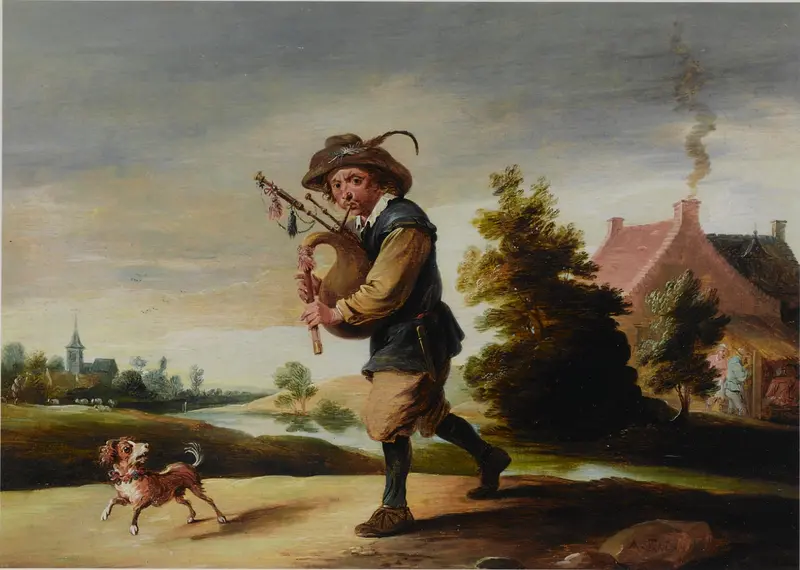
A boor playing a bagpipe in a landscape
Abraham Teniers
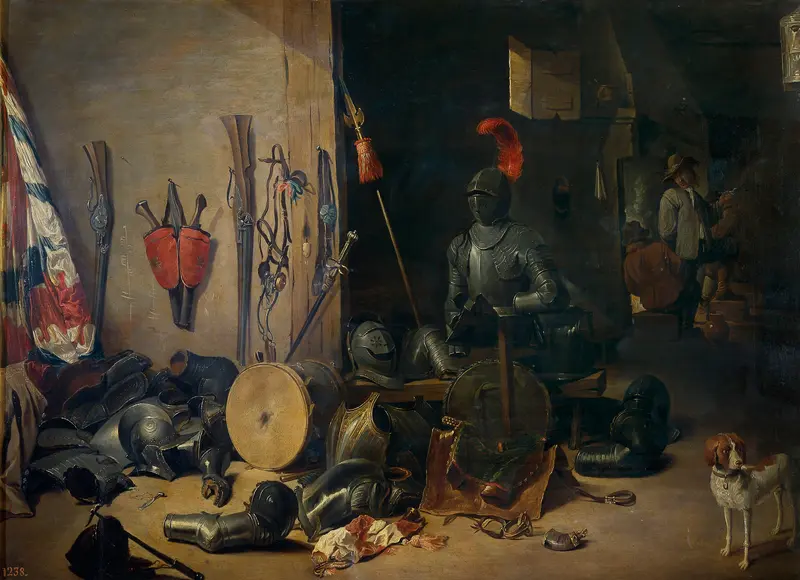
Le Corps de Garde
Abraham Teniers
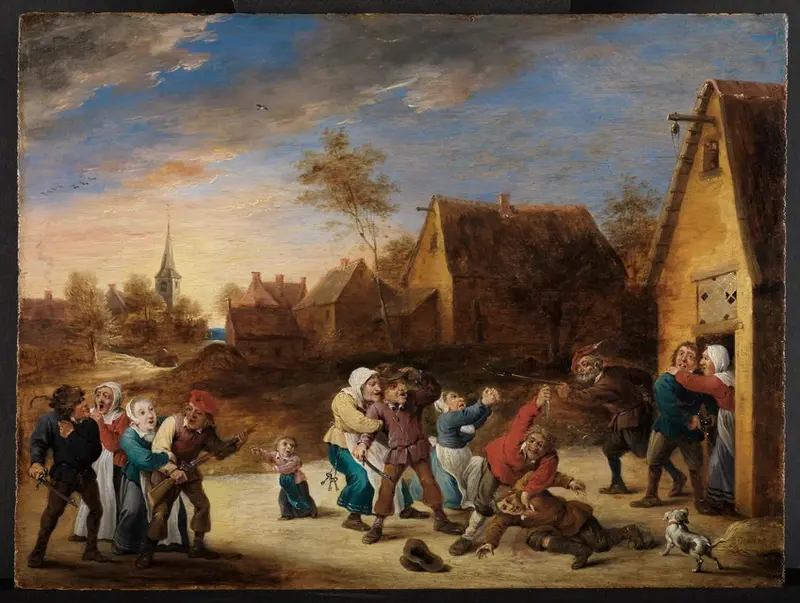
Brawling peasants in front of a tavern
Abraham Teniers
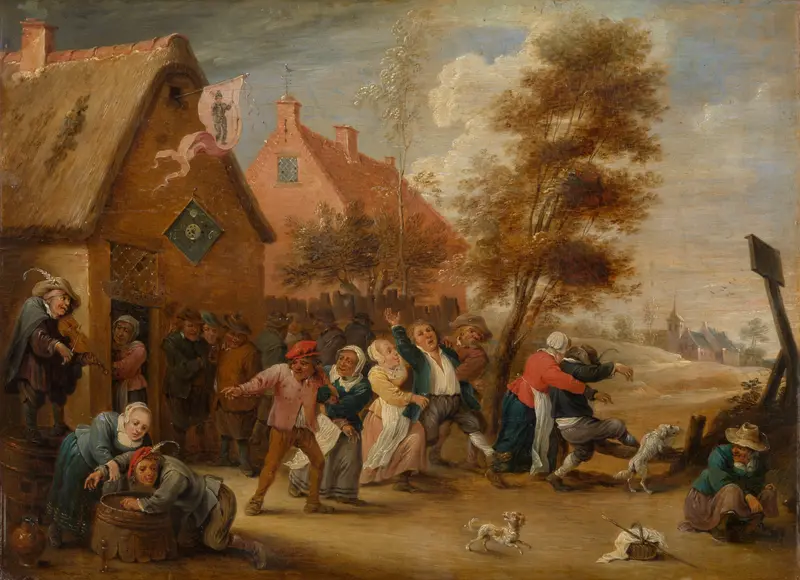
Rural feast
Abraham Teniers
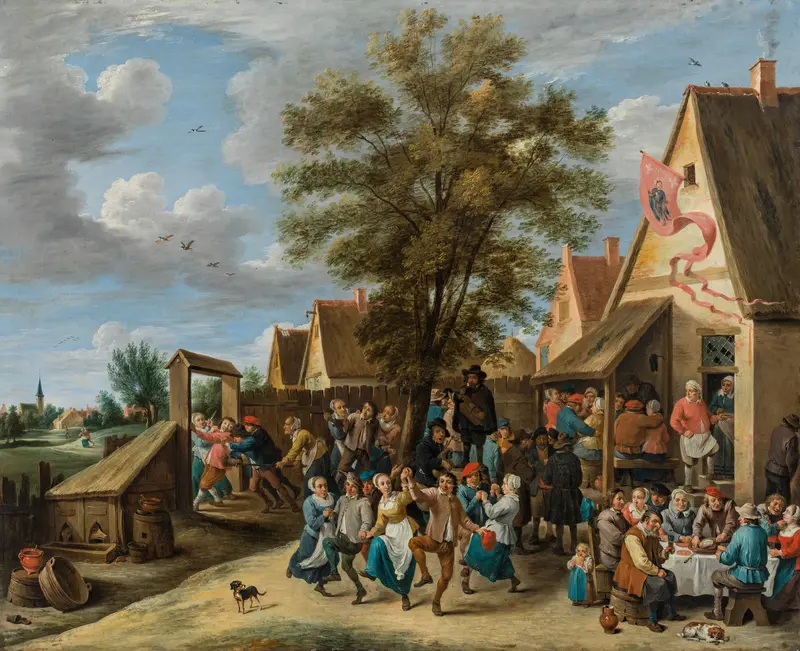
Village kermesse with peasants dancing
Abraham Teniers
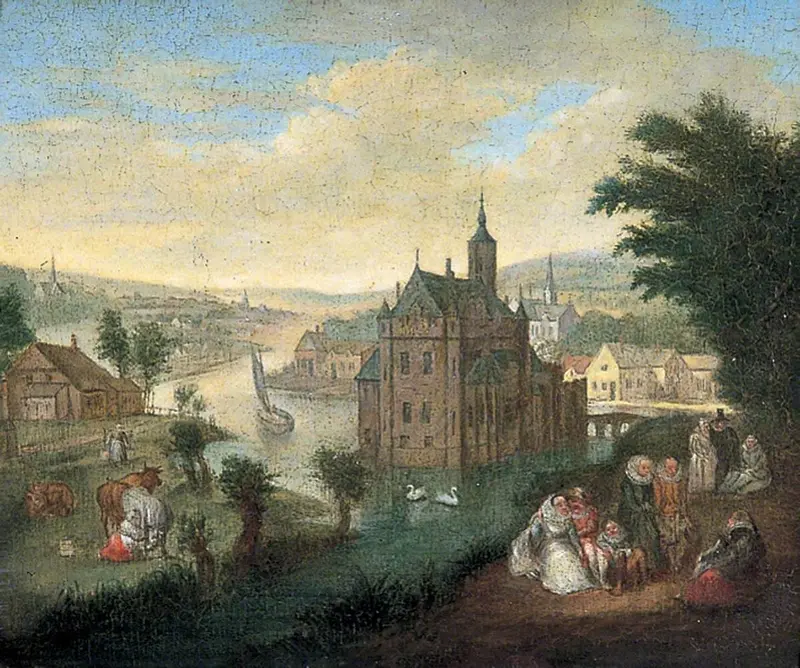
Landscape with Cottages
Abraham Teniers
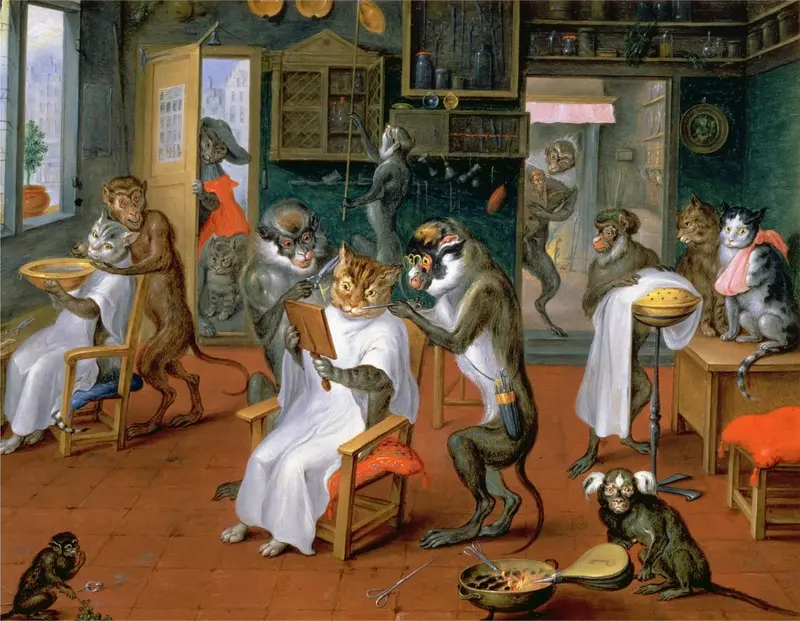
Barbershop with monkeys and cats
Abraham Teniers
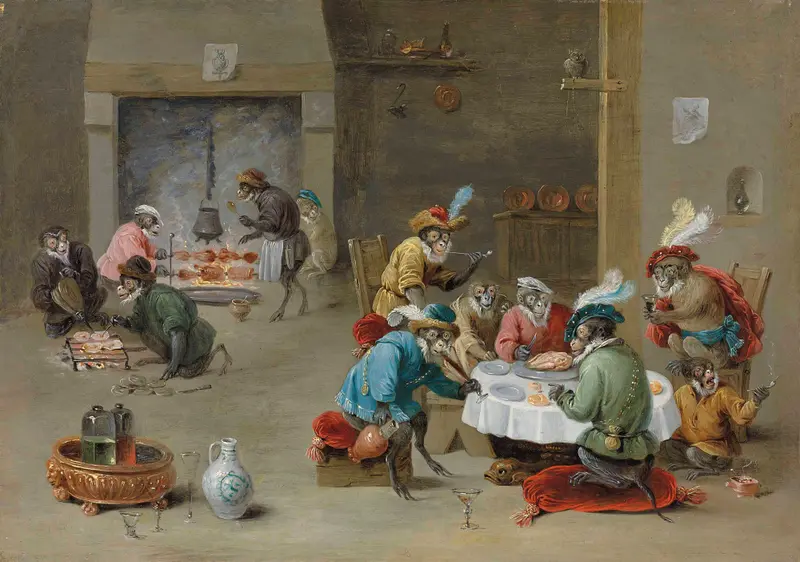
Monkeys smoking, drinking and preparing a meal in a kitchen
Abraham Teniers
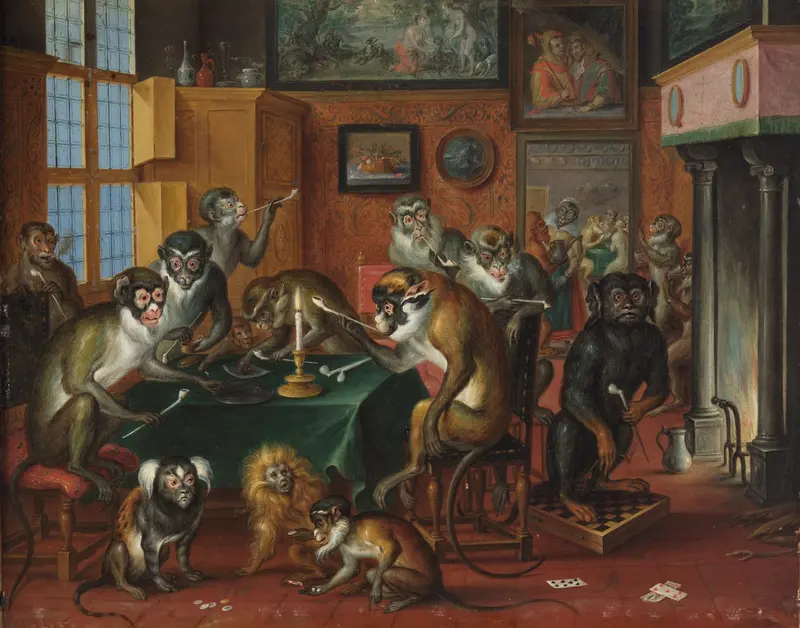
Tabakskollegium with monkeys
Abraham Teniers
More Genre Scene Art

Banquet of the Officers of the St George Civic Guard
Frans Hals

Rembrandt and Saskia in the Scene of the Prodigal Son
Rembrandt van Rijn

Bal du moulin de la Galette
Pierre-Auguste Renoir

Quadrille at the Moulin Rouge
Henri de Toulouse-Lautrec

A Burial at Ornans
Gustave Courbet

When Will You Marry?
Paul Gauguin