
Le Corps de Garde — History & Facts
A riot of armor and weaponry sprawls across the foreground, as if the aftermath of a long campaign or the quiet before a new one. The eye is drawn first to the gleaming suit of armor, propped up and crowned with a jaunty red plume, its empty gaze fixed on the viewer. Scattered drums, breastplates, and gauntlets suggest a story of soldiers at rest, their tools momentarily abandoned.
To the right, a dog stands alert, the only living creature in the immediate scene, its presence a reminder of loyalty and vigilance amid the detritus of war. In the shadowed background, figures gather around a hearth, their relaxed postures a striking contrast to the martial chaos in the foreground. The light, filtering in from the left, picks out the metallic sheen of the armor and the folds of a boldly patterned flag, setting a mood that is both expectant and oddly serene. Painted between 1650 and 1670, Le Corps de Garde by Abraham Teniers belongs to a world fascinated by the rituals and realities of military life.
This kind of guardroom scene flourished in the seventeenth century, especially in the Low Countries, where artists catered to a clientele eager for glimpses into the everyday lives of soldiers—whether as cautionary tales, celebrations of valor, or subtle satires. The careful rendering of objects, from firearms to drums, speaks to a period when such accoutrements were both familiar and freighted with meaning. Today, the painting resides in the Museo Nacional del Prado, a silent witness to a vanished era, inviting viewers to step closer and imagine the stories behind every battered helmet and idle sword.
More Artworks by Abraham Teniers

A wedding scene in a village
Abraham Teniers
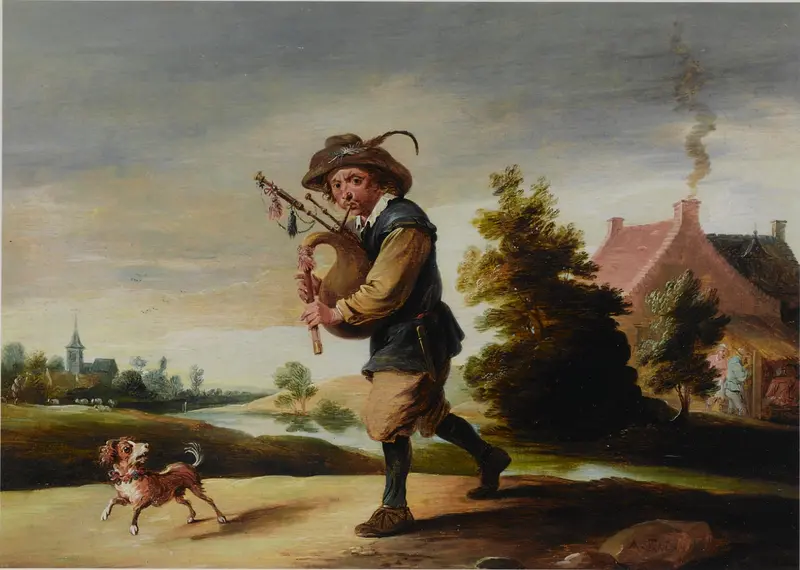
A boor playing a bagpipe in a landscape
Abraham Teniers
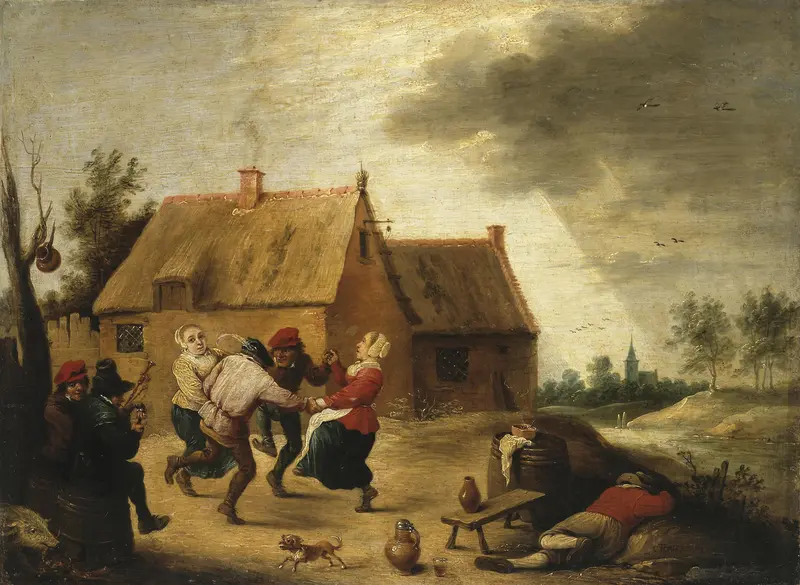
Dancing Peasants
Abraham Teniers
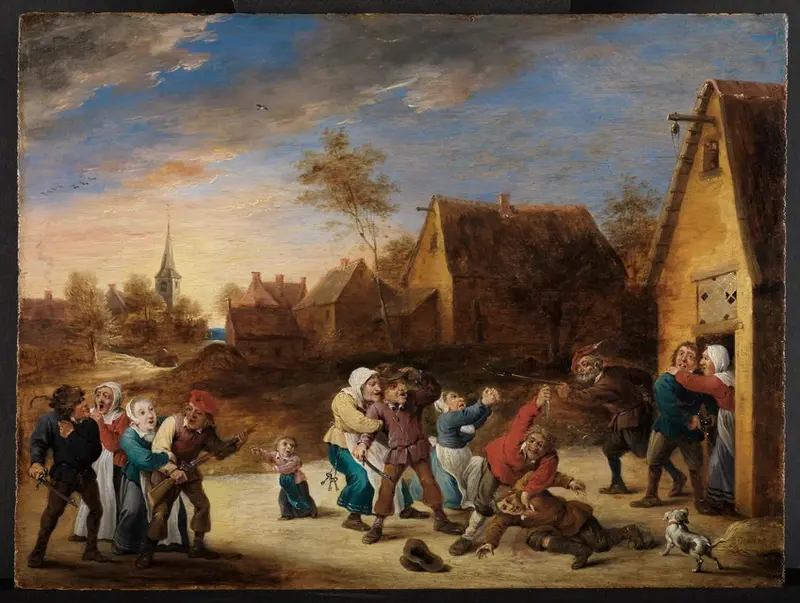
Brawling peasants in front of a tavern
Abraham Teniers
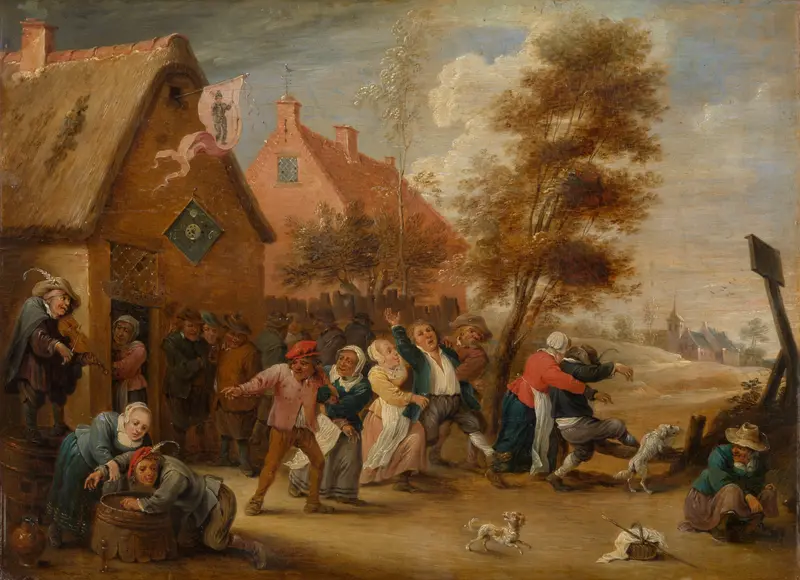
Rural feast
Abraham Teniers
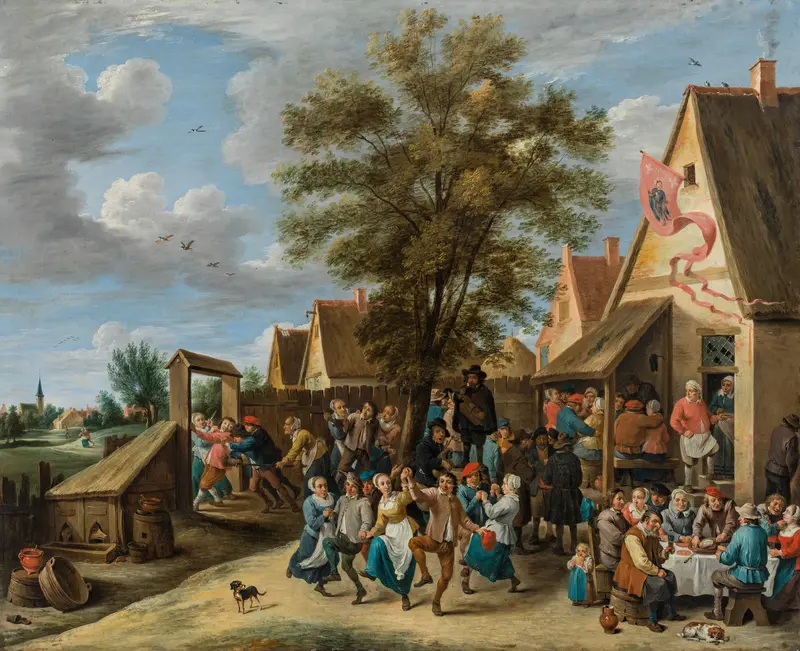
Village kermesse with peasants dancing
Abraham Teniers
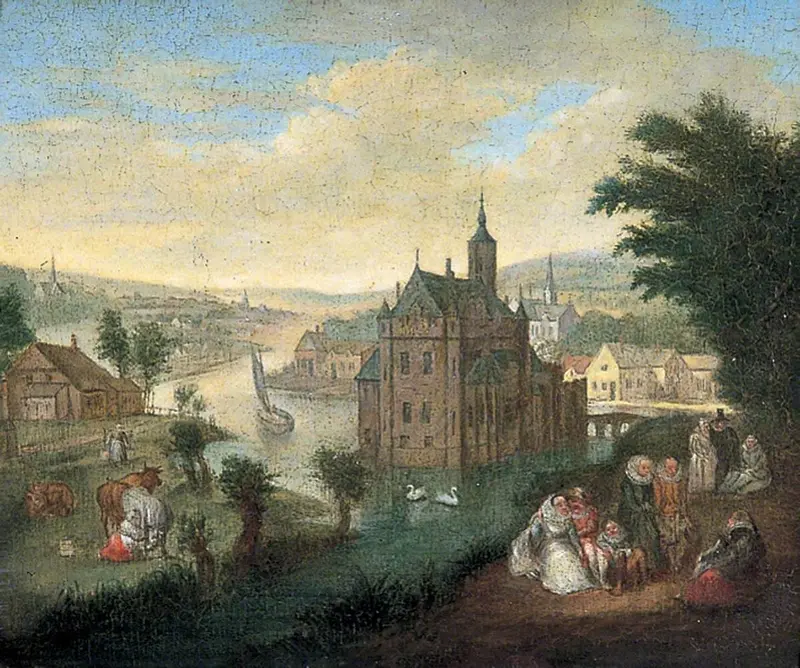
Landscape with Cottages
Abraham Teniers
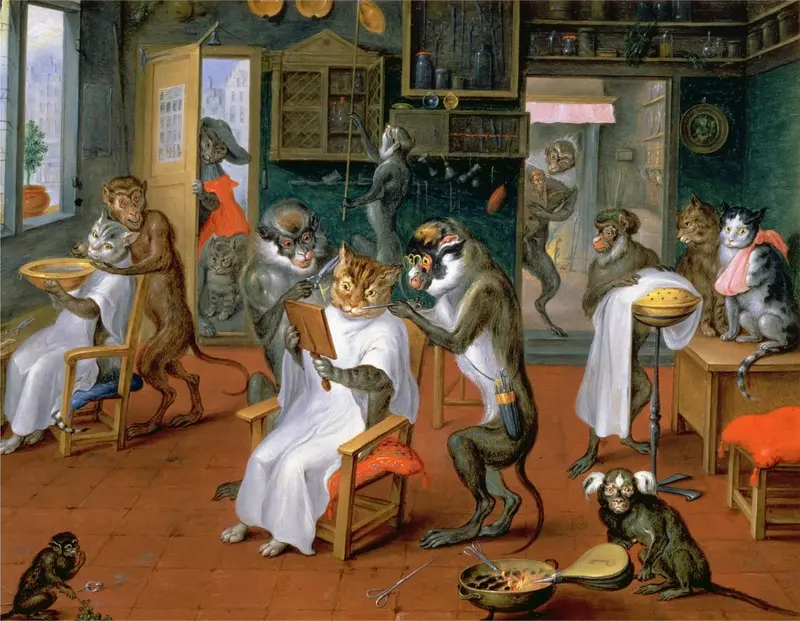
Barbershop with monkeys and cats
Abraham Teniers
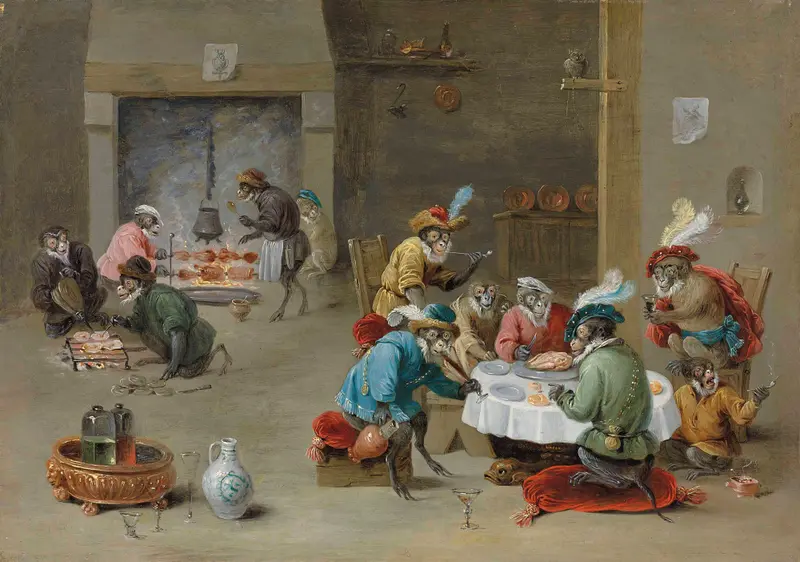
Monkeys smoking, drinking and preparing a meal in a kitchen
Abraham Teniers
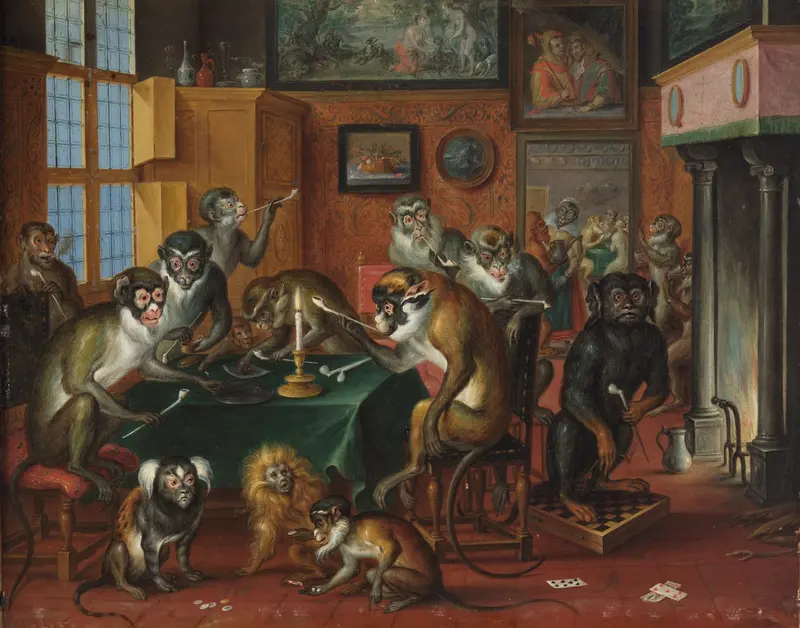
Tabakskollegium with monkeys
Abraham Teniers
More Genre Scene Art

Banquet of the Officers of the St George Civic Guard
Frans Hals

Rembrandt and Saskia in the Scene of the Prodigal Son
Rembrandt van Rijn

Bal du moulin de la Galette
Pierre-Auguste Renoir

Quadrille at the Moulin Rouge
Henri de Toulouse-Lautrec

A Burial at Ornans
Gustave Courbet

When Will You Marry?
Paul Gauguin