
Rural feast — History & Facts
The first thing to catch the eye in Rural feast is the swirl of energy that seems to tumble out of the tavern and spill across the earth. Laughter, music, and tipsy bravado animate the scene, each figure caught in the middle of a gesture: a fiddler plays from his perch, dancers stagger arm-in-arm, and a woman leans over a barrel, perhaps helping a companion regain composure after too much revelry. The palette is warm and earthy, with ochres and russets echoing the thatched roofs and autumnal trees, while the open sky and distant church tower suggest a world both festive and anchored in daily rural life.
Every detail is a clue to the mood: the fluttering banner above the door, the playful dogs underfoot, and the way the light falls on flushed faces and tangled limbs, inviting the viewer to join the celebration—or at least to smile at its chaos. Painted in 1641, this work by Abraham Teniers belongs to a lively tradition of Flemish genre painting, where scenes of peasant merrymaking were both entertainment and moral lesson for the urban collectors who commissioned them. Such images, popular in the seventeenth century, offered a window into village life, sometimes with a wink of satire, sometimes with a note of warning about excess. While little is recorded about the specific journey of this painting, its presence in a modern collection speaks to the enduring fascination with these glimpses of everyday joy and folly.
Look again at the faces—each one a story, each gesture a fragment of a larger, noisy celebration that continues to echo across centuries.
More Artworks by Abraham Teniers

A wedding scene in a village
Abraham Teniers
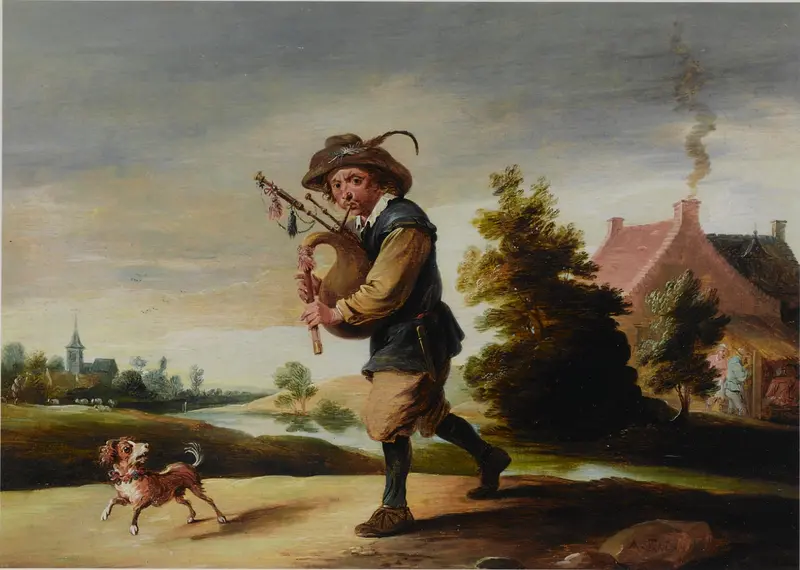
A boor playing a bagpipe in a landscape
Abraham Teniers
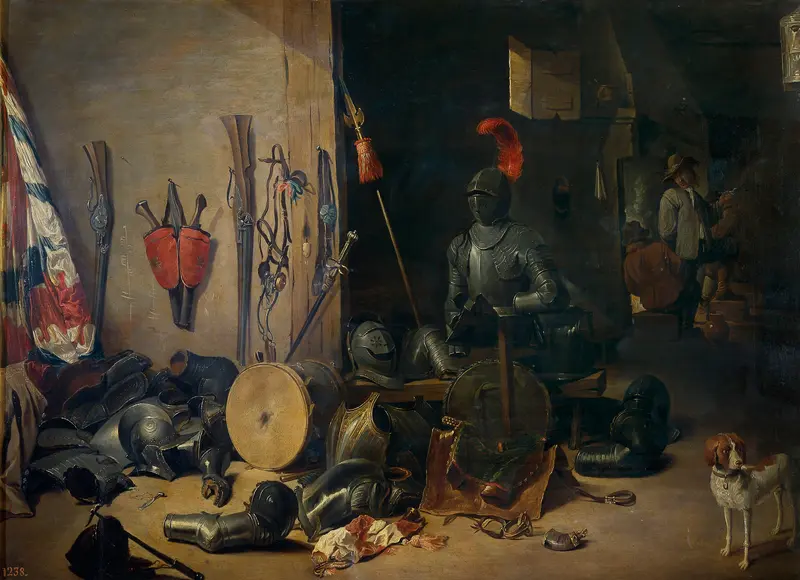
Le Corps de Garde
Abraham Teniers
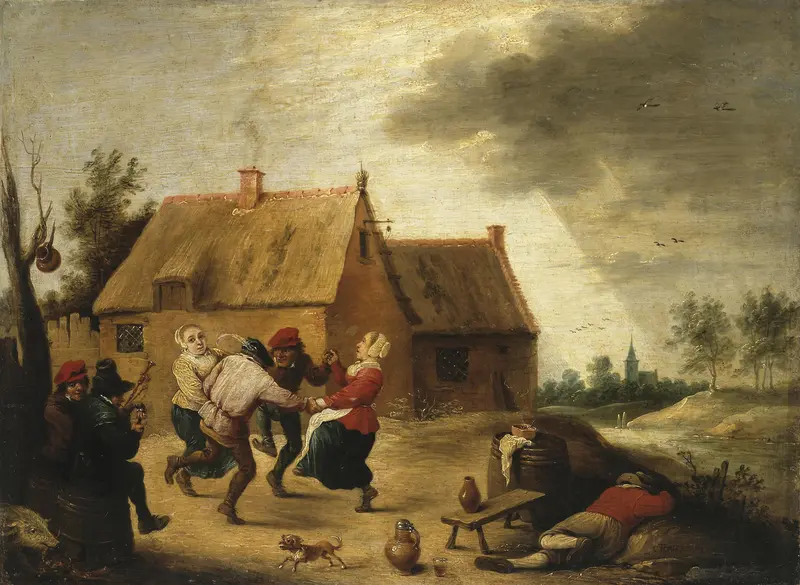
Dancing Peasants
Abraham Teniers
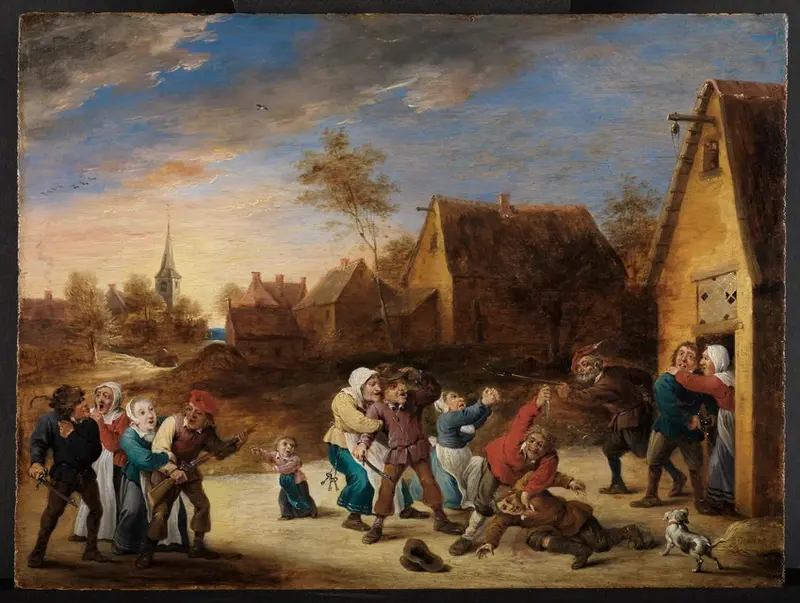
Brawling peasants in front of a tavern
Abraham Teniers
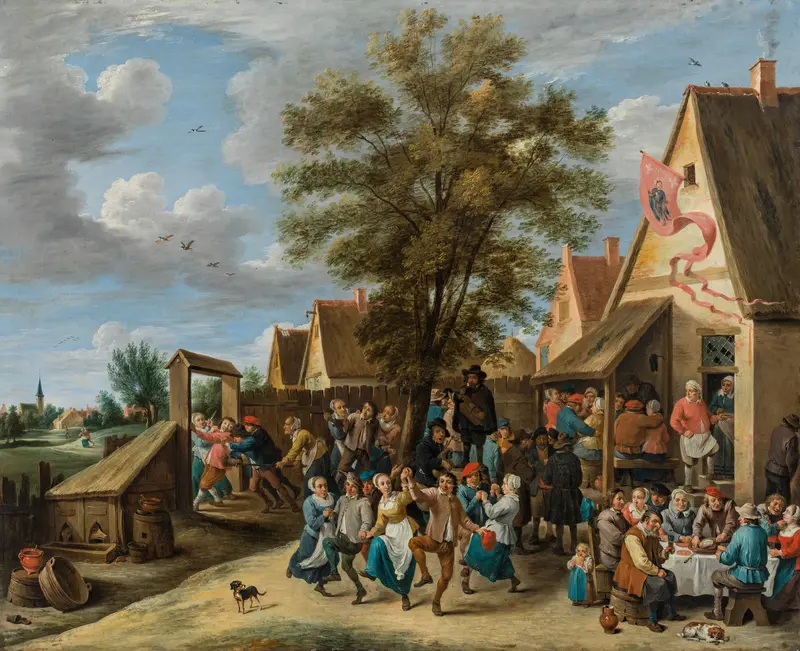
Village kermesse with peasants dancing
Abraham Teniers
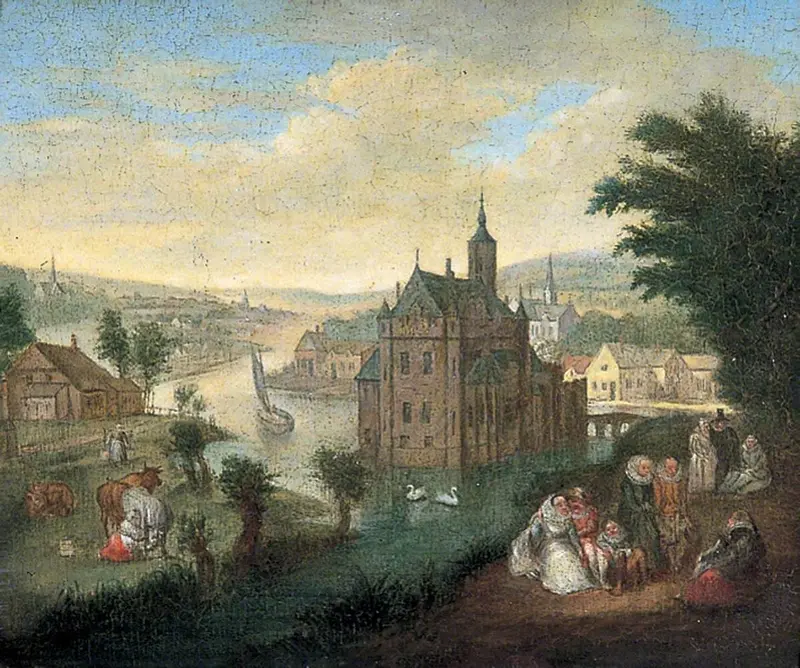
Landscape with Cottages
Abraham Teniers
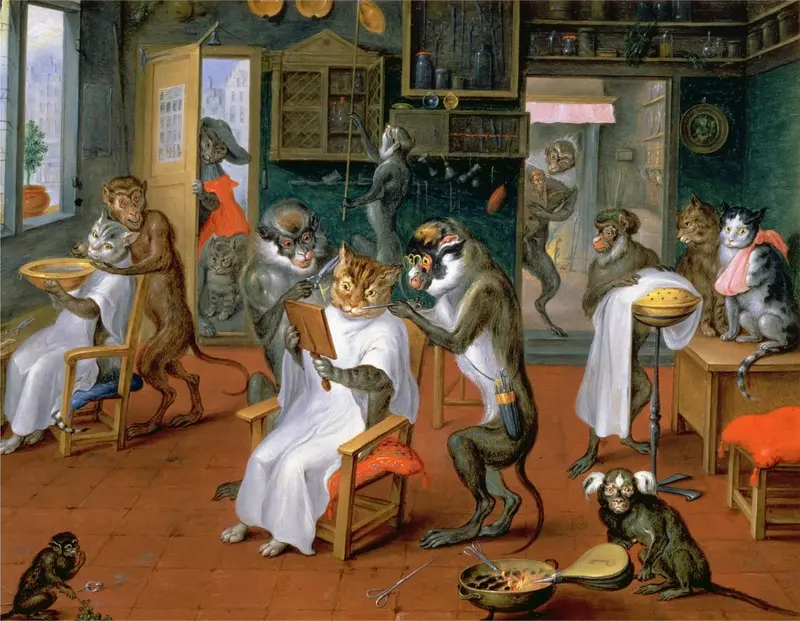
Barbershop with monkeys and cats
Abraham Teniers
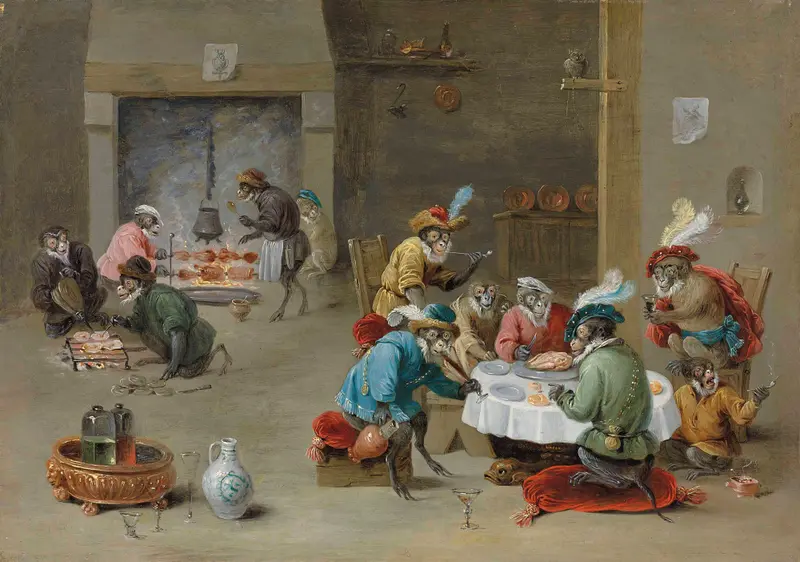
Monkeys smoking, drinking and preparing a meal in a kitchen
Abraham Teniers
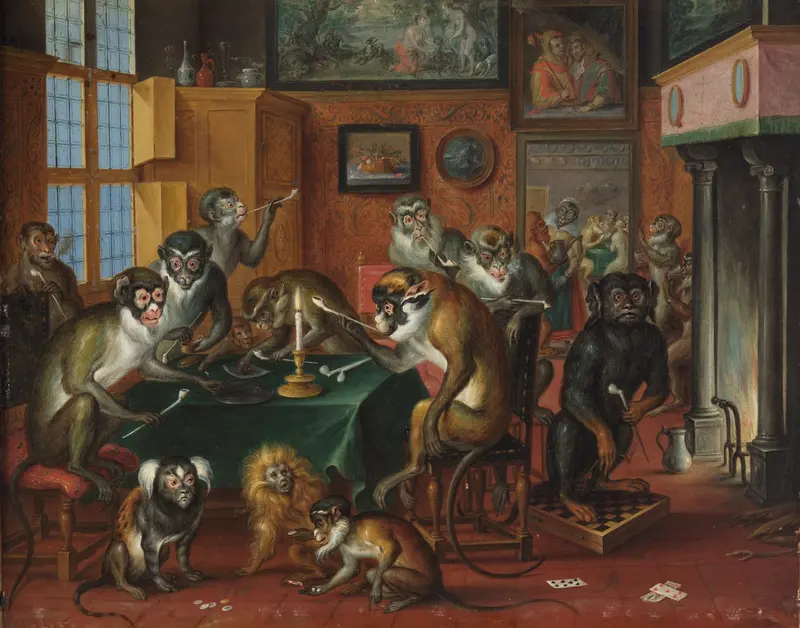
Tabakskollegium with monkeys
Abraham Teniers
More Genre Scene Art

Banquet of the Officers of the St George Civic Guard
Frans Hals

Rembrandt and Saskia in the Scene of the Prodigal Son
Rembrandt van Rijn

Bal du moulin de la Galette
Pierre-Auguste Renoir

Quadrille at the Moulin Rouge
Henri de Toulouse-Lautrec

A Burial at Ornans
Gustave Courbet

When Will You Marry?
Paul Gauguin