
Barbershop with monkeys and cats — History & Facts
What first arrests the eye in Barbershop with monkeys and cats is the topsy-turvy world it conjures: monkeys in the roles of barbers, cats as their pampered clients, and a room bustling with the comic energy of a scene turned upside down. The painter, Abraham Teniers, delights in the details of this animal masquerade—each gesture and prop is carefully chosen to mimic, and mock, the rituals of human grooming. The cats, draped in white smocks, submit with a mix of resignation and feline disdain, while the monkeys, spectacles perched on noses and razors in hand, lean in with professional seriousness.
Light from the tall window glances off the tiled floor, illuminating the fur and whiskers of the cast, and guiding the viewer’s gaze from one vignette to the next: a monkey lathering a cat, another preparing a steaming towel, a kitten awaiting its turn with comic trepidation. This painting belongs to a tradition that flourished in seventeenth-century Flanders, where artists delighted in “singerie”—scenes of monkeys aping human behavior. Such works were both playful and pointed, poking fun at the vanities and follies of contemporary society. In the bustling cities of the Low Countries, where barbershops were social hubs and satire was a popular sport, these paintings found eager patrons among the urban elite.
The work, dated between 1633 and 1667 and now in the Kunsthistorisches Museum Wien, Bilddatenbank, is a testament to that world—a moment when art reveled in wit and observation, and when even a barbershop could become a stage for the absurd. Look again at the faces: the humor is sharp, but so is the sense of a world always on the verge of slipping into chaos.
More Artworks by Abraham Teniers

A wedding scene in a village
Abraham Teniers
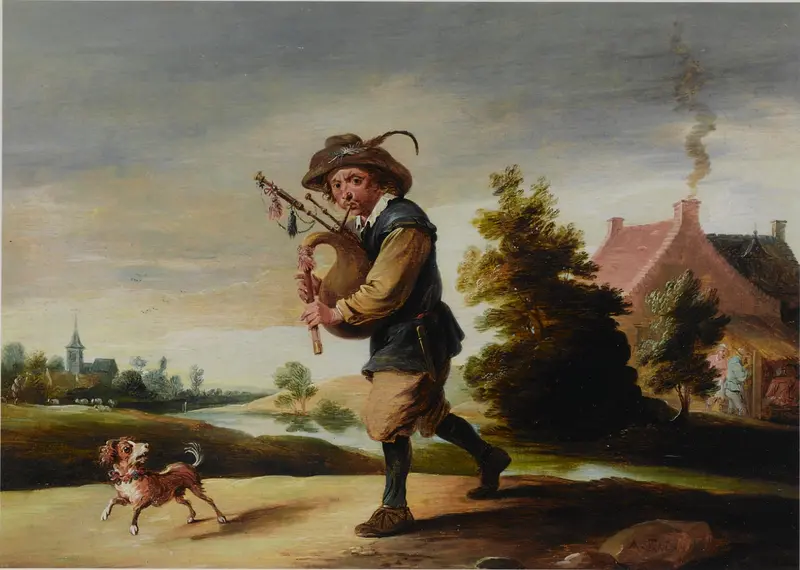
A boor playing a bagpipe in a landscape
Abraham Teniers
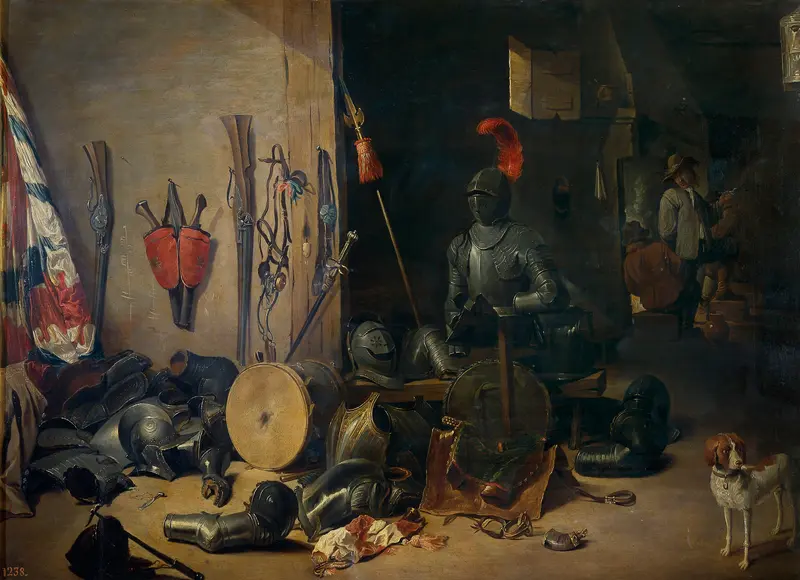
Le Corps de Garde
Abraham Teniers
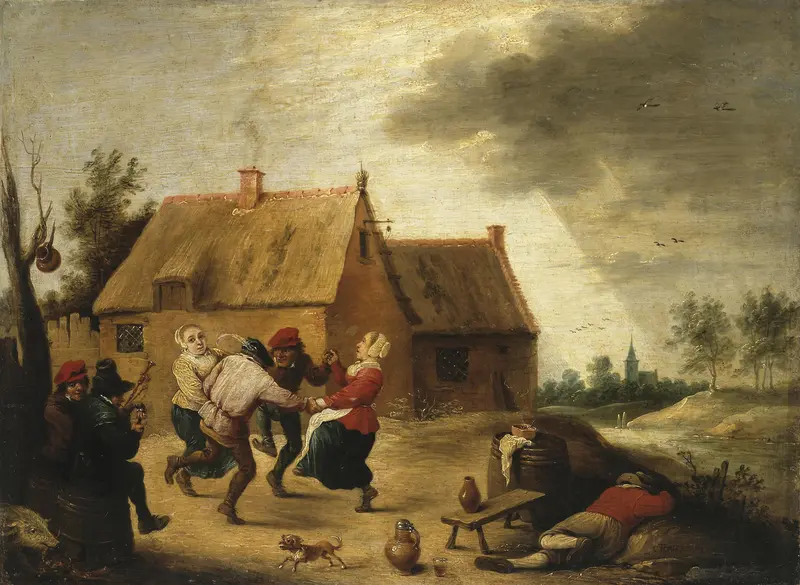
Dancing Peasants
Abraham Teniers
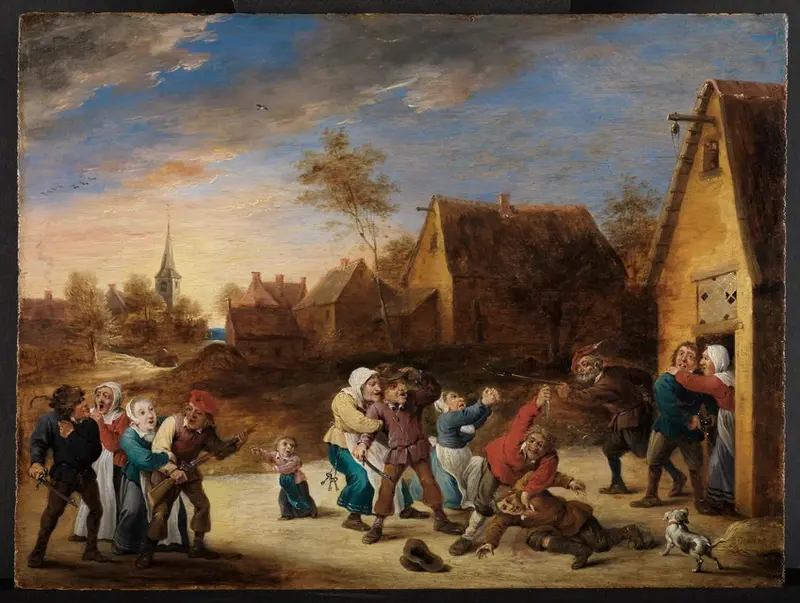
Brawling peasants in front of a tavern
Abraham Teniers
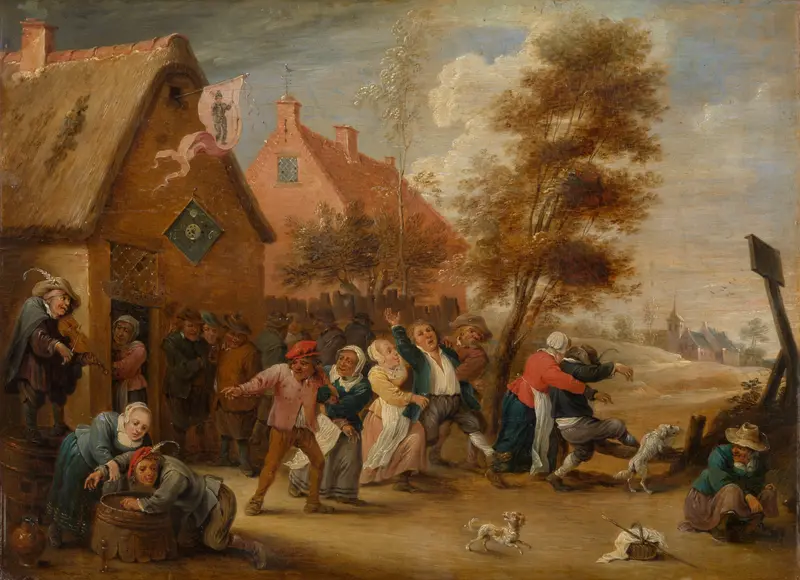
Rural feast
Abraham Teniers
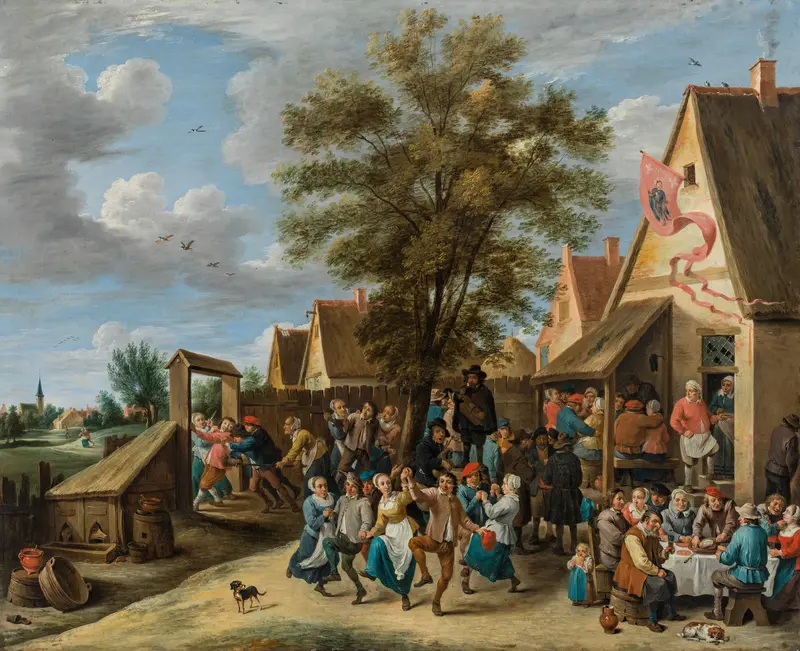
Village kermesse with peasants dancing
Abraham Teniers
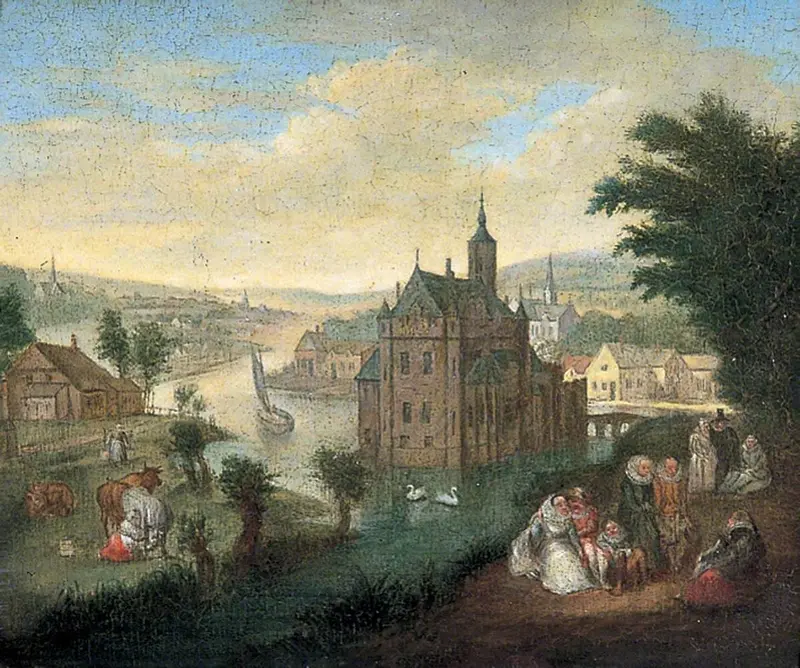
Landscape with Cottages
Abraham Teniers
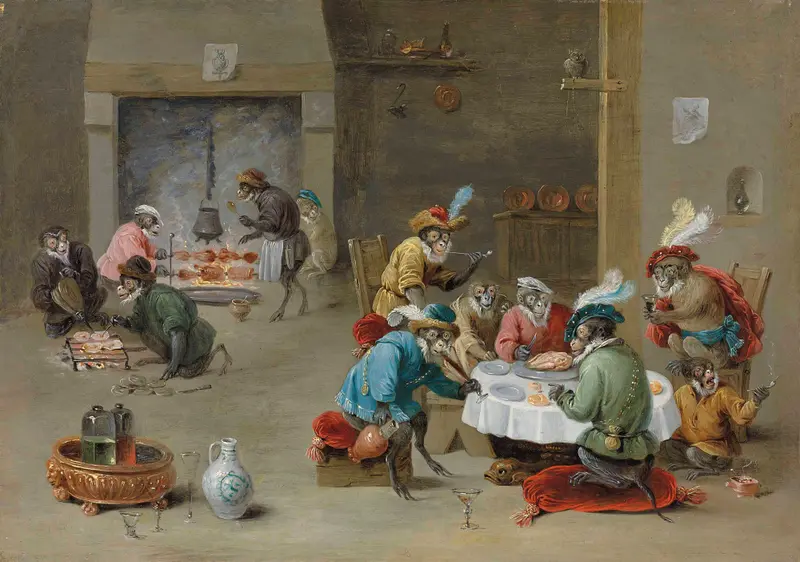
Monkeys smoking, drinking and preparing a meal in a kitchen
Abraham Teniers
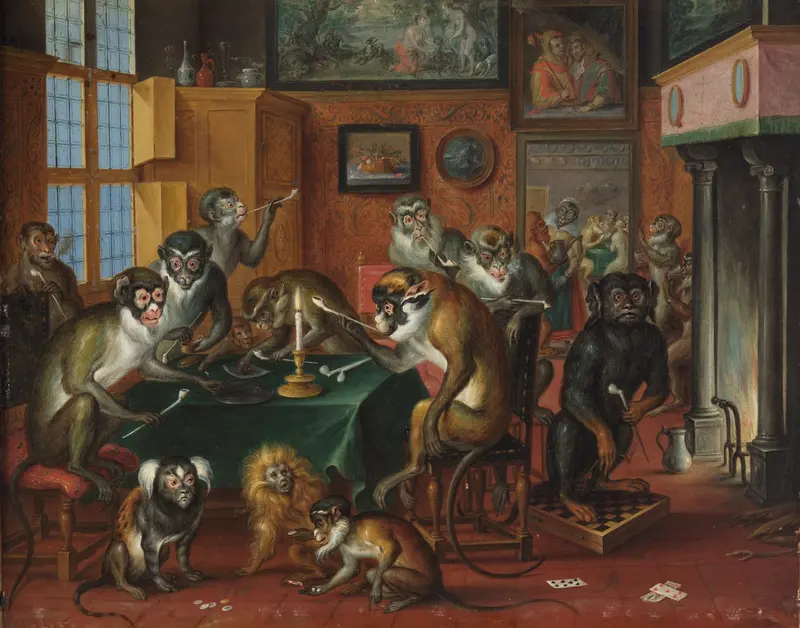
Tabakskollegium with monkeys
Abraham Teniers
More Genre Scene Art

Banquet of the Officers of the St George Civic Guard
Frans Hals

Rembrandt and Saskia in the Scene of the Prodigal Son
Rembrandt van Rijn

Bal du moulin de la Galette
Pierre-Auguste Renoir

Quadrille at the Moulin Rouge
Henri de Toulouse-Lautrec

A Burial at Ornans
Gustave Courbet

When Will You Marry?
Paul Gauguin