
A House of Stout Logs — History & Facts
What first catches the eye in A House of Stout Logs is the choreography of labor, rendered in sunlit ochres and sharp blue. The figures—caught mid-action—move as one organism, each gesture a piece of a larger rhythm. The workers’ white shirts glow against the stacked timber, their bodies angled with purpose, arms raised in the act of lifting, bracing, or hammering.
The diagonal beams slice through the composition, guiding your gaze from one figure to the next, while the sky’s clear blue carves out a sense of open air and possibility. The artist’s hand is visible in the rough, almost blocky outlines, echoing the solid heft of the logs themselves. Created in 1906, this painting belongs to a moment when artists across Finland and northern Europe were drawn to scenes of everyday life and national identity. Akseli Gallen-Kallela was a central figure in this movement, often celebrating the dignity of rural labor and the elemental connection between people and their land.
Works like this were rarely grand commissions; instead, they captured the quiet heroism of ordinary work, often intended for private collectors or local exhibitions. The painting now resides in a Finnish national collection, a testament to how such images—once humble—have become cherished records of a world in transition. Look again at the hands and beams: all the weight and promise of a new home, caught in a single afternoon’s light.
More Artworks by Akseli Gallen-Kallela
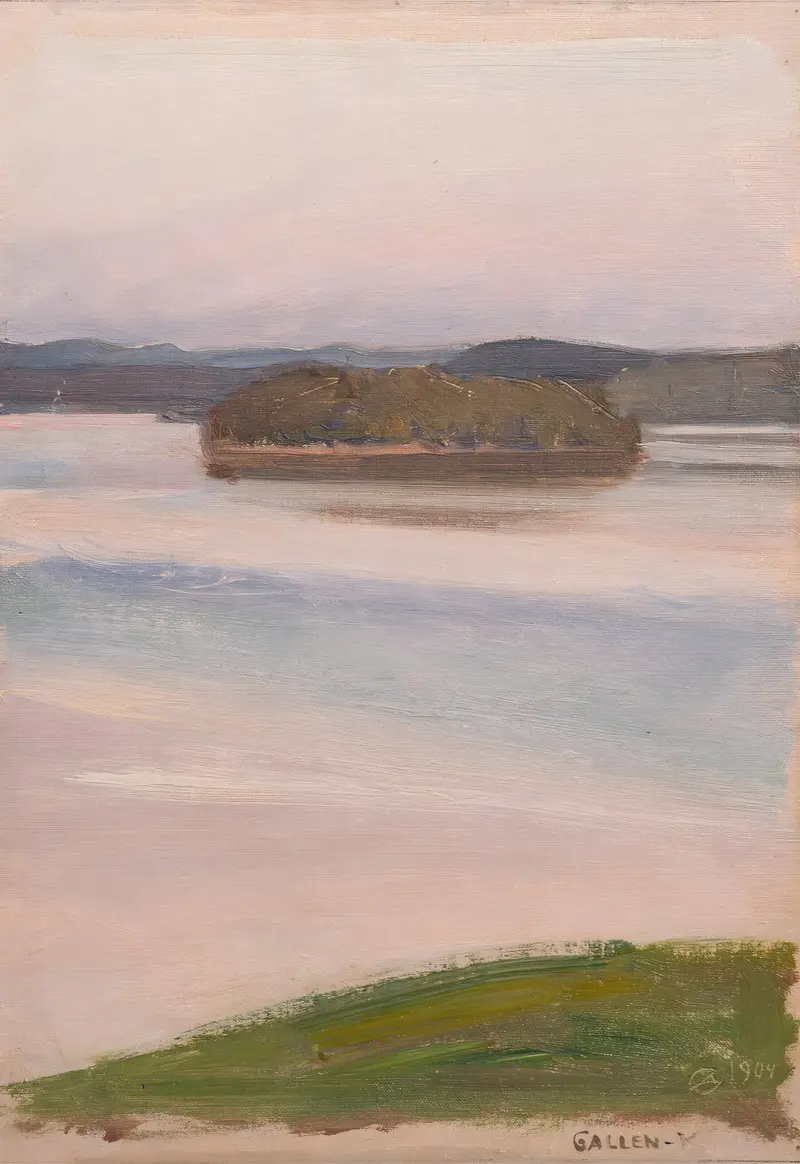
Lake Keitele
Akseli Gallen-Kallela
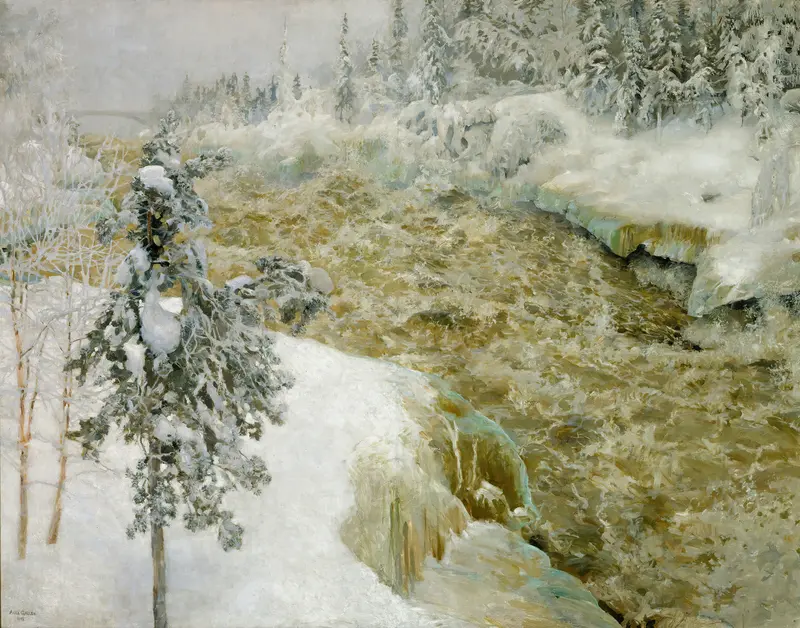
Imatra Falls in Snow ; Imatra in Winter
Akseli Gallen-Kallela
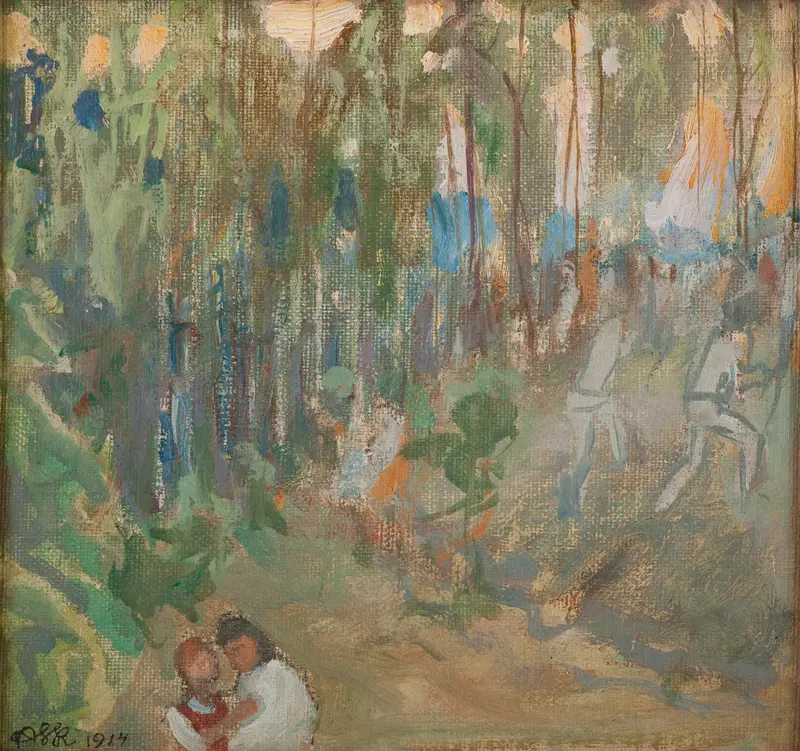
Vainovalkeat
Akseli Gallen-Kallela
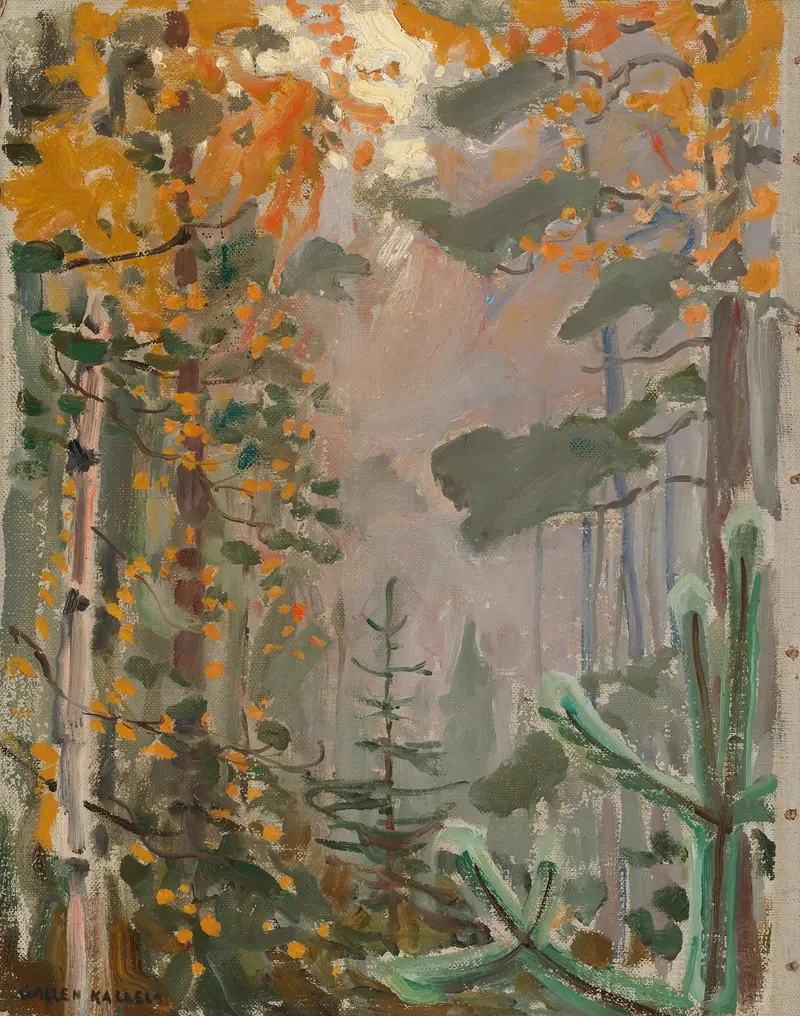
Autumn Landscape
Akseli Gallen-Kallela
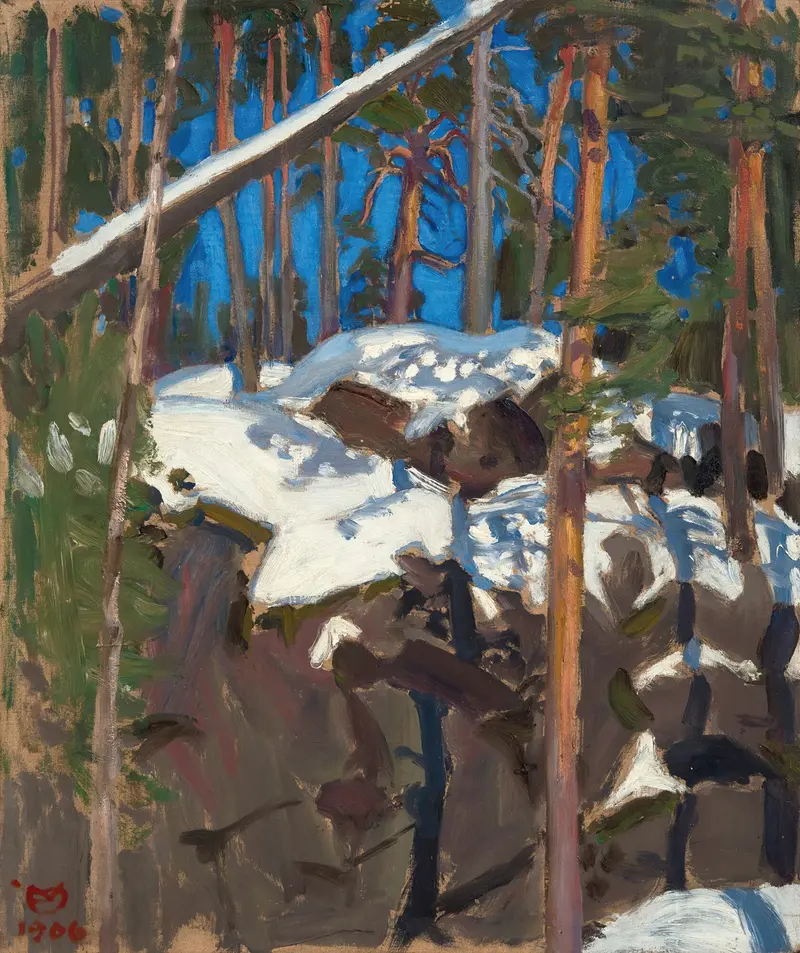
Spring Sun At Konginkangas
Akseli Gallen-Kallela
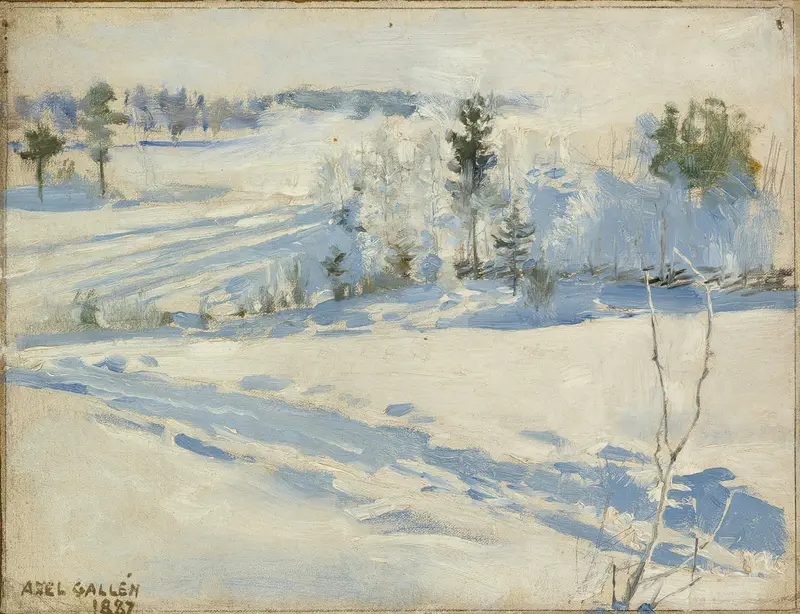
Winter Landscape
Akseli Gallen-Kallela

First Snow
Akseli Gallen-Kallela
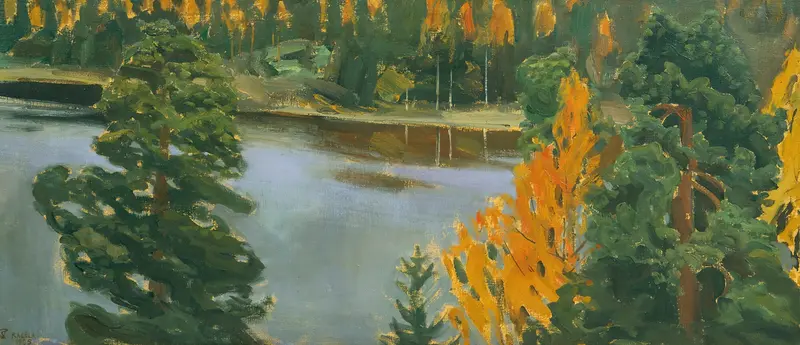
Lake View In Autumn
Akseli Gallen-Kallela
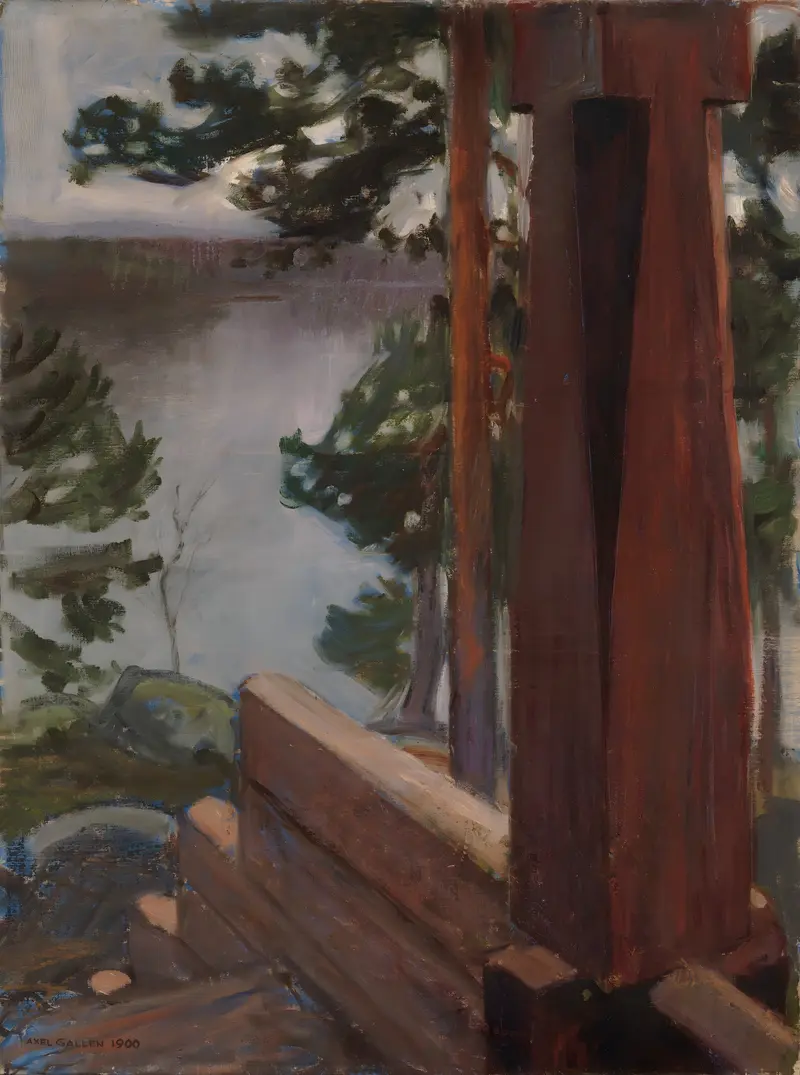
The Kalela Porch
Akseli Gallen-Kallela

Light Behind The Clouds
Akseli Gallen-Kallela
More Genre Scene Art

Banquet of the Officers of the St George Civic Guard
Frans Hals

Rembrandt and Saskia in the Scene of the Prodigal Son
Rembrandt van Rijn

Bal du moulin de la Galette
Pierre-Auguste Renoir

Quadrille at the Moulin Rouge
Henri de Toulouse-Lautrec

A Burial at Ornans
Gustave Courbet

When Will You Marry?
Paul Gauguin