
A vagabond walking along a lane — History & Facts
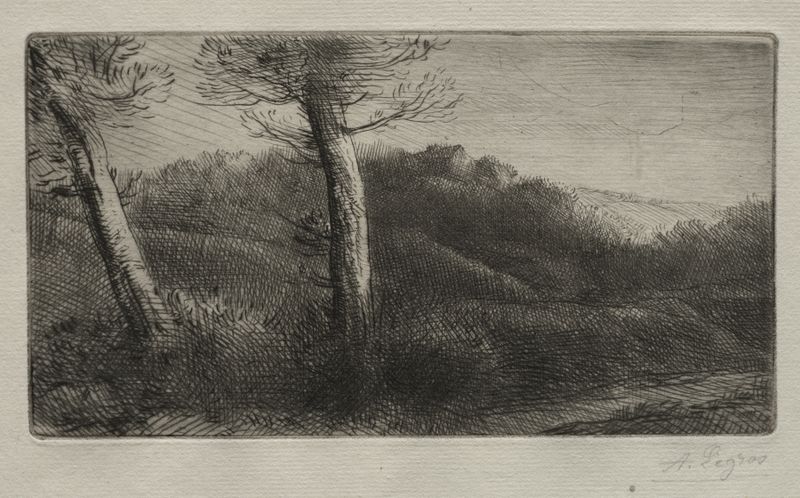
In the solitude of a winding path, a lone figure drifts through life’s transitions, their essence captured in a moment of bittersweet ecstasy. The journey holds both the weight of the world and the lightness of fleeting freedom, stirring a longing that beckons the viewer closer. Look to the left at the twisting lane, where shadows stretch out like whispers in the evening light. The figure of the vagabond, cloaked and contemplative, contrasts against the vibrant hues of the surrounding landscape.
Notice how Legros employs earthy tones—rich browns and muted greens—to evoke a sense of both grounding and yearning, while the luminous sky hints at an unseen horizon, a promise yet to be fulfilled. The brushwork is fluid, almost rhythmic, leading the eye along the path and inviting reflection. Hidden within the vagabond's posture lies a duality: the tension between motion and stillness, freedom and solitude. The distant trees frame the scene like sentinels, emphasizing the isolation of the wanderer, yet they also symbolize nature's embrace, suggesting that every journey, though solitary, is interconnected.
The delicate dance between shadow and light evokes a sense of transience, reminding us that ecstasy often resides in the echoes of our experiences rather than their permanence. In 1890, the artist poured his vision into this piece while living in London, a city rich with influences from both Impressionism and Symbolism. At the time, Legros was navigating his own path as an artist, seeking to capture the human condition through masterful techniques and emotive imagery. The world of art was evolving, and so was he, as he chronicled the quiet yet profound stories of life through his canvas.
More Artworks by Alphonse Legros
Browse all →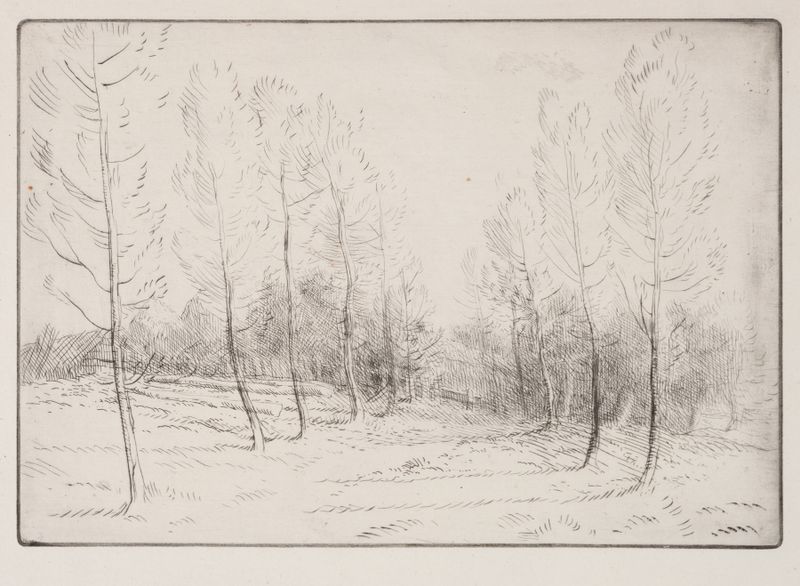
Avenue of Poplars
Alphonse Legros
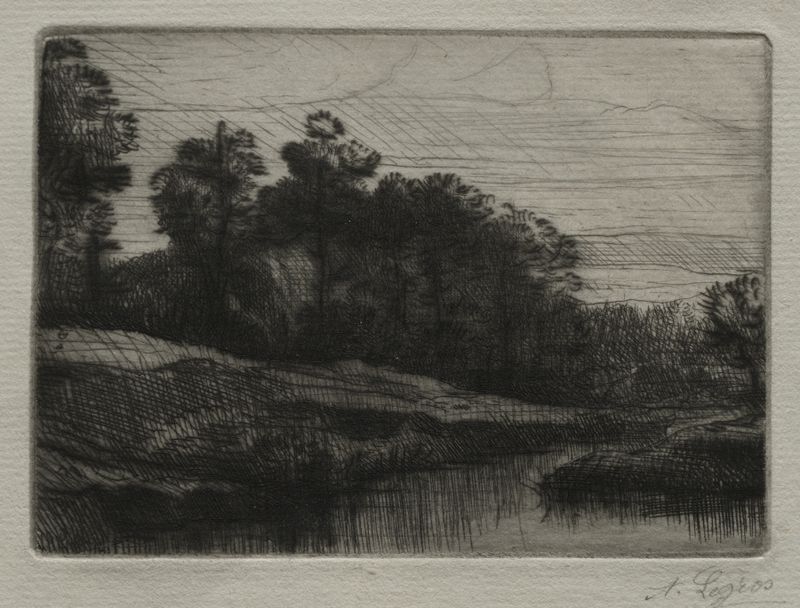
Evening
Alphonse Legros

The Fish in the Hoop Net
Alphonse Legros

The Little Beggar
Alphonse Legros
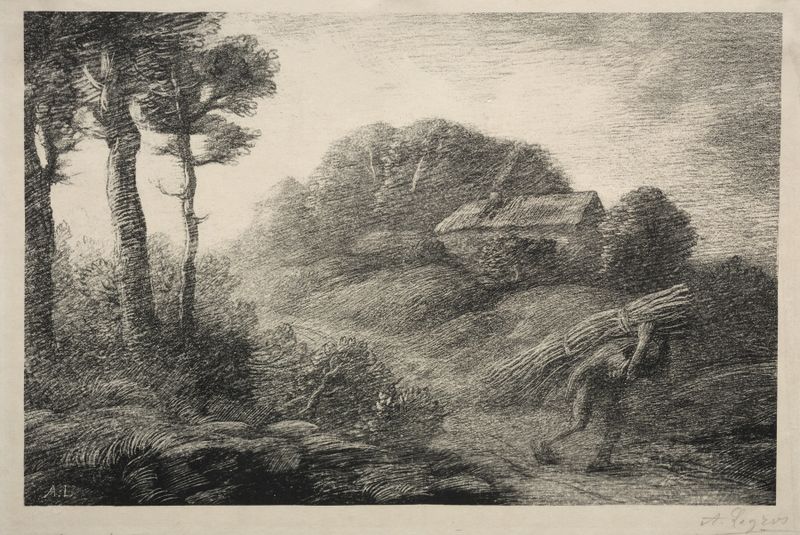
The Return of the Fagot Gatherer
Alphonse Legros

Storm
Alphonse Legros
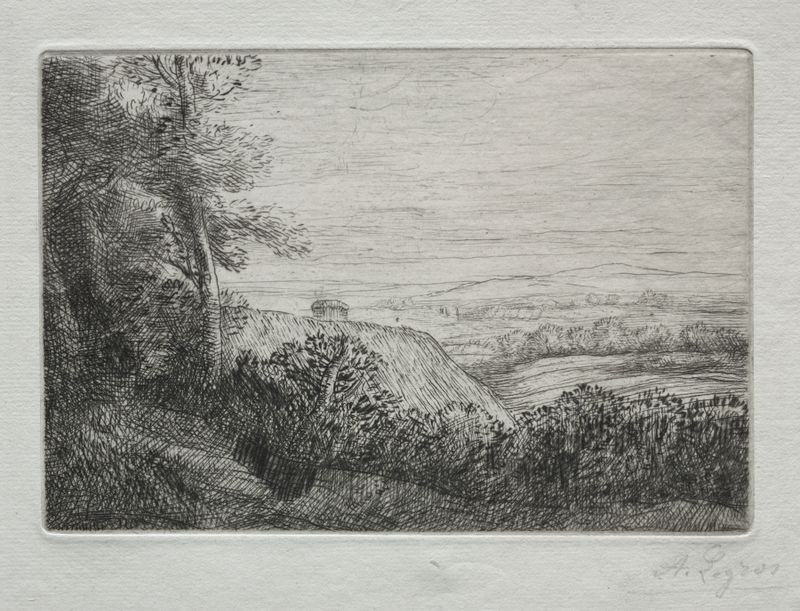
Les dernière Rayons de Soleil
Alphonse Legros
The Traveler Stretched out on the Grass
Alphonse Legros
Guard House
Alphonse Legros

Death of a Vagabond
Alphonse Legros





