
Agony in the Garden — History & Facts
When William Blake painted Agony in the Garden in 1799, he was working not for a church or public commission, but as part of a remarkable private project: a set of biblical illustrations for the civil servant and art patron Thomas Butts. This series, created over several years, allowed Blake to interpret scripture with a freedom rarely granted to artists of his era. The result is a vision of Christ’s agony that bears little resemblance to the grand, theatrical scenes favored by his contemporaries.
Instead, Blake offers an intimate, almost visionary encounter, filtered through his own spiritual and artistic imagination. The scene is set in Gethsemane, the night before Jesus’s arrest, as told in the Gospels. Here, Jesus kneels in prayer, isolated from his sleeping disciples, his form illuminated by a shaft of otherworldly light. Unlike the robust, muscular figures of Andrea Mantegna or the dramatic chiaroscuro of Caravaggio, Blake renders Christ with elongated limbs and a delicate, almost weightless posture.
The angel above, reaching down with a cup, is not a distant messenger but a near, compassionate presence, embodying the moment when Christ asks, “Let this cup pass from me.” The garden is sparse, the night air thick with spiritual tension, every brushstroke focused on the silent exchange between suffering and solace. The medium of Agony in the Garden remains uncertain—scholars have debated whether it is watercolor, tempera, or a mix of techniques, as Blake often experimented with materials. The painting has remained in private collections for much of its life, surfacing occasionally in exhibitions and catalogues, but never achieving the fame of Blake’s illuminated books. Today, it is recognized as a key work from his so-called “Butts Set,” marking a period when Blake’s visionary art moved beyond poetry into a new kind of biblical painting.
Its survival and quiet power testify to the enduring fascination with Blake’s unique blend of personal faith and artistic invention.
More Artworks by William Blake
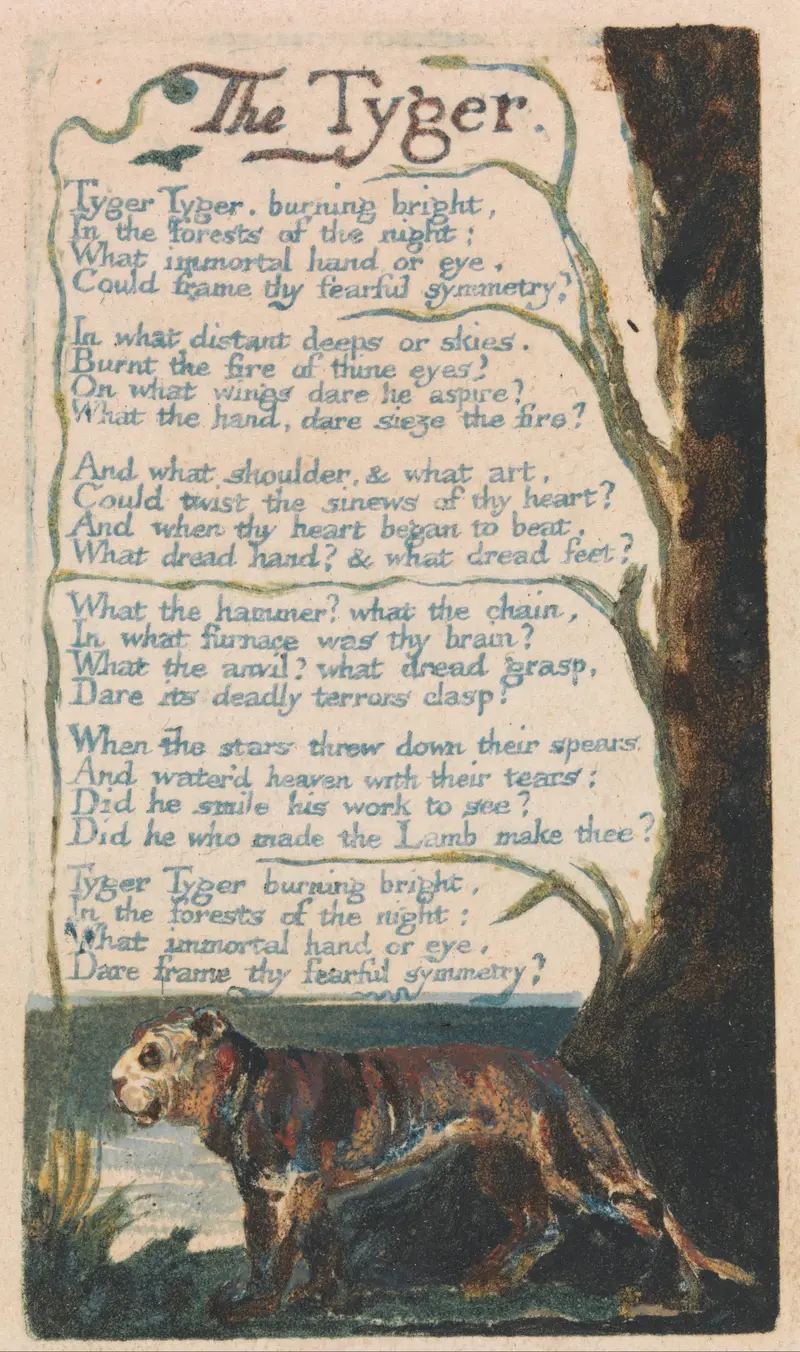
The Tyger
William Blake

Christ Blessing
William Blake
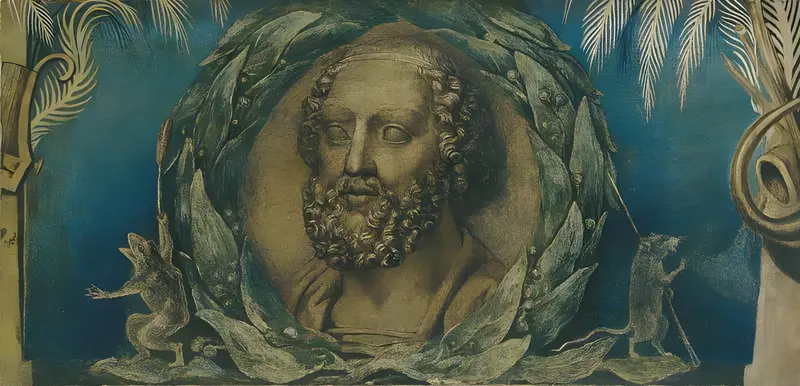
Homer
William Blake
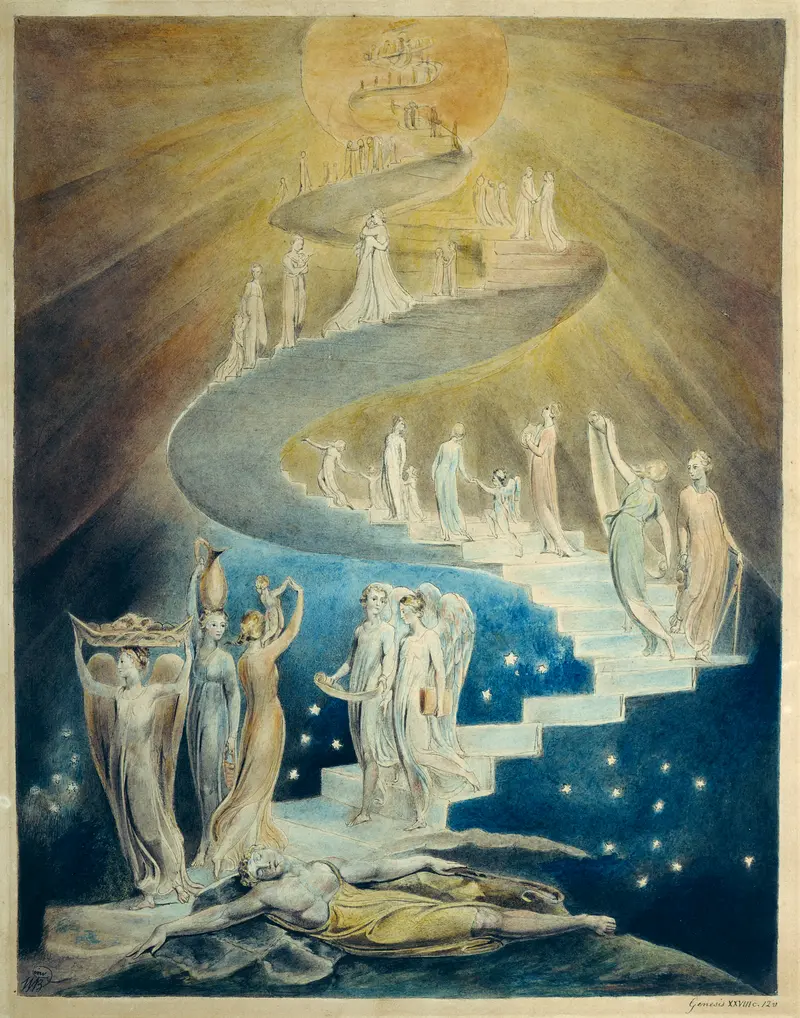
Jacob's Ladder
William Blake
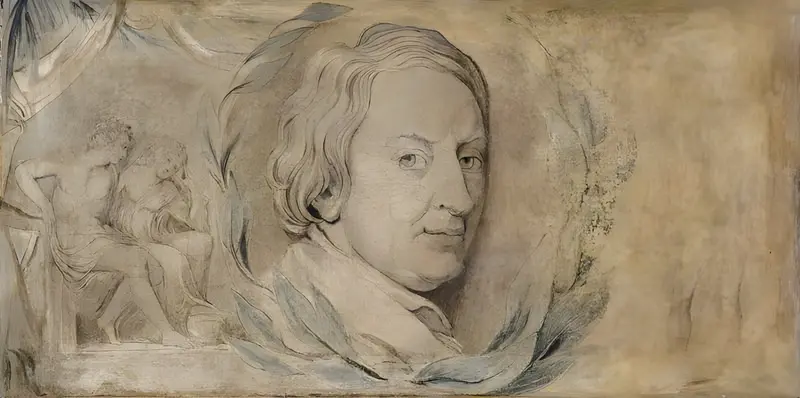
John Dryden (1631–1700)
William Blake
Landscape near Felpham
William Blake
Sacrifice of Job
William Blake
Christ's Entry into Jerusalem
William Blake
The Ancient of Days
William Blake
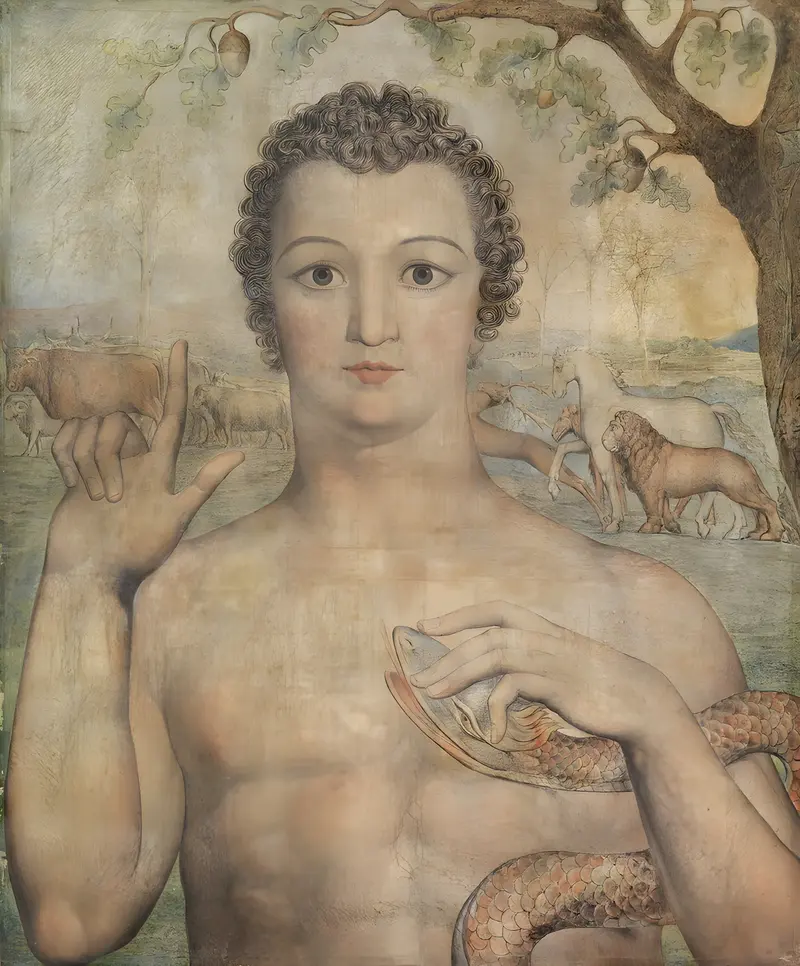
Adam Naming the Beasts
William Blake





