
Album 8 estampes (en couleurs) (04) : Retour des champs — History & Facts
What first draws the eye in Retour des champs is the quiet intimacy between two figures, arm in arm as they make their way home along a sunlit wall. The man’s pitchfork casts a long, playful shadow, echoing the upright steeple of the village church behind them, while the woman’s basket spills with the green of freshly gathered produce. The palette is gentle and cool, with the fading light of evening stretching their shadows along the path, inviting the viewer to linger in the hush of the day’s end.
The couple’s postures—her leaning in, him carrying a jug—suggest a shared fatigue and a wordless companionship, while the winding road and distant rooftops hint at the comforting routine of rural life. Works like this, created by Armand Apol and held today in the Royal Library of Belgium, belong to a tradition of early twentieth-century European printmaking that sought to dignify everyday labor and the rhythms of village existence. Artists of this period often turned to scenes of the countryside, not as nostalgic fantasies, but as records of a world in transition—where mechanization was beginning to alter the age-old patterns of work and rest. Though little is documented about this particular print’s origins or first audience, its quiet focus and gentle humor speak to a time when such images offered both pride and solace to viewers.
The longer you look, the more the subtle choreography of light, shadow, and gesture reveals itself—an invitation to step into the slow pace of another era.
More Artworks by Armand Apol
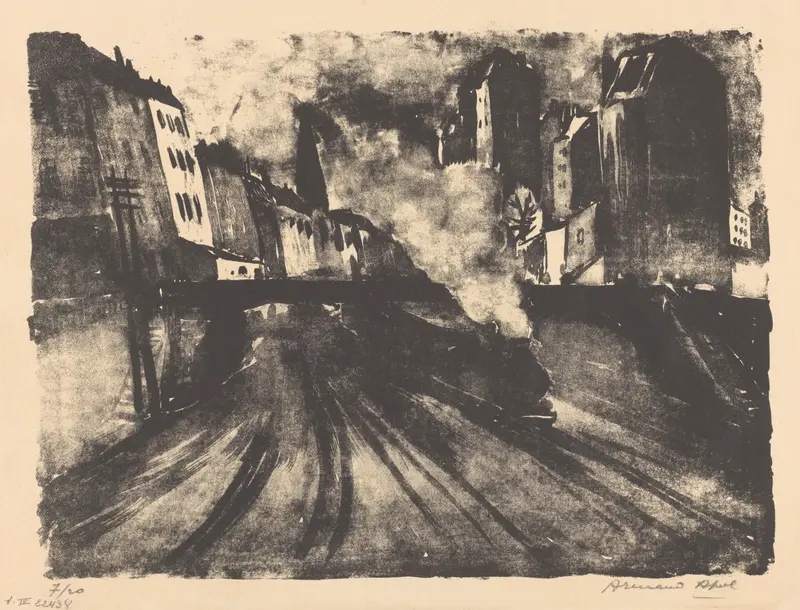
Chemin de fer de ceinture à Paris
Armand Apol
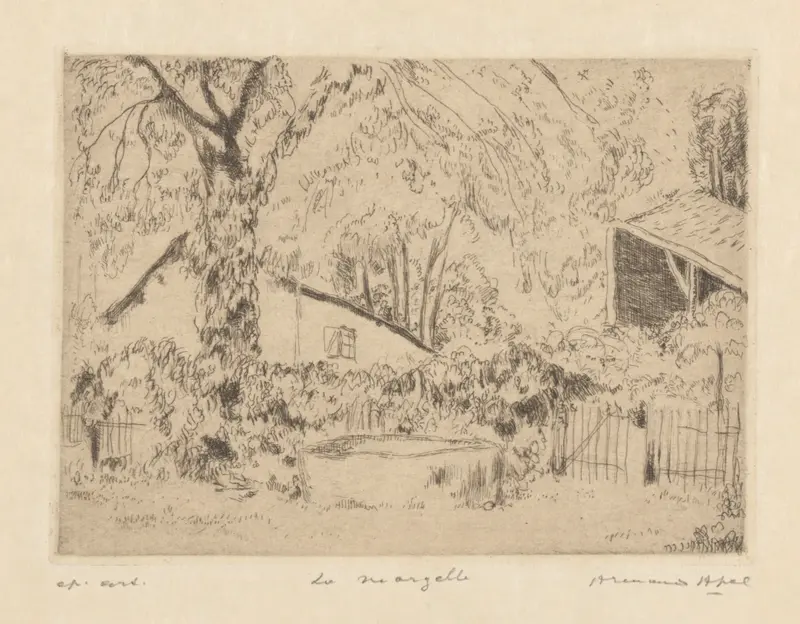
La margelle
Armand Apol
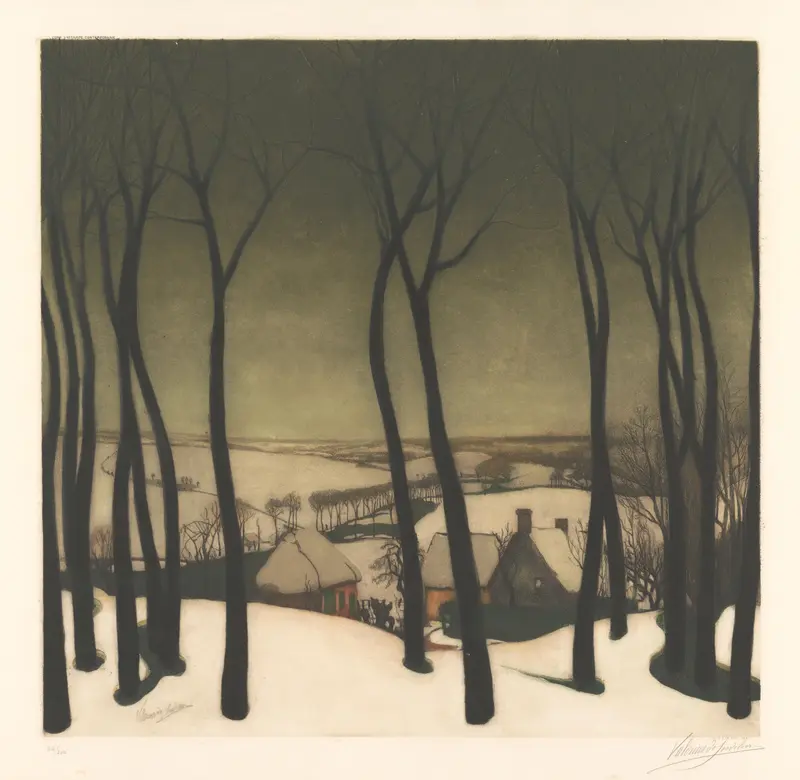
Album 8 estampes (en couleurs) (05) : Paysage
Armand Apol
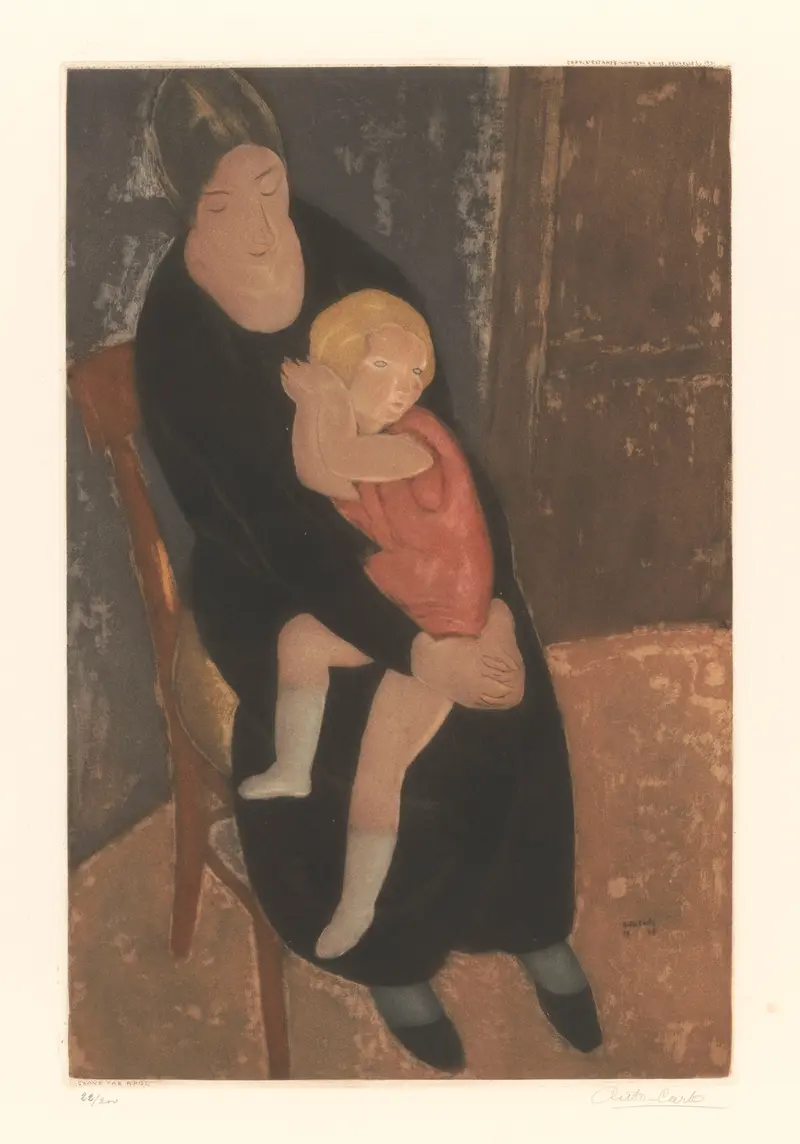
Album 8 estampes (en couleurs) (08) : Mère et enfant
Armand Apol
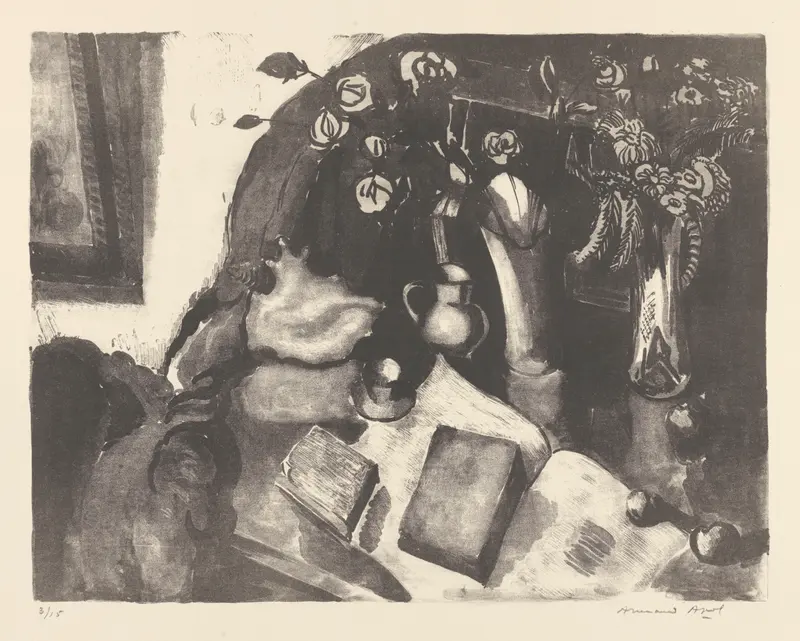
Dix lithographies au lavis (02) : Nature morte
Armand Apol

Dix planches (06) : La loge
Armand Apol
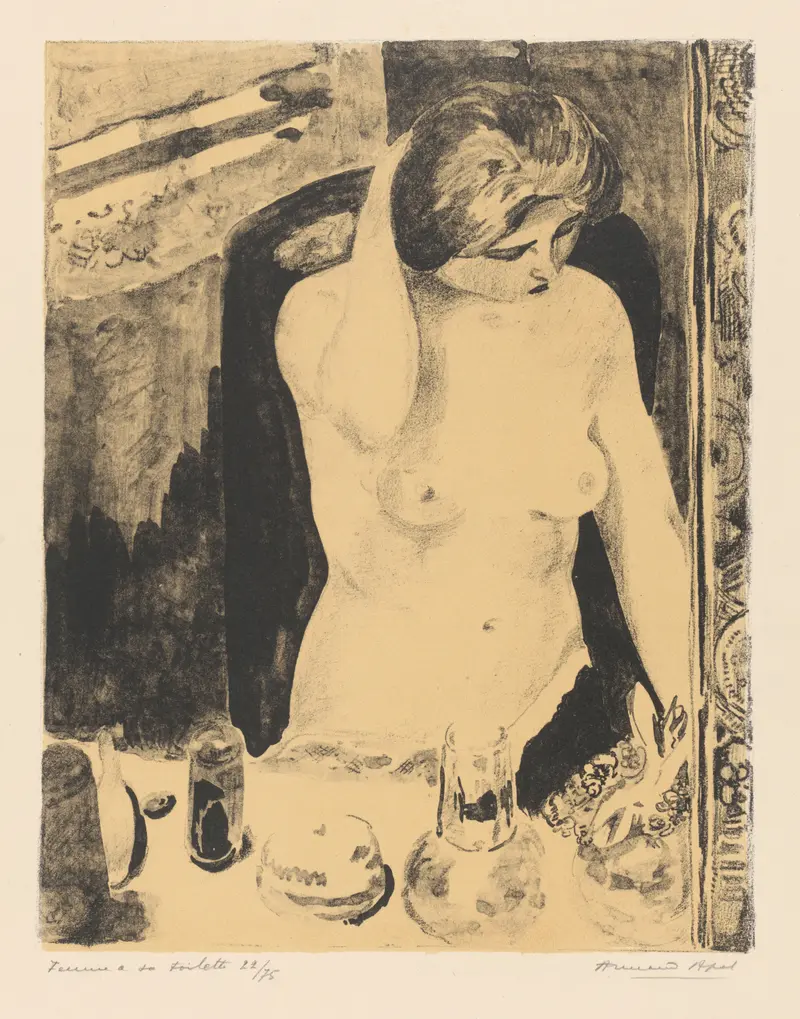
Dix planches (10) : Femme à sa toilette
Armand Apol
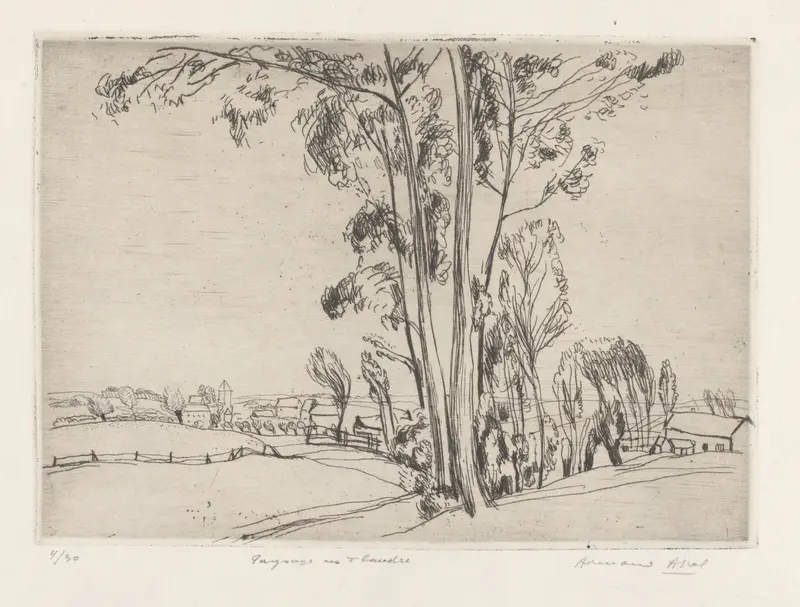
Paysage en Flandre (Etichove)
Armand Apol
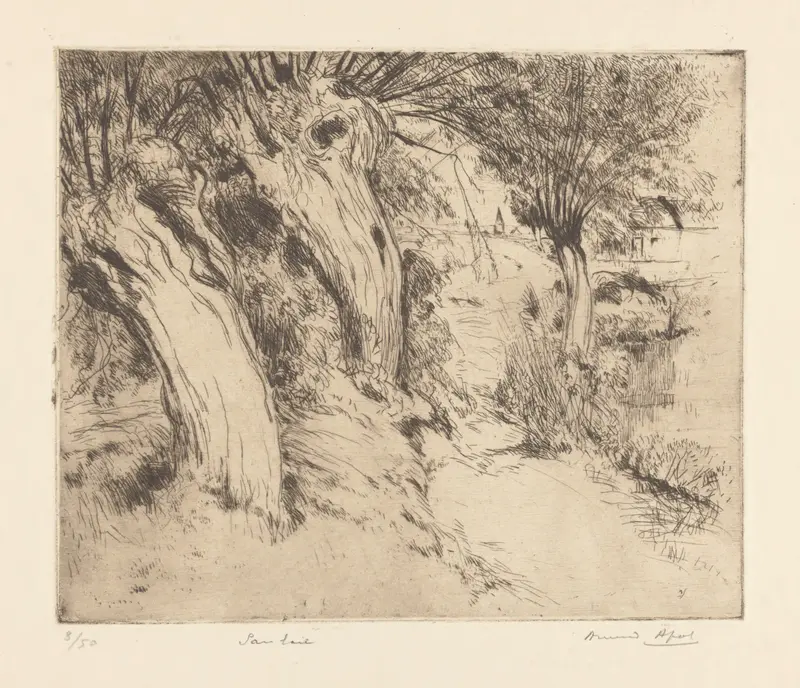
Saulaie
Armand Apol
Zeebrugge
Armand Apol
More Genre Scene Art

Banquet of the Officers of the St George Civic Guard
Frans Hals

Rembrandt and Saskia in the Scene of the Prodigal Son
Rembrandt van Rijn

Bal du moulin de la Galette
Pierre-Auguste Renoir

Quadrille at the Moulin Rouge
Henri de Toulouse-Lautrec

A Burial at Ornans
Gustave Courbet

When Will You Marry?
Paul Gauguin