
Allegory of Poetry — History & Facts
A golden-haired muse leans forward, her gaze fixed not on a page, but on the viewer, as if inviting us into the secret world of inspiration. Draped in flowing fabrics that seem to shimmer with their own light, she holds a lyre delicately in one hand—a classic emblem of poetry’s music—while her other hand gestures upward, as though drawing words from the very air. The palette glows with warm flesh tones and soft blues, the light caressing her bare shoulder and illuminating the rich textures of silk and velvet.
Every detail, from the laurel wreath crowning her head to the scattered scrolls and books at her feet, signals that this is no ordinary portrait but an allegory: a living embodiment of Poetry herself, caught in the moment of creation. Painted in the 18th century, Allegory of Poetry by Jean-François de Troy belongs to a world where allegorical paintings were both fashionable and meaningful, gracing the walls of salons and private libraries. Artists like de Troy were often called upon to give visual form to the ideals of the Enlightenment, blending classical references with the sensuality and elegance prized by the French Rococo. While history has kept few traces of this particular work’s early journey, it now resides in the Portland Art Museum, where its luminous presence continues to pose the eternal question: where does inspiration come from? Let your eyes linger on the muse’s gesture, and perhaps you too will catch a whisper of her answer.
More Artworks by Jean-François de Troy
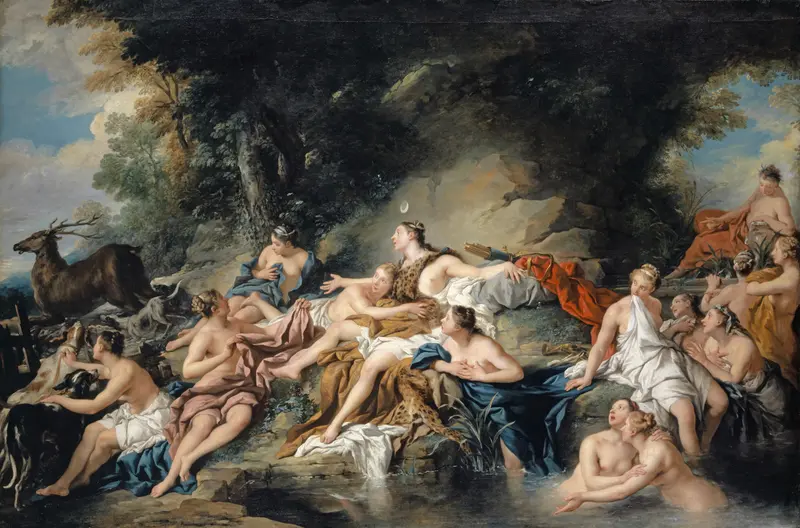
Diana and Actaeon
Jean-François de Troy
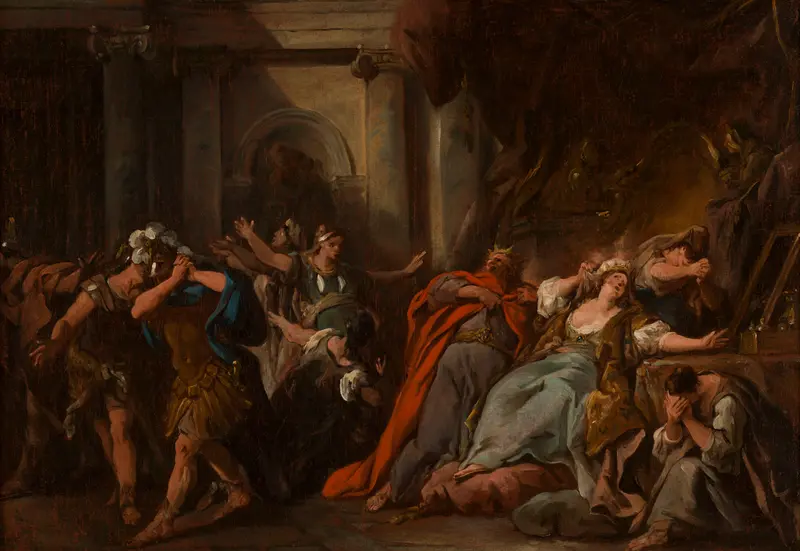
Créüse consumée par la robe empoisonnée
Jean-François de Troy
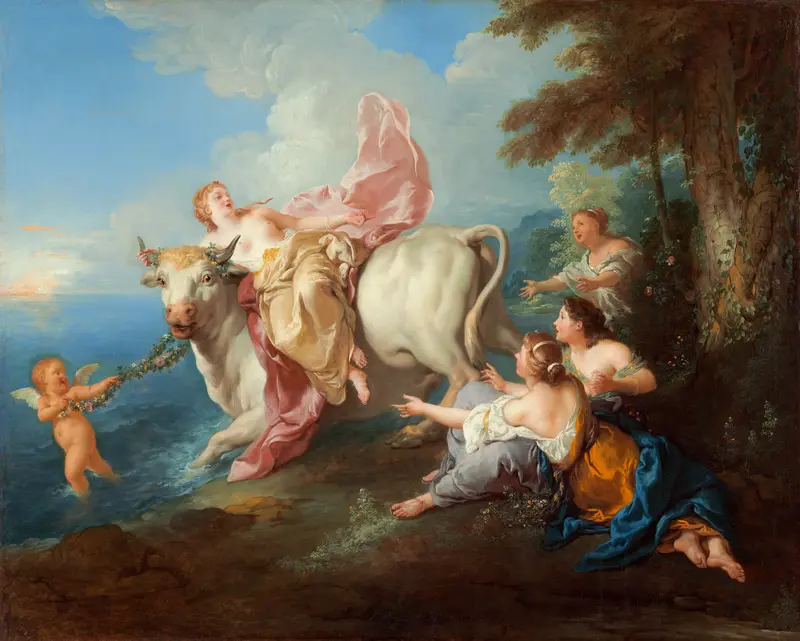
The Abduction of Europa
Jean-François de Troy
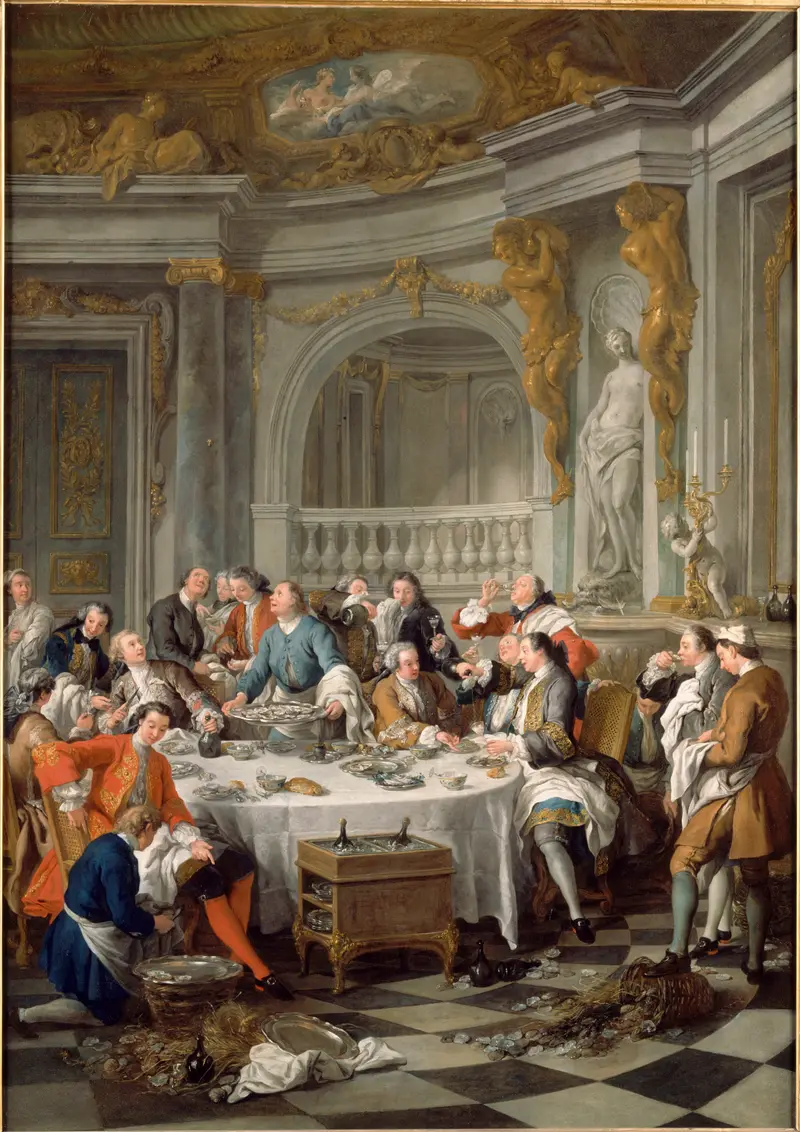
The Lunch of Oysters
Jean-François de Troy
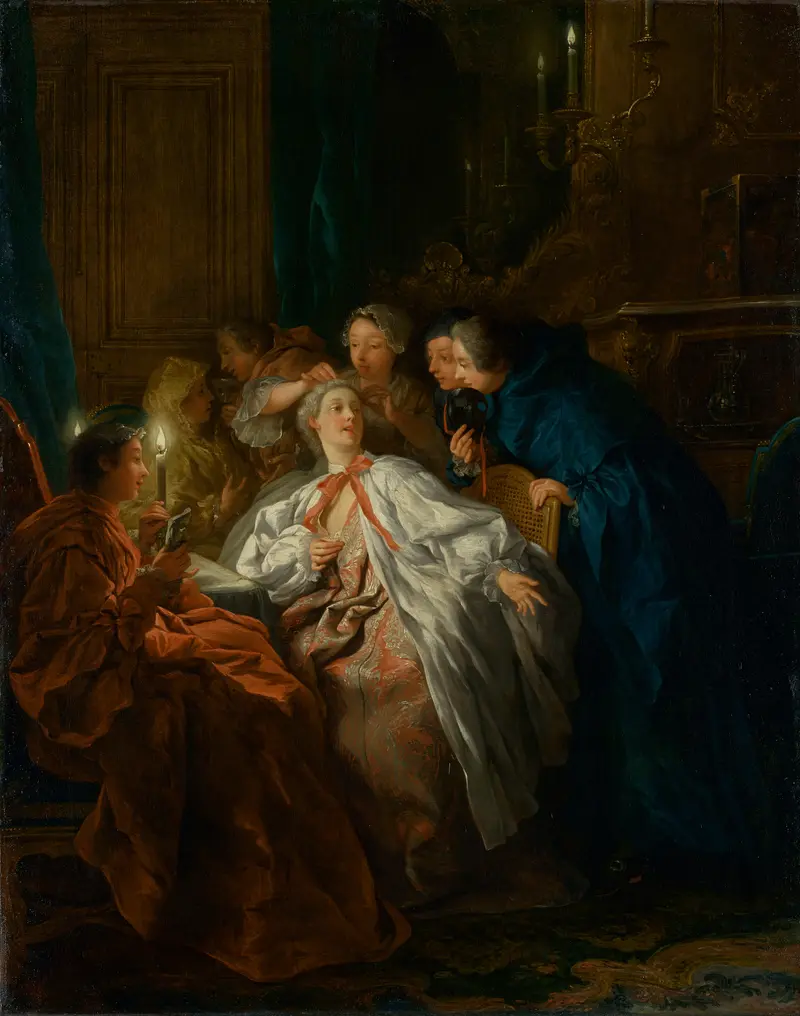
Before the Ball
Jean-François de Troy
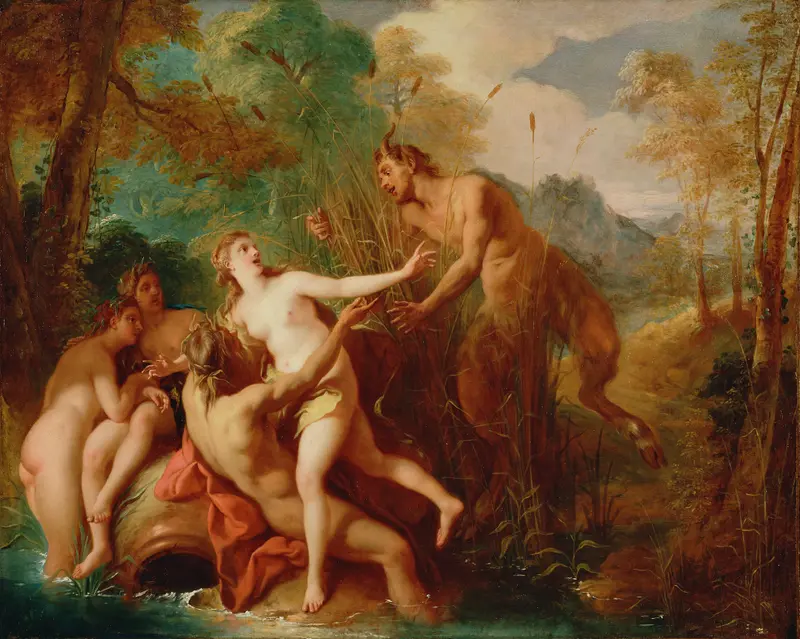
Pan and Syrinx
Jean-François de Troy

Le Combat des soldats nés des dents du serpent
Jean-François de Troy
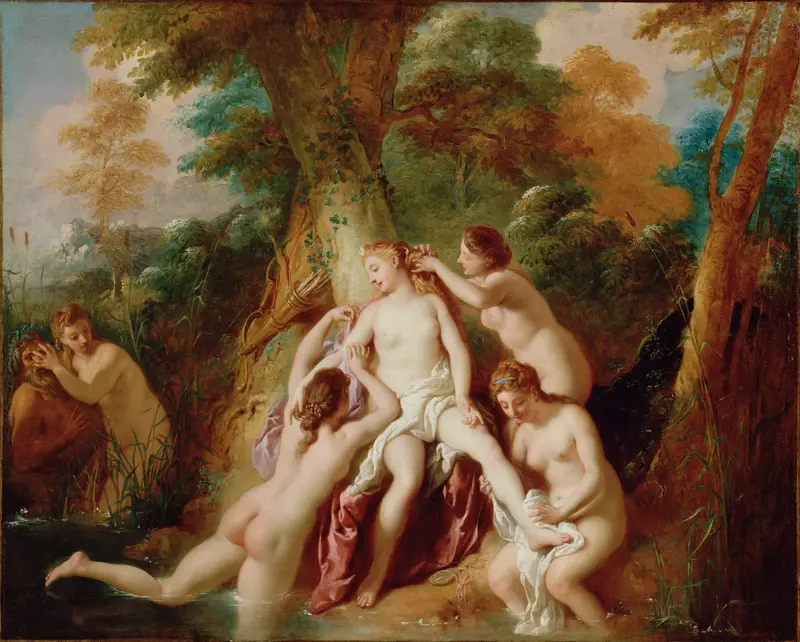
Diana and Her Nymphs Bathing
Jean-François de Troy
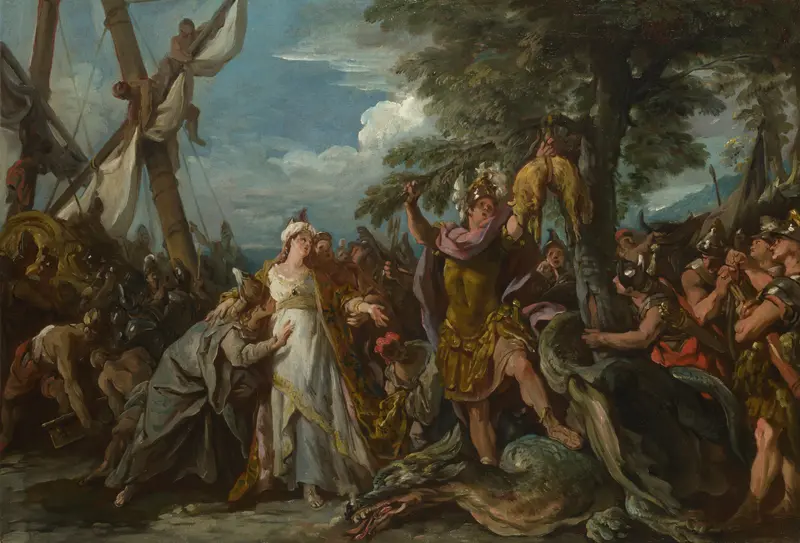
The Capture of the Golden Fleece
Jean-François de Troy
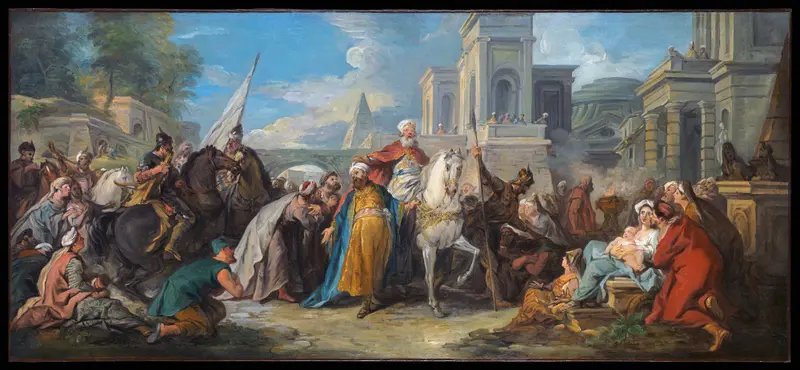
The Triumph of Mordecai
Jean-François de Troy





