
Bathers at Asnières (Study III) — History & Facts
Few studies have shaped the course of modern painting as quietly as Bathers at Asnières (Study III) by Georges Seurat. This work is one of several preparatory pieces for Seurat’s monumental Bathers at Asnières, a painting that would later ignite debate at the 1884 Salon des Artistes Indépendants. The study’s importance lies not just in its connection to the finished canvas, but in its role as a testing ground for the divisionist technique that would soon define Seurat’s career.
Unlike the final painting, which was executed in the distinctive dots of Pointillism, this study reveals the artist’s earlier explorations in light, form, and composition. Here, Seurat captures a tranquil afternoon along the Seine, where young men pause from labor to rest by the water’s edge. The figures are arranged in a calm, almost classical order, their stillness contrasting with the shimmering river and hazy factories in the distance. Every element is deliberate: the boy reclining in the foreground invites the viewer’s gaze, while the soft, diffused light flattens shadows and blurs the boundary between leisure and industry.
Seurat’s choice of subject—urban workers at rest—echoes the democratic spirit of the era, and stands apart from the sun-dappled, upper-class bathers painted by Renoir just a few years earlier. The study’s muted palette and careful geometry foreshadow the radical innovations that would soon follow. The precise medium of Bathers at Asnières (Study III) remains uncertain, as does its early provenance, but it is typical of the oil sketches and studies Seurat produced in 1883 while preparing his first major canvas. Many of these studies were kept in the artist’s studio, unseen by the public until after his untimely death in 1891.
Today, works like this are prized for the insight they offer into Seurat’s methodical process and the birth of Neo-Impressionism. Though not as widely exhibited as the finished Bathers at Asnières, the study is now recognized as a crucial link in the artist’s evolution, bridging the gap between academic tradition and the new science of color and vision.
More Artworks by Georges Seurat
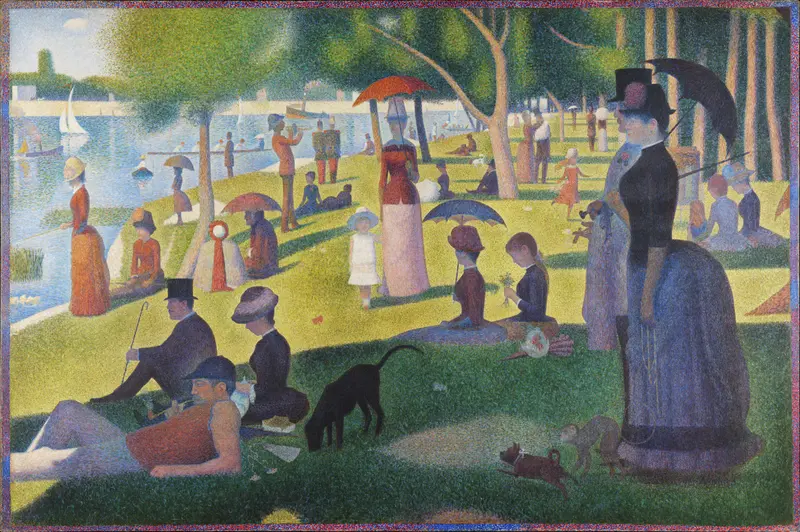
A Sunday Afternoon on the Island of La Grande Jatte
Georges Seurat
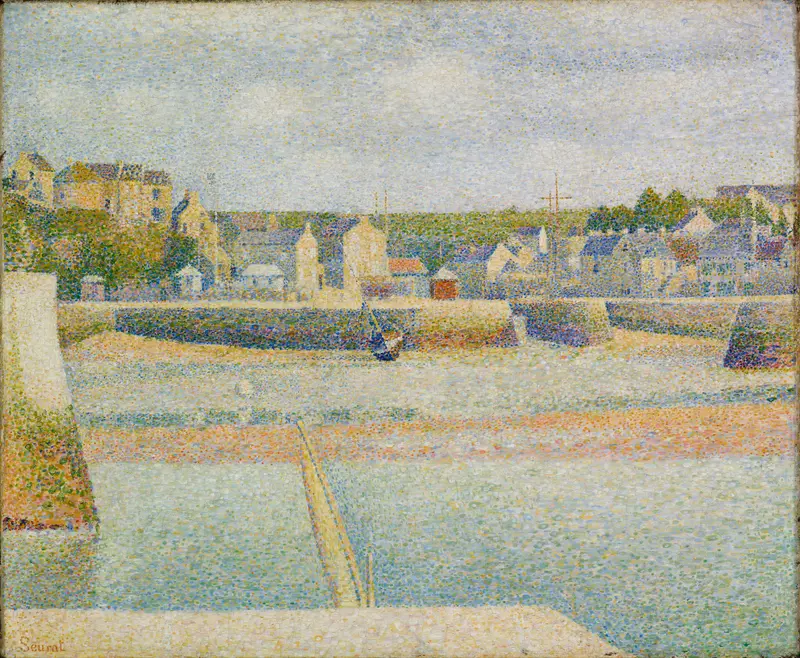
Port-en-Bessin, The Outer Harbor (Low Tide)
Georges Seurat
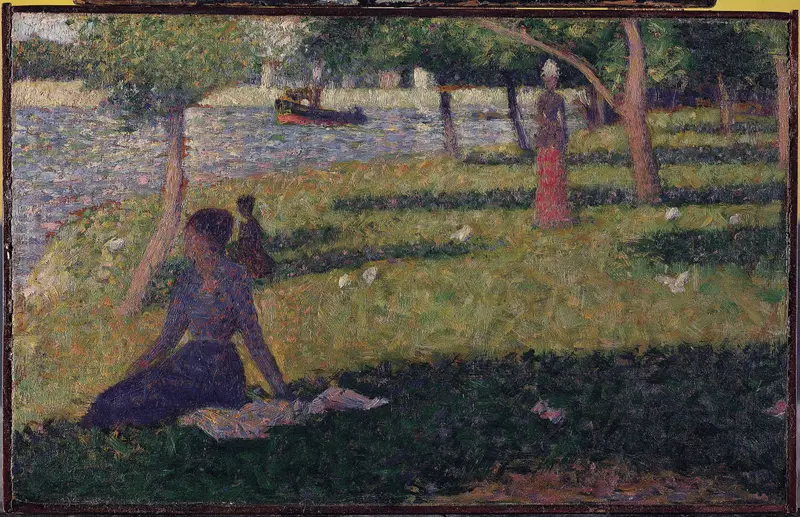
Étude pour ‘La Grande Jatte’ (Study for ‘La Grande Jatte’)
Georges Seurat
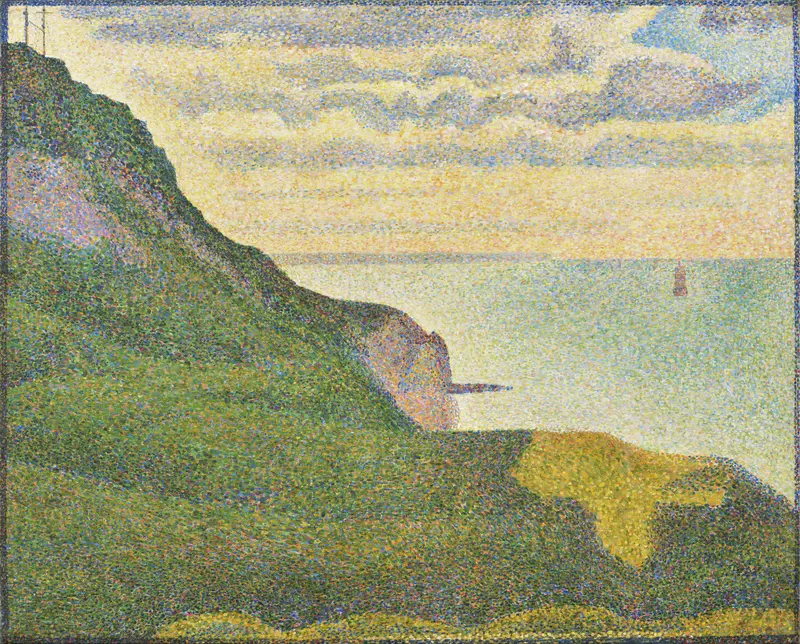
Seascape at Port-en-Bessin,Normandy
Georges Seurat
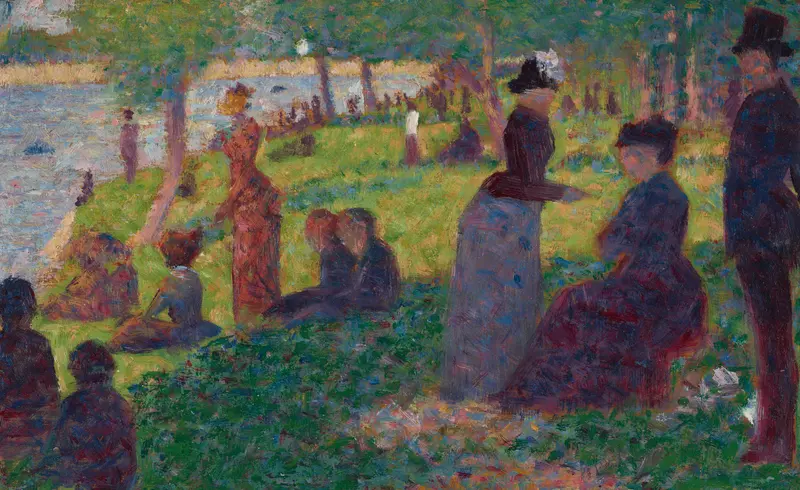
Oil Sketch for "A Sunday on La Grande Jatte — 1884"
Georges Seurat
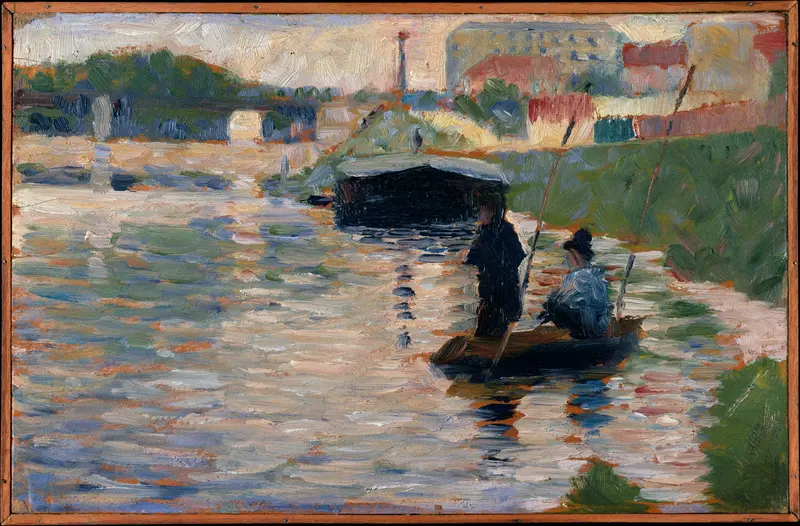
View of the Seine
Georges Seurat
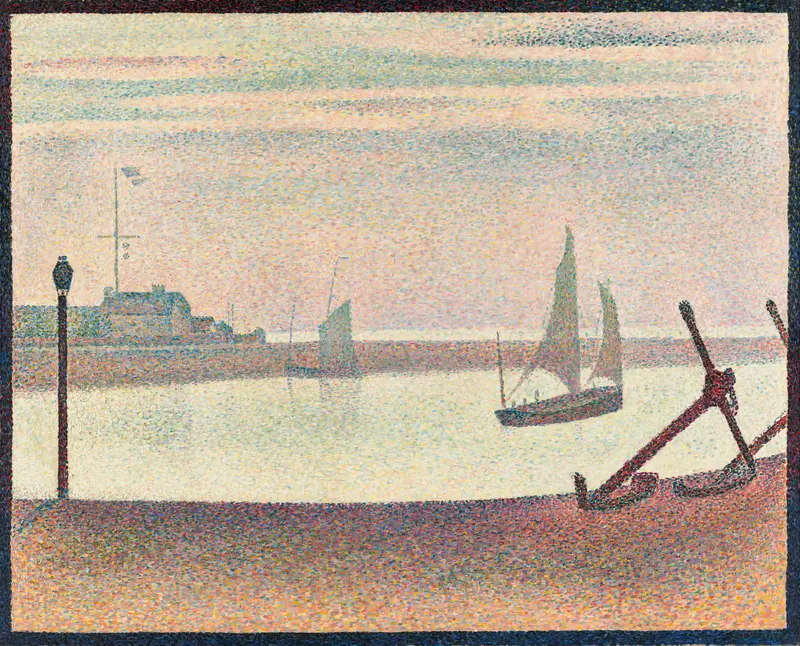
The Channel at Gravelines, Evening
Georges Seurat
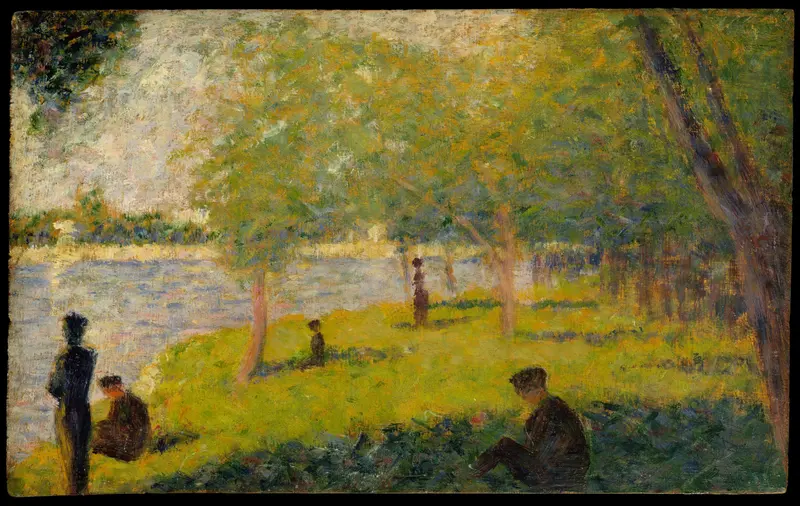
Study for ‘A Sunday on La Grande Jatte’
Georges Seurat
Study for A Sunday on La Grande Jatte
Georges Seurat
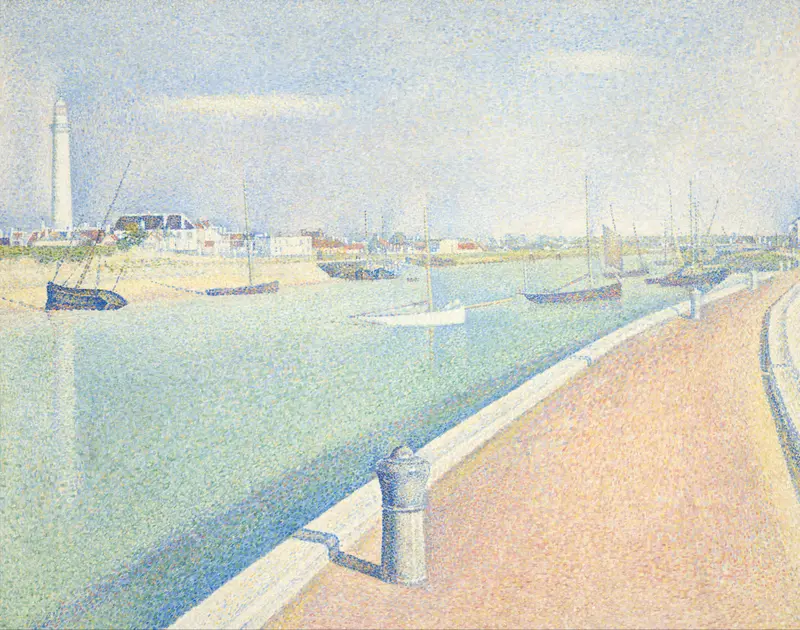
The Channel of Gravelines, Petit Fort Philippe
Georges Seurat
More Genre Scene Art

Banquet of the Officers of the St George Civic Guard
Frans Hals

Rembrandt and Saskia in the Scene of the Prodigal Son
Rembrandt van Rijn

Bal du moulin de la Galette
Pierre-Auguste Renoir

Quadrille at the Moulin Rouge
Henri de Toulouse-Lautrec

A Burial at Ornans
Gustave Courbet

When Will You Marry?
Paul Gauguin