
Building — History & Facts
The first thing that grips the eye in Building is the quiet tension between creation and care, each rendered with the same unflinching honesty. A woman, intent and unsmiling, nurses her child at the edge of a raw timber structure, her gaze both protective and wary. The unfinished log walls rise behind her, their pale surfaces freshly hewn, while two men work with axe and auger, their bodies bent in labor.
The composition draws the viewer into the heart of a moment where family and survival are inseparable: the tools, the felled logs, the mother’s firm hold, all bound together by the golden light that falls across the wood and skin alike. Even the forested hillside beyond seems to press close, as if nature itself were watching. Painted in 1903 as a study for a fresco in the Jusélius Mausoleum, this work by Akseli Gallen-Kallela belongs to a world where the building of a home was both an act of necessity and a declaration of hope. At the turn of the twentieth century, Finnish artists often turned to scenes of rural life to express national identity and the cycles of hardship and renewal.
The careful attention to the structure’s joinery, the roughness of bark and the softness of the child’s cheek, all speak to a time when the rhythms of work and nurture shaped daily existence. Now held by the Finnish National Gallery Ateneum in Helsinki, this study survives as a testament to the era’s ideals—inviting us to look again at the hands that build, and the lives sheltered within.
More Artworks by Akseli Gallen-Kallela
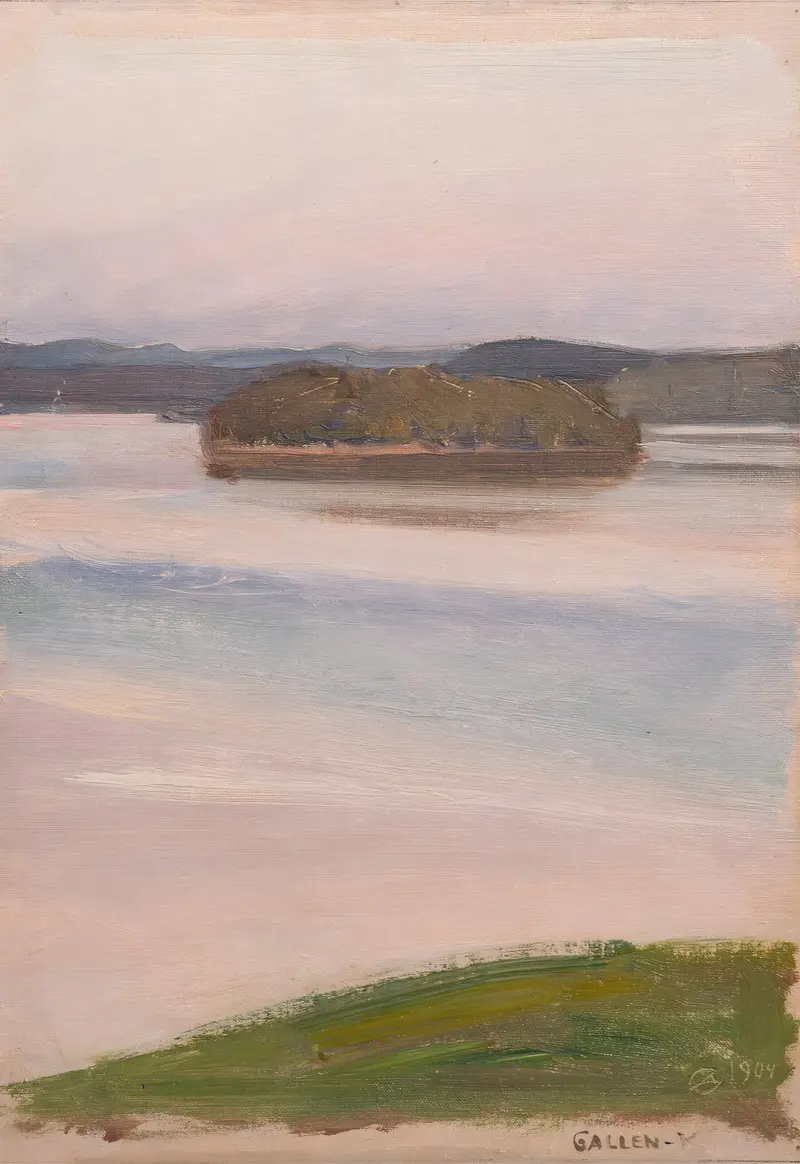
Lake Keitele
Akseli Gallen-Kallela
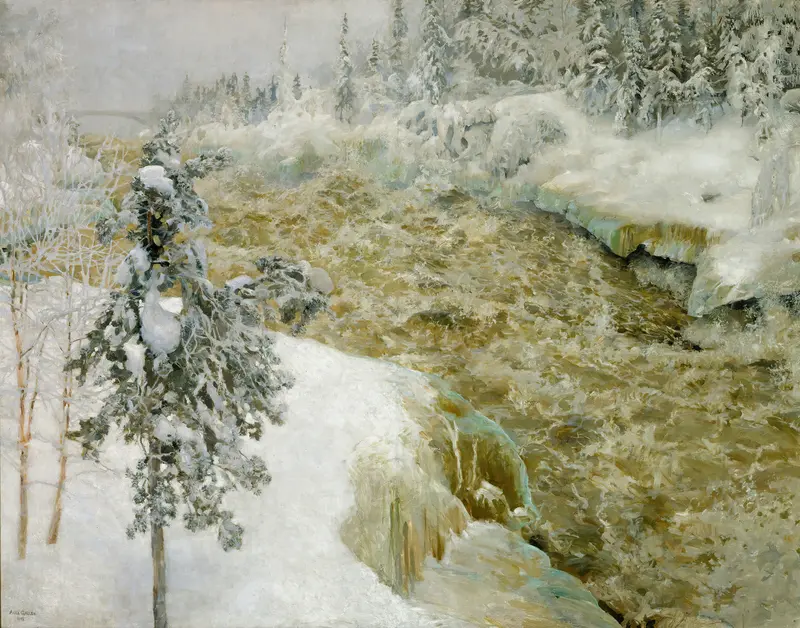
Imatra Falls in Snow ; Imatra in Winter
Akseli Gallen-Kallela
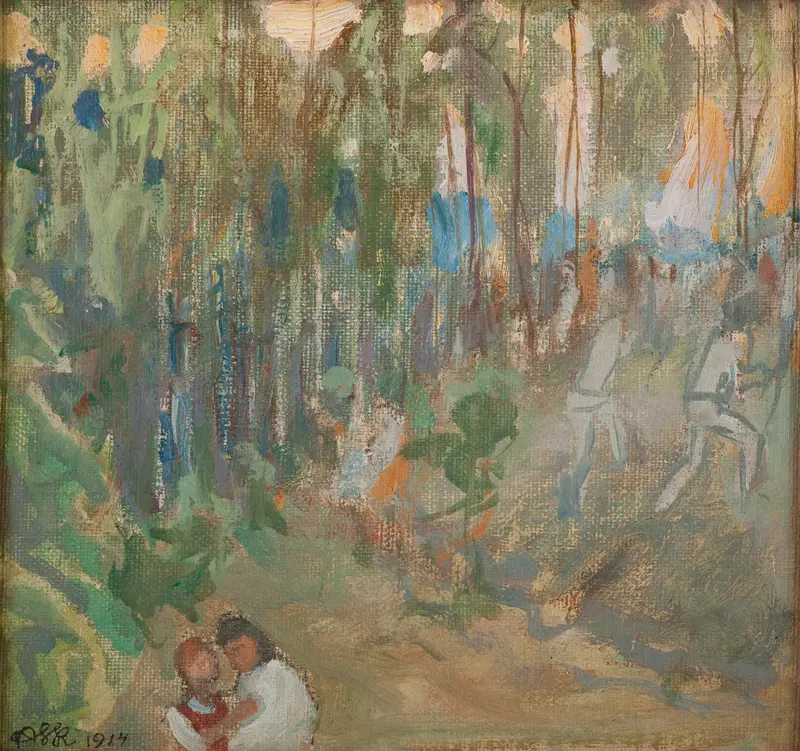
Vainovalkeat
Akseli Gallen-Kallela
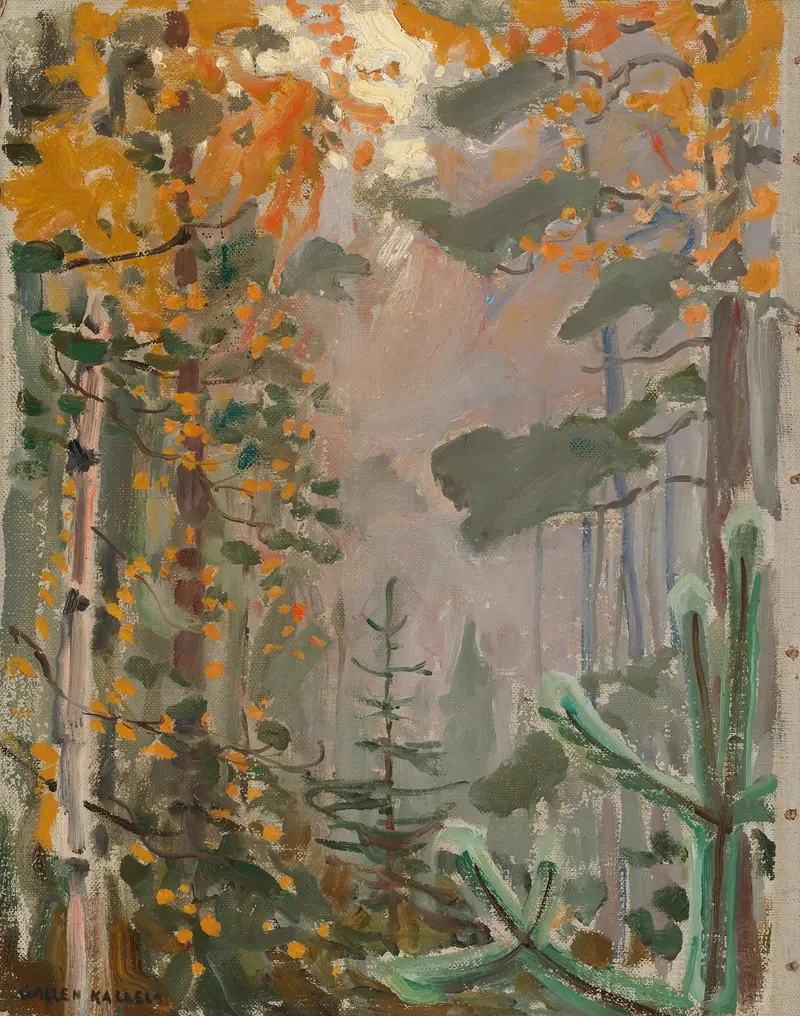
Autumn Landscape
Akseli Gallen-Kallela
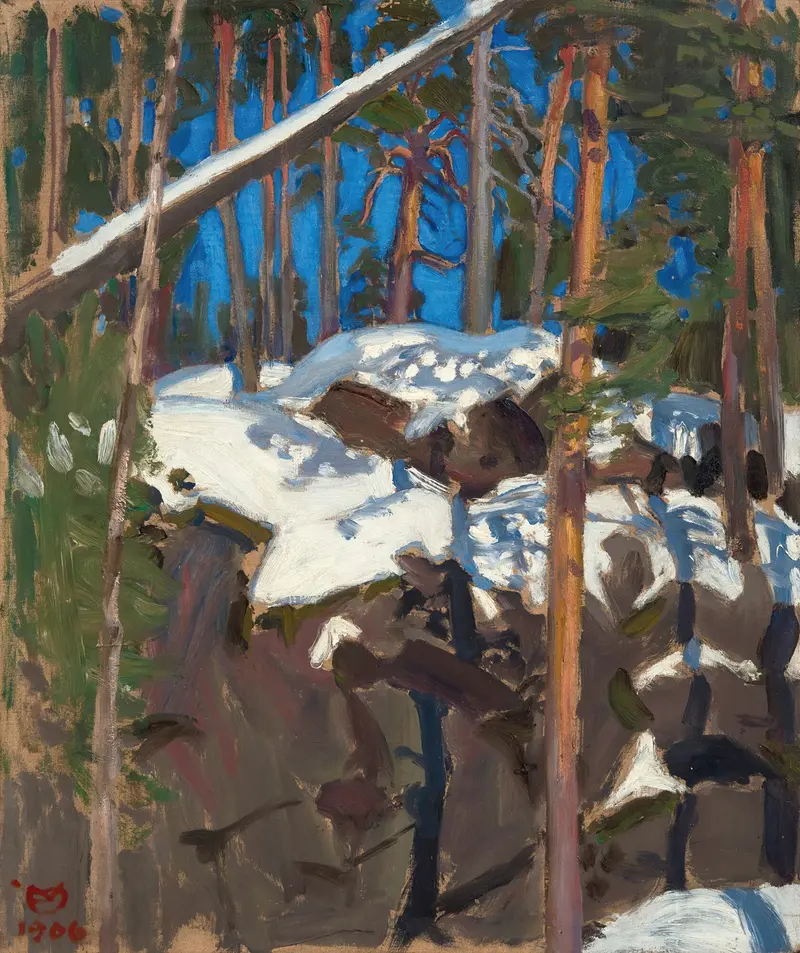
Spring Sun At Konginkangas
Akseli Gallen-Kallela
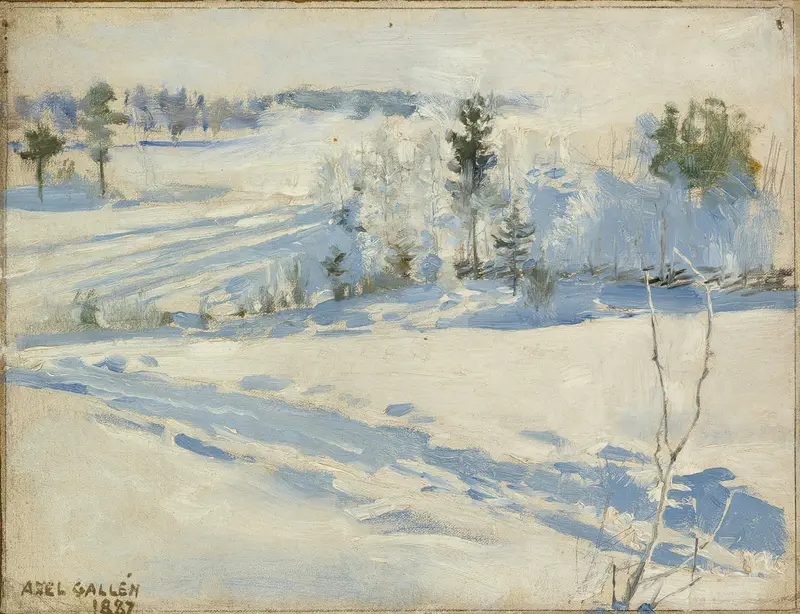
Winter Landscape
Akseli Gallen-Kallela

First Snow
Akseli Gallen-Kallela
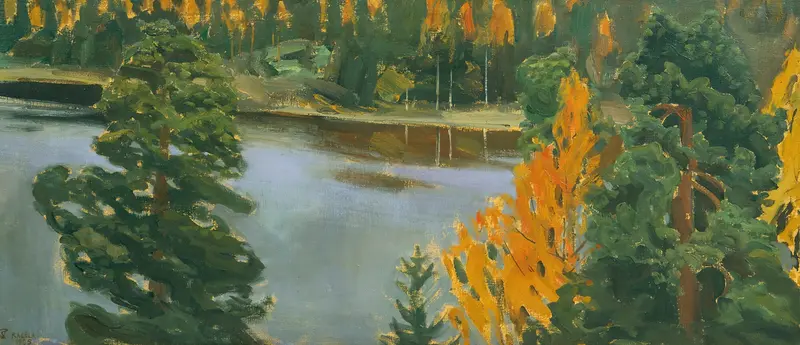
Lake View In Autumn
Akseli Gallen-Kallela
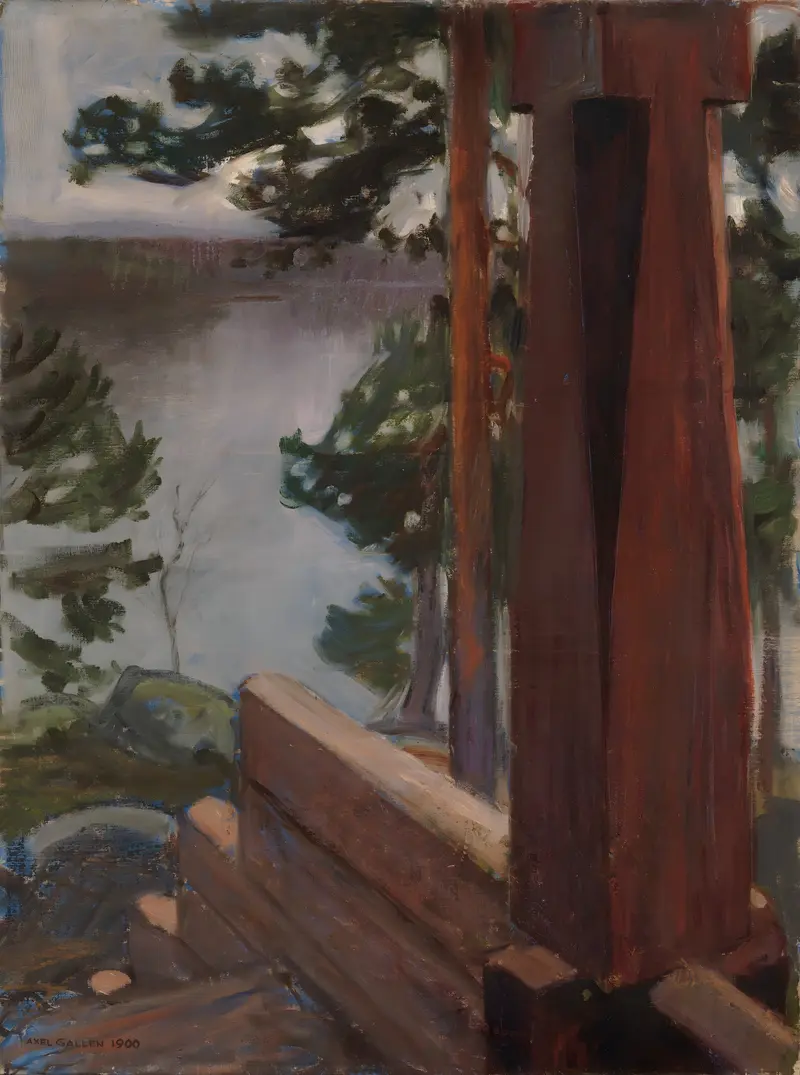
The Kalela Porch
Akseli Gallen-Kallela

Light Behind The Clouds
Akseli Gallen-Kallela
More Genre Scene Art

Banquet of the Officers of the St George Civic Guard
Frans Hals

Rembrandt and Saskia in the Scene of the Prodigal Son
Rembrandt van Rijn

Bal du moulin de la Galette
Pierre-Auguste Renoir

Quadrille at the Moulin Rouge
Henri de Toulouse-Lautrec

A Burial at Ornans
Gustave Courbet

When Will You Marry?
Paul Gauguin