
Burial — History & Facts
What first grips the eye in Burial is the sweep of bold, sunlit color: a flash of red cloth in the foreground, alive with movement, set against the ochre earth and the cool, shadowed figures beyond. The paint is laid on in quick, confident strokes, giving the scene a sense of immediacy, as if the viewer has stumbled upon a moment in progress. The two women at the front, rendered in deep reds and purples, stride forward with a sense of purpose, their forms both solid and fleeting.
Behind them, a procession of figures in lighter tones moves in unison, their gestures suggesting ritual or communal action. The green above hints at foliage, but it is the interplay of light and shadow on skin and cloth that commands attention, drawing the viewer into the heart of the scene. Painted in 1910, this work by Akseli Gallen-Kallela belongs to a period when artists across Europe were drawn to scenes of daily life and ceremony beyond their own borders, often working quickly to capture the energy of what they saw. Such paintings were rarely made for grand salons; instead, they were studies, souvenirs, or explorations—records of travel or encounters with unfamiliar cultures.
Gallen-Kallela, best known for his role in Finnish symbolism, here turns his gaze outward, using loose brushwork and a vivid palette to immerse himself in another world. The work's presence in a modern auction underscores how history has kept few traces of its journey, but the painting itself remains a window onto a moment, a place, and a way of seeing that invites us to look again.
More Artworks by Akseli Gallen-Kallela
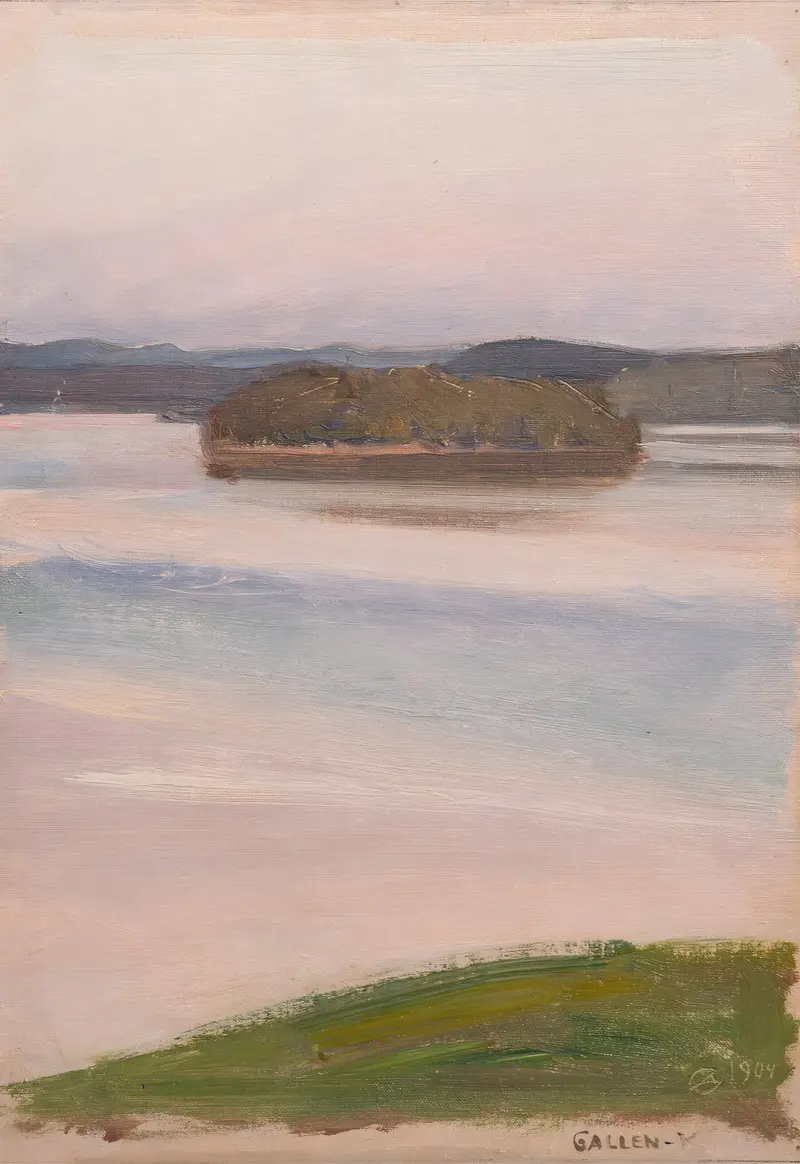
Lake Keitele
Akseli Gallen-Kallela
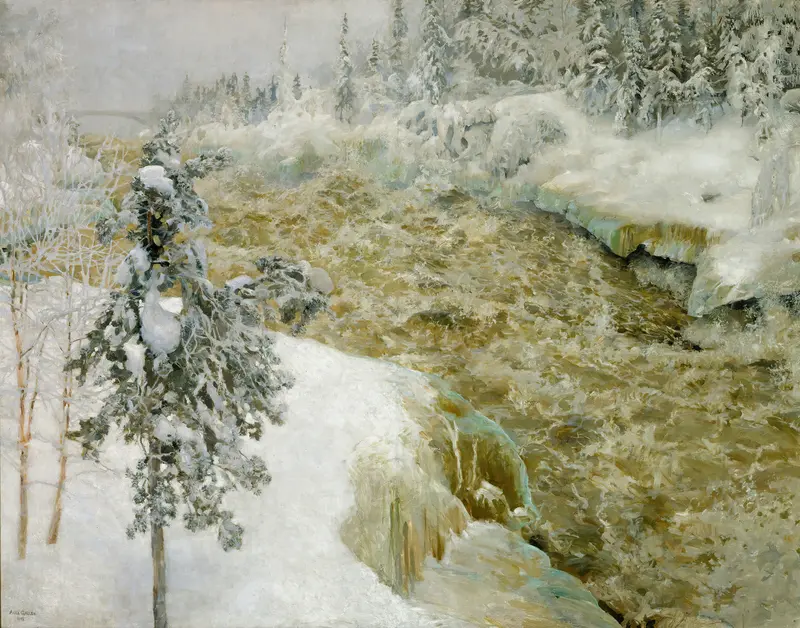
Imatra Falls in Snow ; Imatra in Winter
Akseli Gallen-Kallela
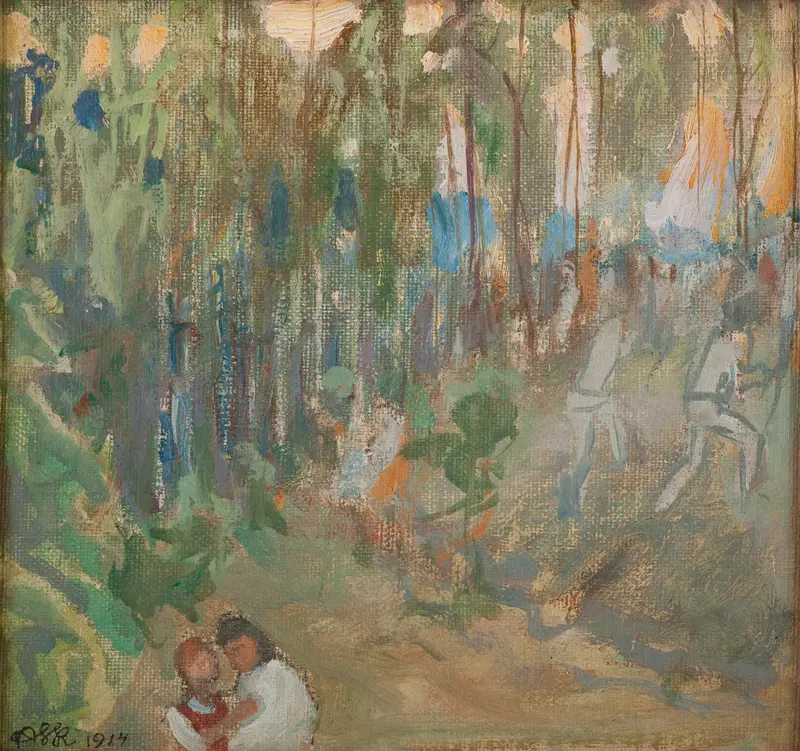
Vainovalkeat
Akseli Gallen-Kallela
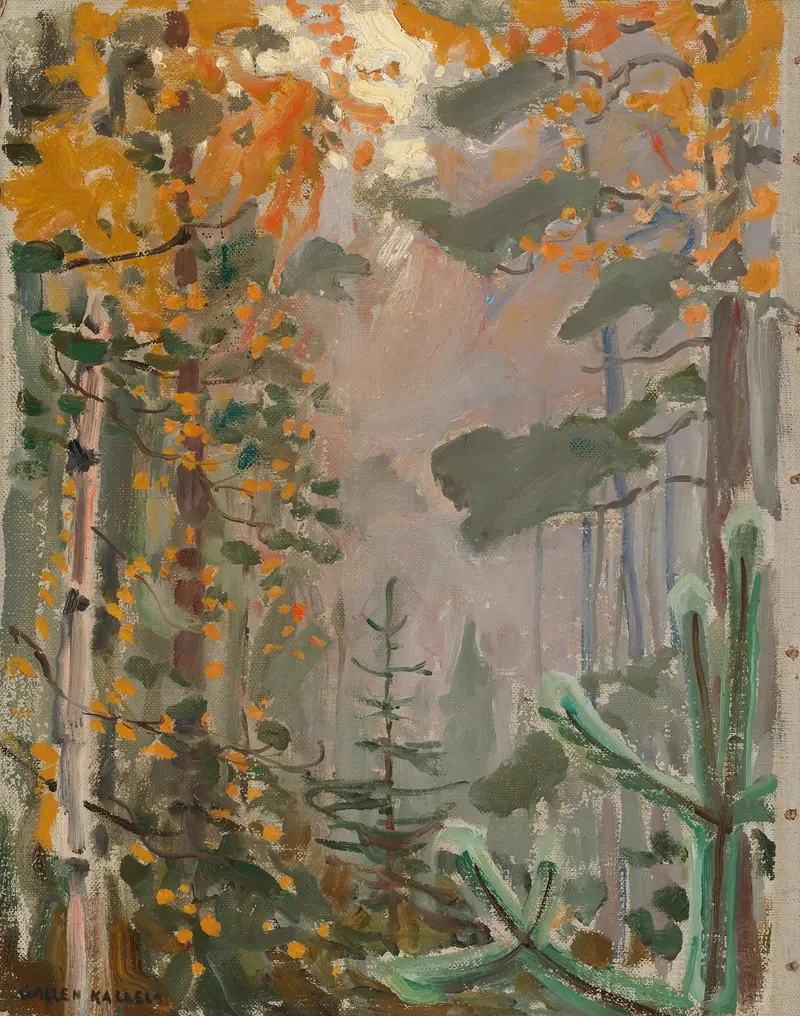
Autumn Landscape
Akseli Gallen-Kallela
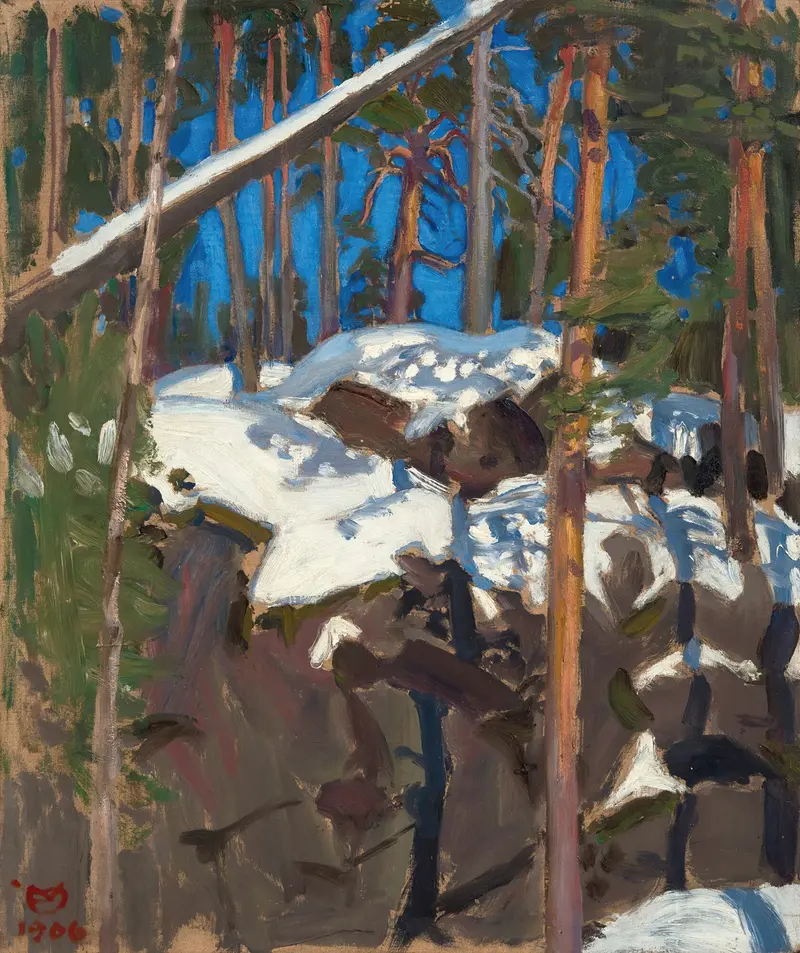
Spring Sun At Konginkangas
Akseli Gallen-Kallela
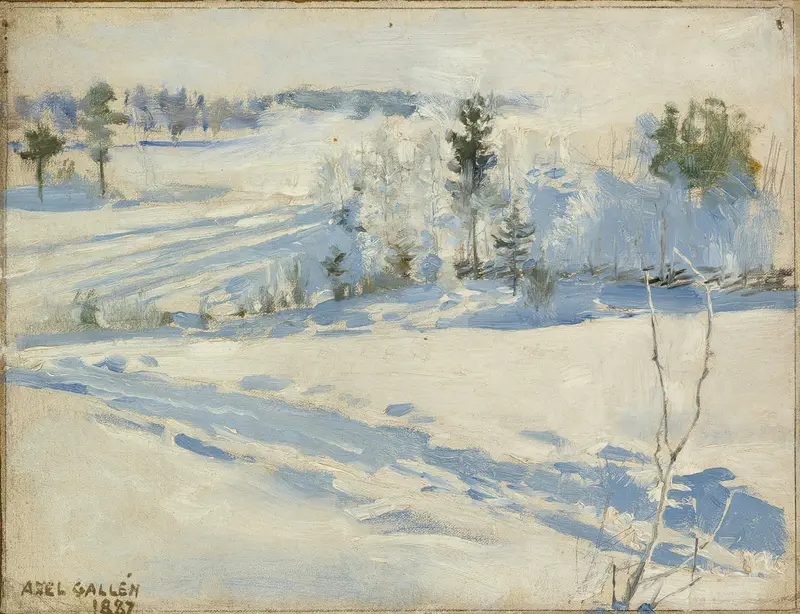
Winter Landscape
Akseli Gallen-Kallela

First Snow
Akseli Gallen-Kallela
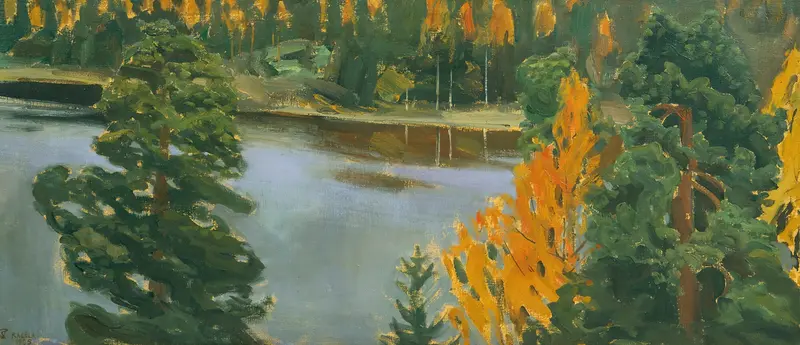
Lake View In Autumn
Akseli Gallen-Kallela
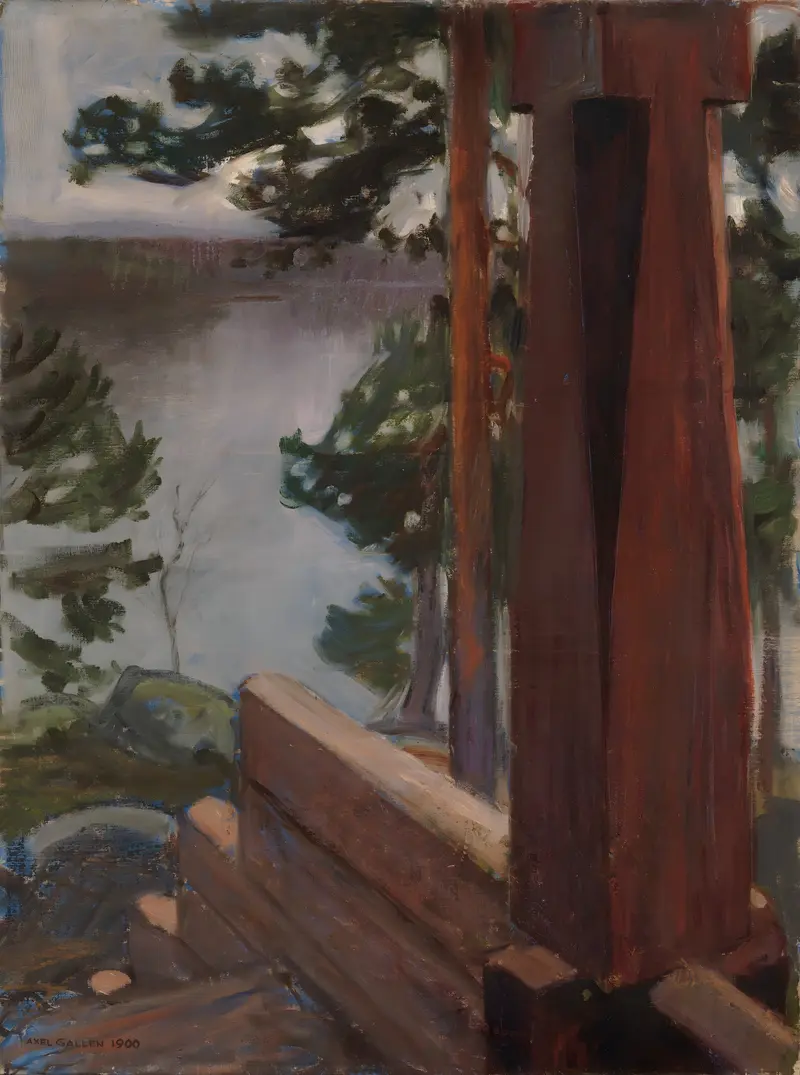
The Kalela Porch
Akseli Gallen-Kallela

Light Behind The Clouds
Akseli Gallen-Kallela
More Genre Scene Art

Banquet of the Officers of the St George Civic Guard
Frans Hals

Rembrandt and Saskia in the Scene of the Prodigal Son
Rembrandt van Rijn

Bal du moulin de la Galette
Pierre-Auguste Renoir

Quadrille at the Moulin Rouge
Henri de Toulouse-Lautrec

A Burial at Ornans
Gustave Courbet

When Will You Marry?
Paul Gauguin