
By the River of Tuonela, study for the Jusélius Mausoleum frescos — History & Facts
A single oar slices into black water, and all eyes—some defiant, some hollow—are caught in the hush of a crossing. The central figure, gaunt and intent, pulls a boat toward the river’s edge, his body tense with purpose. Around him, the living and the dead seem to mingle: a girl with downcast eyes clutches her garment, while an old woman peers out from the shadows, her cane a fragile anchor to the world behind.
The palette is somber, the river an inky void, and the figures are caught between resignation and dread. Every gesture here is a signal: the bowed heads, the nakedness, the way the darkness swallows the left edge of the scene. The composition draws you into the mythic threshold, where fate is not chosen but awaited. Painted in 1903 as a study for the Jusélius Mausoleum frescos, this work by Akseli Gallen-Kallela stands at the intersection of Symbolism and Finnish national romanticism.
At the turn of the twentieth century, artists across Europe turned to myth and legend to express the anxieties and hopes of a rapidly changing world. In Finland, the Kalevala and other epic tales provided a wellspring of imagery for painters seeking to define a national identity. Gallen-Kallela’s vision of the River of Tuonela—an underworld crossing from Finnish mythology—resonates with the era’s fascination with mortality and the afterlife.
Though history has kept few traces of this particular study’s journey, its haunting presence invites you to linger at the riverbank, where every face tells a different story of departure.
More Artworks by Akseli Gallen-Kallela
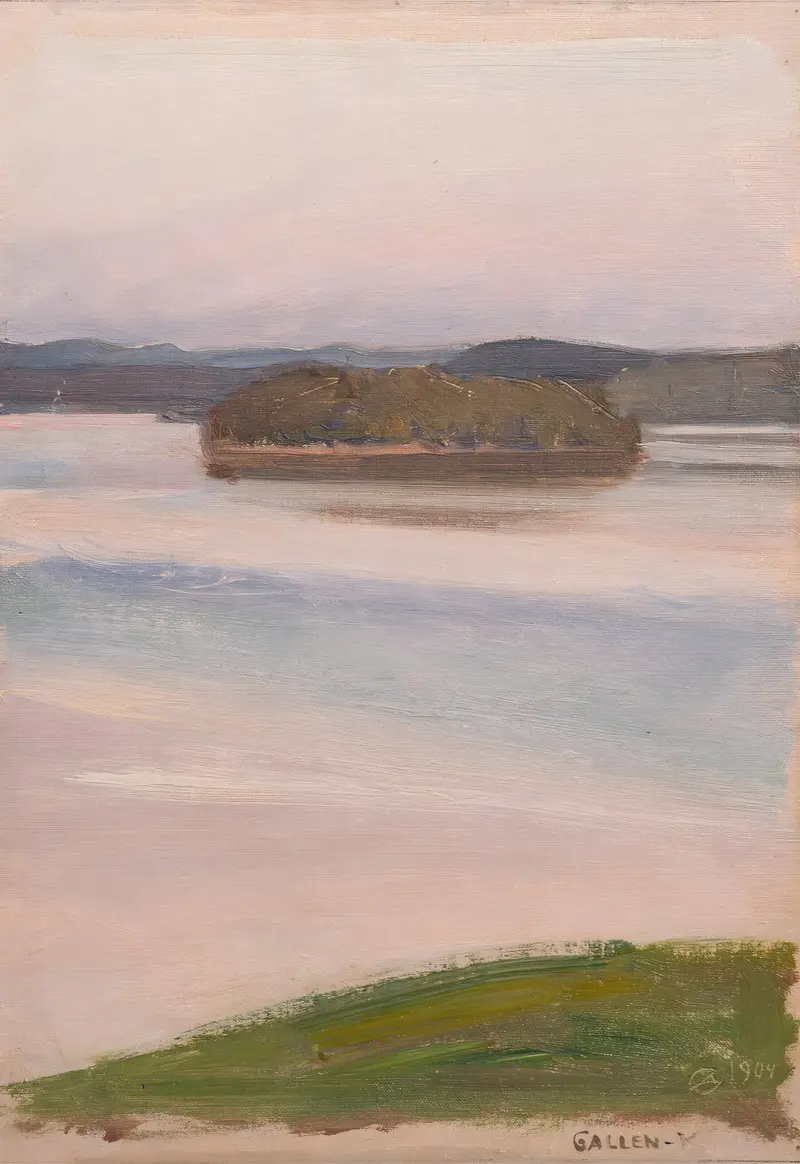
Lake Keitele
Akseli Gallen-Kallela
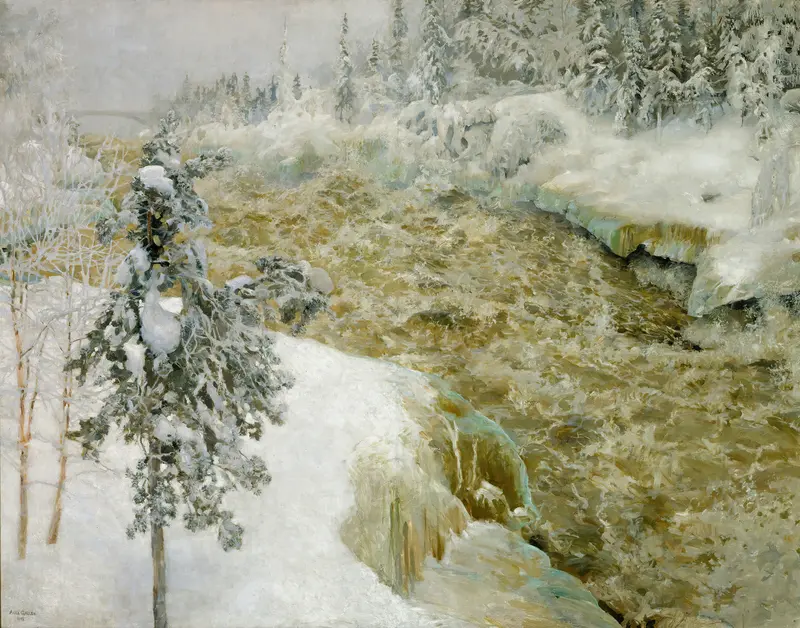
Imatra Falls in Snow ; Imatra in Winter
Akseli Gallen-Kallela
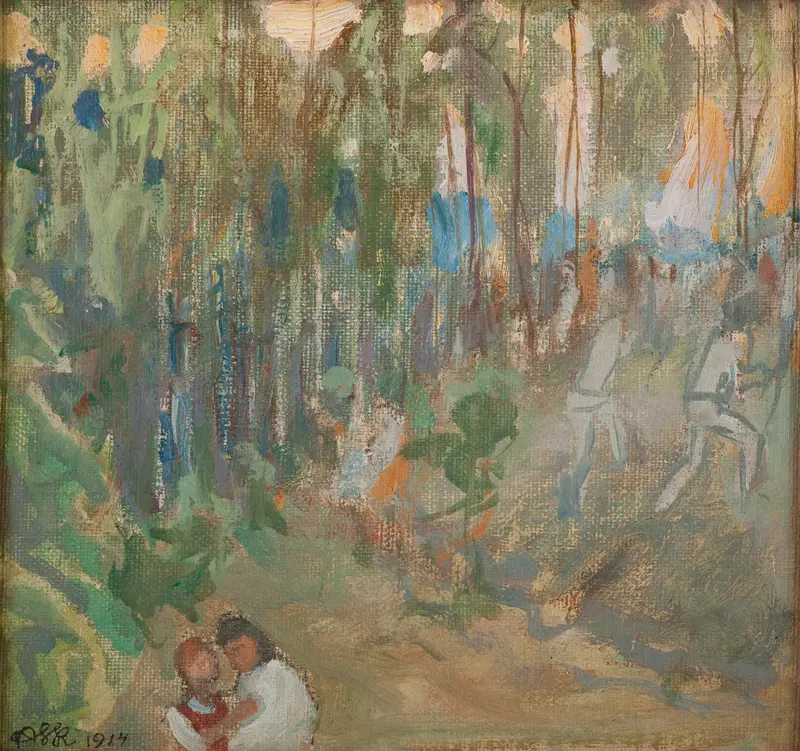
Vainovalkeat
Akseli Gallen-Kallela
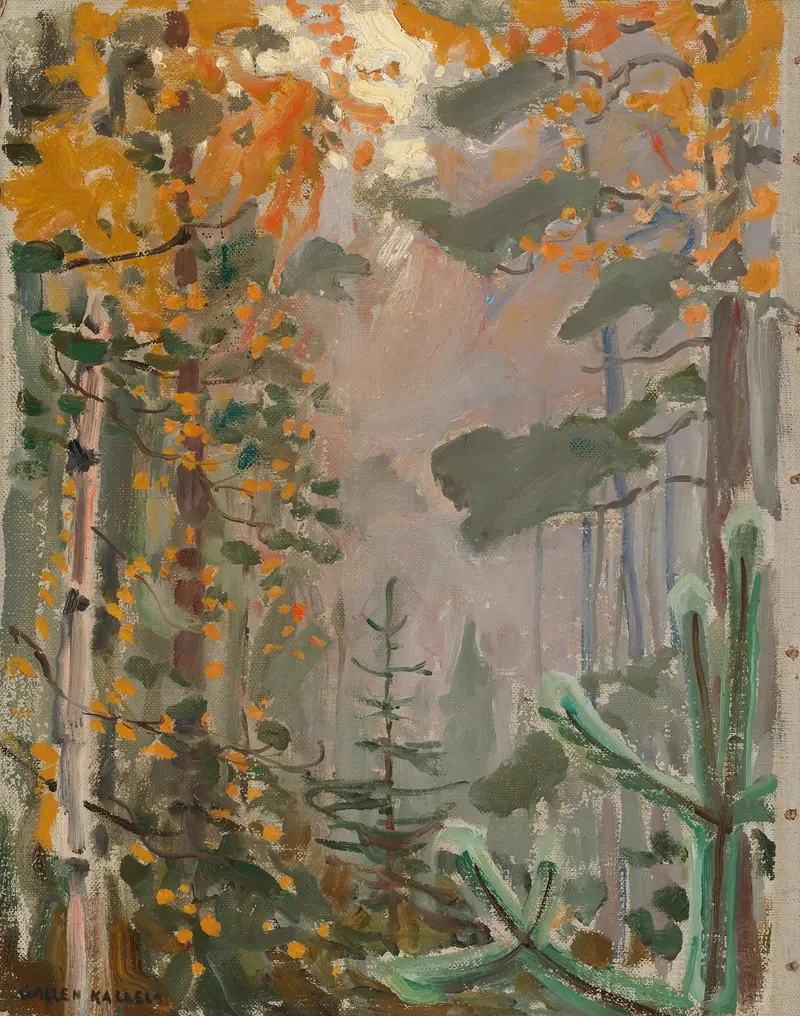
Autumn Landscape
Akseli Gallen-Kallela
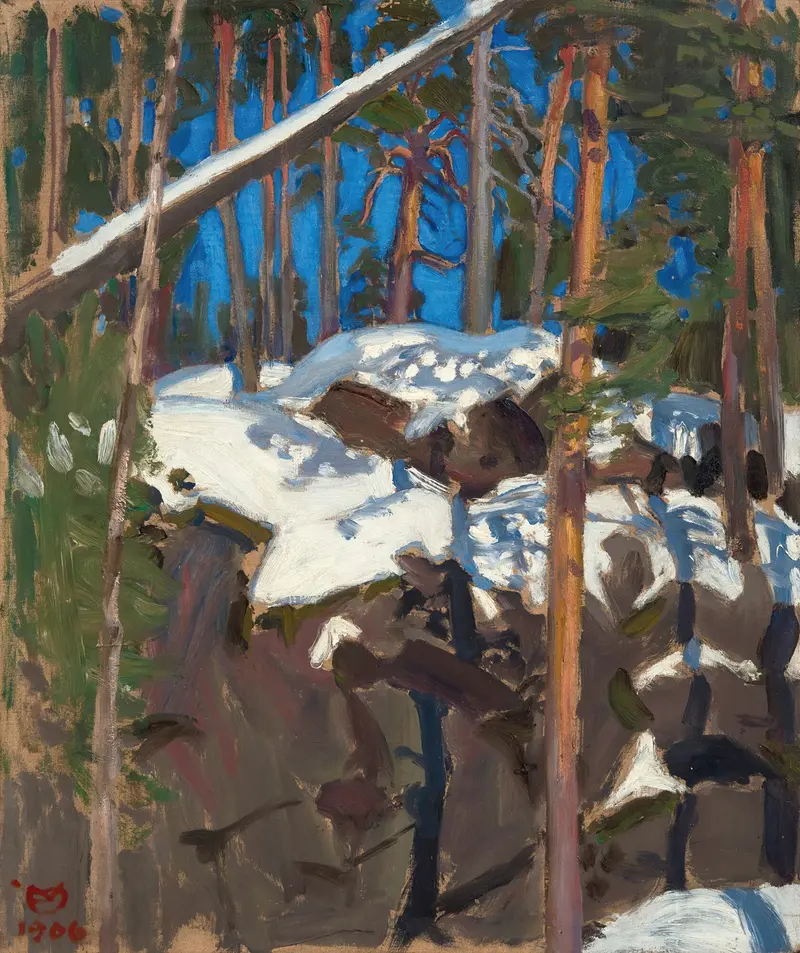
Spring Sun At Konginkangas
Akseli Gallen-Kallela
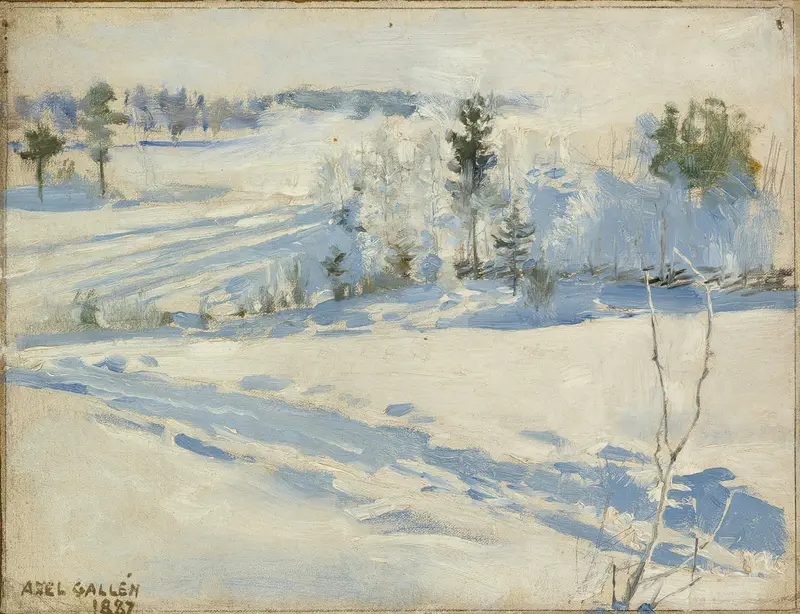
Winter Landscape
Akseli Gallen-Kallela

First Snow
Akseli Gallen-Kallela
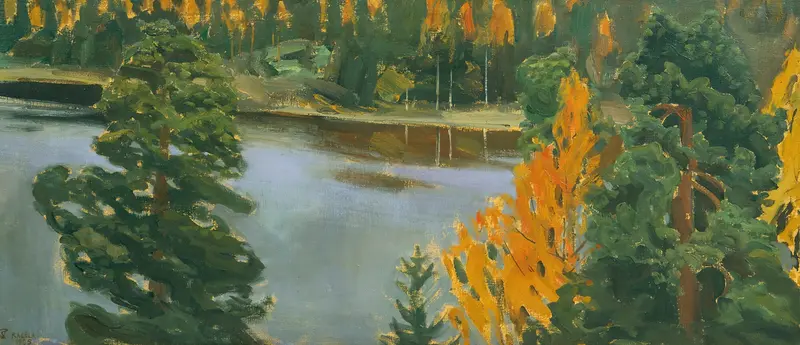
Lake View In Autumn
Akseli Gallen-Kallela
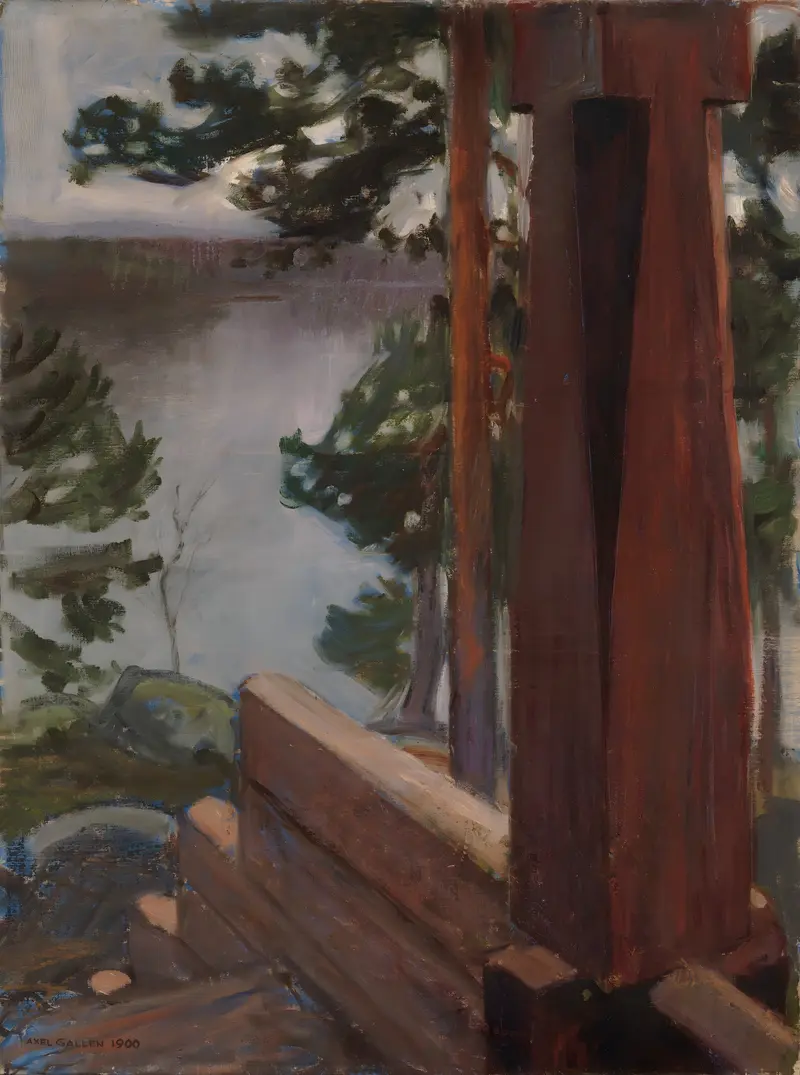
The Kalela Porch
Akseli Gallen-Kallela

Light Behind The Clouds
Akseli Gallen-Kallela





