
Concert in the Ruins — History & Facts
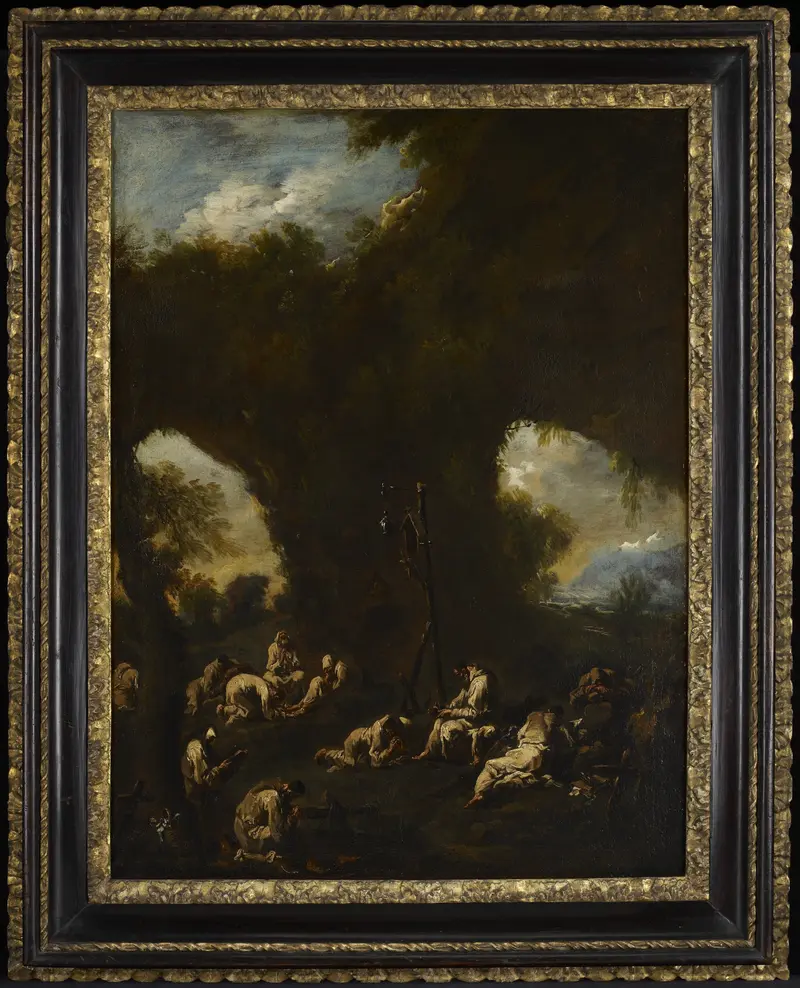
A gathering of musicians, huddled in the shadow of crumbling stone and wild greenery, draws the viewer into a world where music and ruin coexist. The eye is first caught by the figures in the foreground, their white garments gleaming against the dark, mossy walls. Each gesture is deliberate: one bows his head to the strings, another leans in, lost in concentration, while a third sprawls on the ground, perhaps swept away by the melody or the melancholy of the setting.
The great arch above frames a patch of luminous sky, its golden light barely touching the broken statues and scattered relics below. This contrast of decay and artistry, of human creation persisting amidst the collapse of civilization, is the painting’s quiet drama. Works like Concert in the Ruins by Alessandro Magnasco belong to a tradition that flourished in Baroque Italy, when artists delighted in placing the sacred or the civilized within landscapes of ruin. Such scenes were not merely picturesque; they spoke to a fascination with the passage of time, the persistence of culture, and the fragility of human achievement.
Magnasco, known for his restless brushwork and theatrical compositions, often peopled his canvases with musicians, monks, or beggars, inviting viewers to reflect on the uneasy beauty of disorder. The date of this painting remains unknown, and history has kept few traces of its early life, but today it finds a home in the Nationalmuseum, Stockholm, where its uneasy harmony still invites us to listen with our eyes.
More Artworks by Alessandro Magnasco

The Synagogue
Alessandro Magnasco
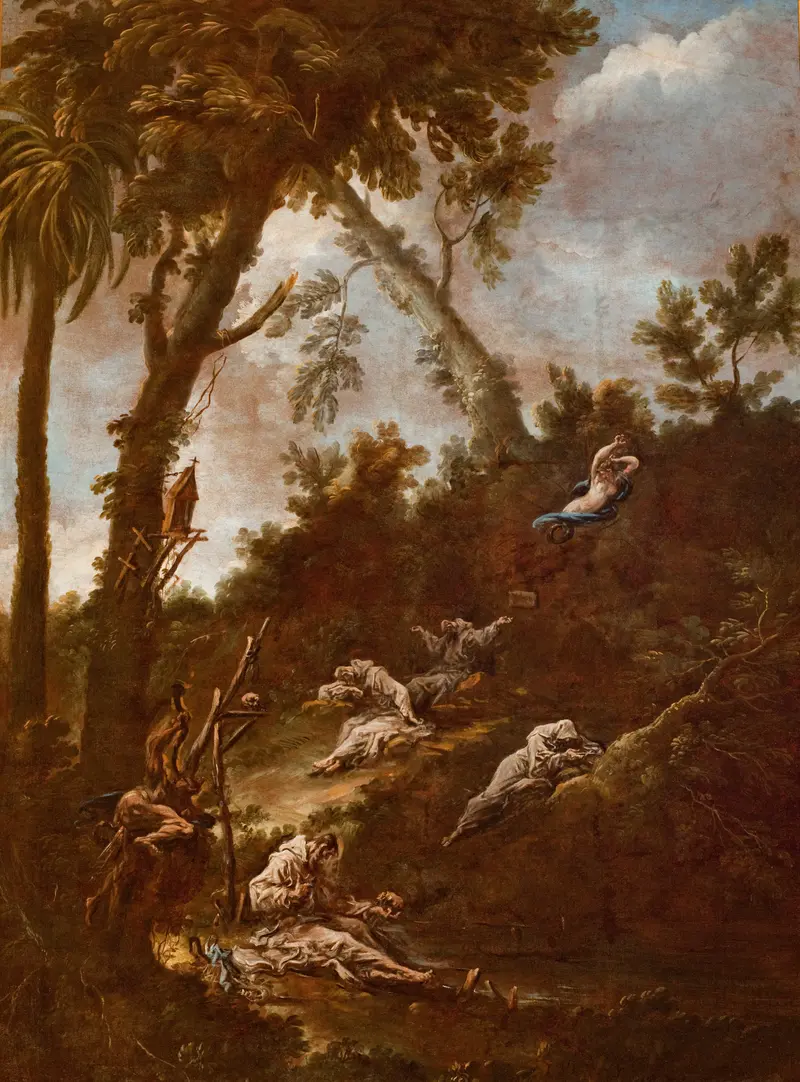
Hermits (Anachorets)
Alessandro Magnasco
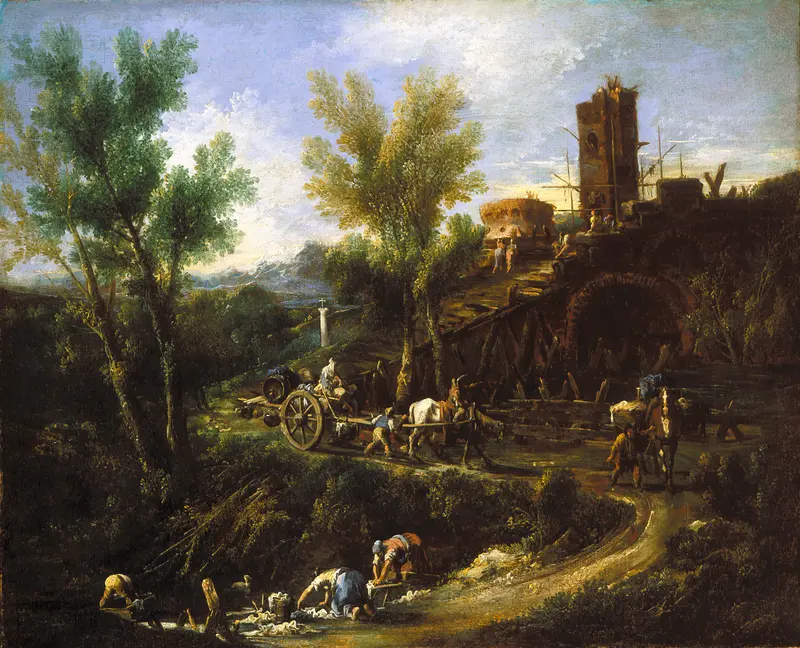
Landscape with Gypsies and Washerwomen
Alessandro Magnasco
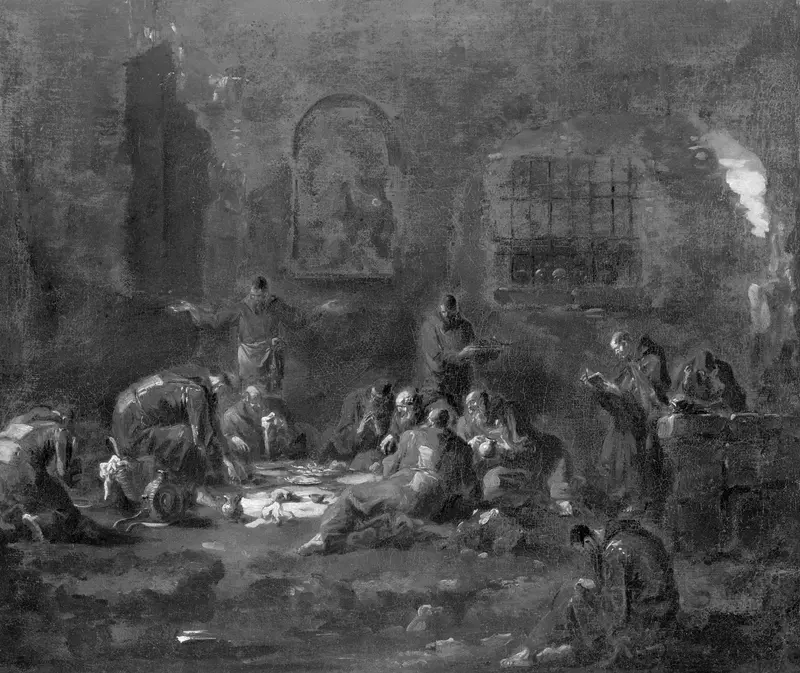
Monks at Supper
Alessandro Magnasco
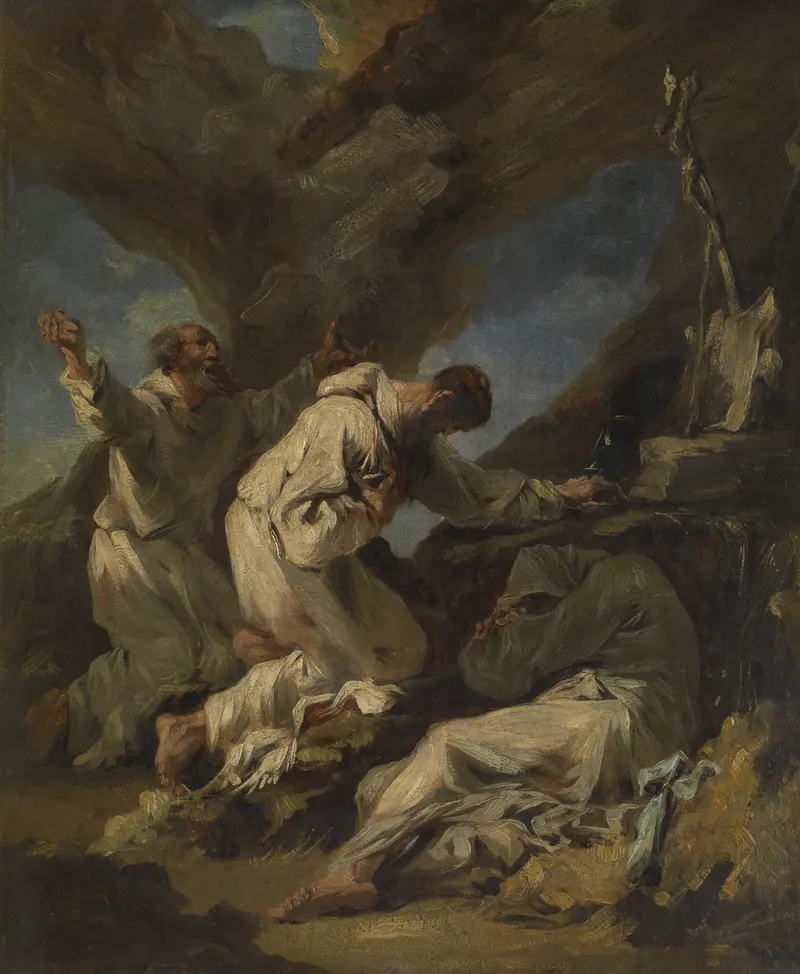
Praying Monks
Alessandro Magnasco
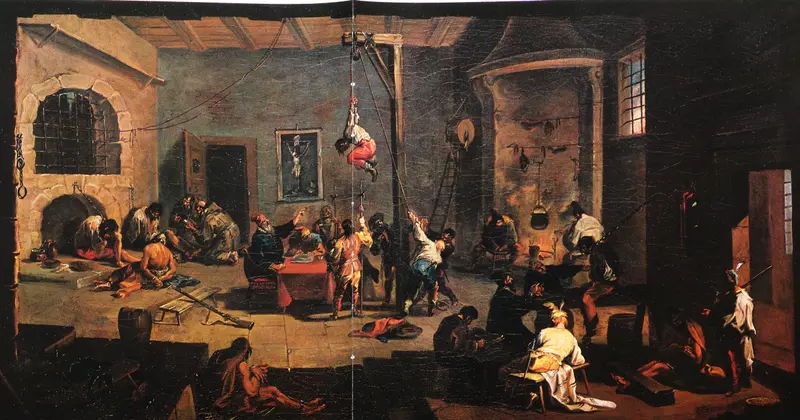
Torture Scene
Alessandro Magnasco
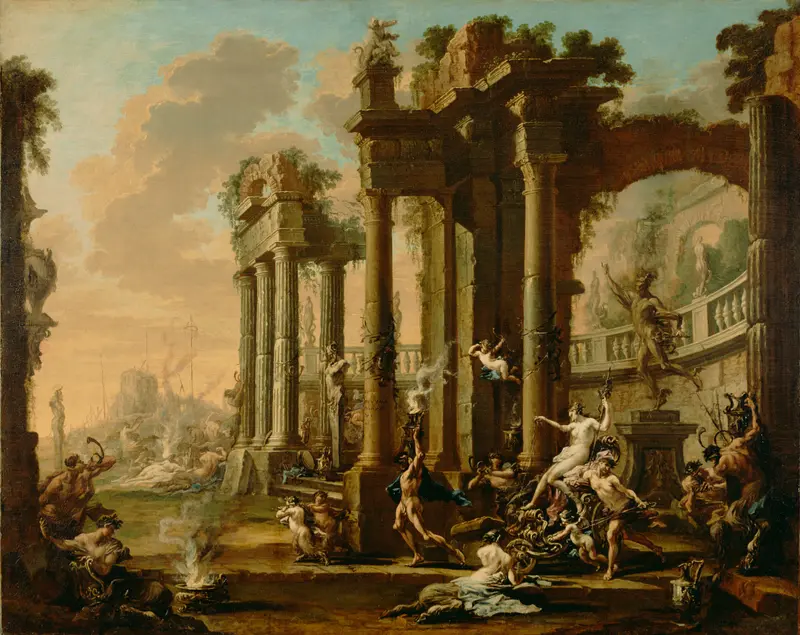
The Triumph of Venus
Alessandro Magnasco
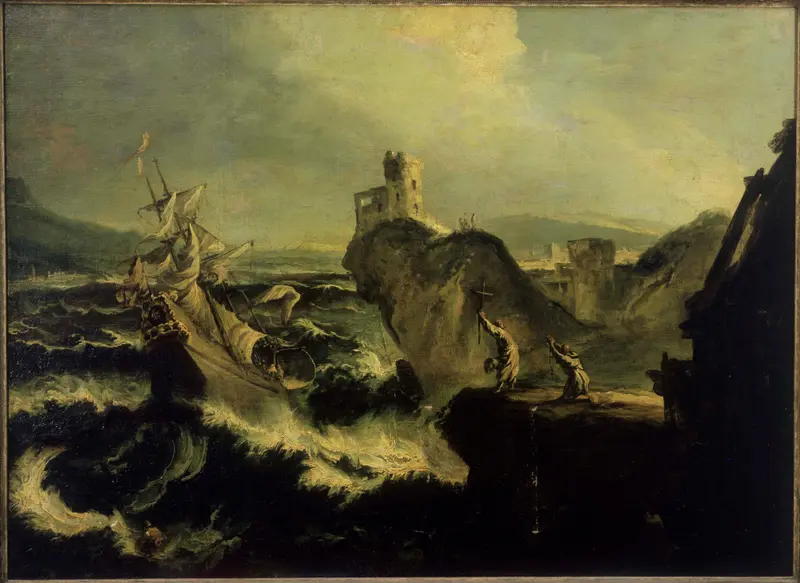
The Shipwreck
Alessandro Magnasco
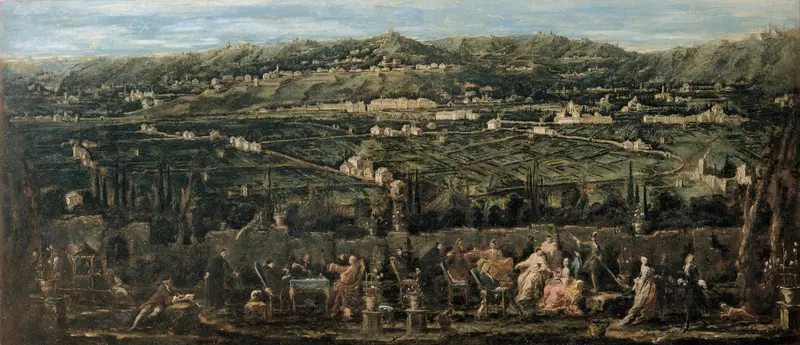
Garden Party in Albaro
Alessandro Magnasco
Monks Praying in a Grotto
Alessandro Magnasco
More Genre Scene Art

Banquet of the Officers of the St George Civic Guard
Frans Hals

Rembrandt and Saskia in the Scene of the Prodigal Son
Rembrandt van Rijn

Bal du moulin de la Galette
Pierre-Auguste Renoir

Quadrille at the Moulin Rouge
Henri de Toulouse-Lautrec

A Burial at Ornans
Gustave Courbet

When Will You Marry?
Paul Gauguin