
Cow and Boy — History & Facts
A shaft of northern light glances off the wet flank of a cow, its hide rendered in quick, confident strokes, while just beyond, a boy stands knee-deep in water, his form half-merged with the shimmering lake. The meeting of animal and child is neither staged nor sentimental; instead, it feels caught in the midst of some everyday ritual, as if the painter had stumbled upon a private world at the water’s edge. The cow’s lowered head and the boy’s steady gaze create a silent conversation, their reflections dissolving into ripples and reeds.
The brushwork is loose but deliberate, letting the landscape breathe—sky, hill, and water all flicker with the energy of a fleeting moment. Even the clouds seem to be in motion, echoing the quiet restlessness of the scene. Painted in 1885, Cow and Boy belongs to a world where rural life was both subject and setting for a new kind of painting in northern Europe. Artists like Akseli Gallen-Kallela were beginning to look beyond grand historical themes, turning instead to the rhythms of everyday existence and the landscapes that shaped them.
Such works were rarely commissioned by the elite; rather, they were often created for exhibitions or private collectors interested in the truth of modern life. The painting now resides in a Finnish national collection, a reminder that history has kept few traces of these small, luminous encounters—except, perhaps, in the way the light still glances off the water, drawing the viewer back for another look.
More Artworks by Akseli Gallen-Kallela
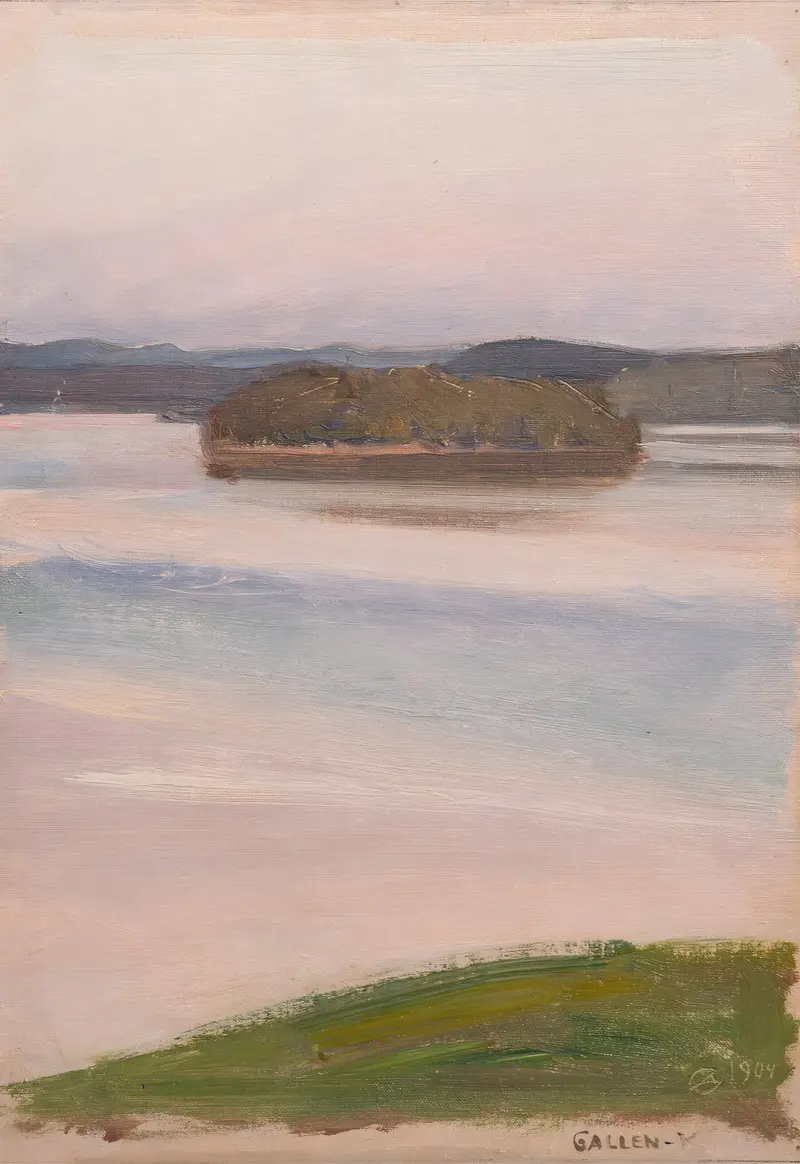
Lake Keitele
Akseli Gallen-Kallela
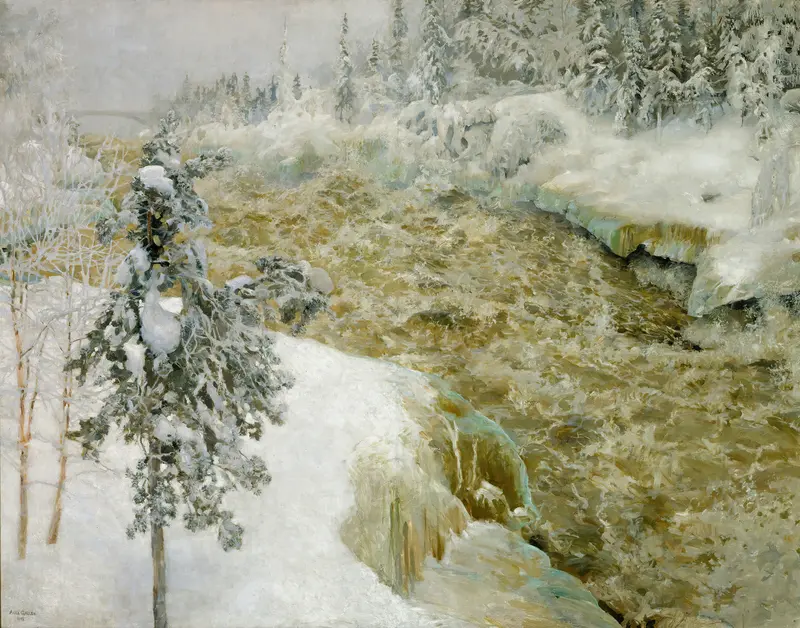
Imatra Falls in Snow ; Imatra in Winter
Akseli Gallen-Kallela
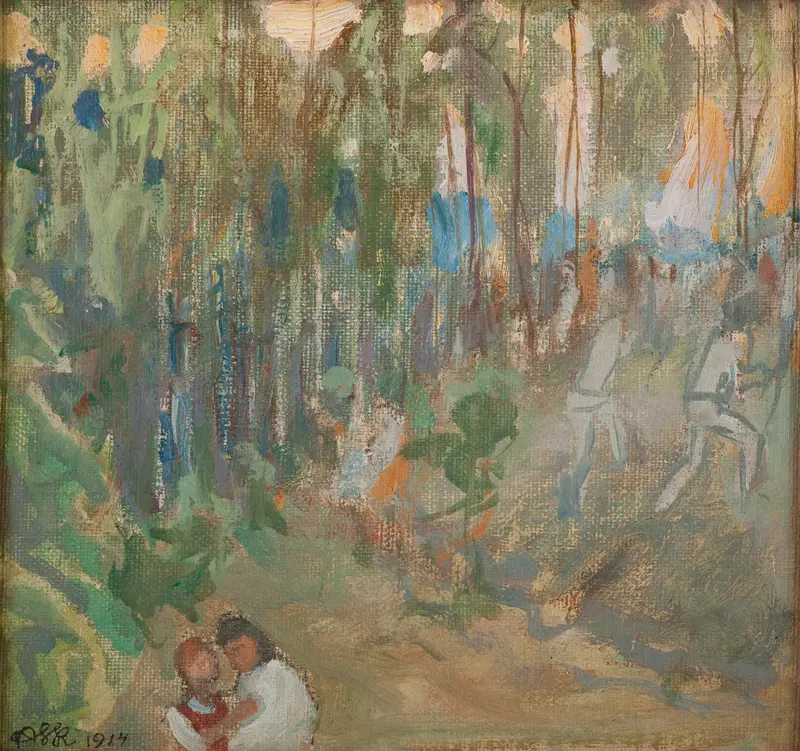
Vainovalkeat
Akseli Gallen-Kallela
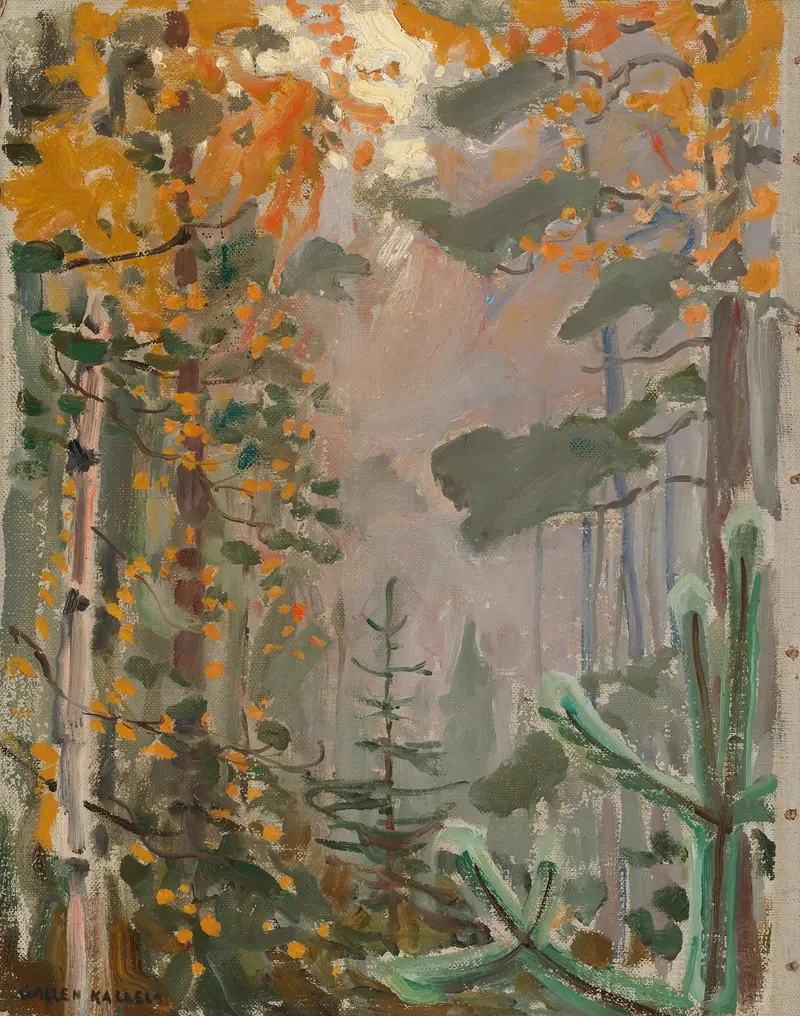
Autumn Landscape
Akseli Gallen-Kallela
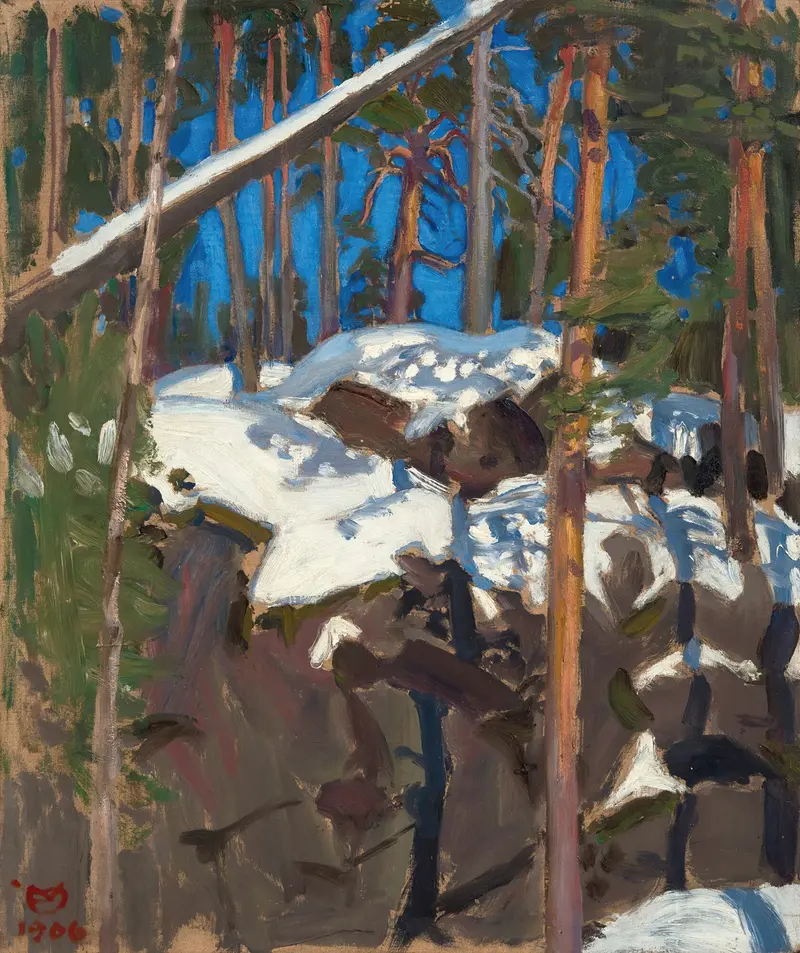
Spring Sun At Konginkangas
Akseli Gallen-Kallela
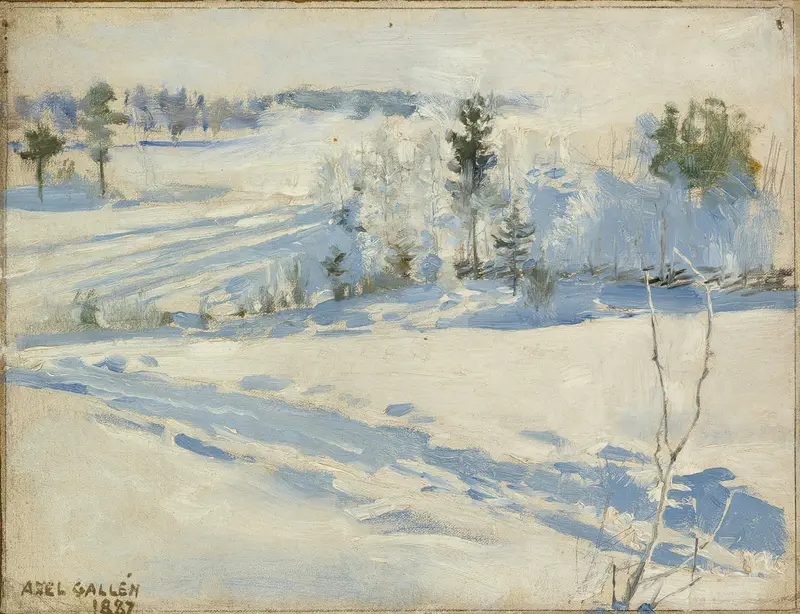
Winter Landscape
Akseli Gallen-Kallela

First Snow
Akseli Gallen-Kallela
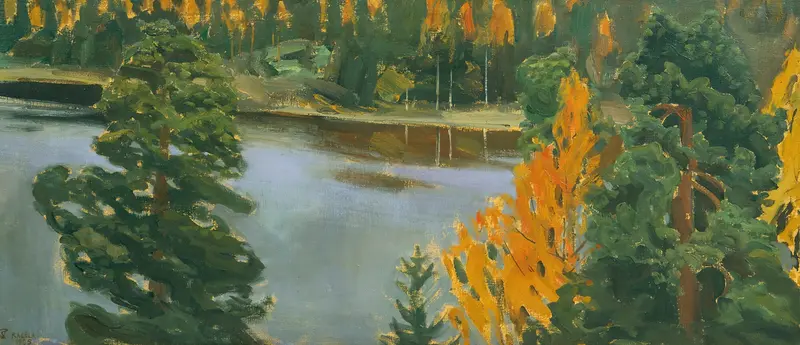
Lake View In Autumn
Akseli Gallen-Kallela
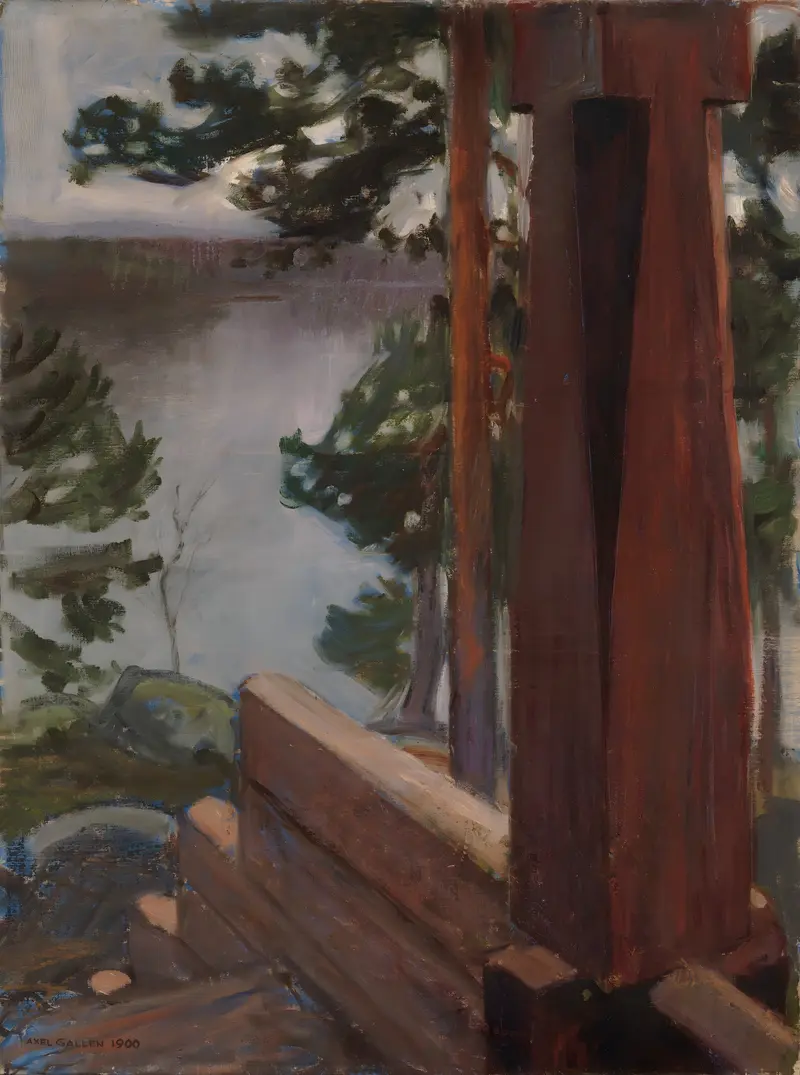
The Kalela Porch
Akseli Gallen-Kallela

Light Behind The Clouds
Akseli Gallen-Kallela
More Genre Scene Art

Banquet of the Officers of the St George Civic Guard
Frans Hals

Rembrandt and Saskia in the Scene of the Prodigal Son
Rembrandt van Rijn

Bal du moulin de la Galette
Pierre-Auguste Renoir

Quadrille at the Moulin Rouge
Henri de Toulouse-Lautrec

A Burial at Ornans
Gustave Courbet

When Will You Marry?
Paul Gauguin