
Demosthenes (384–322 BC) — History & Facts
When William Blake painted Demosthenes (384–322 BC) in 1800, he was not simply illustrating a famous orator, but engaging in a dialogue with the Enlightenment fascination for classical heroes. The choice of Demosthenes—a figure celebrated for his oratory against Macedonian domination of Athens—was itself a statement in an era marked by political upheaval and the struggle for liberty. Blake’s contemporaries were deeply invested in the meaning of ancient democracy, and the figure of Demosthenes had become a touchstone for debates about the power of speech and the fate of nations. In the work, Blake captures Demosthenes at the moment of passionate address, perhaps evoking one of his legendary Philippics against Philip II.
The orator’s body leans forward, mouth open in mid-speech, hand raised as if to command the attention of a restless assembly. The background is spare, focusing all attention on the figure’s intensity; the drapery clings to his form, suggesting both classical statuary and the living force of the man. Unlike earlier neoclassical treatments—such as Jean-Léon Gérôme’s more polished depictions—Blake’s Demosthenes is raw, almost feverish, his features animated by a private fire.
The emphasis on gesture and expression over idealized beauty gives the work its particular charge. The precise medium of Demosthenes (384–322 BC) remains uncertain, as does its early provenance; no original commission or patron is firmly recorded. The painting’s style and subject place it squarely within the period when Blake was seeking recognition as both painter and poet, often working outside the mainstream art world. Today, the work is recognized as part of Blake’s ongoing exploration of visionary figures—ancient and modern—who defy tyranny through the force of the spoken word.
Though not as widely exhibited as his illuminated books, Demosthenes stands as a testament to Blake’s fascination with the moral struggles of history and his refusal to separate art from politics.
More Artworks by William Blake
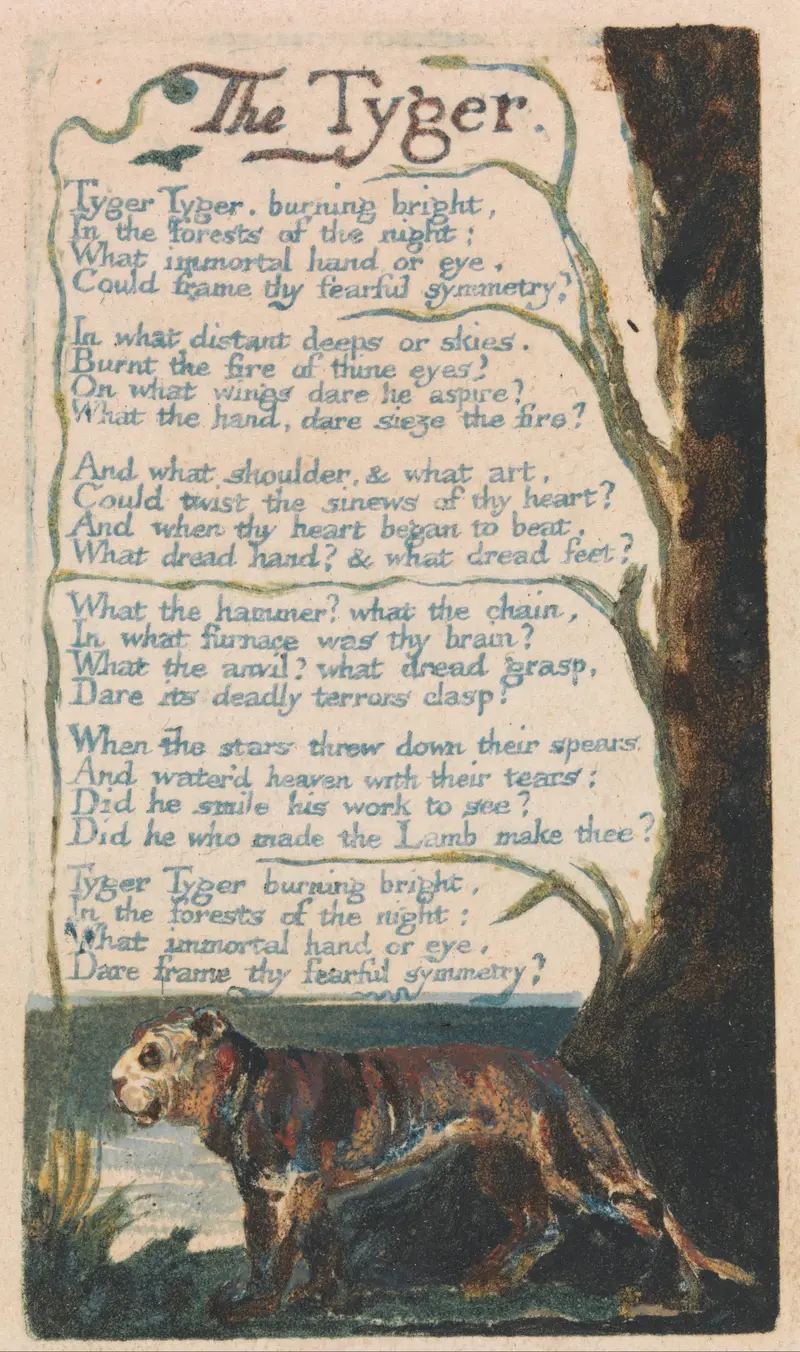
The Tyger
William Blake

Christ Blessing
William Blake
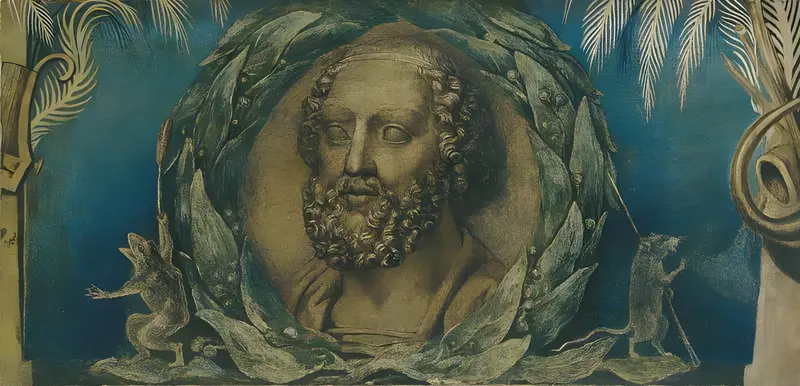
Homer
William Blake
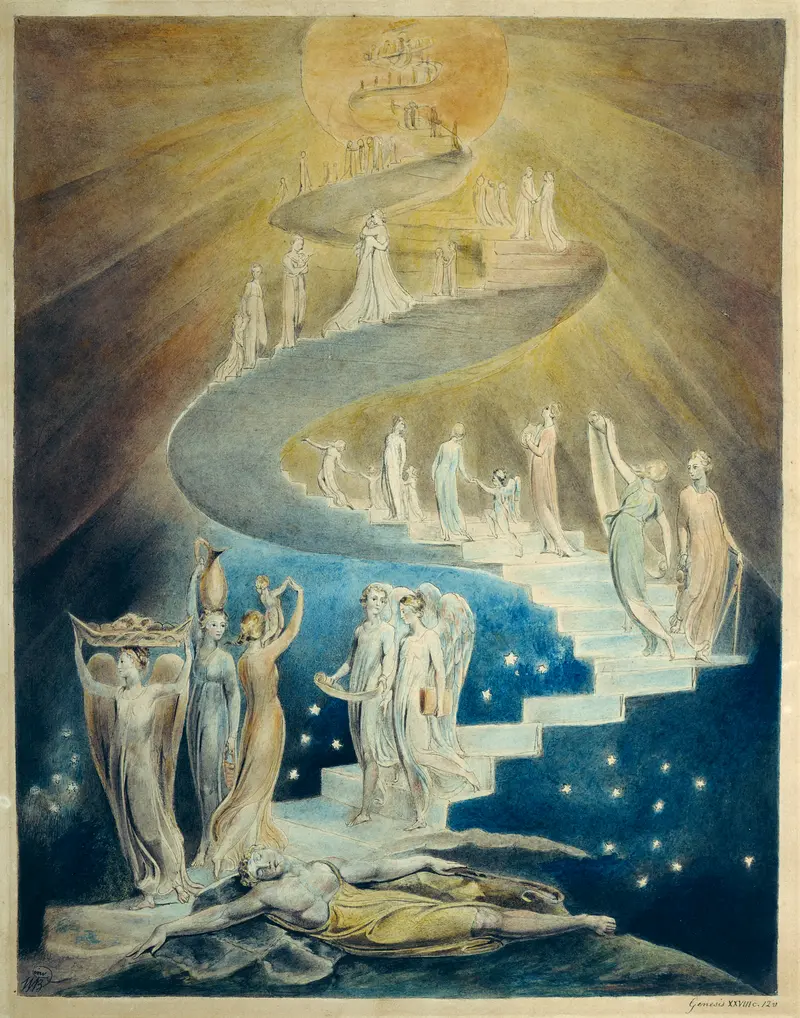
Jacob's Ladder
William Blake
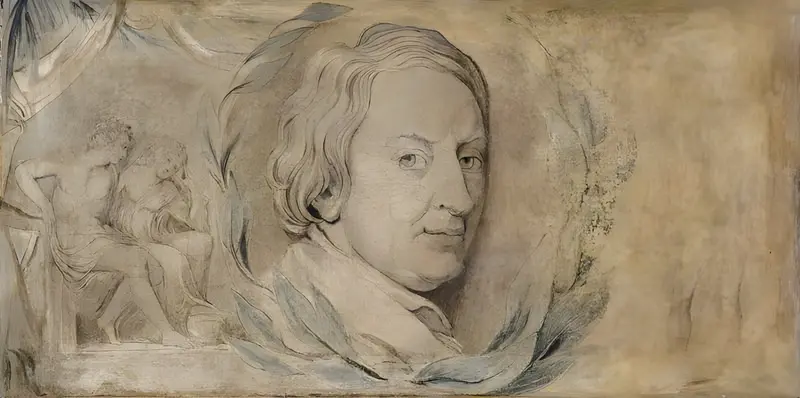
John Dryden (1631–1700)
William Blake

Landscape near Felpham
William Blake
Sacrifice of Job
William Blake
Christ's Entry into Jerusalem
William Blake
The Ancient of Days
William Blake
Adam Naming the Beasts
William Blake





