
Diana and her Companions, Diana after the Chase — History & Facts
A single, cool gaze commands the center of the canvas, where Diana, goddess of the hunt, sits surrounded by the trophies of her domain. The painter, Abraham Janssens, has chosen to compress the scene so tightly that every gesture and glance crackles with tension: Diana’s hand hovers over her hounds, her bow held upright like a scepter of authority, while her companions cluster close, one whispering urgently, another absorbed in her own task. The lush blue drapery and the gleaming flesh of the figures draw the eye in a spiral, from the goddess’s calm face to the heap of game—hare, birds, and deer—laid out in a silent testament to the morning’s labor.
The arrangement is not just a record of abundance; it is a tableau of power and intimacy, where the goddess’s wildness is matched by the careful choreography of her attendants. Painted in 1613, this work belongs to the world of early seventeenth-century Antwerp, when mythological scenes were prized by collectors eager to display both learning and taste. Artists like Janssens drew on the classical revival sweeping through Flanders, blending the drama of Italian Baroque with the cool precision of Netherlandish realism. Such paintings were often destined for private chambers or studioli, where their sensuality and erudition could be savored in close quarters.
Little is recorded about the specific journey of this canvas, now in the collection of the Pinakothek, but its survival lets us glimpse a moment when gods and mortals, myth and matter, mingled in the painter’s eye. The painting invites you to linger, to read the silent language of hands, glances, and fur, and to imagine the stories that unfold just beyond the frame.
More Artworks by Abraham Janssens

Jupiter Rebuked by Venus
Abraham Janssens
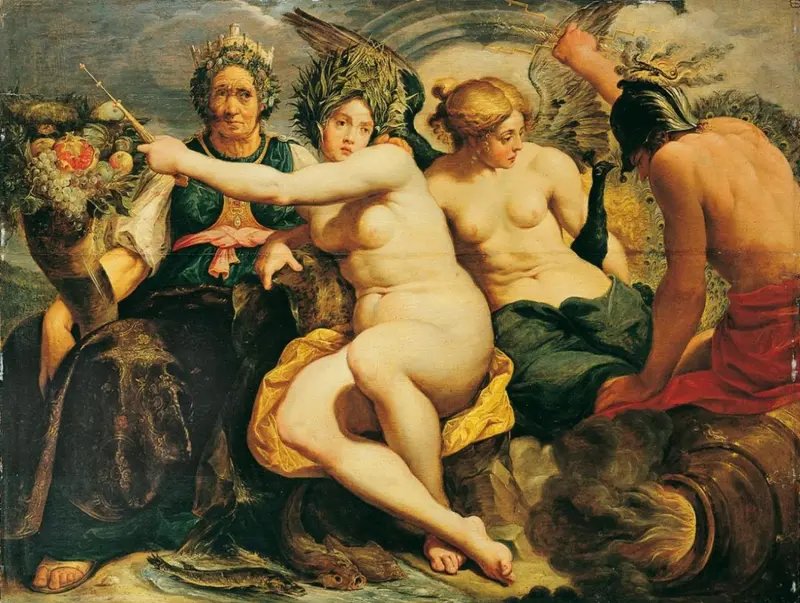
Allegorie der vier Elemente
Abraham Janssens
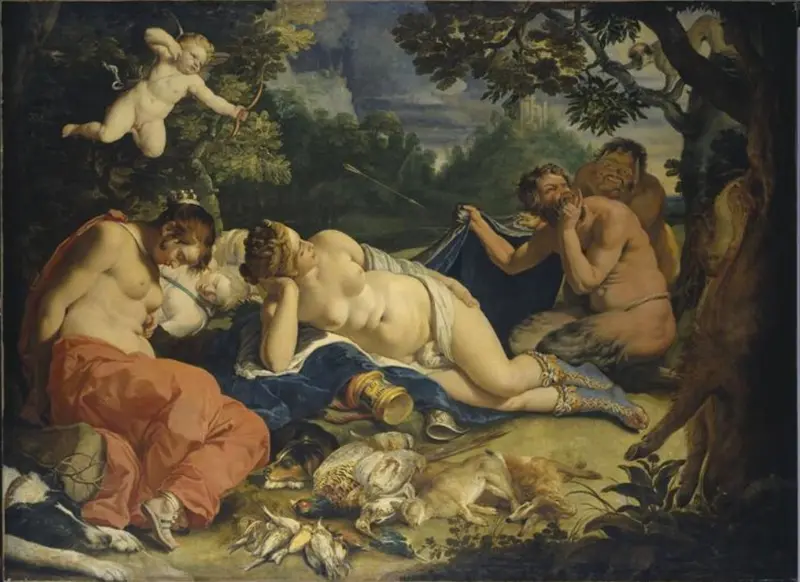
Diana and her nymphs spied on by satyrs
Abraham Janssens

Die Erweckung des Lazarus 153 Bavarian State Painting Collections
Abraham Janssens
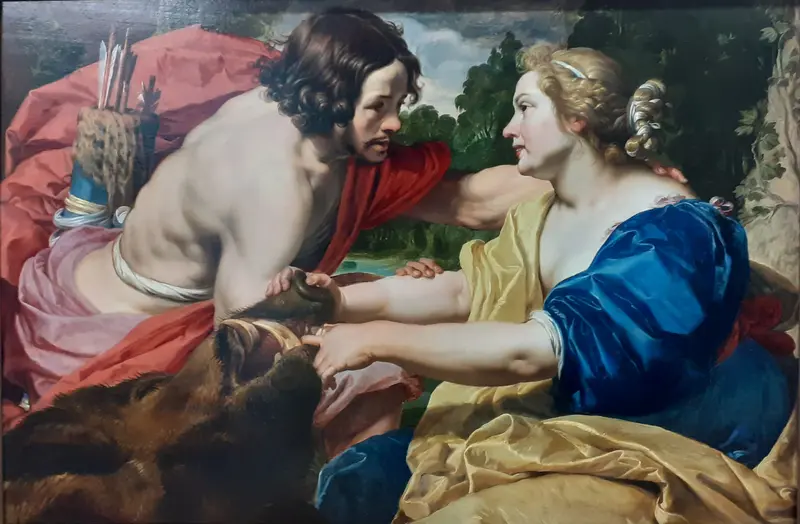
Meleager presents the head of the Calydonian Boar to Atalanta
Abraham Janssens
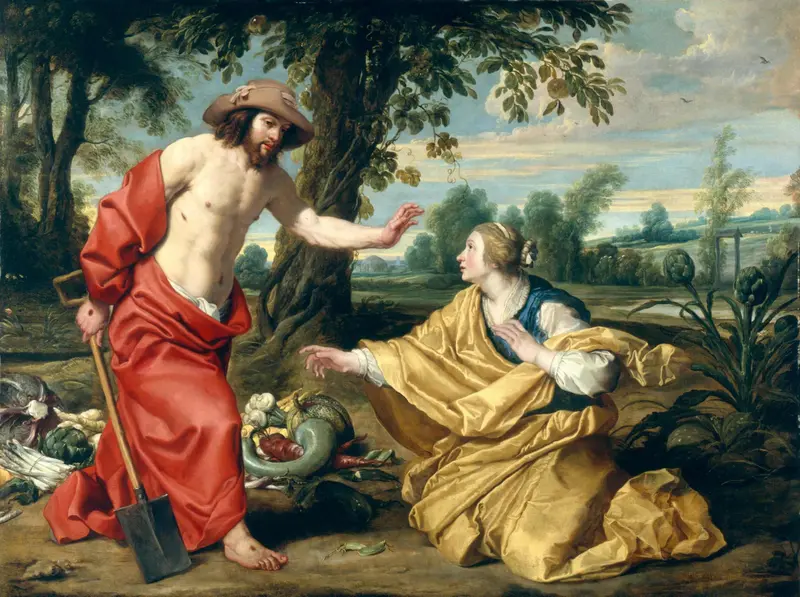
Noli me Tangere
Abraham Janssens
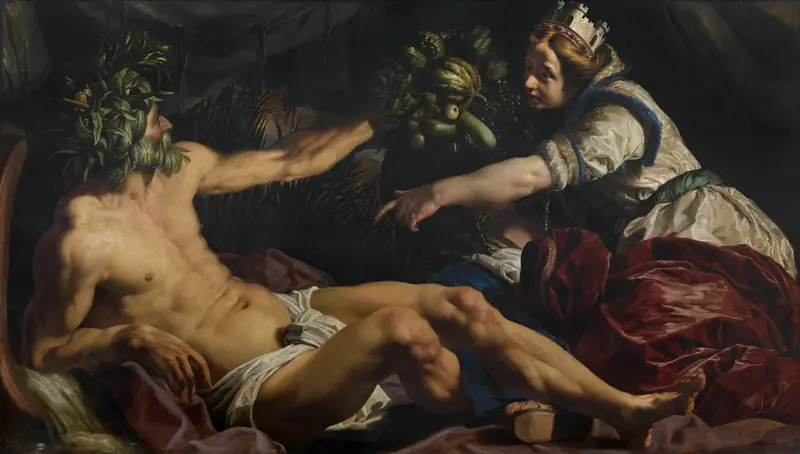
Scaldis and Antverpia
Abraham Janssens
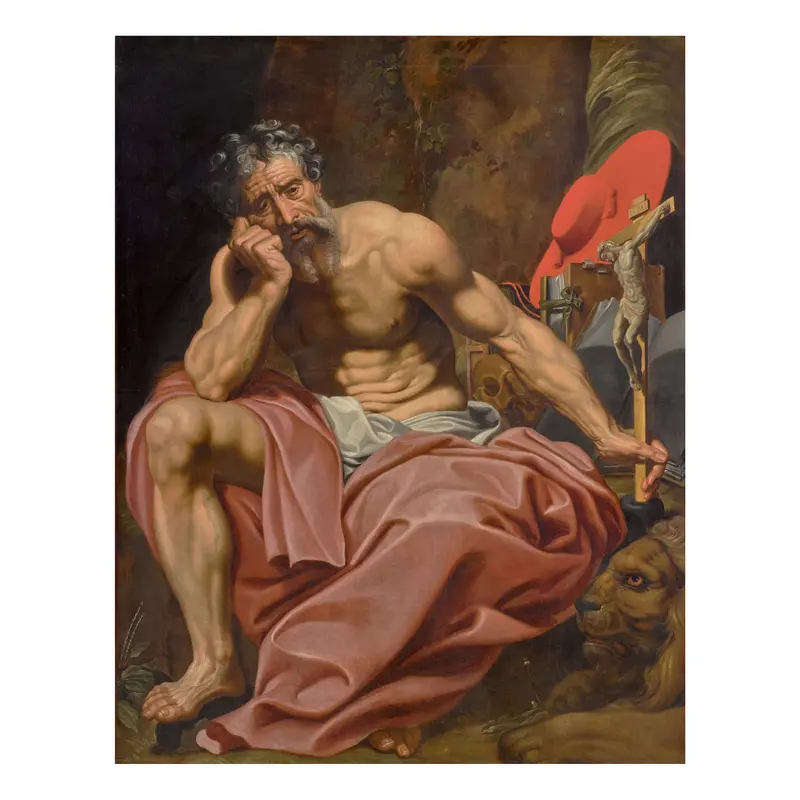
Saint Jerome
Abraham Janssens
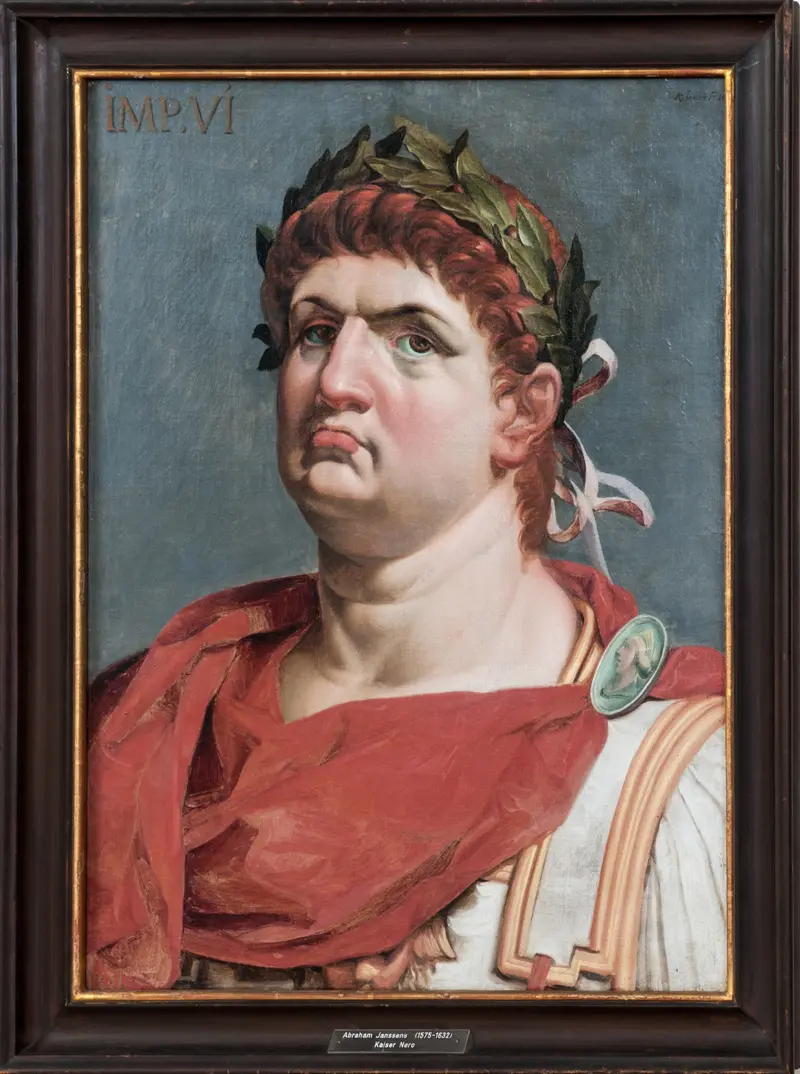
Nero
Abraham Janssens
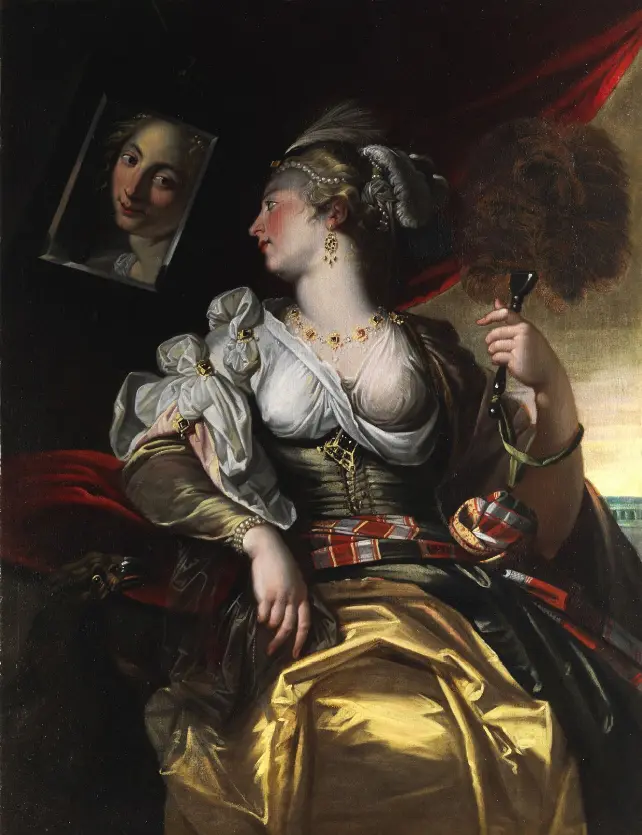
The Face
Abraham Janssens





