
Ebisu and Daikoku Celebrating the New Year Festival — History & Facts
When Ebisu and Daikoku Celebrating the New Year Festival appeared in Edo in 1804, it was part of a remarkable surge in popular prints that brought the gods themselves into the homes of ordinary townspeople. The work is one of the earliest known depictions by Katsushika Hokusai of the two most cheerful and approachable deities in the Japanese pantheon, Ebisu and Daikoku, whose images were believed to bring prosperity and good fortune for the coming year. At a time when New Year’s rituals were a blend of Shinto, Buddhist, and folk traditions, prints like this were not only art but talismans, exchanged and displayed to invite luck. Here, Hokusai captures Ebisu, the god of fishermen and luck, and Daikoku, the god of wealth and agriculture, in a moment of festive revelry.
Ebisu, with his fishing rod and a plump sea bream (symbol of good fortune), sits beside Daikoku, who wields his mallet of plenty and perches atop bales of rice. The two share sake, their broad smiles and round forms radiating warmth and abundance. The composition is animated by bold outlines and playful gestures, inviting the viewer to join the celebration.
Unlike the more formal and static portrayals by earlier ukiyo-e artists such as Torii Kiyonaga, Hokusai’s gods are approachable, nearly tumbling out of the frame with their energy. The precise medium of this work is uncertain, though it likely belongs to the genre of woodblock prints that made Hokusai a household name. While the original patron remains unknown, such prints were typically produced for the urban merchant class, who hung them in their homes and shops. Over the years, many impressions of this composition have circulated, making it difficult to trace the journey of any single sheet.
Today, examples can be found in major collections worldwide, a testament to Hokusai’s enduring appeal and his ability to bridge the worlds of the sacred and the everyday. This early depiction of Ebisu and Daikoku foreshadows the humor and inventiveness that would define Hokusai’s later work, including his celebrated Thirty-six Views of Mount Fuji.
More Artworks by Katsushika Hokusai

The Great Wave off Kanagawa
Katsushika Hokusai
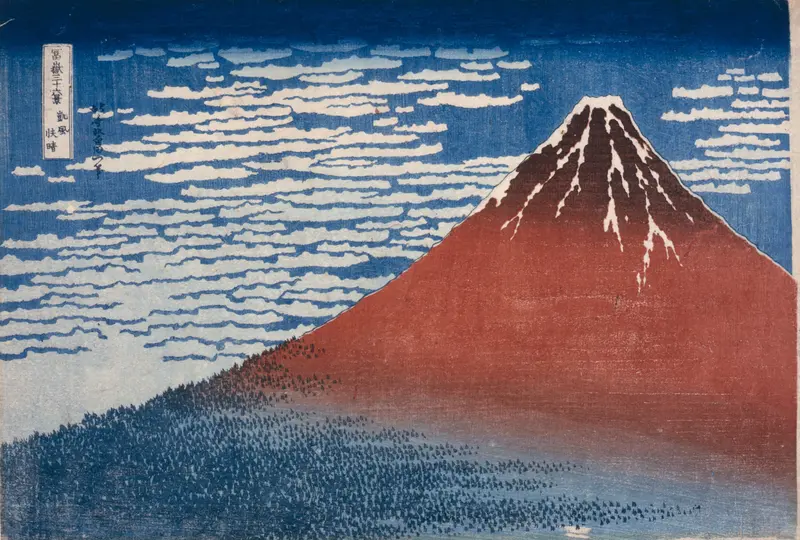
Fine Wind, Clear Morning (Red Fuji)
Katsushika Hokusai
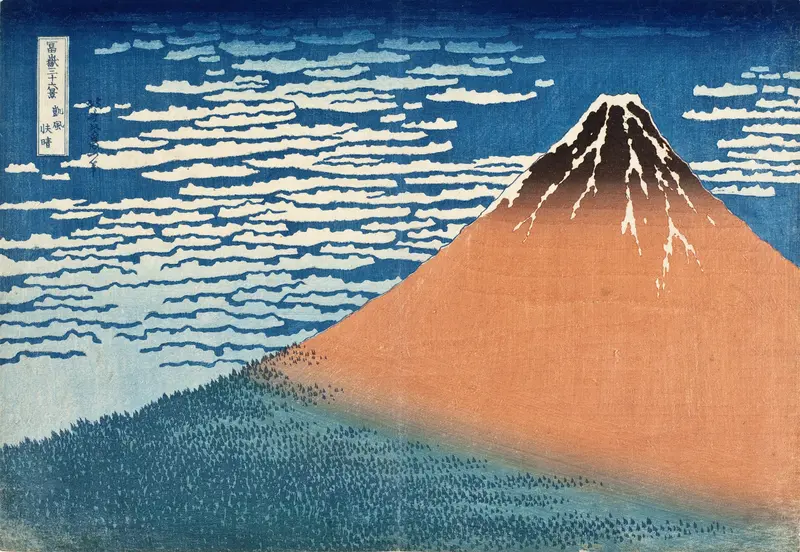
South Wind, Clear Dawn
Katsushika Hokusai
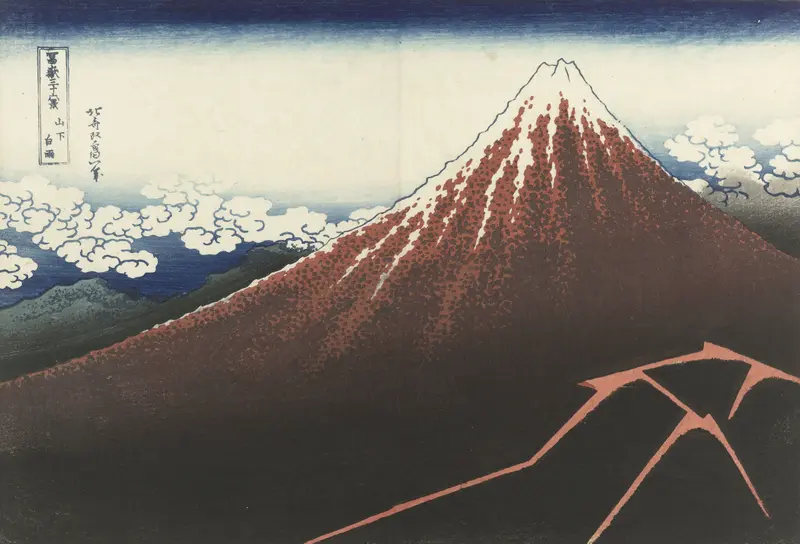
Rainstorm Beneath the Summit
Katsushika Hokusai
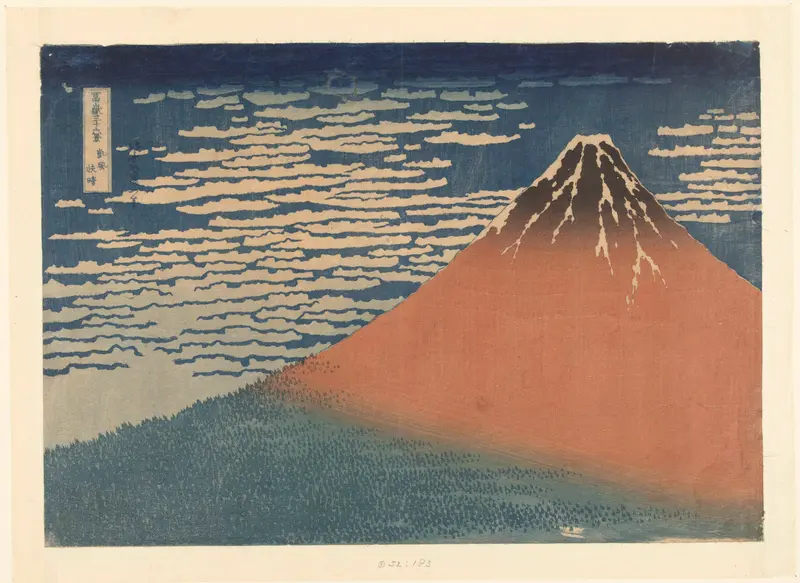
Clear Weather with a Southerly Wind
Katsushika Hokusai
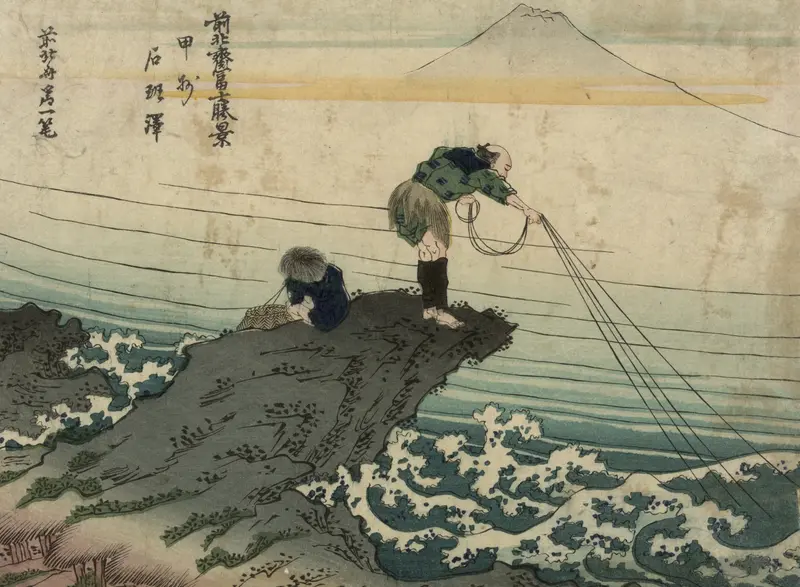
Kōshū kajikazawa
Katsushika Hokusai
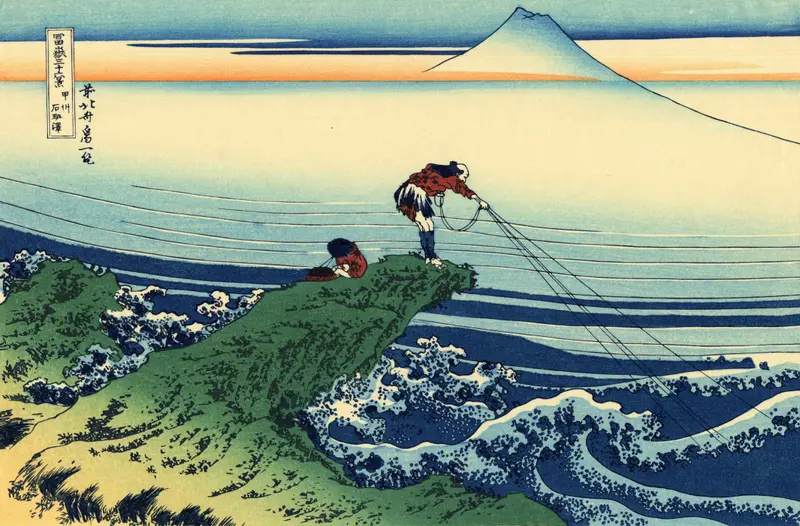
Kōshū kajikazawa 2
Katsushika Hokusai
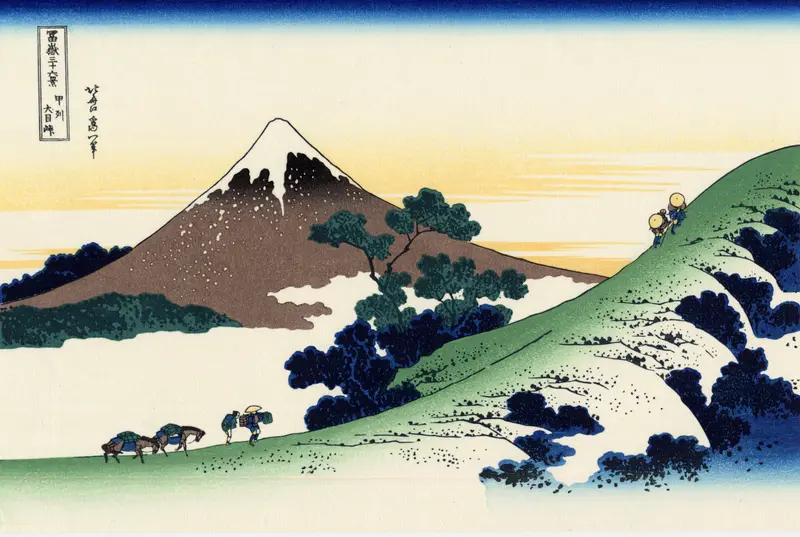
Inume Pass in Kai Province (Kôshû inume-tôge)
Katsushika Hokusai

Yoro Falls in Mino Province (Mino no Yoro no taki), from the series "A Tour of Waterfalls in Various Provinces (Shokoku taki meguri)"
Katsushika Hokusai
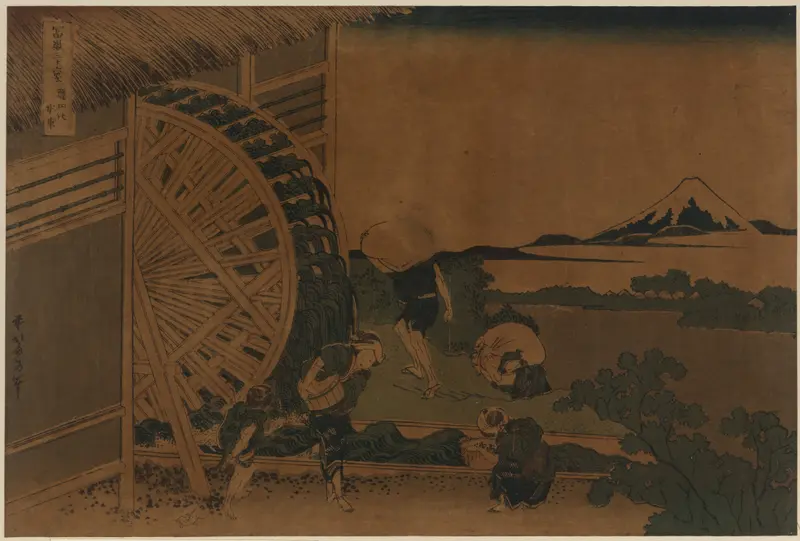
Onden no suisha
Katsushika Hokusai
More Genre Scene Art

Banquet of the Officers of the St George Civic Guard
Frans Hals

Rembrandt and Saskia in the Scene of the Prodigal Son
Rembrandt van Rijn

Bal du moulin de la Galette
Pierre-Auguste Renoir

Quadrille at the Moulin Rouge
Henri de Toulouse-Lautrec

A Burial at Ornans
Gustave Courbet

When Will You Marry?
Paul Gauguin