
Ebisu (God of Luck, Protector of Merchants) — History & Facts
In 1799, Katsushika Hokusai began signing his works with the name “Sōri,” marking a new chapter in his artistic journey. Around this pivotal moment, he created Ebisu (God of Luck, Protector of Merchants), a rare depiction of one of Japan’s Seven Lucky Gods. While Hokusai is best known today for his later landscapes, this early work captures his fascination with popular folklore and the everyday hopes of Edo’s bustling merchant class.
The precise medium remains uncertain, a reminder of how many of Hokusai’s early prints and paintings have been lost or misattributed over time. The image centers on Ebisu, the only one of the Seven Lucky Gods to have originated in Japan rather than China or India. Hokusai chooses the moment when Ebisu, plump and smiling, lifts a freshly caught sea bream—symbol of prosperity and good fortune. The god’s fisherman’s hat and rod, rendered with quick, expressive lines, root him in the world of ordinary tradesmen, while the fish gleams as the promise of success.
Unlike the more formal, hieratic depictions by earlier artists, Hokusai’s Ebisu is approachable, almost neighborly—a contrast to the more remote divinities seen in works by Utagawa Toyokuni or Tosa Mitsuoki. The exact provenance of this piece is unclear, typical for Hokusai’s early works, which often circulated as single-sheet prints or paintings among Edo’s urban classes. No commission or patron is recorded, and its survival into modern collections is a stroke of luck befitting its subject. Today, Ebisu (God of Luck, Protector of Merchants) is valued as an early example of Hokusai’s engagement with folk subjects, foreshadowing the wit and humanity that would later define his most famous prints.
Its presence in the online gallery offers a glimpse into the artist’s restless experimentation at the dawn of the nineteenth century.
More Artworks by Katsushika Hokusai

The Great Wave off Kanagawa
Katsushika Hokusai
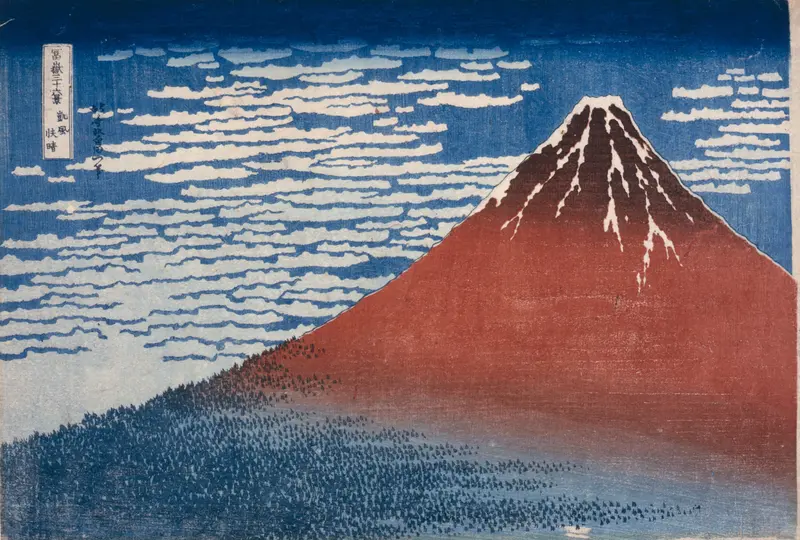
Fine Wind, Clear Morning (Red Fuji)
Katsushika Hokusai
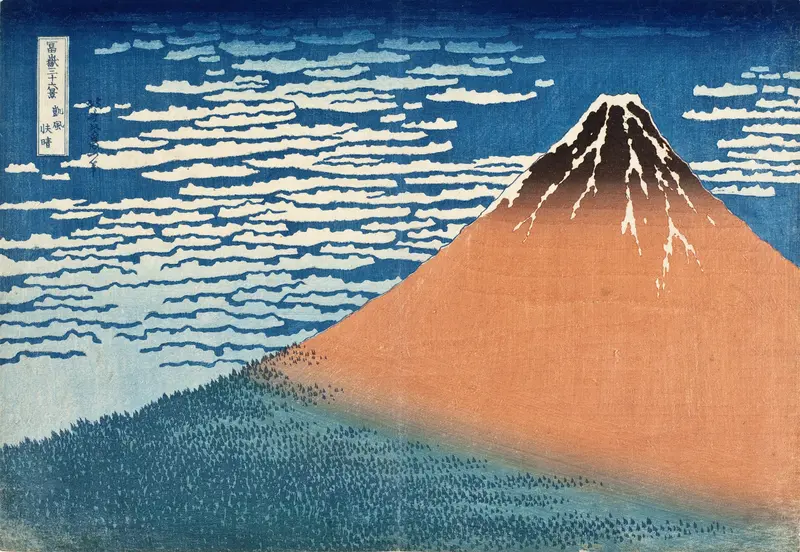
South Wind, Clear Dawn
Katsushika Hokusai
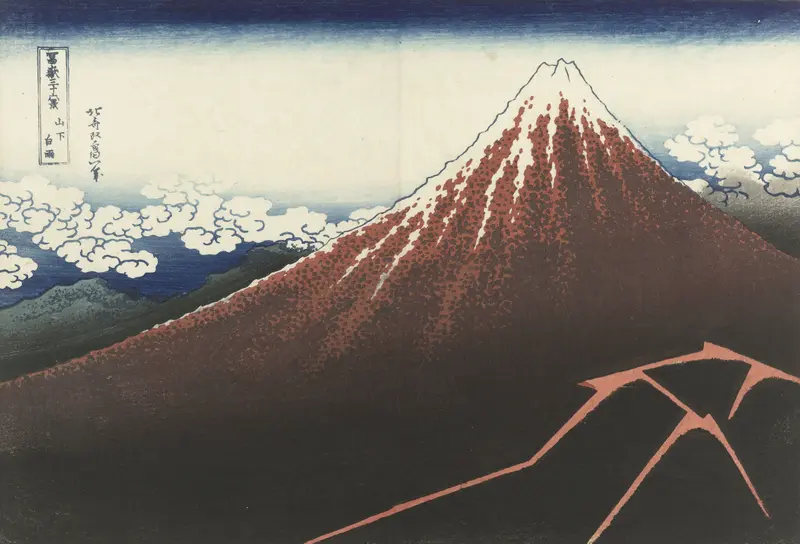
Rainstorm Beneath the Summit
Katsushika Hokusai
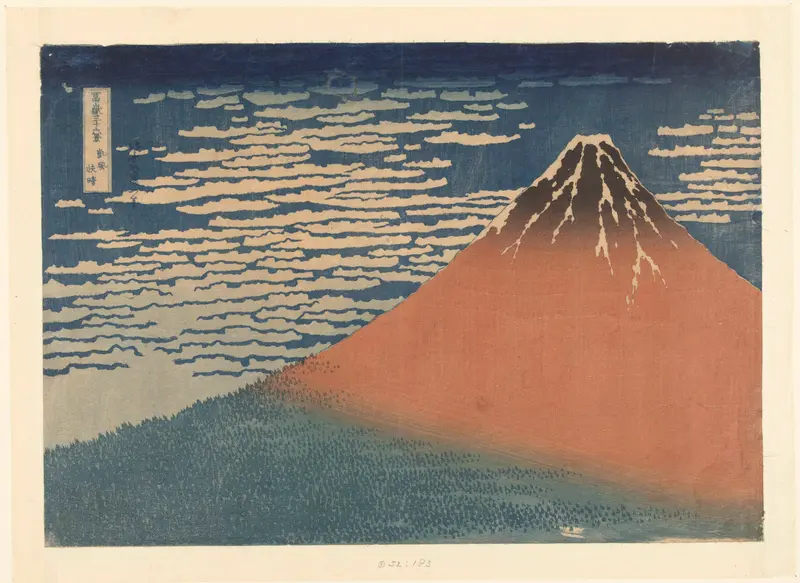
Clear Weather with a Southerly Wind
Katsushika Hokusai
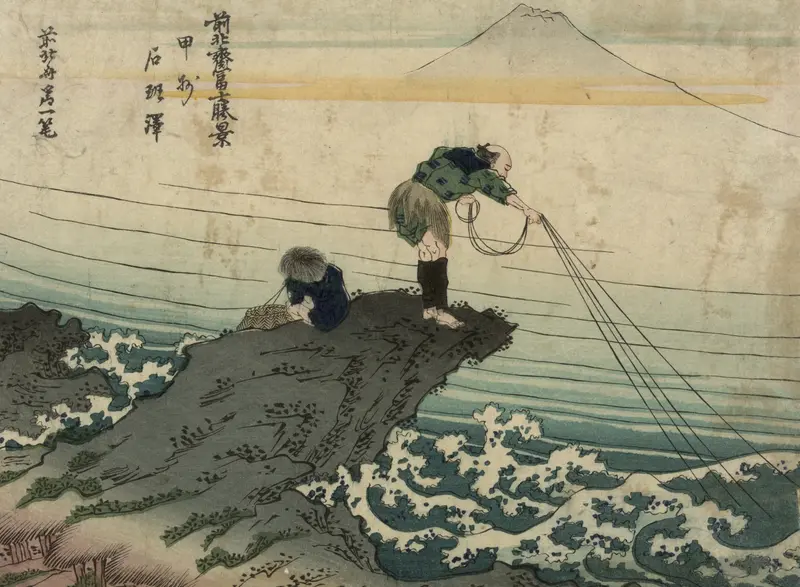
Kōshū kajikazawa
Katsushika Hokusai
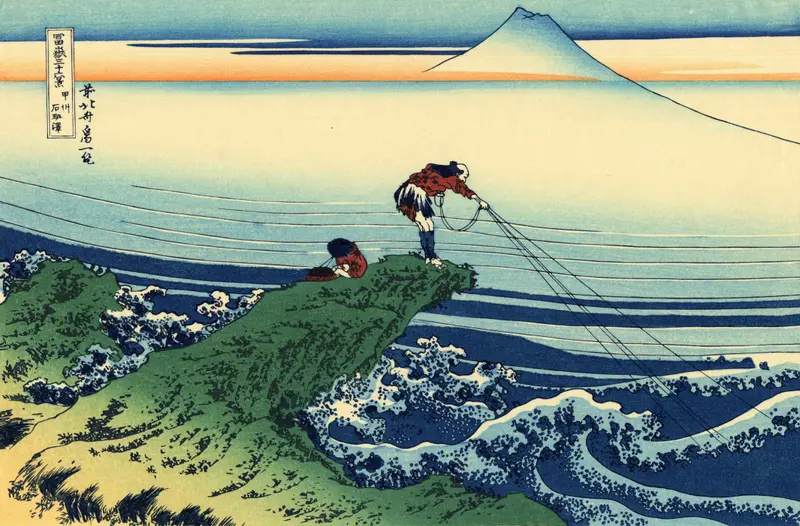
Kōshū kajikazawa 2
Katsushika Hokusai
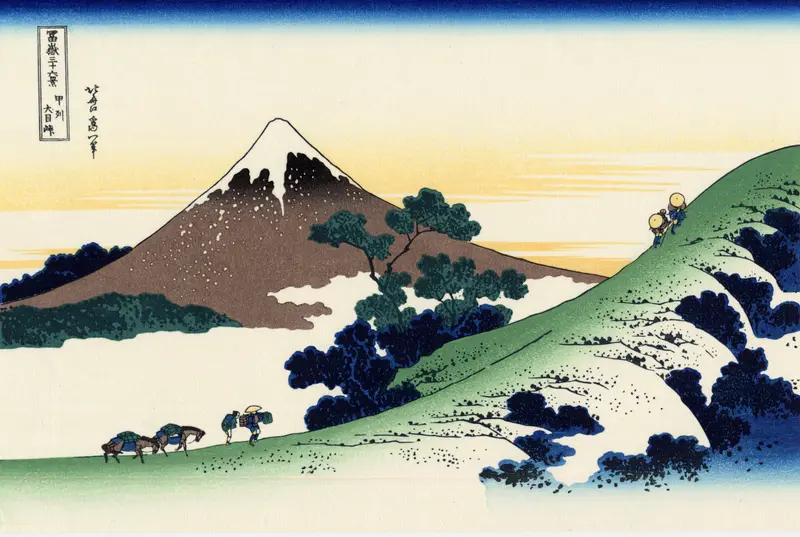
Inume Pass in Kai Province (Kôshû inume-tôge)
Katsushika Hokusai

Yoro Falls in Mino Province (Mino no Yoro no taki), from the series "A Tour of Waterfalls in Various Provinces (Shokoku taki meguri)"
Katsushika Hokusai
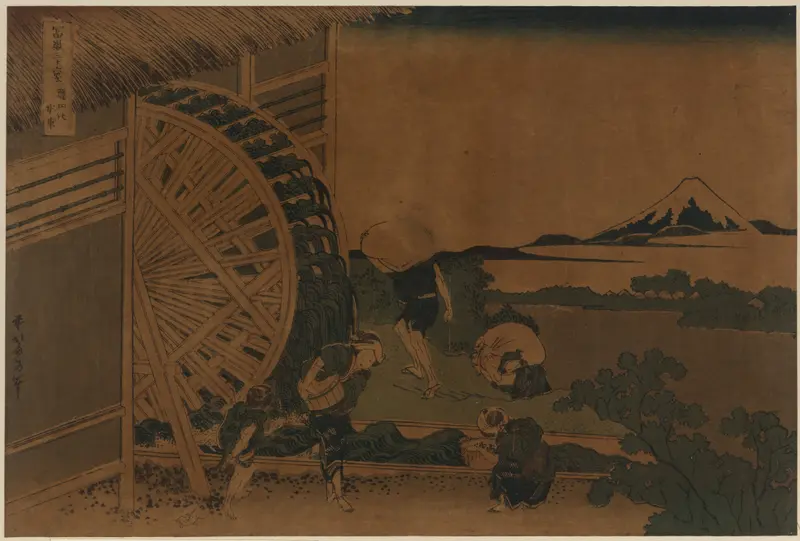
Onden no suisha
Katsushika Hokusai





