Moresque Ornament from the Alhambra No. 4 — History & Facts
What first catches the eye in Moresque Ornament from the Alhambra No. 4 is the hypnotic logic of its patterning—geometry so intricate it seems to pulse with its own rhythm. The upper and lower panels each offer a different vision of Moorish ornament: above, a lattice of interlocking stars and polygons, their olive, crimson, and blue forms locked in a dance of symmetry; below, the design deepens, with calligraphic flourishes and medallions blooming from a field of red, the blue script and motifs inviting the viewer closer.
Each motif is not just decorative, but a lesson in how repetition and variation can create endless visual interest, guiding the gaze from one rosette or tile to the next, never quite settling, always discovering. This chromolithograph, produced in 1856 by Owen Jones, belongs to a world fascinated by the rediscovery and cataloguing of historical ornament. In the nineteenth century, architects and designers across Europe looked to the Islamic palaces of Spain—especially the Alhambra—as models of complexity and refinement. Jones’s work, published in London and now preserved in collections such as the Polona Digital Library, was both a study tool and a manifesto: it argued that beauty could be found in the rules of geometry, and that the patterns of the past could inspire the designs of the future.
Today, as you trace the lines and colors of this page, you join a long tradition of viewers captivated by the endless possibilities of ornament.
More Artworks by Owen Jones

Greek Ornament No. 1
Owen Jones
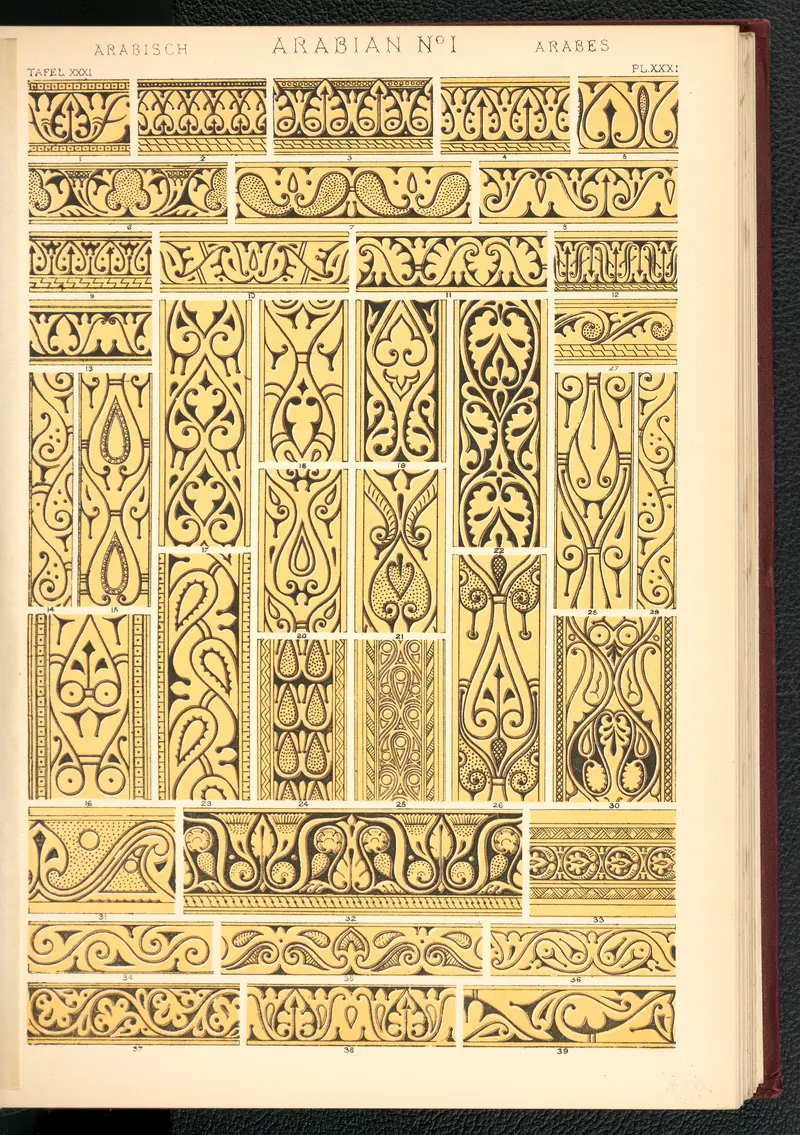
Arabian Ornament No. 1
Owen Jones
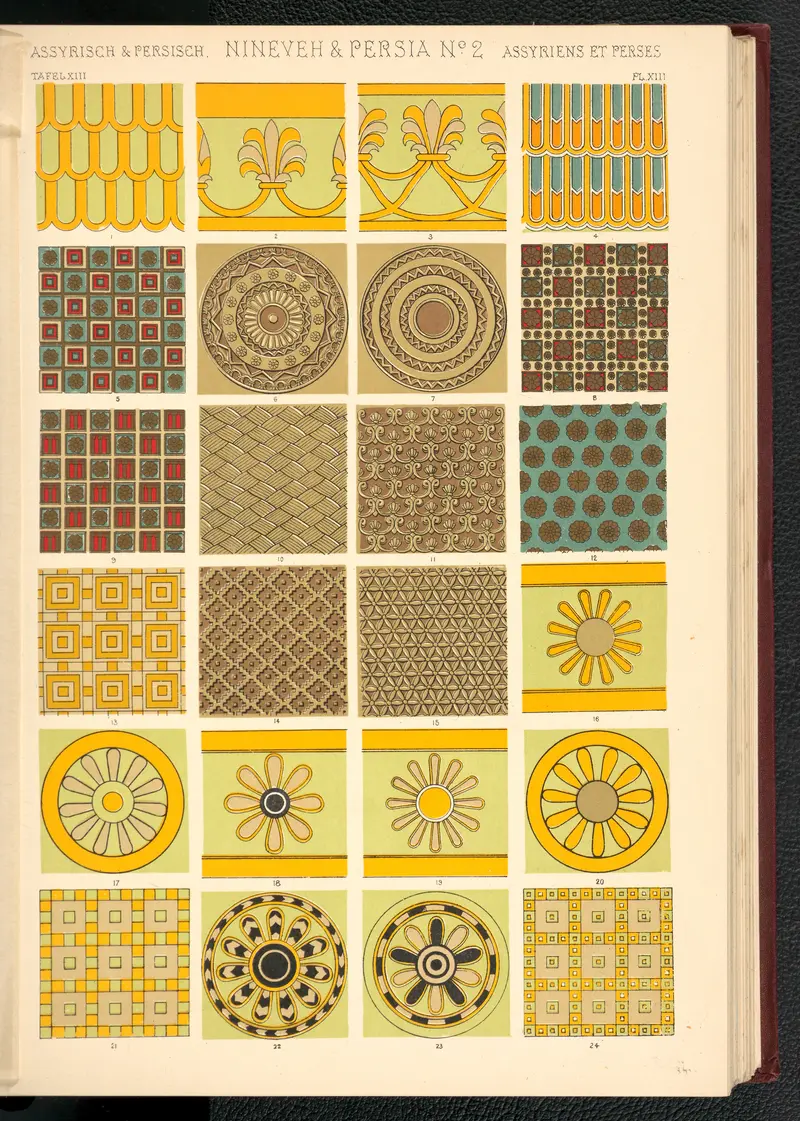
Assyrian Ornament No. 2
Owen Jones

Egyptian Ornament No. 3
Owen Jones
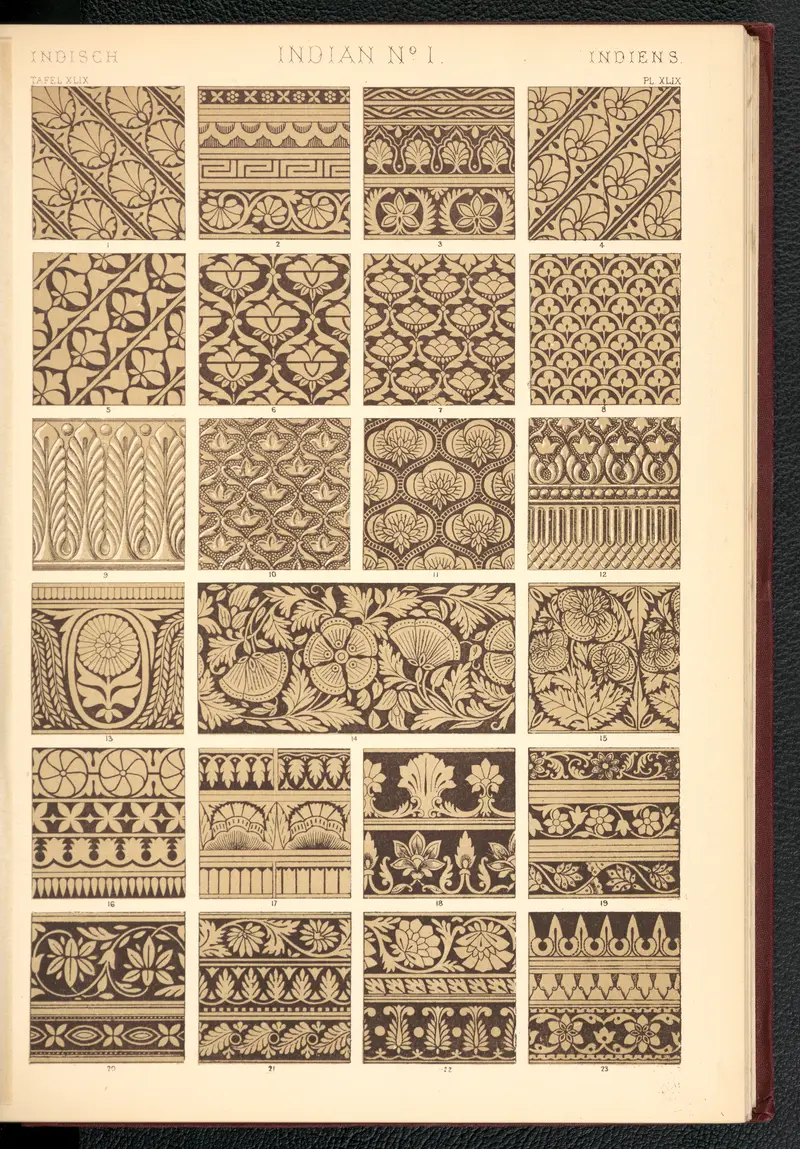
Indian Ornament No. 1
Owen Jones
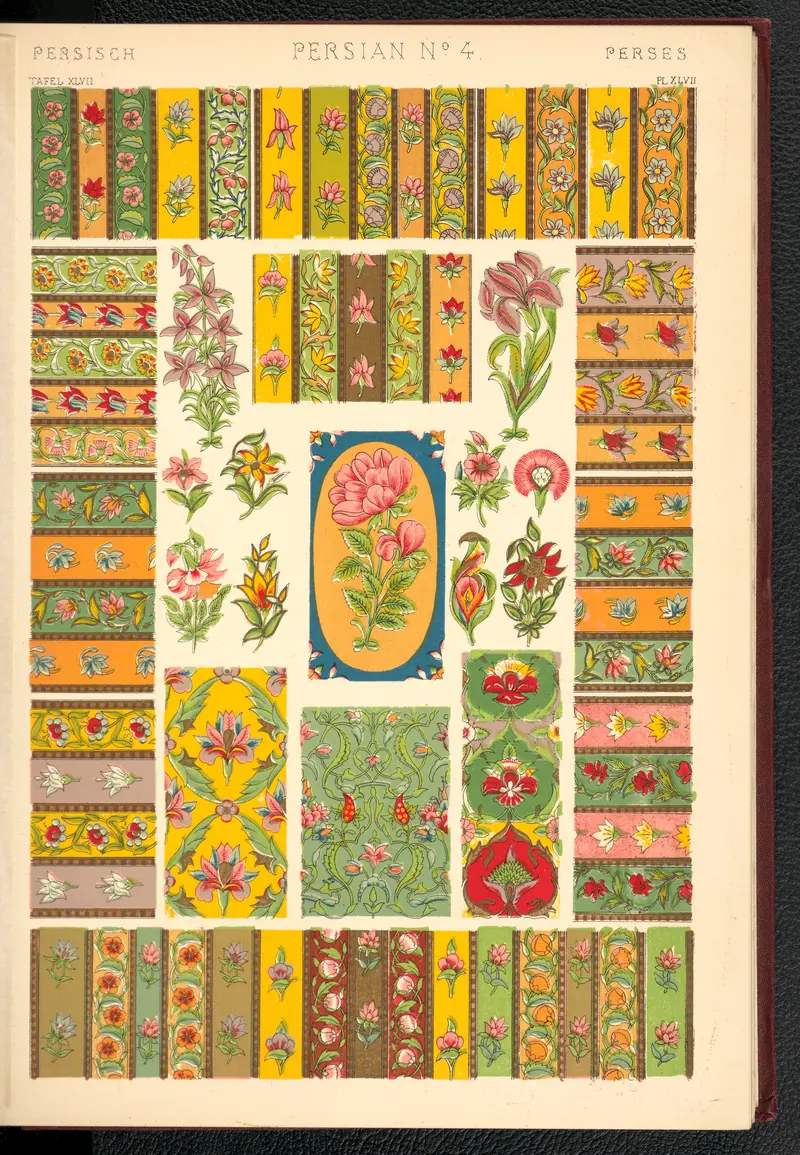
Persian Ornament No. 4
Owen Jones
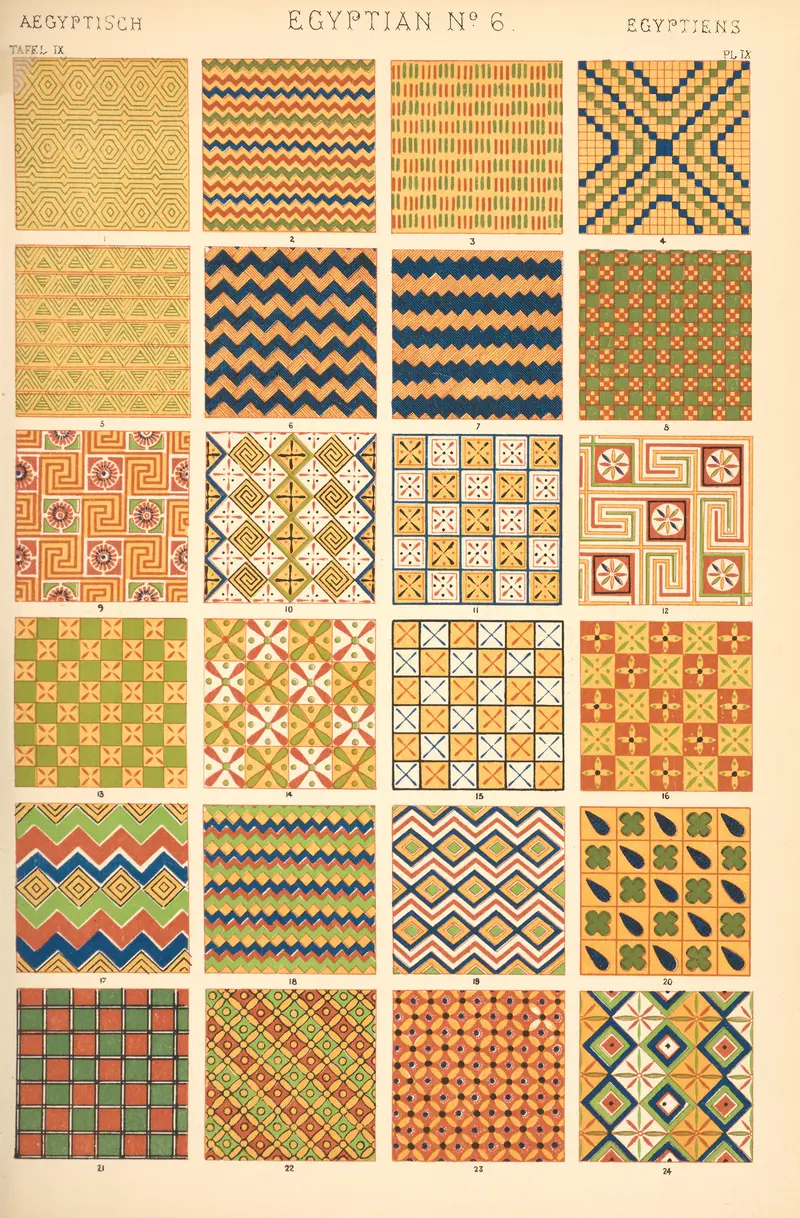
Egyptian Ornament No. 6
Owen Jones
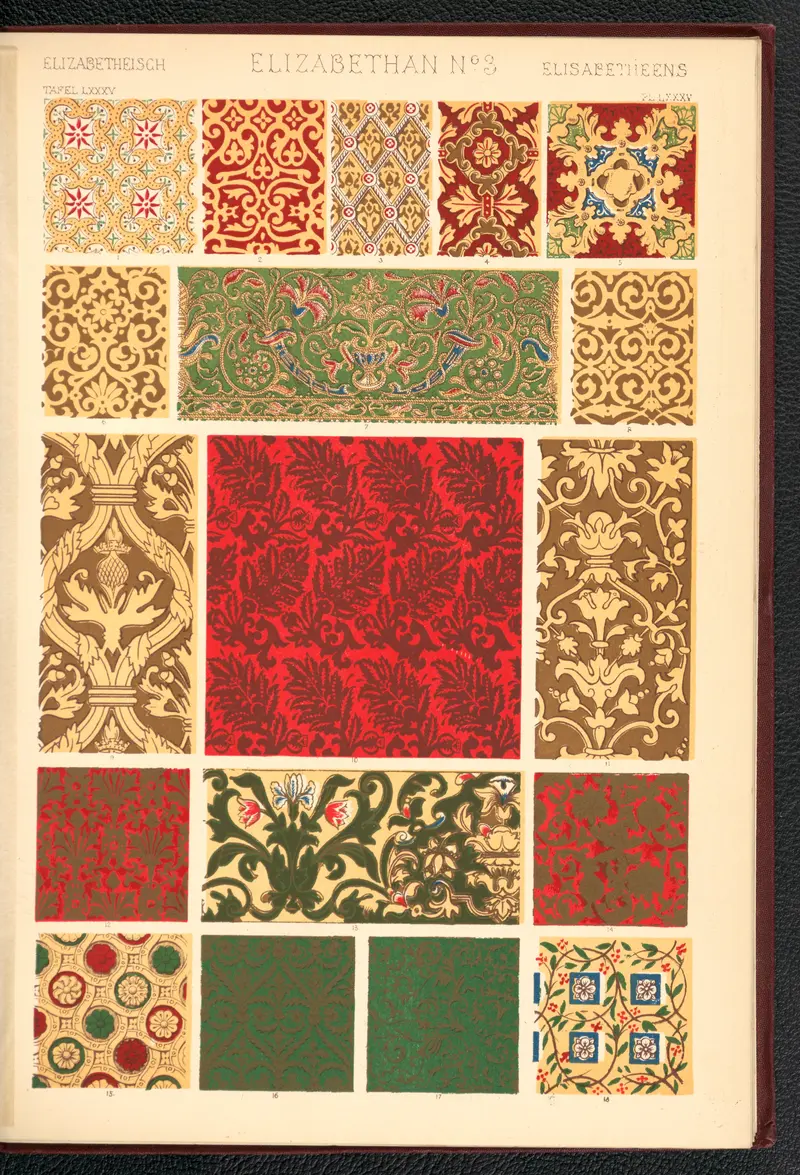
Elizabethan Ornament No. 3
Owen Jones
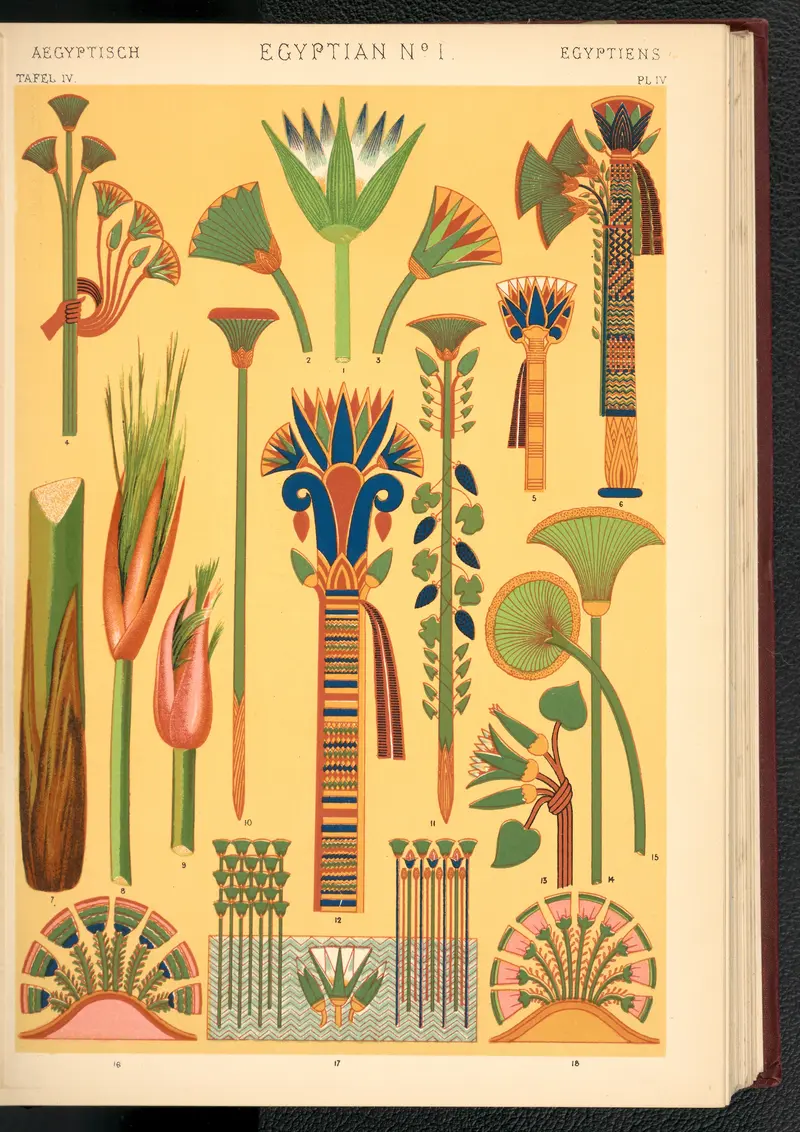
Egyptian Ornament No. 1
Owen Jones
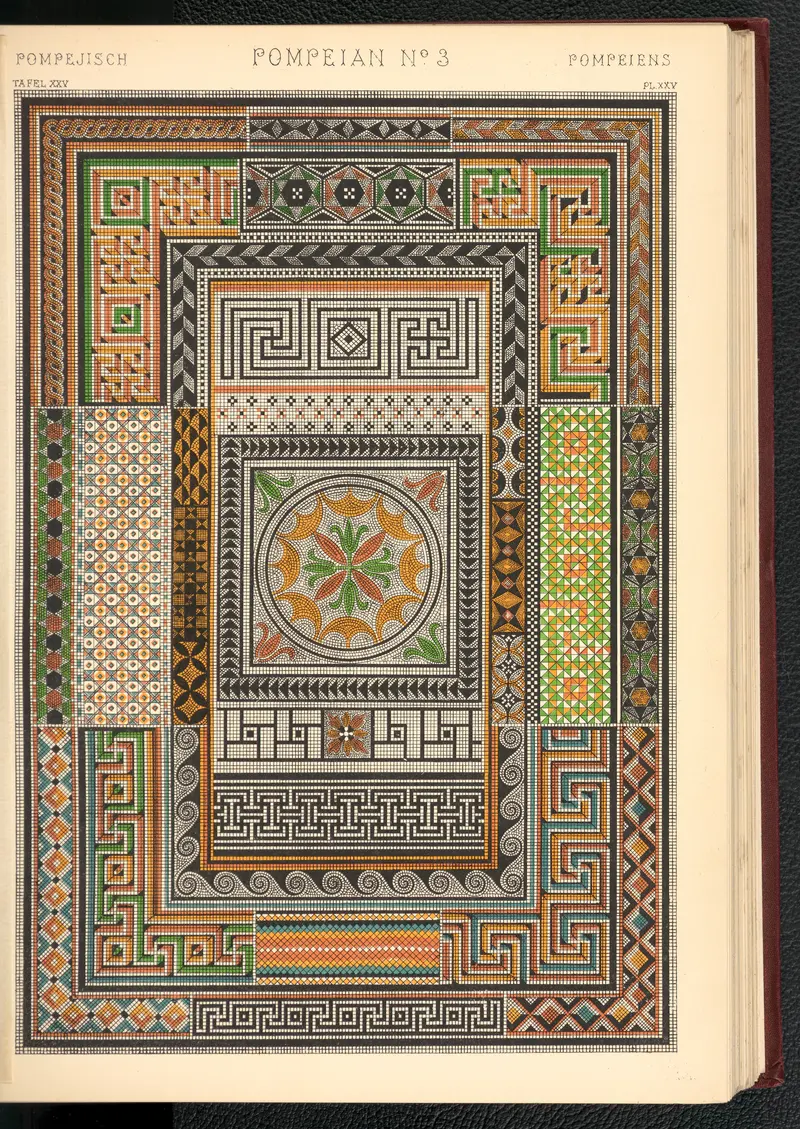
Pompeian Ornament No. 3
Owen Jones