
Fishermen at Menton — History & Facts
When Jules Breton painted Fishermen at Menton in 1878, he was already renowned for his scenes of rural France—but here, he turned his gaze south, to the sunlit Mediterranean coast. This was a rare departure for the artist, who spent most of his career in the northern fields of Artois. The painting is one of only a handful in which Breton captured the daily life of fishermen, rather than peasants at harvest.
Its creation coincided with a period when the French Riviera was becoming a fashionable destination for artists and aristocrats alike, lending the work a sense of both novelty and documentary interest. The scene unfolds in the early morning, as fishermen haul their boats onto the shore at Menton, a town nestled between the sea and the mountains near the Italian border. The men’s sun-browned arms strain at the ropes, while women and children cluster nearby, their faces marked by anticipation and fatigue. The Mediterranean light, so different from the northern gloom of Breton’s earlier works, bathes the figures and sand in warm golds and blues, emphasizing the harmony between people and their environment.
The careful arrangement of baskets, nets, and weathered boats signals the community’s dependence on the sea. Unlike Winslow Homer’s storm-lashed fishermen, Breton chooses a moment of calm industry, highlighting resilience rather than peril. The exact journey of Fishermen at Menton after its completion is not fully documented, but it is known to have been exhibited in Paris in the late 1870s, where it was praised for its honest depiction of working life. The painting reflects Breton’s broader interest in dignifying labor, a theme that made him popular with both critics and the public.
Today, it stands as a testament to the artist’s brief but fruitful engagement with the Mediterranean, and as a rare glimpse into the daily rhythms of Menton’s fishing community in the late nineteenth century. Its current whereabouts are not widely published, but it remains a celebrated example of Breton’s ability to capture both place and people with clarity and respect.
More Artworks by Jules Breton

The Song of the Lark
Jules Breton
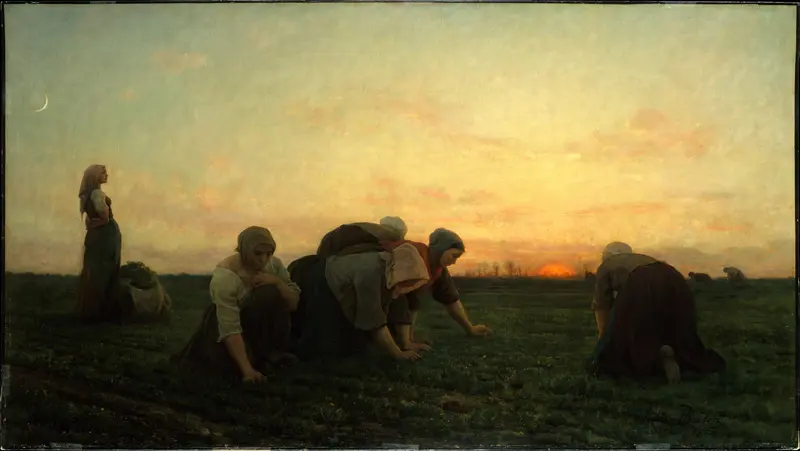
The Weeders
Jules Breton
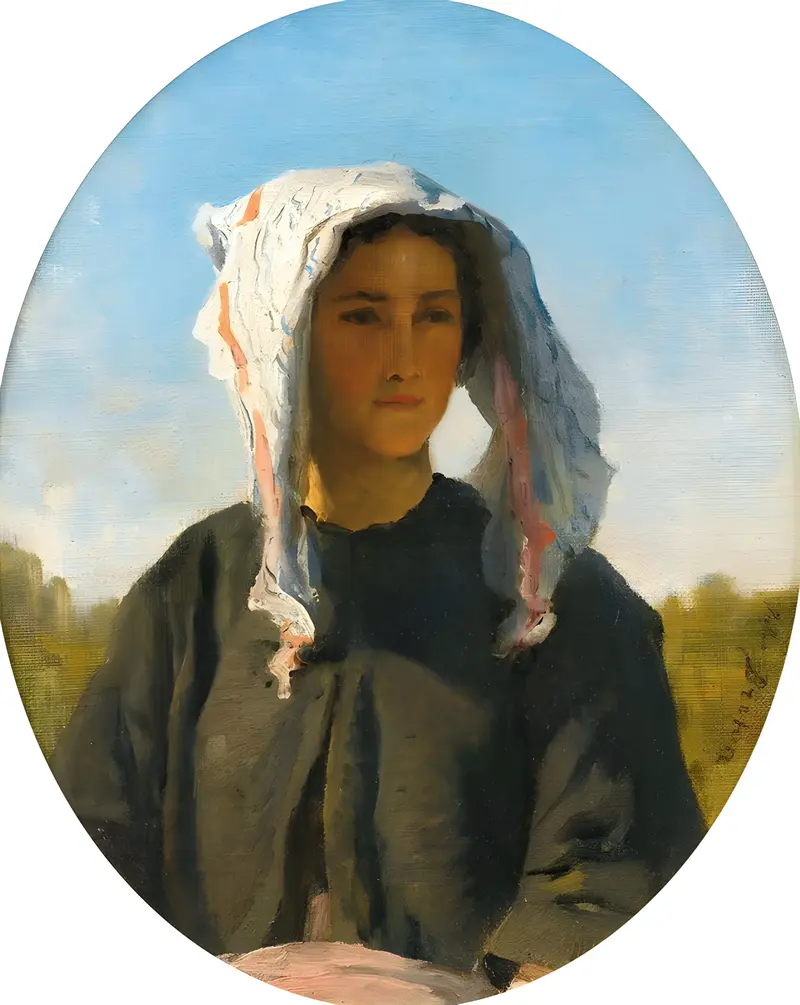
Portrait de jeune Paysanne Bordelaise
Jules Breton
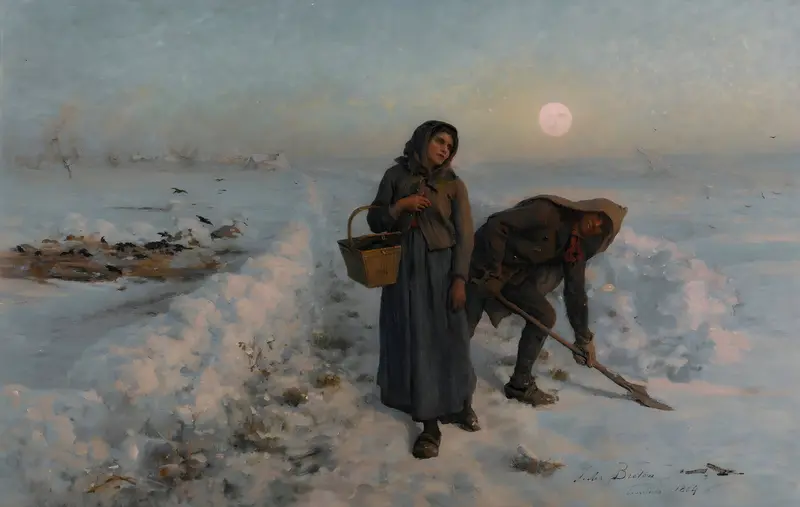
Sur la route en hiver; artois
Jules Breton
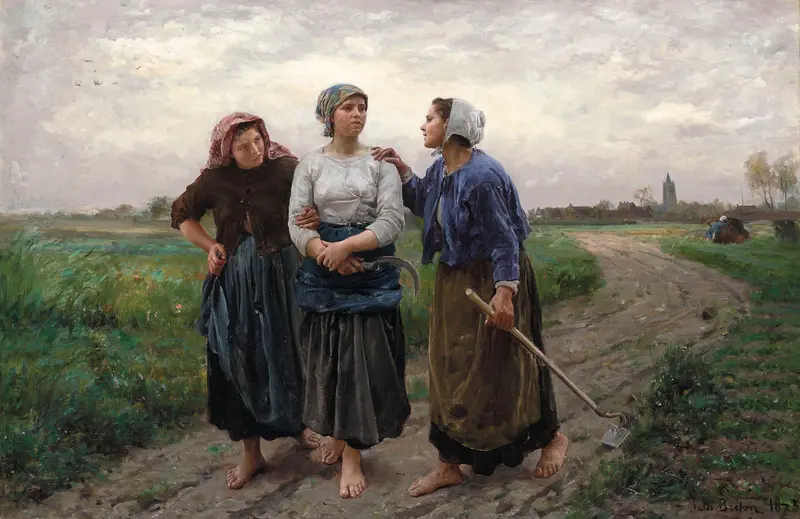
Les amies
Jules Breton
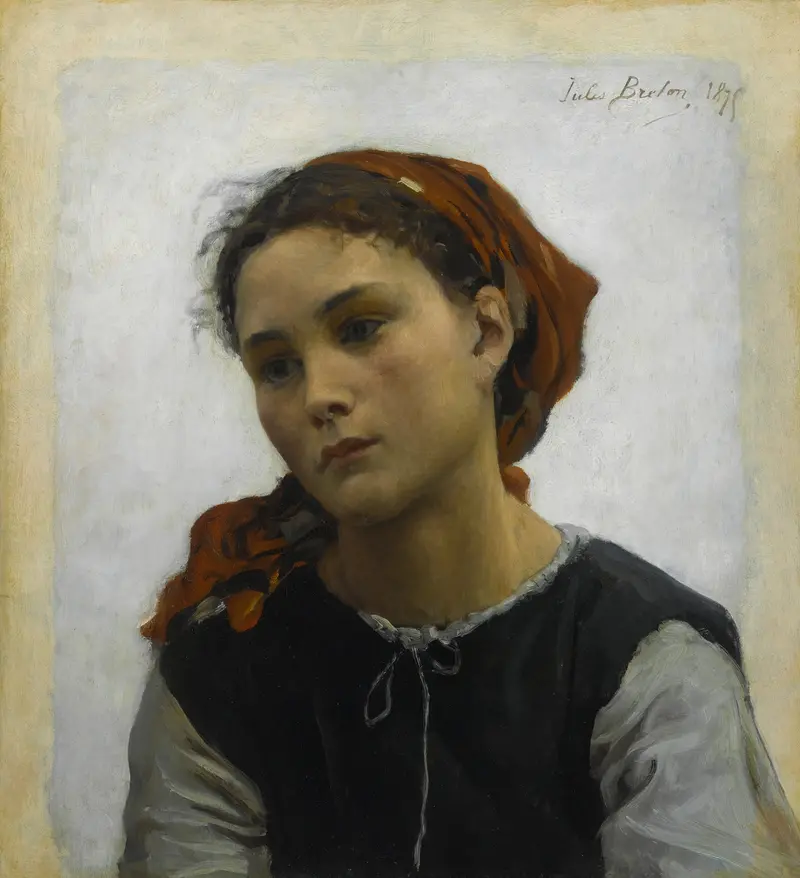
Innocente
Jules Breton
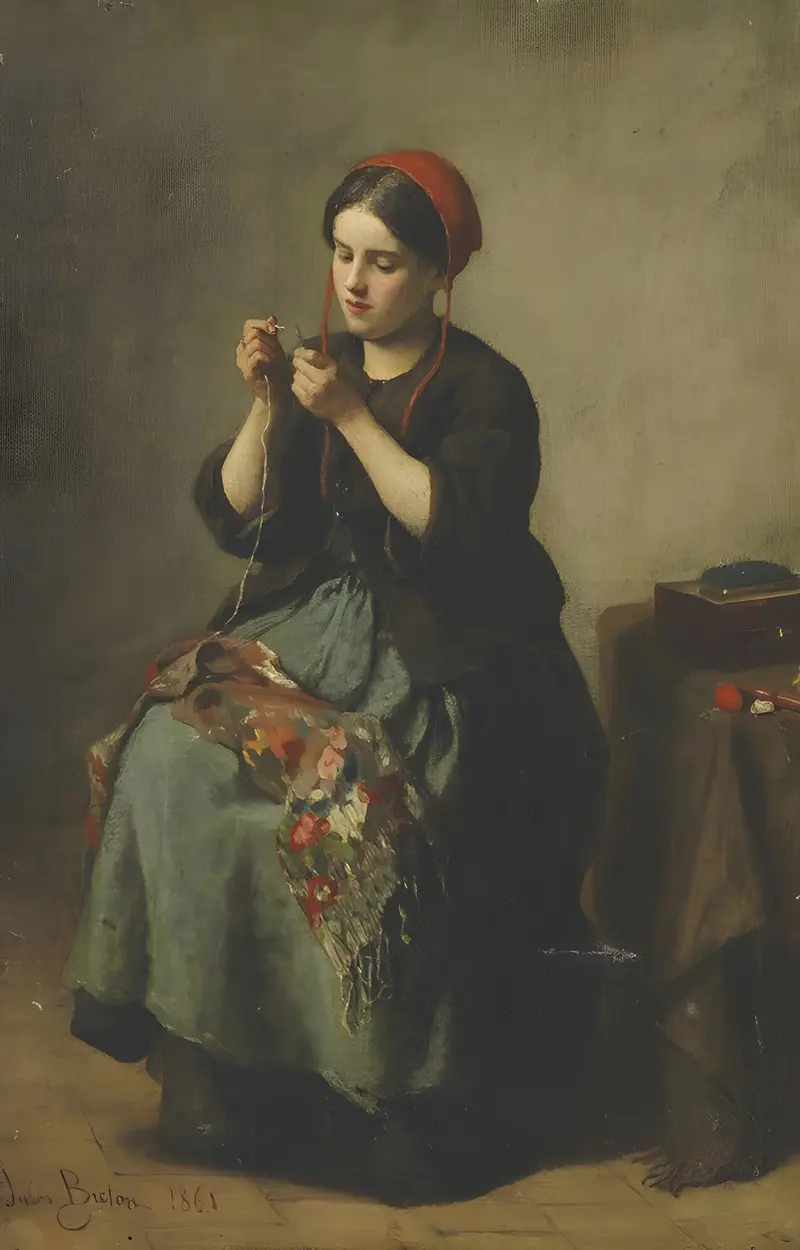
Peasant woman threading a needle
Jules Breton
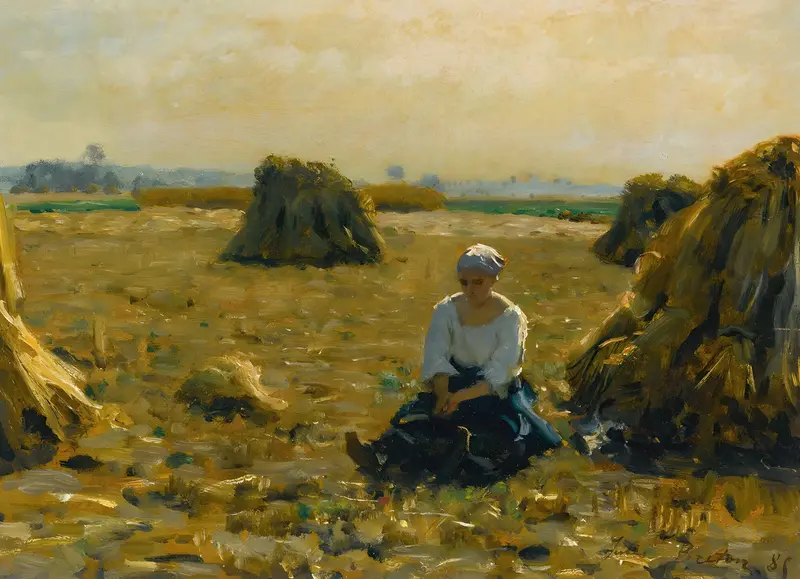
Jeune femme dans les champs
Jules Breton
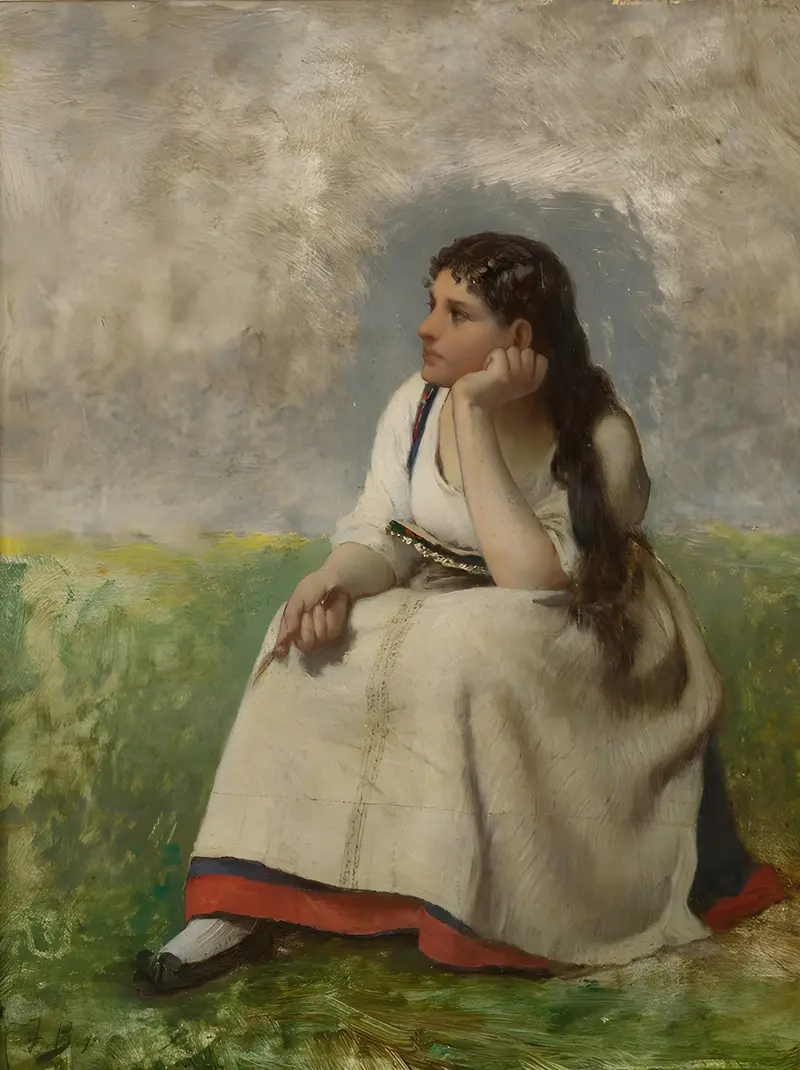
Jeune Fille Pensive
Jules Breton
Returning from the Fields
Jules Breton





