
Flora and the Zephyrs — History & Facts
What draws the eye first is the sense of movement and hush—figures caught in a garden’s secret ritual, with the central woman, crowned in rose, turning her gaze outward as if she’s just caught sight of the viewer. Every gesture seems choreographed: arms lifted to arrange garlands, heads bent in concentration, a figure on the right clutching a basket of blooms. The Zephyrs, those winged spirits of the breeze, hover and lean in, their presence signaled by the gentle tilt of the trees and the flutter of drapery.
Waterhouse’s palette is lush with greens and rose-madder, but it’s the interplay of skin, fabric, and petal that creates a mood of languor and anticipation—this is a world where time slows and fragrance lingers. Painted in 1898, Flora and the Zephyrs belongs to a moment when myth and nature were fertile ground for artists seeking escape from the industrial city. The late nineteenth century saw a revival of classical themes, especially among British painters drawn to the Pre-Raphaelite vision of beauty, poetry, and storytelling. Works like this—oil on canvas, measuring just over a meter tall—were often created for private collectors who wanted to bring a sense of Arcadian calm into their homes.
History has kept few traces of this particular painting’s early journey, but its subject and style place it firmly within the era’s fascination with myth, allegory, and the sensuous pleasures of the painted garden. Let your eye wander through the tangle of flowers, and imagine the world of 1898, where art promised a breath of ancient air.
More Artworks by John William Waterhouse
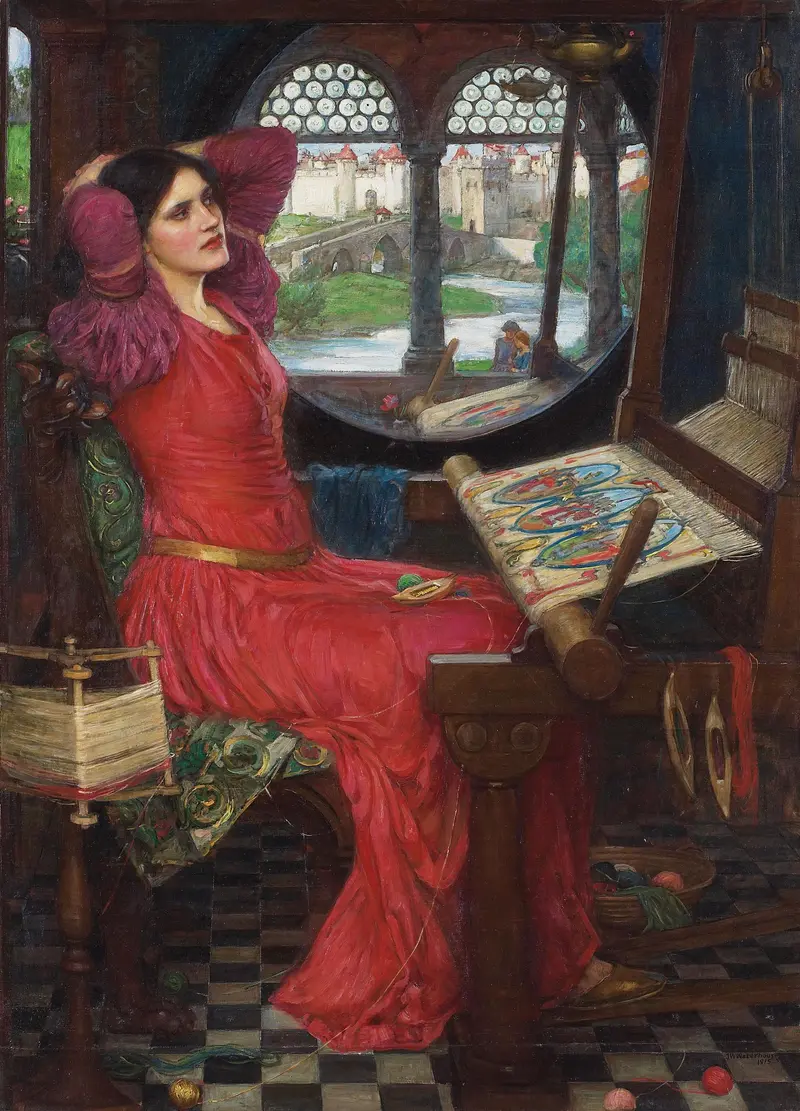
'I Am Half-Sick of Shadows,' Said the Lady of Shalott
John William Waterhouse

The Favourites of the Emperor Honorius, 1883
John William Waterhouse
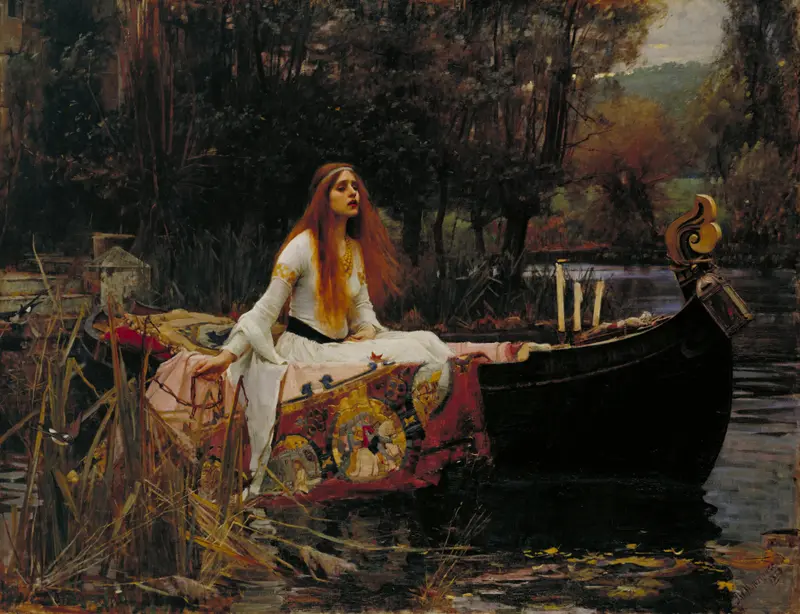
The Lady of Shalott
John William Waterhouse
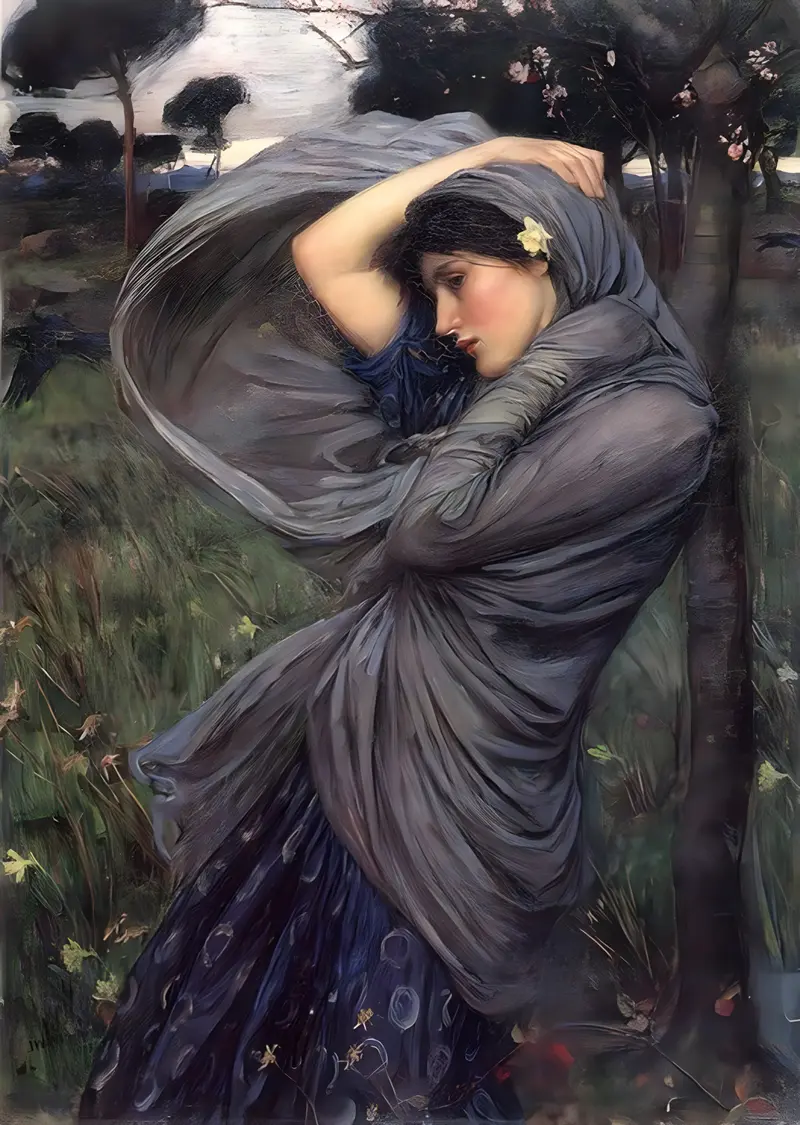
Boreas
John William Waterhouse
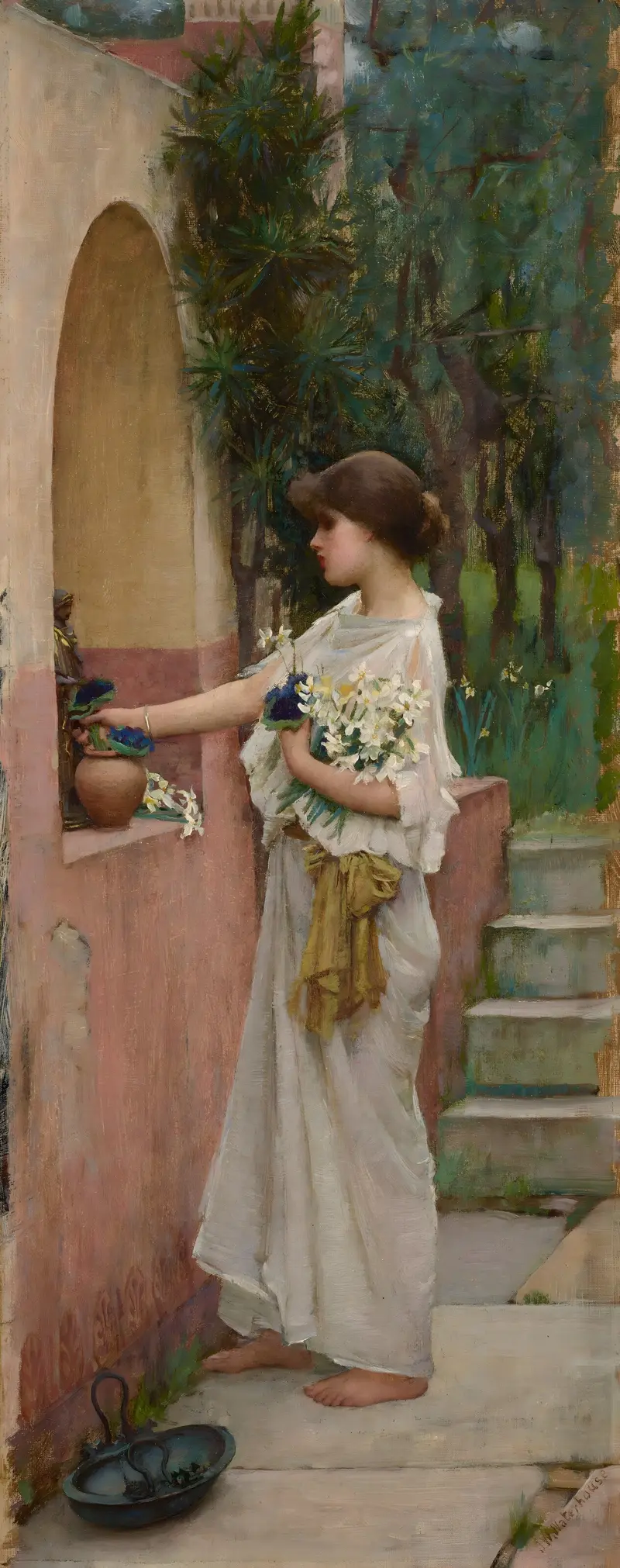
A Roman Offering
John William Waterhouse
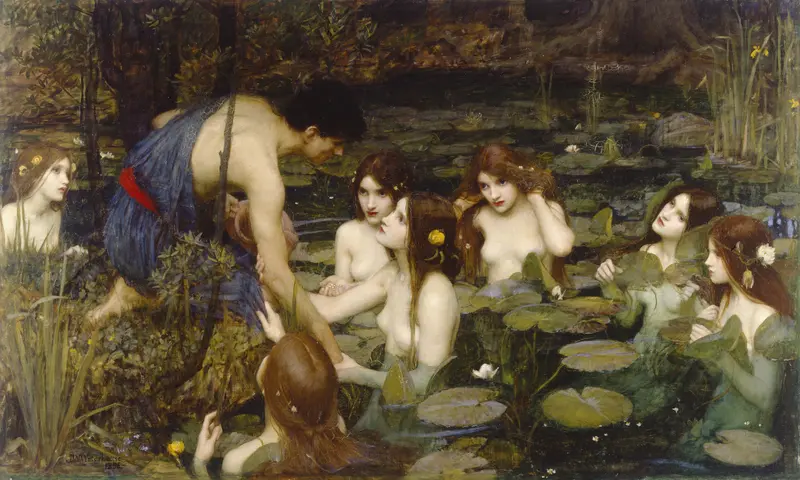
Hylas and the Nymphs
John William Waterhouse
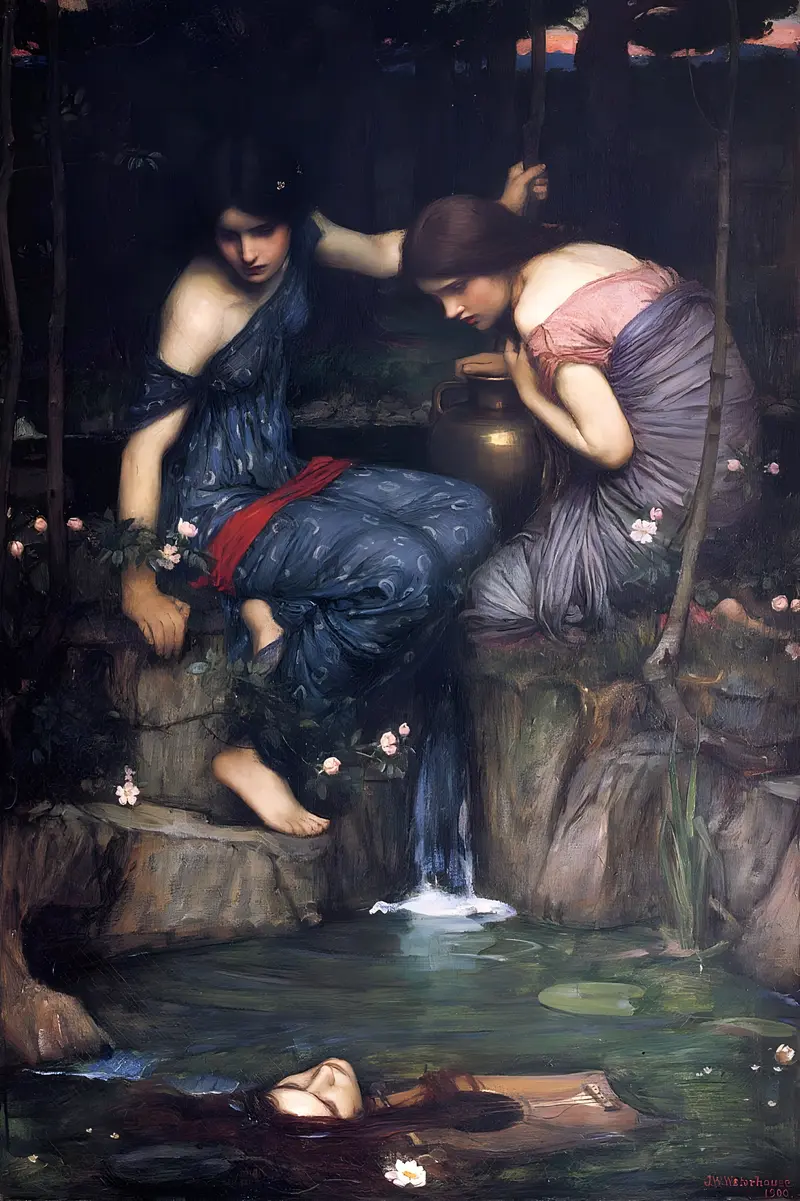
Nymphs Finding the Head of Orpheus
John William Waterhouse

The Crystal Ball
John William Waterhouse
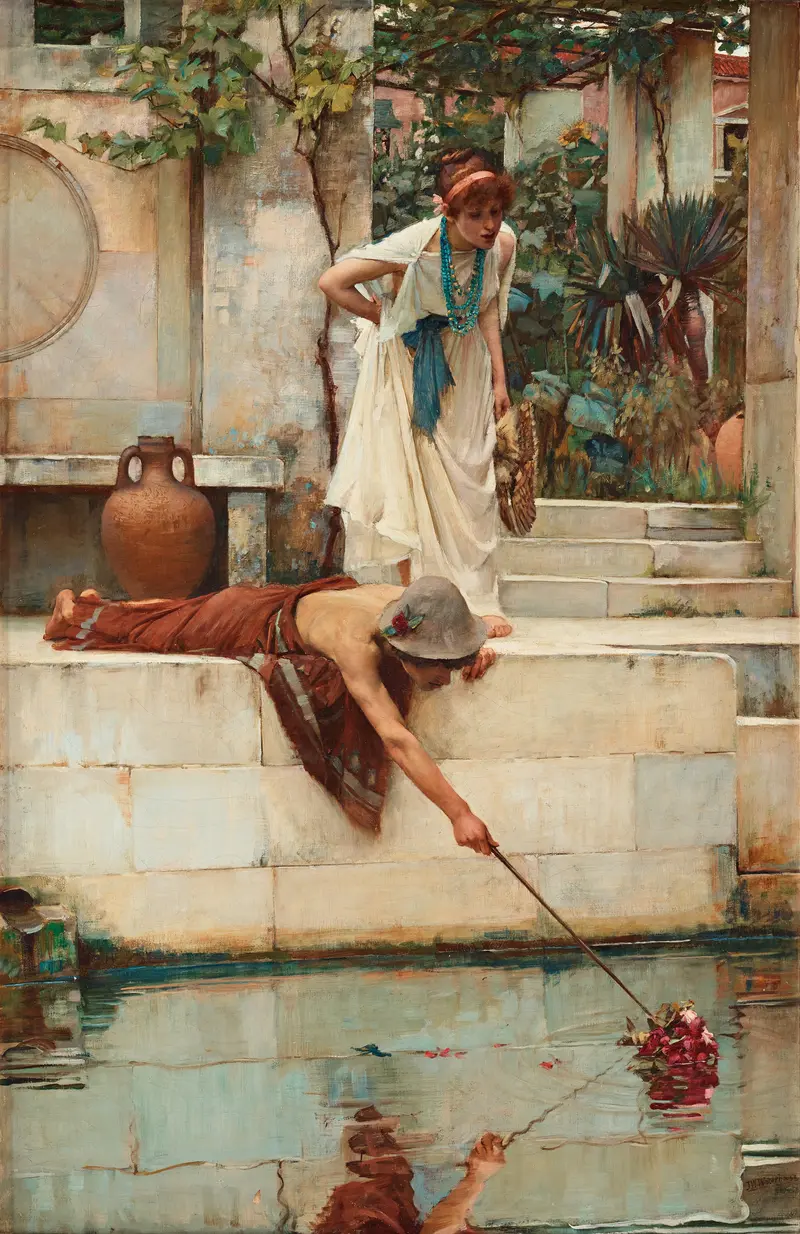
The Rescue
John William Waterhouse
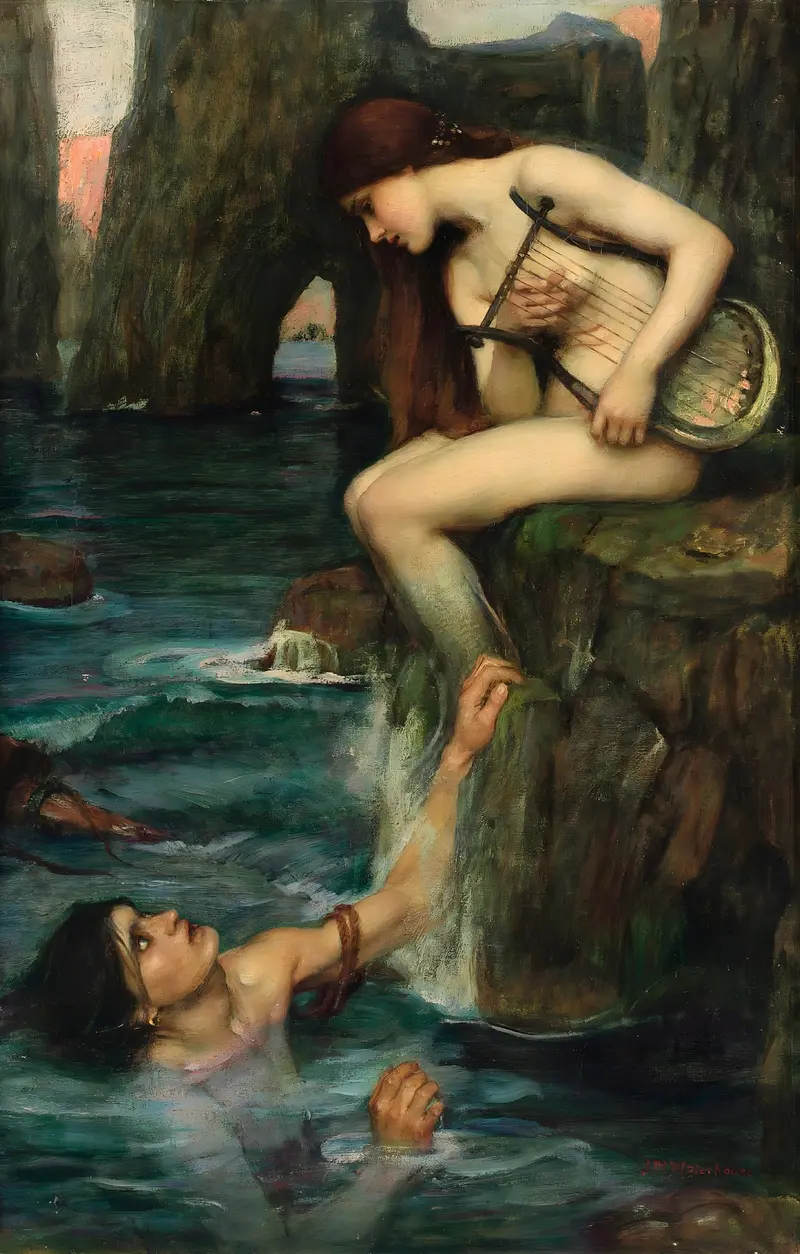
The Siren, 1900
John William Waterhouse





