
Fording the Danube at Wachau — History & Facts
The first thing that seizes the viewer in Fording the Danube at Wachau is the hush that settles over the scene—a moment suspended between the river’s slow current and the heavy, patient strength of the horses. The artist, Alexander Von Bensa, chooses not the drama of battle or storm, but the quiet determination of crossing. The low horizon draws the eye to the broad sky, painted in muted violets and ochres, which presses down on the small raft and its living cargo.
The horses, richly harnessed, are rendered with careful attention, their heads turned in various directions, suggesting both alertness and resignation. The men guiding the ferry are absorbed in their task, one standing knee-deep in the water, the other steadying the vessel with a sweep of red cloth—each gesture a signal of control and care. Painted before 1902, this work belongs to a world where rivers were both barriers and lifelines, and where the movement of horses and goods shaped the rhythms of daily life. Scenes like this, especially in Central Europe, were often commissioned to commemorate military campaigns, royal journeys, or simply to celebrate the engineering feats of river crossings.
Yet, history has kept few traces of Von Bensa’s lesser-known works, leaving us with only the painting’s quiet testimony and its place in a collection today. The image invites us to linger, to imagine the chill of the water, the weight of the animals, and the unhurried resolve of those who must cross—reminding us that even the most routine passages are worthy of record.
More Artworks by Alexander Von Bensa

Historisches Karussell
Alexander Von Bensa
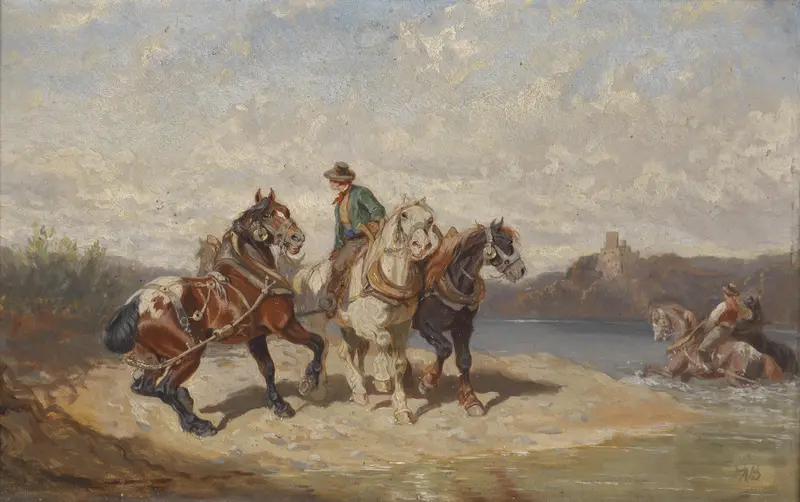
Treidelpferde an der Donau
Alexander Von Bensa
Rückkehr ins Schloss
Alexander Von Bensa
On the Scent
Alexander Von Bensa
Ausfahrt vor dem Schloss
Alexander Von Bensa
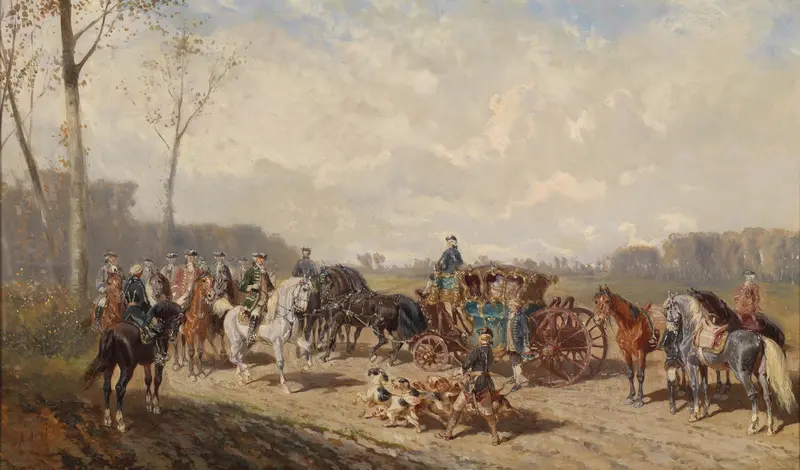
Begegnung beim Ausritt
Alexander Von Bensa
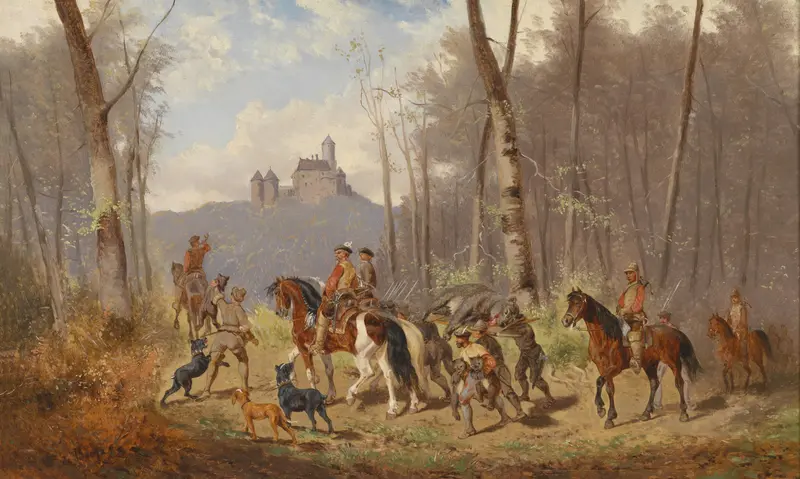
Heimkehr nach der Bärenjagd
Alexander Von Bensa
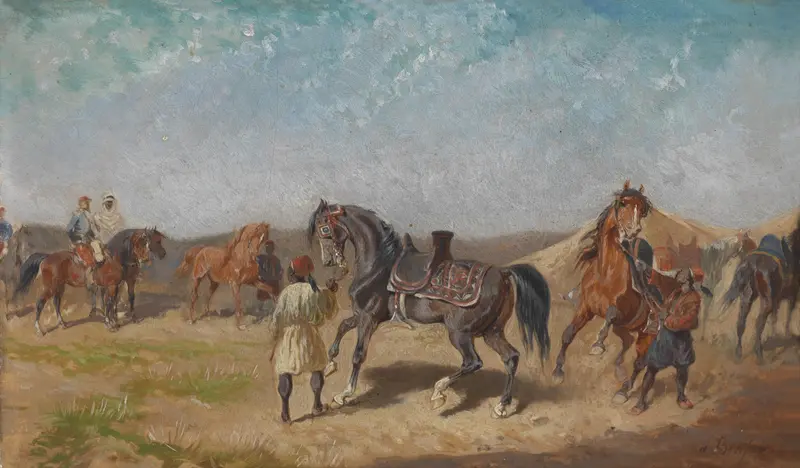
Nordafrikanisches Reiterlager
Alexander Von Bensa
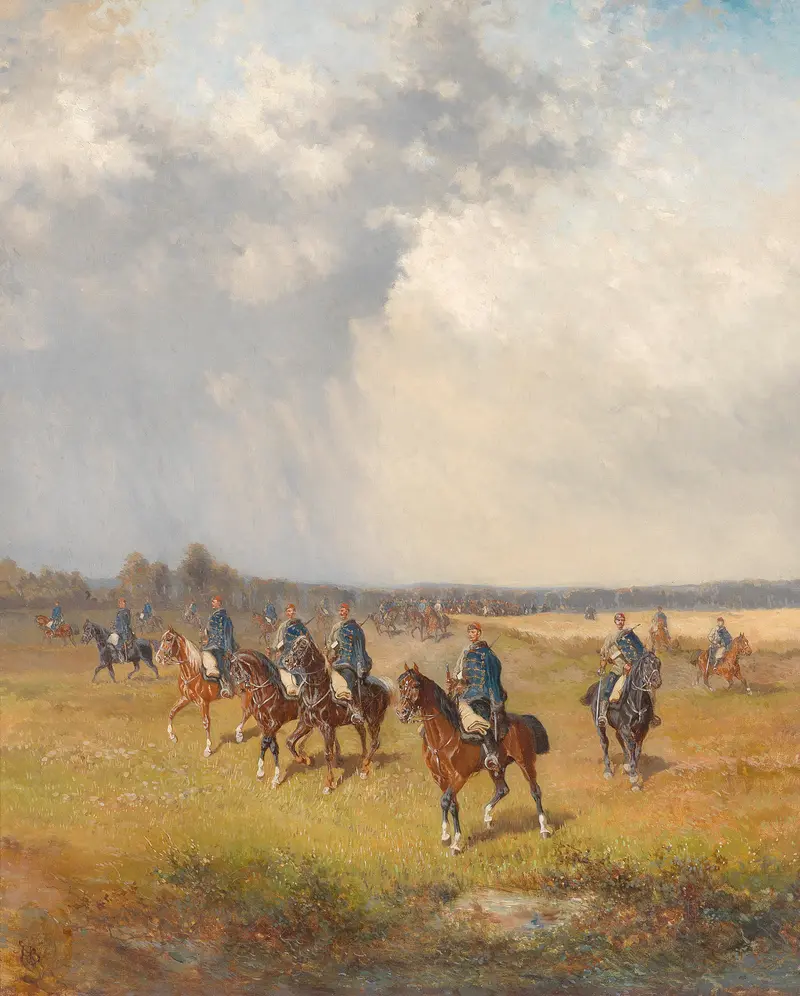
Ungarische Husaren
Alexander Von Bensa
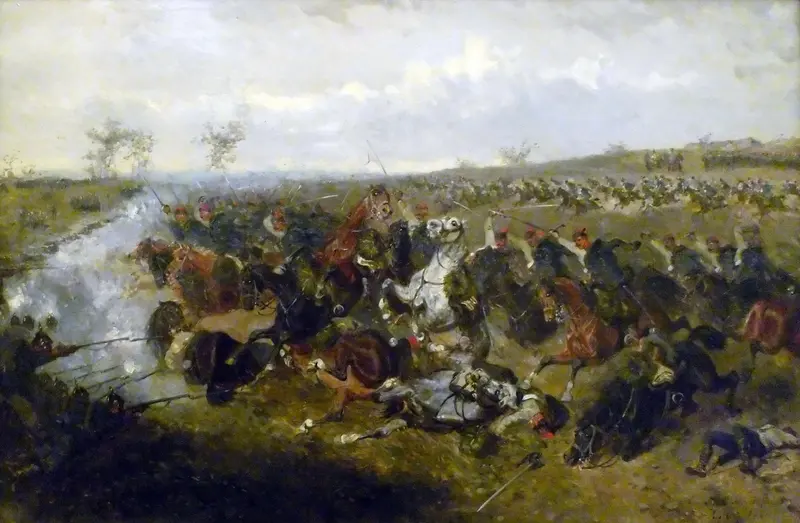
Battle of Schweinschädel.
Alexander Von Bensa
More Landscape Art

The Starry Night
Vincent van Gogh

View of Delft
Johannes Vermeer

Water Lilies
Claude Monet

The Grand Canal, Venice, looking north-west from the Ca' Corner to the Ca' Contarini degli Scrigni, with the campanile of Santa Maria della Carità
Canaletto

Windsor Castle
Canaletto

The Grand Canal looking North-East from the Palazzo Dolfin-Manin to the Rialto Bridge
Canaletto