
Galatea — History & Facts
When Galatea was unveiled in the Villa Farnesina in Rome, it instantly became a touchstone for artists and poets alike, not least because Raphael chose to paint only the nymph herself, leaving her lover Acis and the jealous giant Polyphemus to other hands. This focus was unusual—most Renaissance depictions of the myth showed the lovers together or the violence of Polyphemus’ rage. By isolating Galatea, Raphael transformed a tragic love story into a celebration of ideal beauty, and the fresco’s fame quickly spread through Rome’s artistic circles. At the center of the scene, Galatea rides a shell chariot across the sea, drawn by dolphins and surrounded by a swirling retinue of sea creatures and cupids.
She turns her head gracefully, eyes lifted as if hearing the distant song of Polyphemus, while arrows fly overhead—cupid’s mischief at work. The nymph’s red drapery billows behind her, a vivid contrast to the cool blues of the water, guiding the viewer’s gaze to her radiant face. The composition’s dynamic movement and anatomical precision show Raphael’s study of classical sculpture, yet the mood is lighter and more jubilant than in, for example, Titian’s later, stormier Bacchus and Ariadne. Commissioned by the wealthy banker Agostino Chigi for his villa around 1512, Galatea was part of an ambitious decorative scheme involving several leading artists of the High Renaissance.
The fresco remains in its original location, a rare survival, and has been admired by generations of visitors for both its technical skill and its joyful spirit. Although the exact date and preparatory process are still discussed by scholars, the work stands as a testament to Raphael’s mature style, blending classical ideals with vibrant movement. Today, Galatea continues to draw crowds to the Villa Farnesina, a living reminder of Rome’s golden age of art.
More Artworks by Raphael

Madonna of the Goldfinch
Raphael

Madonna with the Fish
Raphael
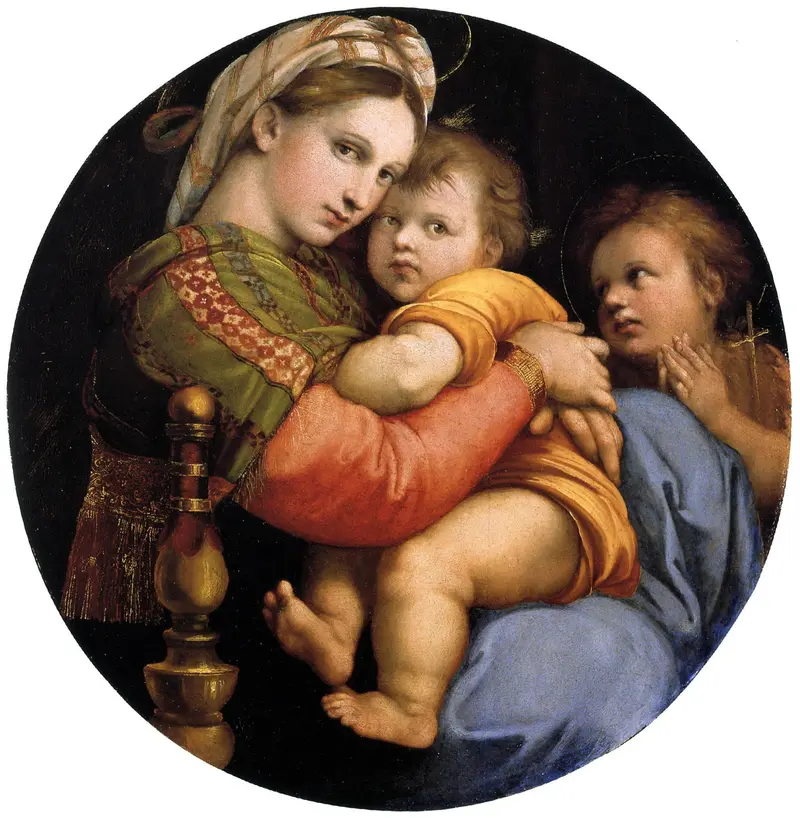
Madonna and Child (Madonna della Seggiola)
Raphael
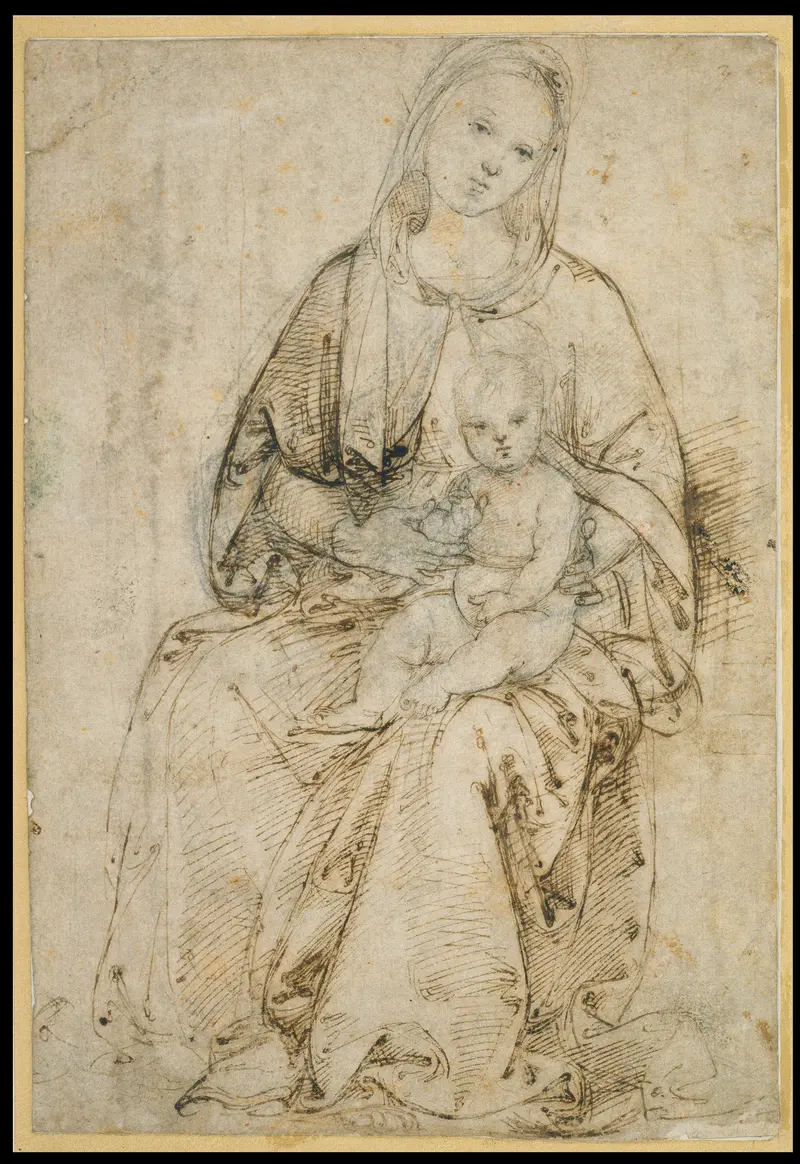
Seated Madonna and Child
Raphael
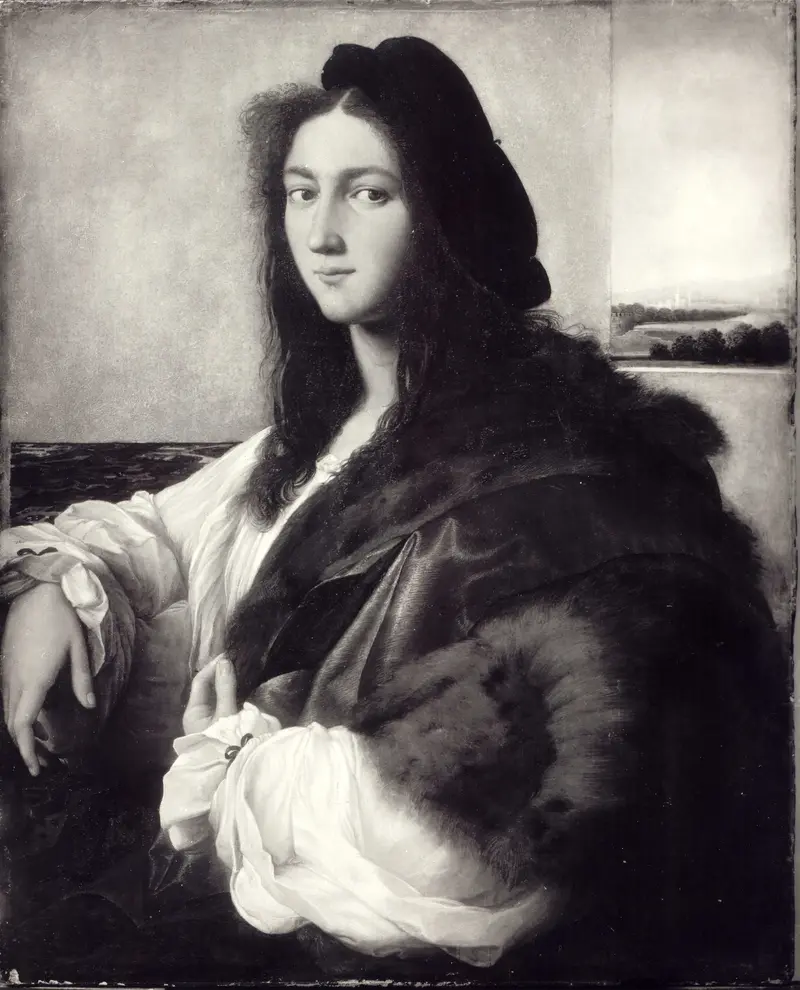
Portrait of a Young Man
Raphael
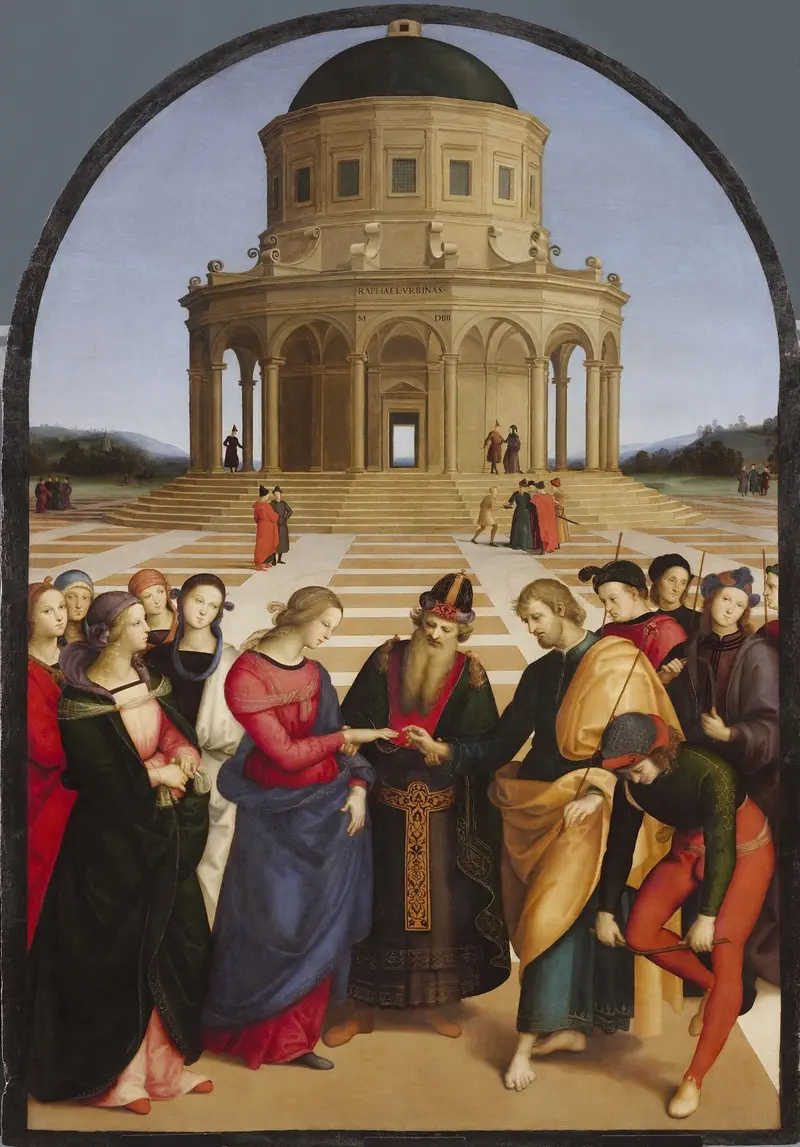
The Marriage of the Virgin
Raphael
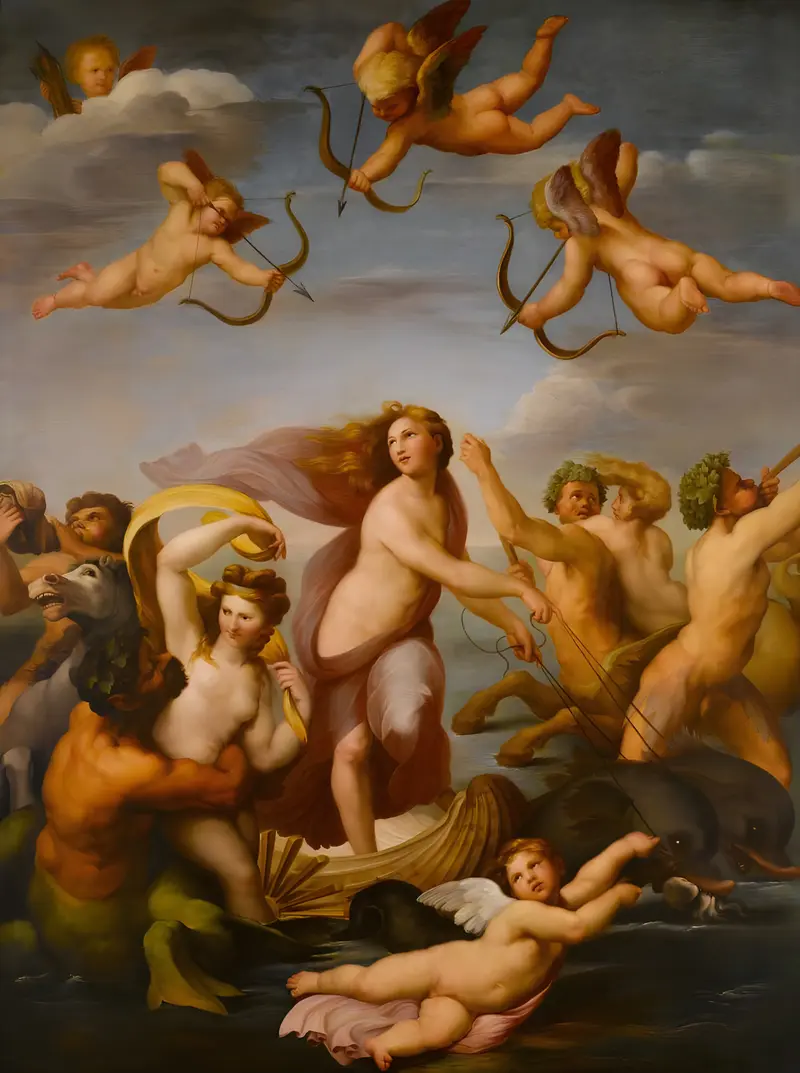
The Triumph of Galatea (copy after Raphael)
Raphael
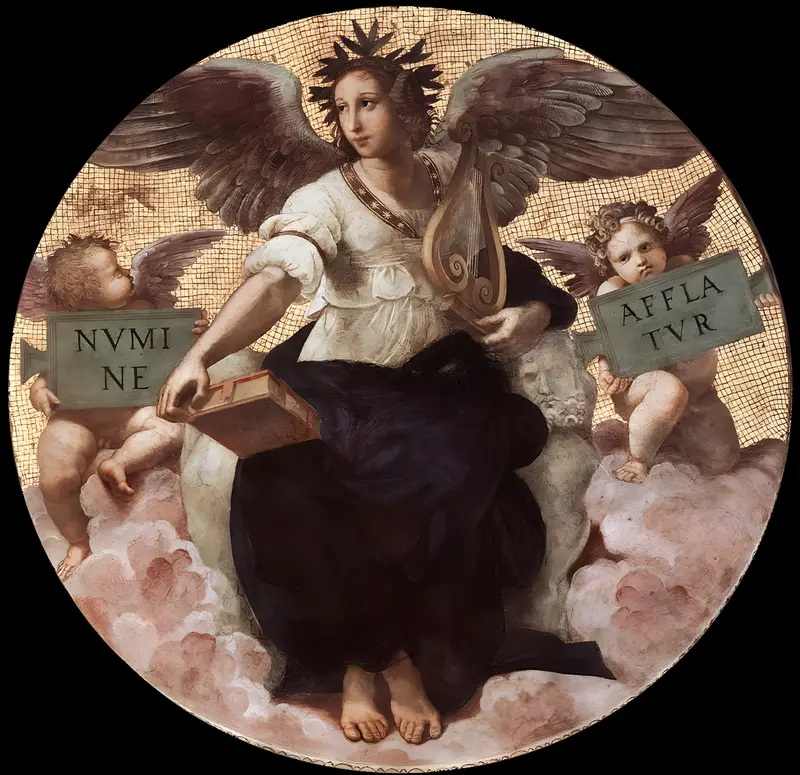
Poetry
Raphael
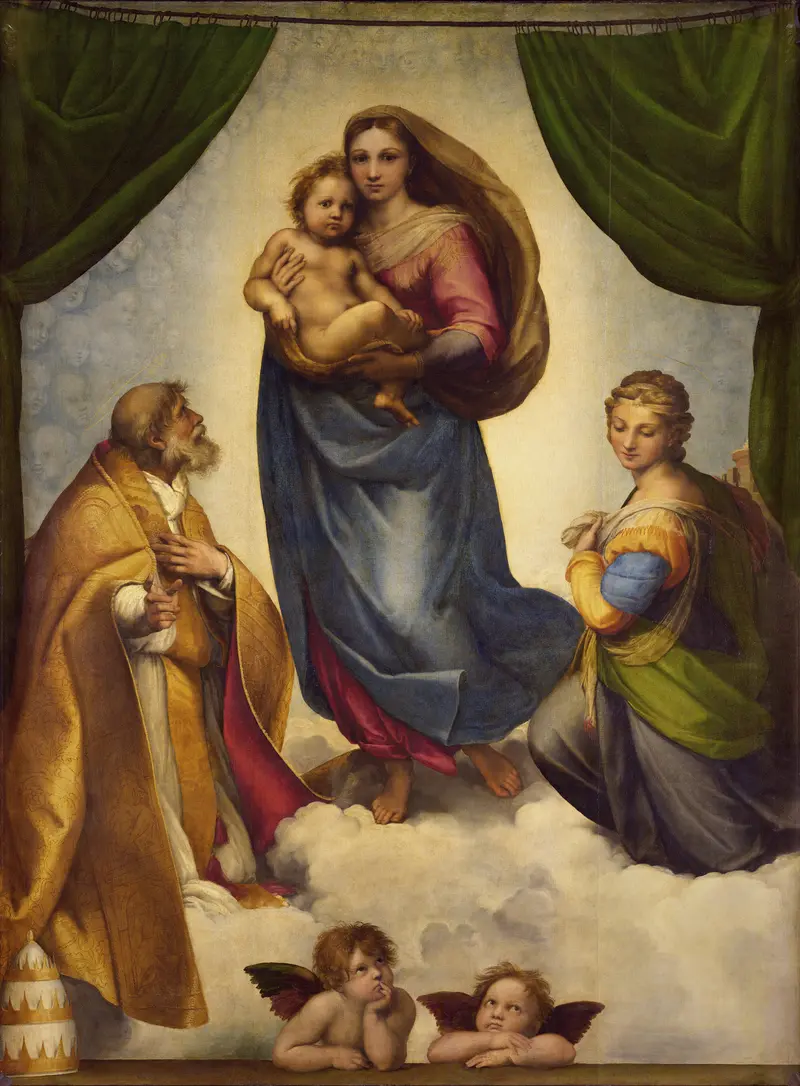
Sistine Madonna
Raphael
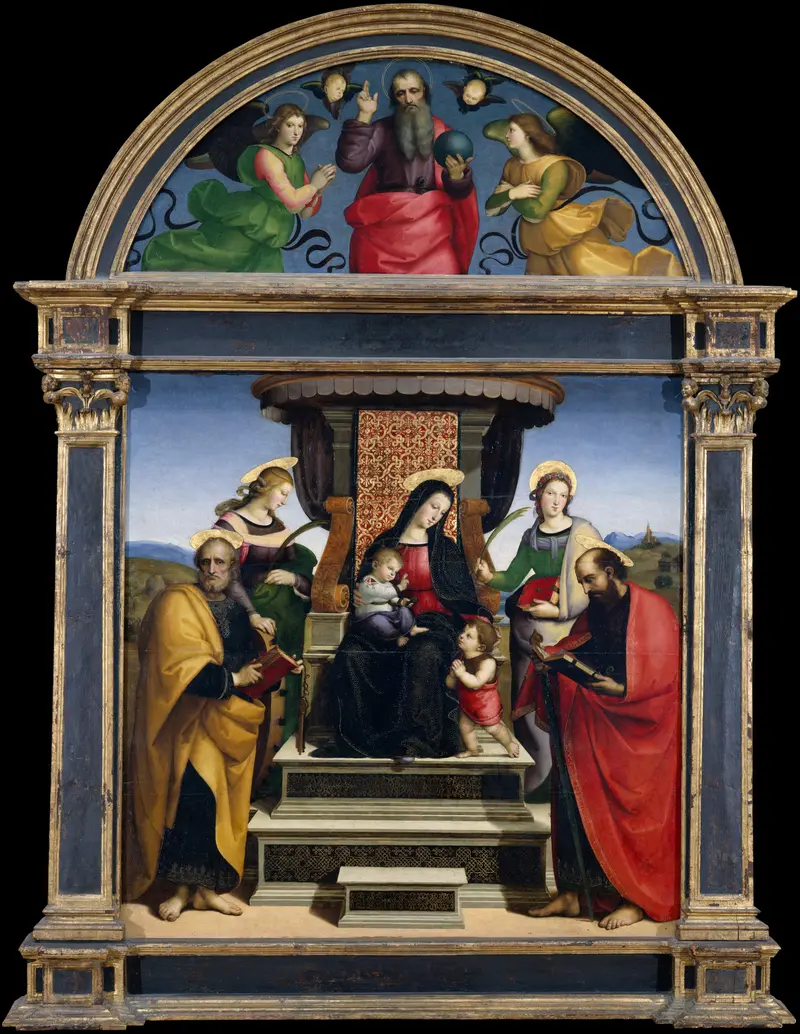
Madonna and Child Enthroned with Saints
Raphael





