
Girl Singing — History & Facts
No one knows the identity of the girl who bursts into song in Girl Singing, but her lively presence has sparked debate for centuries: is she a portrait, a genre figure, or a memory of someone dear to Frans Hals? Painted around 1630, this work stands out for its informality and spontaneity, qualities that were unusual in Dutch portraiture at the time. Some art historians believe that Hals used members of his own family as models for his genre scenes, while others point to the possibility that the sitter was a professional singer or actress from Haarlem’s vibrant theater scene. The painting’s uncertain status—neither strictly portrait nor pure genre—has kept scholars guessing. The girl’s parted lips and animated eyes capture the very moment of song, a fleeting instant of performance.
Her hand, raised in a gesture of rhythm or emphasis, draws the viewer into the music’s invisible current. The loose brushwork, especially in the shimmering highlights of her collar and the soft modeling of her face, gives the impression of movement and sound. Unlike the more formal and moralizing scenes by Jan Steen, who often depicted music-making as a warning against vice, Hals’s approach is direct and celebratory: this is music as joy, not allegory.
The light falls from the left, illuminating her face and casting the background into shadow, focusing all attention on her expression. The exact provenance of Girl Singing is not fully documented, but it is typical of Hals’s works from the late 1620s and early 1630s, when he was at the height of his fame in Haarlem. Paintings like this were popular among the city’s prosperous burghers, who enjoyed scenes of daily life rendered with freshness and wit. Over the centuries, the painting has passed through private collections and exhibitions, and its attribution to Frans Hals has remained secure, unlike some other works from his circle.
Today, Girl Singing is celebrated as a prime example of Frans Hals’s ability to capture the energy and immediacy of life, a quality that continues to fascinate viewers and scholars alike.
More Artworks by Frans Hals

Banquet of the Officers of the St George Civic Guard
Frans Hals

Portrait of Jacob Pietersz Olycan (1596-1638)
Frans Hals

Laughing Cavalier
Frans Hals

Militia Company of District XI under the Command of Captain Reynier Reael, Known as ‘The Meagre Company’
Frans Hals

Regentesses of the Old Men's Alms House
Frans Hals
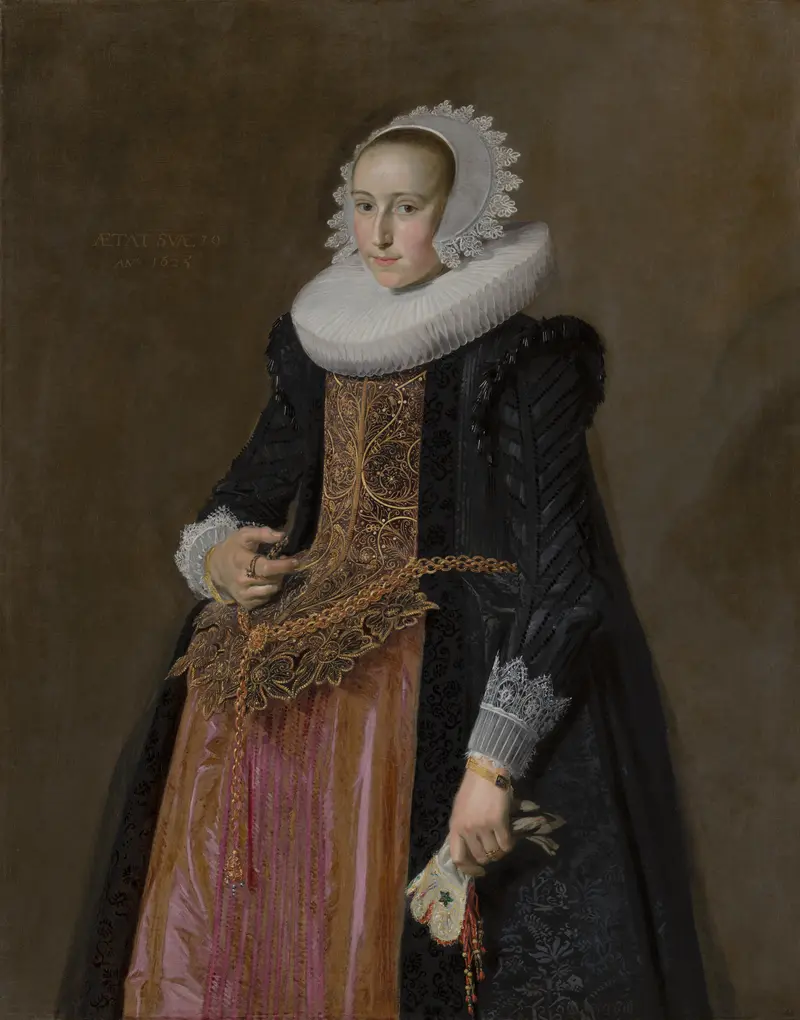
Portrait of Aletta Hanemans (1606–1653)
Frans Hals

Portrait of a Married Couple, Likely Isaac Abrahamsz Massa and Beatrix van der Laen
Frans Hals
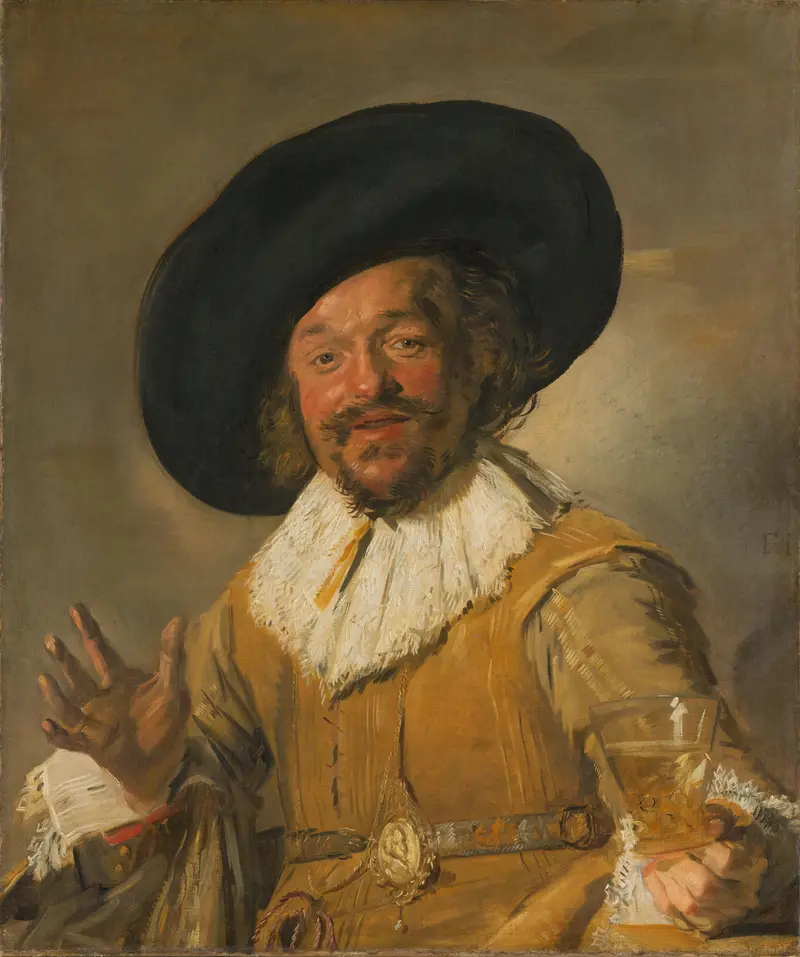
The Merry Drinker
Frans Hals

Portrait of Paulus Verschuur
Frans Hals

Portrait of Pieter van den Broecke
Frans Hals
More Genre Scene Art
Banquet of the Officers of the St George Civic Guard
Frans Hals

Rembrandt and Saskia in the Scene of the Prodigal Son
Rembrandt van Rijn

Bal du moulin de la Galette
Pierre-Auguste Renoir

Quadrille at the Moulin Rouge
Henri de Toulouse-Lautrec

A Burial at Ornans
Gustave Courbet

When Will You Marry?
Paul Gauguin