
Halt of the Brigands — History & Facts
A restless energy crackles through the ruins, where the ragged company sprawls among toppled columns and battered armor. The eye is drawn first to the grand, decaying architecture—arches and statues looming with a faded glory—before settling on the figures scattered across the grass and stone. Some lounge in drunken camaraderie, others tend to weapons or huddle over makeshift meals, while a few keep wary watch from the shadows.
Light pours in from the left, catching on gleaming helmets and the pale limbs of a statue, lending a theatrical air to this gathering of brigands. Every detail, from the discarded drums to the tangled ropes, signals both disorder and a strange sense of ritual, as if this halt is as much performance as respite. Painted in the 1710s by Alessandro Magnasco, this scene belongs to a world fascinated by the romance and menace of outlaws. In early eighteenth-century Italy, images of bandits and soldiers at rest were both a reflection of social anxieties and a source of morbid curiosity for collectors.
The ruins evoke the grandeur of a lost classical past, now claimed by society’s outsiders, while the lively, almost chaotic brushwork is typical of Magnasco’s style—his figures seem to flicker with nervous motion, unlike the calm, idealized bandits of earlier painters. Today, this work remains in the collection of the Hermitage Museum, a testament to how history’s margins can become the center of our gaze. Look again, and see how every gesture and shadow hints at a story half-told.
More Artworks by Alessandro Magnasco

The Synagogue
Alessandro Magnasco
Hermits (Anachorets)
Alessandro Magnasco
Landscape with Gypsies and Washerwomen
Alessandro Magnasco
Monks at Supper
Alessandro Magnasco
Praying Monks
Alessandro Magnasco
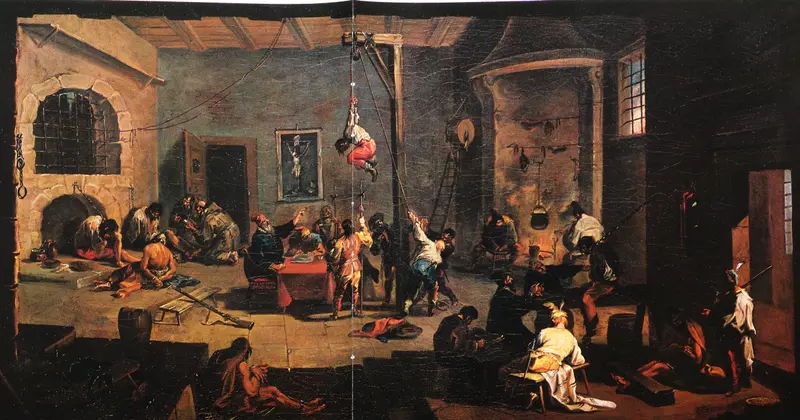
Torture Scene
Alessandro Magnasco
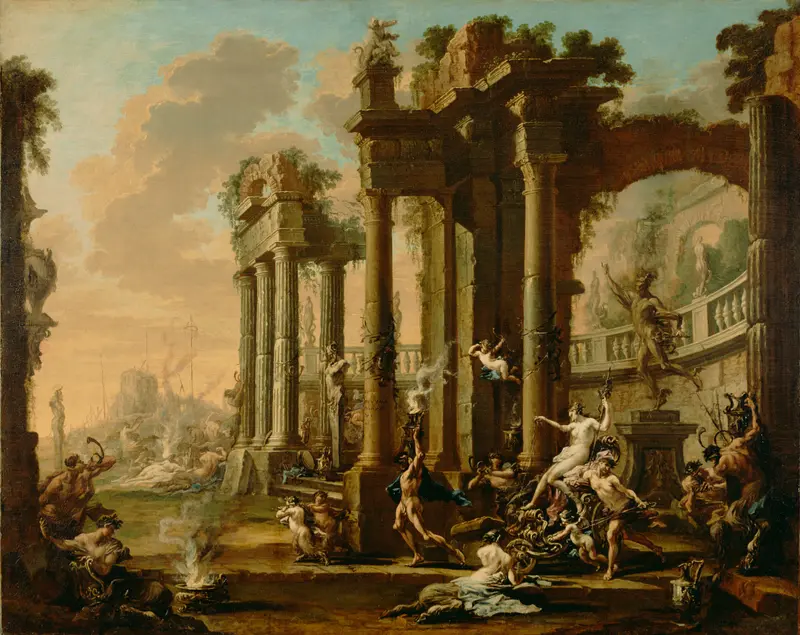
The Triumph of Venus
Alessandro Magnasco
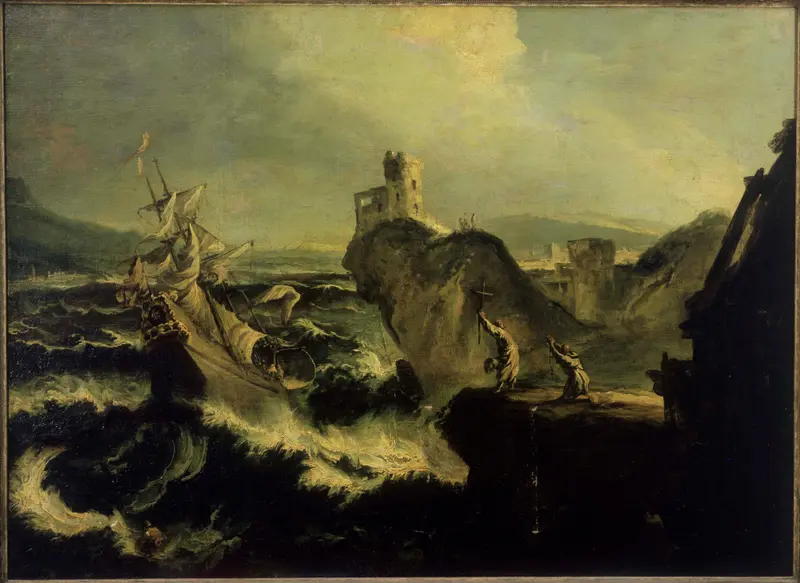
The Shipwreck
Alessandro Magnasco
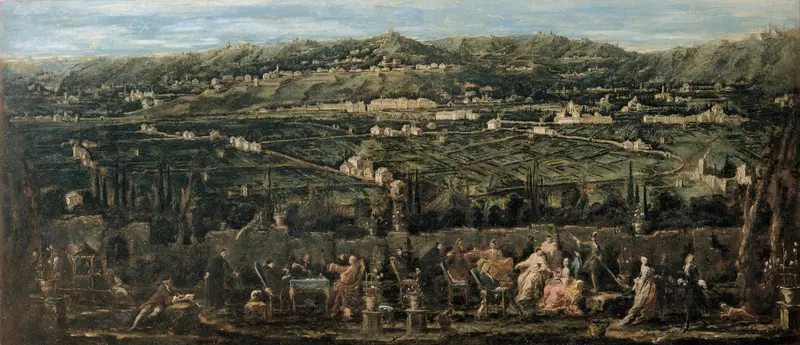
Garden Party in Albaro
Alessandro Magnasco
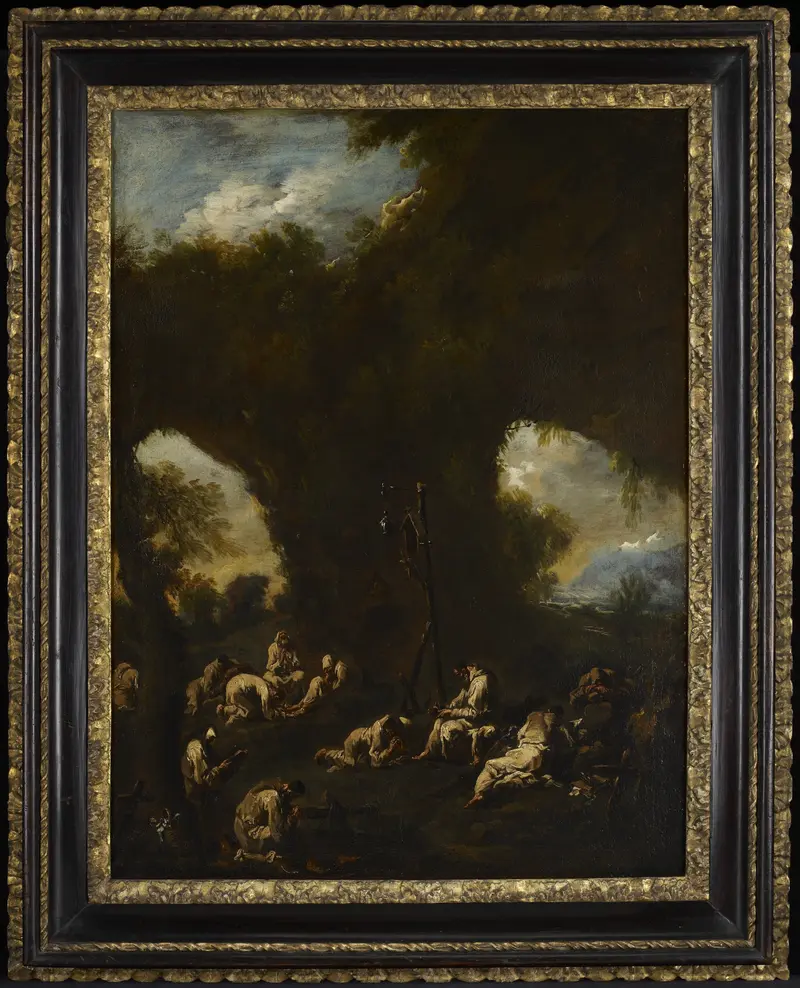
Monks Praying in a Grotto
Alessandro Magnasco
More Genre Scene Art

Banquet of the Officers of the St George Civic Guard
Frans Hals

Rembrandt and Saskia in the Scene of the Prodigal Son
Rembrandt van Rijn

Bal du moulin de la Galette
Pierre-Auguste Renoir

Quadrille at the Moulin Rouge
Henri de Toulouse-Lautrec

A Burial at Ornans
Gustave Courbet

When Will You Marry?
Paul Gauguin