
Head of an Angel — History & Facts
When Fra Angelico painted Head of an Angel in 1447, he was at the height of his fame, recently summoned to Rome by Pope Eugenius IV to work on the frescoes of the Vatican. This angel, believed to be a fragment from a larger altarpiece or fresco, has long intrigued scholars because its original context remains uncertain. Some suggest it was once part of the great Armadio degli Argenti cycle in Florence, while others link it to the lost decorations of San Marco.
The painting stands as a testament to how fragments can take on a life of their own, cherished even when their original purpose is lost to time. The angel gazes downward, lips parted as if caught mid-song, a gentle radiance suffusing its youthful face. The painter captures a moment of serene contemplation, perhaps as the angel listens to the divine message or prepares to announce it. The delicate curls of hair, the soft modeling of the cheeks, and the faint shimmer of a golden halo all point to Fra Angelico’s devotion to depicting the heavenly made tangible.
Unlike the more dramatic angels of Filippo Lippi or the muscular messengers of Masaccio, Fra Angelico’s angel is gentle, almost human in its emotion, inviting the viewer to pause and reflect rather than to marvel at grandeur. The physical history of Head of an Angel is as enigmatic as its expression. Its medium is uncertain—possibly tempera on panel, as was typical for Fra Angelico—and its journey through the centuries is largely undocumented. What is clear is that by the nineteenth century, fragments like this were being collected for their beauty and as precious survivals of early Renaissance devotion.
Today, Head of an Angel is admired as a rare and intimate encounter with Fra Angelico’s vision, offering a glimpse into the artist’s careful attention to spiritual grace at a time when Florentine painting was on the cusp of great change.
More Artworks by Fra Angelico

Condemnation of St Lawrence by the Emperor Valerian
Fra Angelico
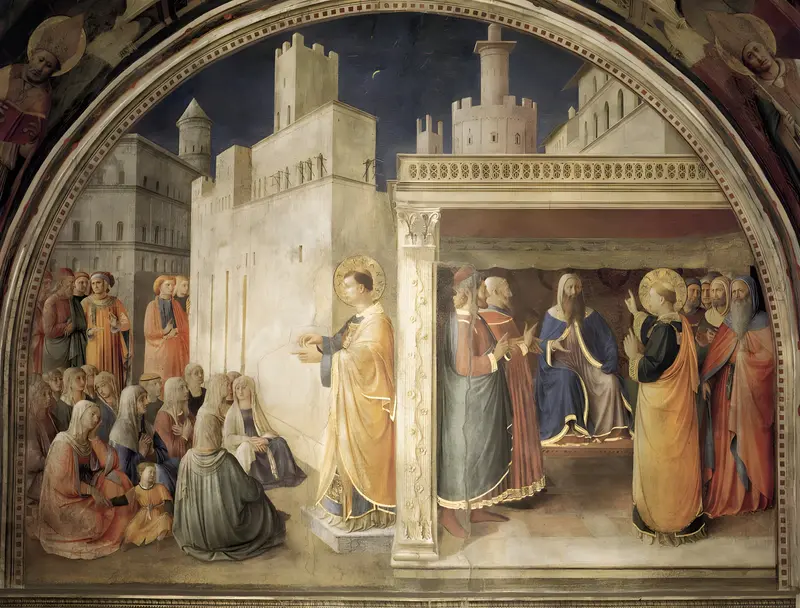
Lunette of the north wall
Fra Angelico
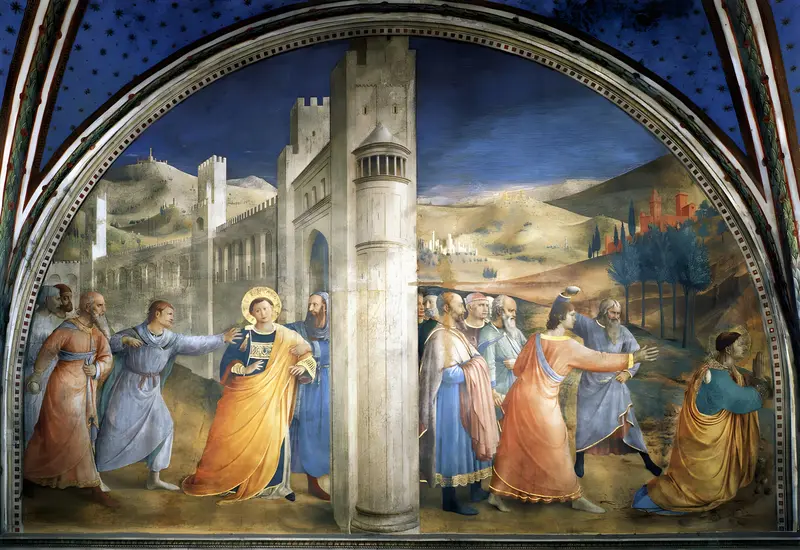
Lunette of the east wall in Niccoline Chapel
Fra Angelico
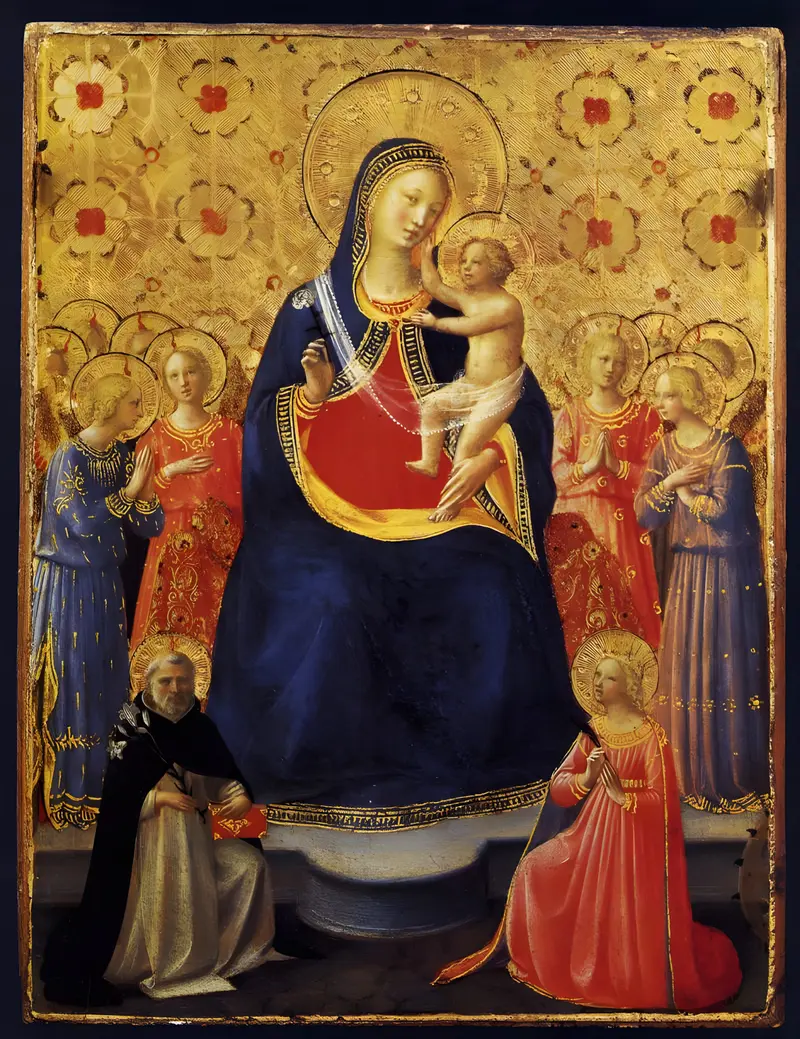
Madonna and Child Enthroned with Nine Angels and Saints Dominic and Catherine of Alexandria
Fra Angelico
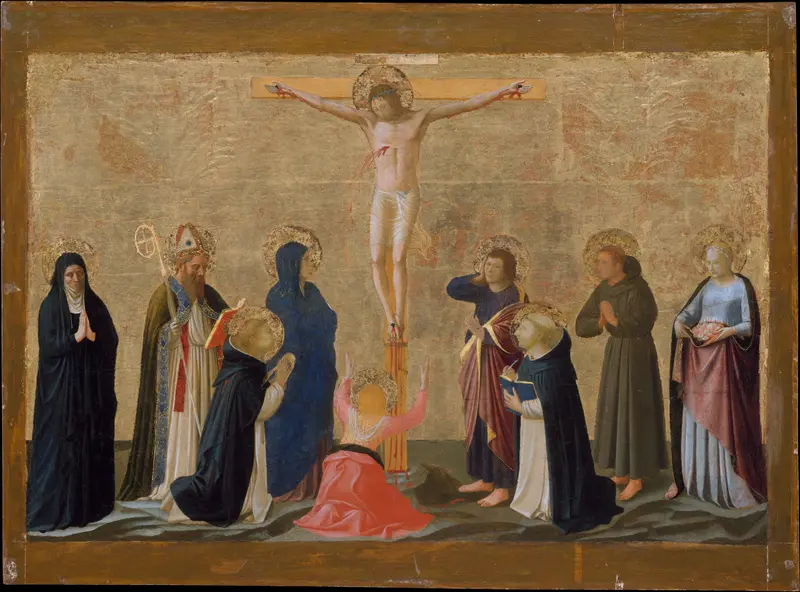
The Crucifixion
Fra Angelico
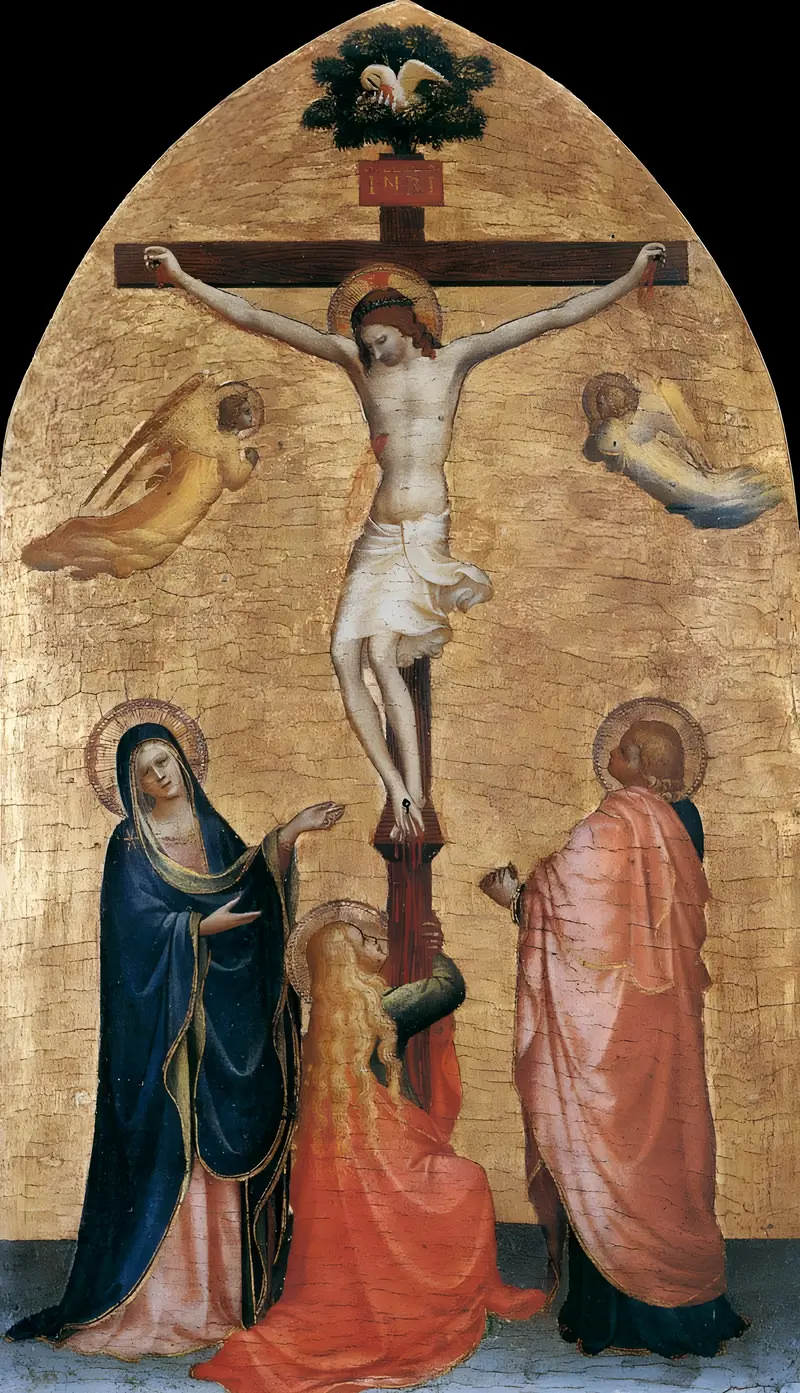
Crucifixion with the Virgin, John the Evangelist, and Mary Magdelene
Fra Angelico
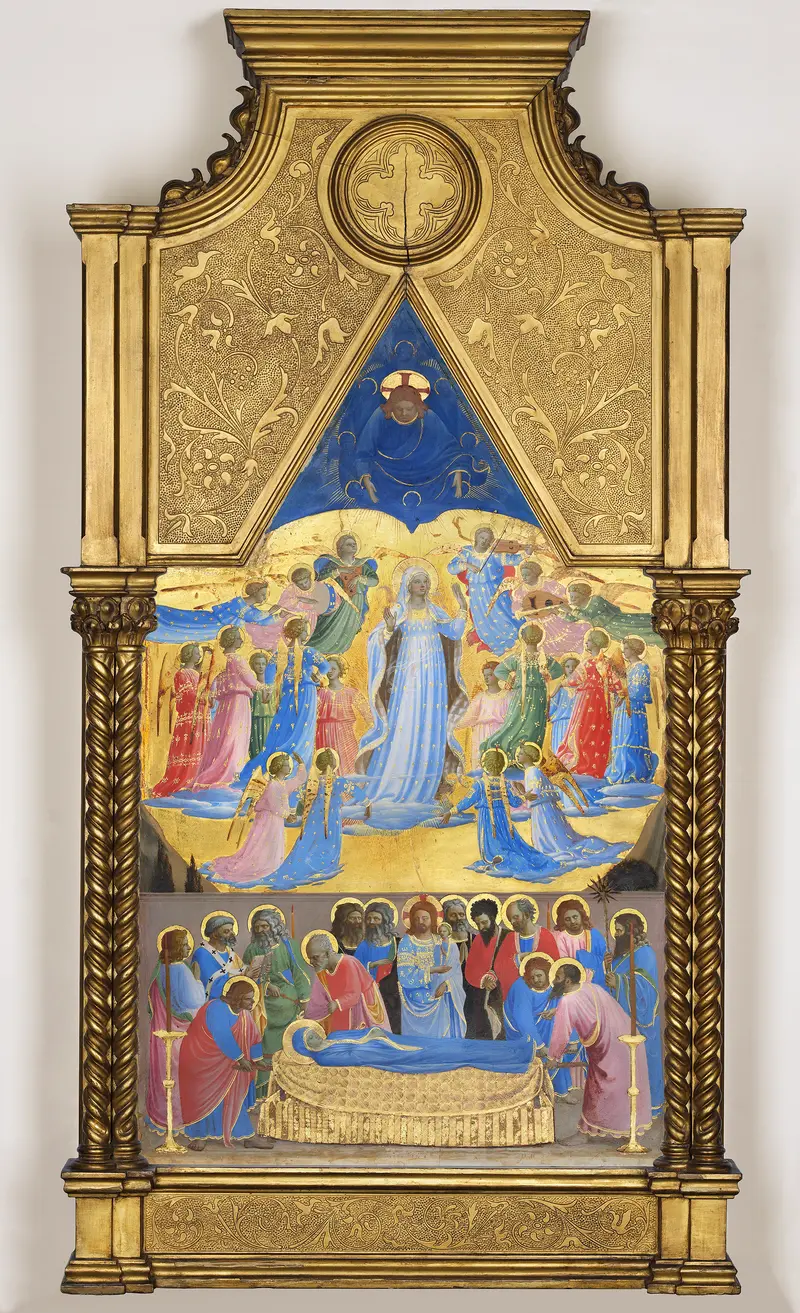
Dormition and Assumption of the Virgin
Fra Angelico
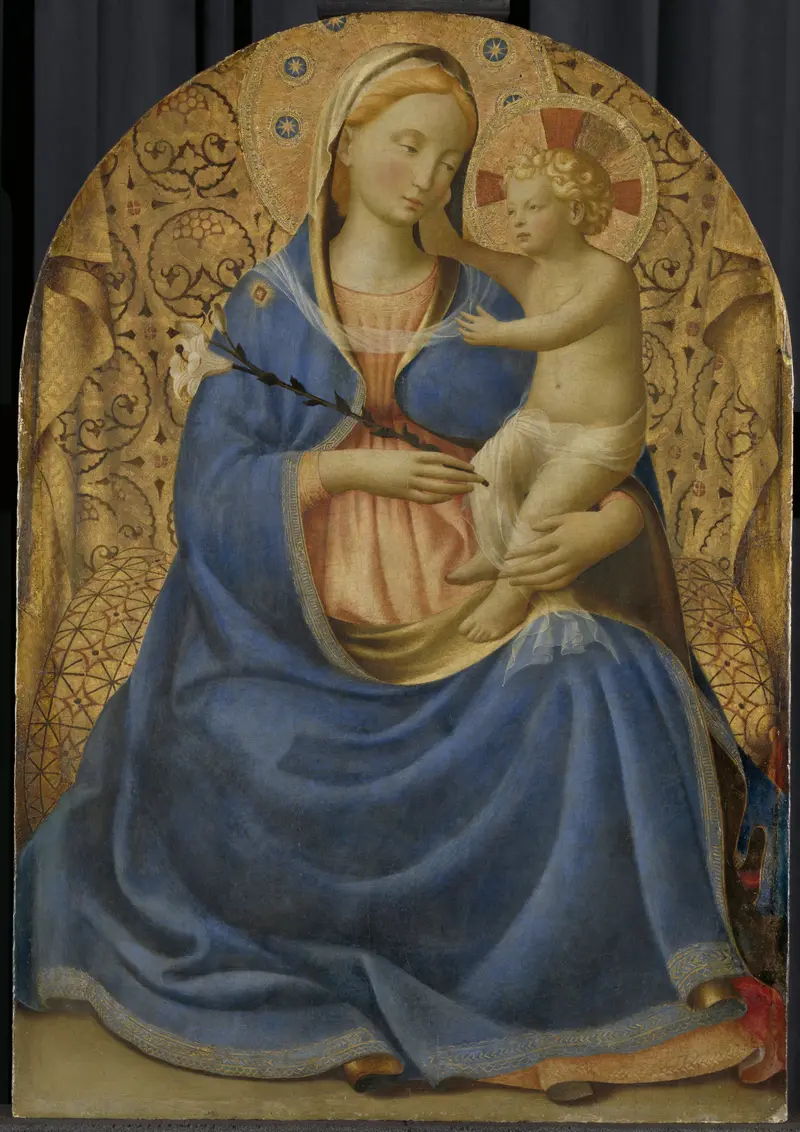
Madonna of Humility
Fra Angelico
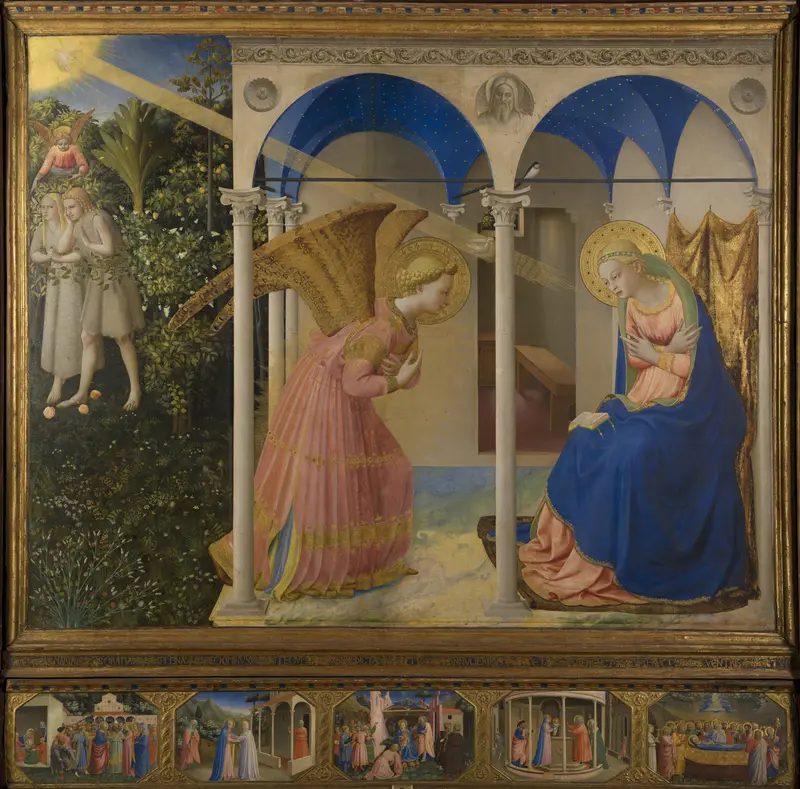
The Annunciation
Fra Angelico

Saint Anthony Abbot
Fra Angelico





