
Heilige Hieronymus lezend — History & Facts
A gaunt old man sits hunched over his writing, his entire body drawn into the act of reading or translating, as if the world around him has faded to nothing but the page and the skull at his feet. The lines cut by Jusepe de Ribera are sharp and unsparing, tracing every rib, every sinew, and every wrinkle of Saint Jerome’s flesh. The lion, resting its heavy head beside him, is less a beast than a silent witness, its mane echoing the saint’s wild beard.
Light carves out the saint’s back and arms, leading the eye from the rough stone shelter to the parchment in his hands, and then down to the skull—a reminder of mortality, and the seriousness of the work. This print belongs to a long tradition of depicting Saint Jerome as a solitary scholar in the wilderness, but Ribera’s treatment is particularly raw. Unlike the idealized figures of earlier Renaissance artists, Ribera gives us a body marked by age and asceticism, a man who has chosen hardship for the sake of wisdom. The rough cross-hatching and deep shadows add a sense of immediacy, as if the saint’s struggle is happening before us.
In the early seventeenth century, such images were prized for private devotion, inviting viewers to contemplate both the labor of learning and the inevitability of death. The print, dated 1622 and now in the Rijksmuseum, is a testament to Ribera’s reputation for unflinching realism and his fascination with the extremes of human experience—qualities that still draw the viewer back to the saint’s silent vigil.
More Artworks by Jusepe de Ribera

Saint Francis of Paola
Jusepe de Ribera

Penitent Saint Peter
Jusepe de Ribera
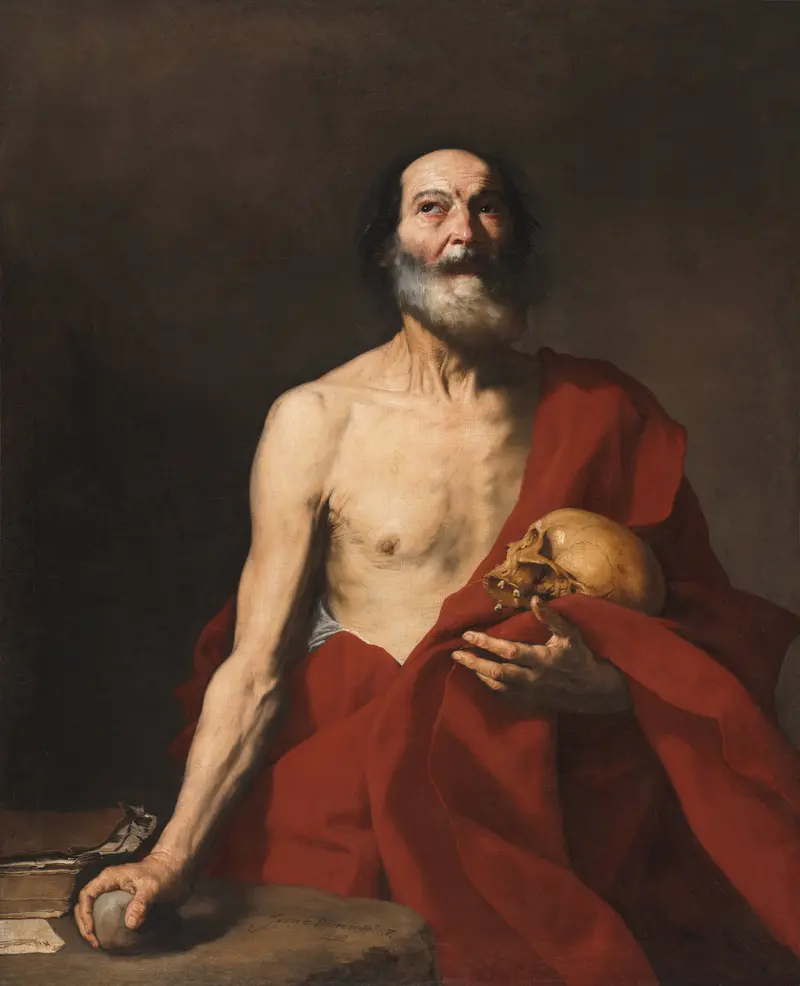
Saint Jerome
Jusepe de Ribera
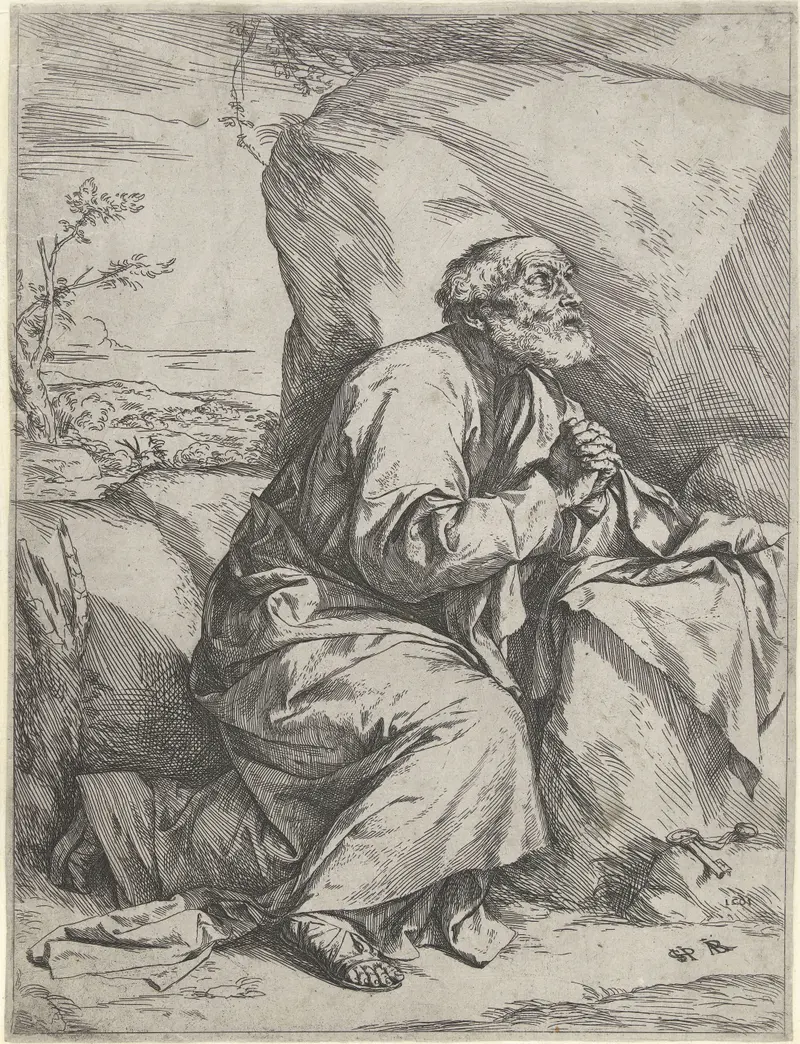
Boetvaardige Petrus
Jusepe de Ribera
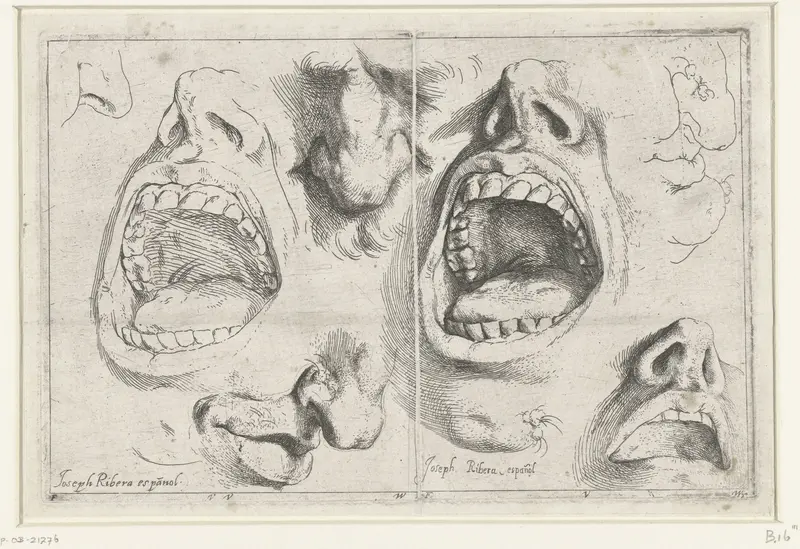
Studies van neus en mond
Jusepe de Ribera
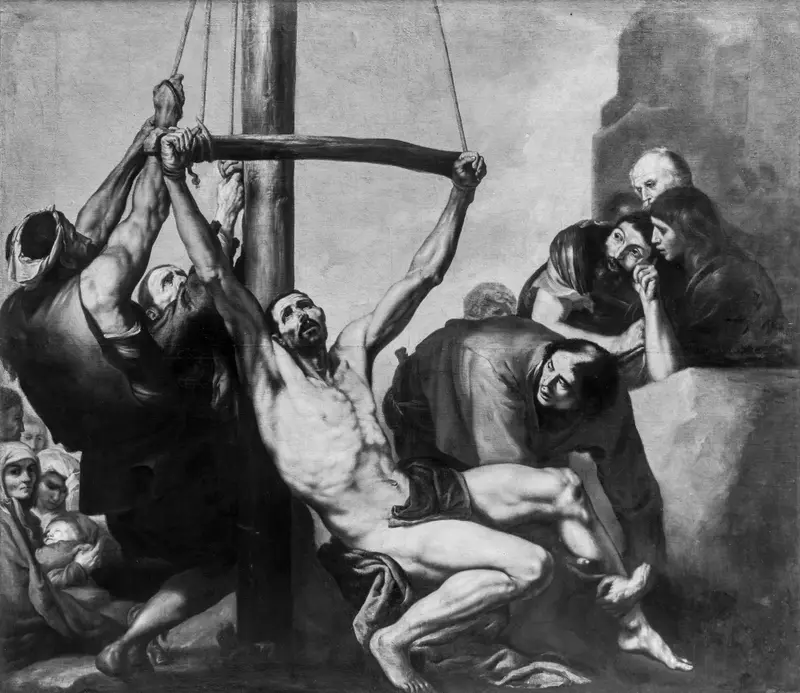
The Martyrdom of Saint Bartholomew
Jusepe de Ribera
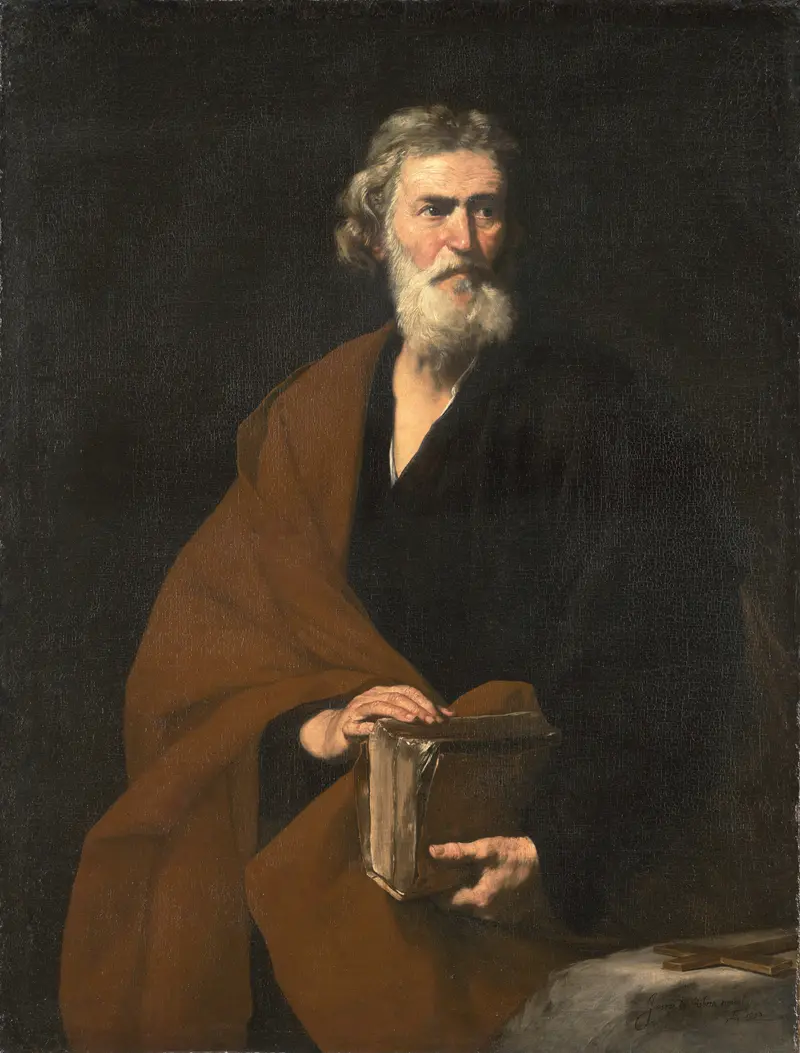
Saint Matthew
Jusepe de Ribera
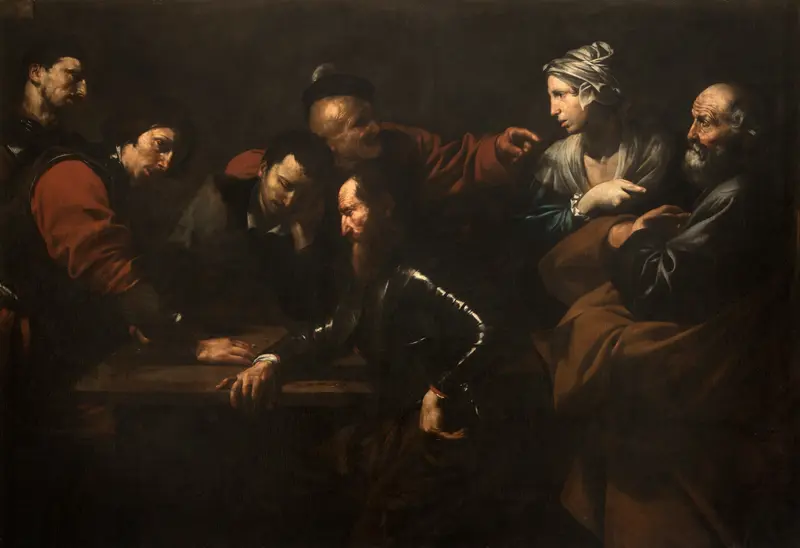
The Denial of Saint Peter
Jusepe de Ribera
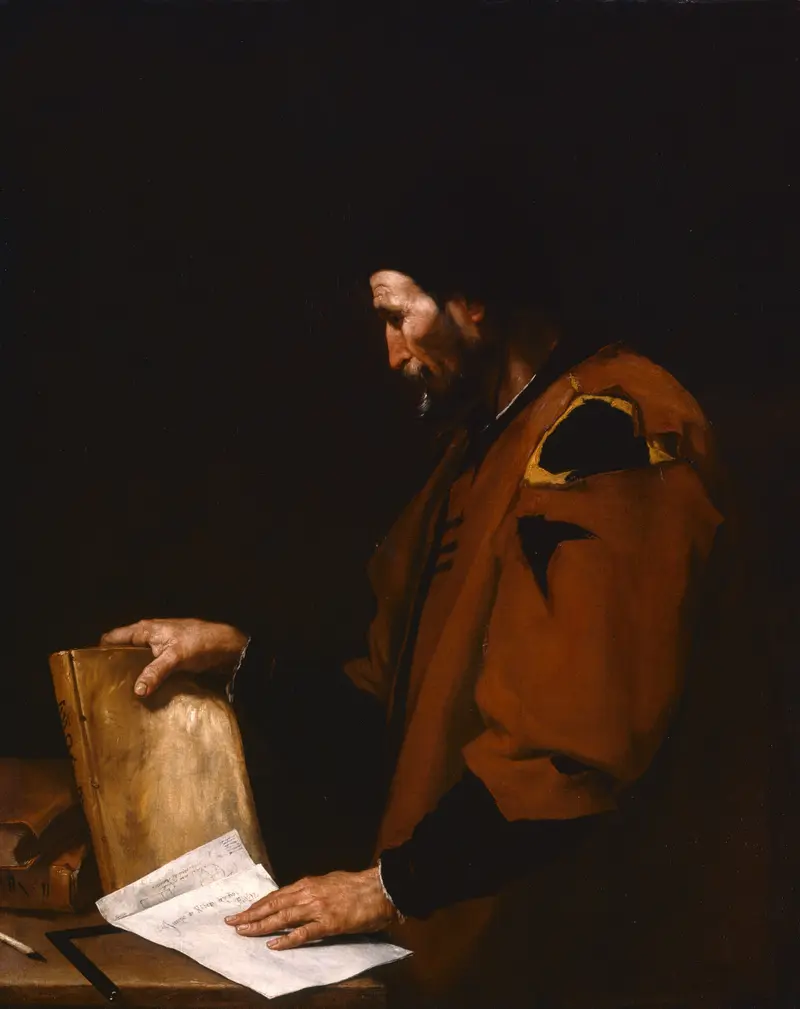
Aristotle
Jusepe de Ribera
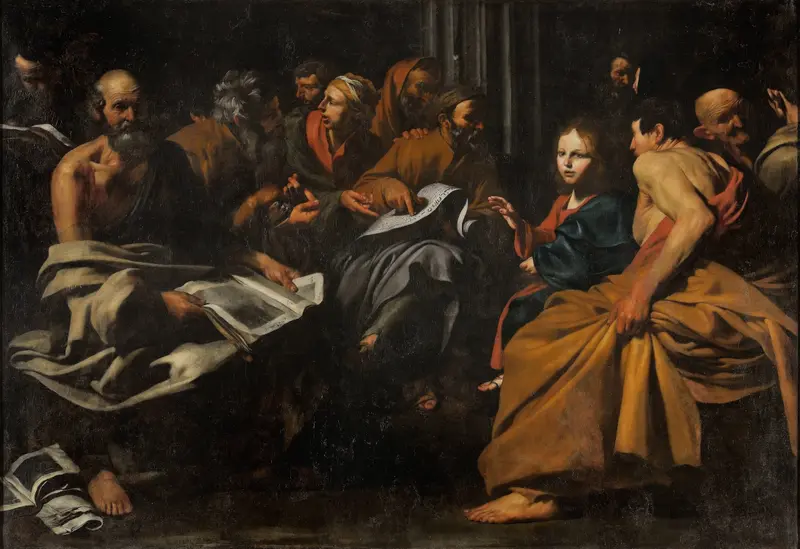
Christ among the doctors
Jusepe de Ribera





