
Hercules Kicking Faunus out of Omfale's Bed — History & Facts
What grips the viewer first in Hercules Kicking Faunus out of Omfale's Bed is the sheer theatricality of the moment, frozen in a tangle of limbs, drapery, and startled gazes. The eye is drawn to the muscular figure of Hercules, caught mid-action as he forcefully ejects the intruding faun from the opulent bed. The faun’s body twists away, half-human, half-beast, its hooves scrambling for purchase, while Omfale, draped in golden fabric, reclines in a languid pose, her attention seemingly divided between the chaos and her own calm detachment.
The drama is heightened by the startled putti at the foot of the bed and the wide-eyed servant or witness in the shadows, whose gesture of alarm pulls the viewer deeper into the unfolding story. Painted in 1607, this work by Abraham Janssens belongs to a world in which mythological scenes served both as moral lessons and as pretexts for displays of virtuoso painting. The lush fabrics, gleaming metal vessels, and carefully arranged flowers speak to the era’s fascination with sensuality and abundance, while the exaggerated musculature and expressive faces recall the influence of Italian masters on Northern artists. Such paintings were often commissioned by wealthy patrons eager to showcase both their learning and their taste for the dramatic; the myth of Hercules and Omfale, with its themes of mistaken identity and reversal of roles, offered ample opportunity for wit and spectacle.
History has kept few traces of this particular canvas’s journey, but its energy and detail invite us to linger, searching for the next twist in the ancient tale.
Sources: Wikidata Q9291475 · Image source (Wikimedia Commons)
More Artworks by Abraham Janssens

Jupiter Rebuked by Venus
Abraham Janssens
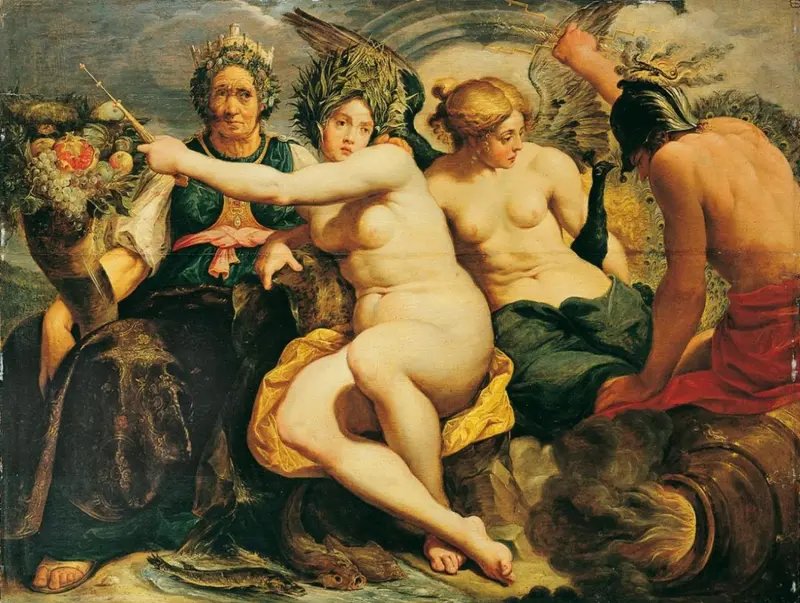
Allegorie der vier Elemente
Abraham Janssens
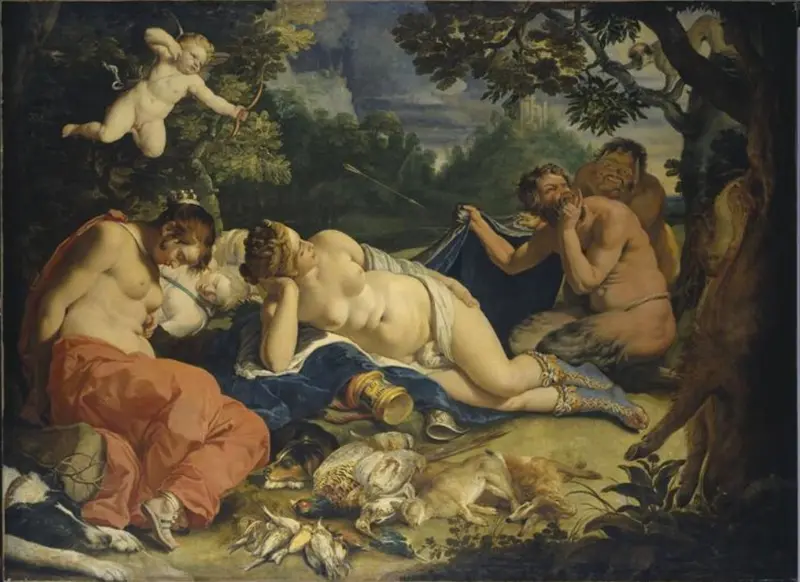
Diana and her nymphs spied on by satyrs
Abraham Janssens

Die Erweckung des Lazarus 153 Bavarian State Painting Collections
Abraham Janssens
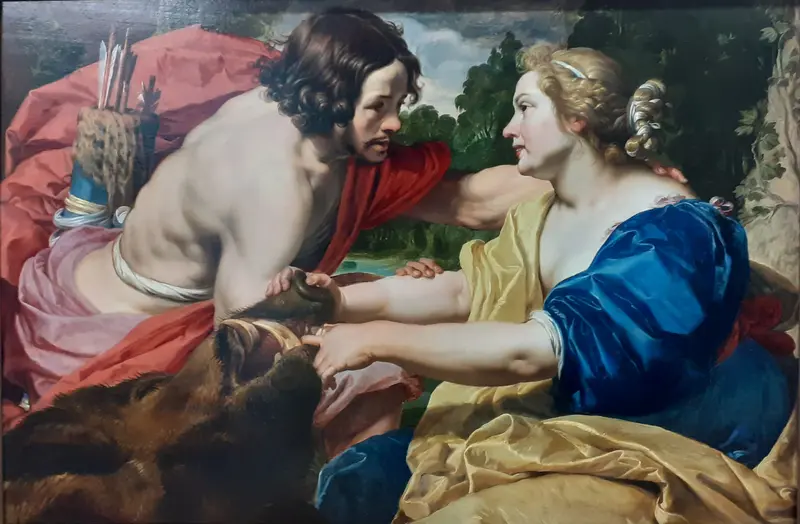
Meleager presents the head of the Calydonian Boar to Atalanta
Abraham Janssens
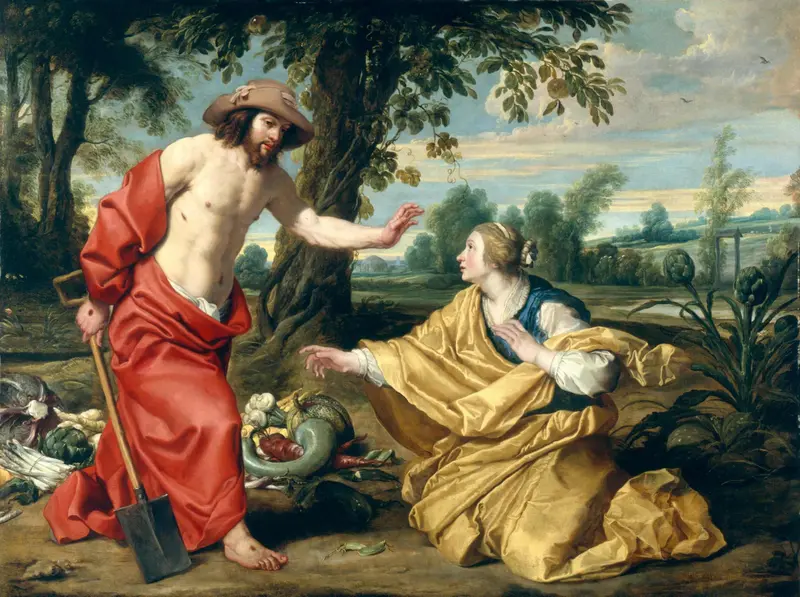
Noli me Tangere
Abraham Janssens
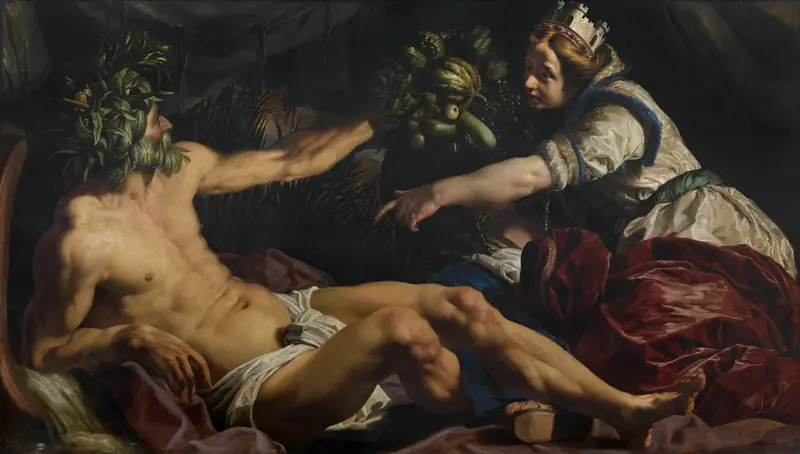
Scaldis and Antverpia
Abraham Janssens
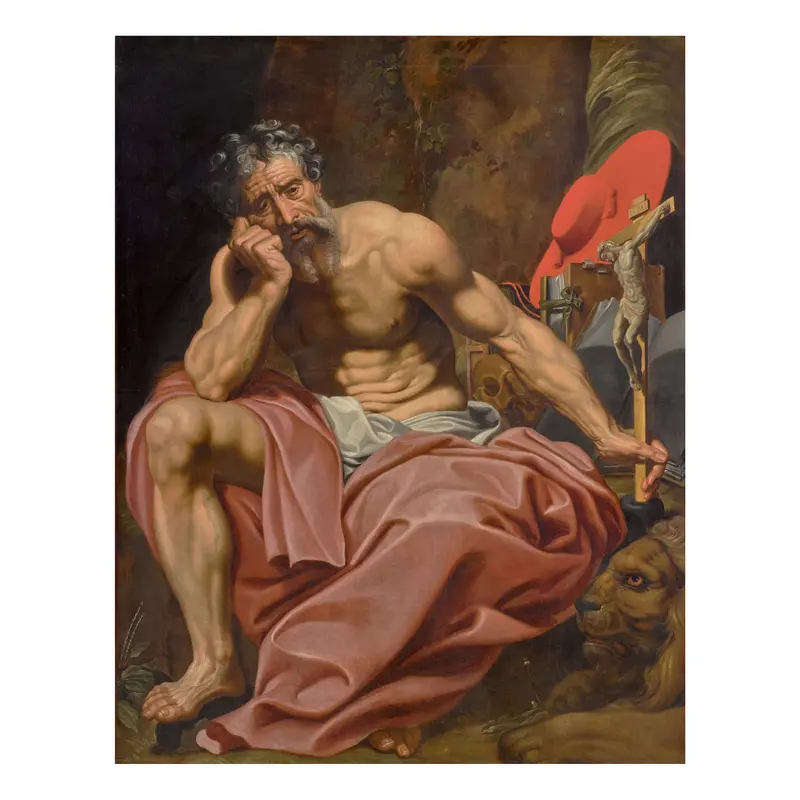
Saint Jerome
Abraham Janssens
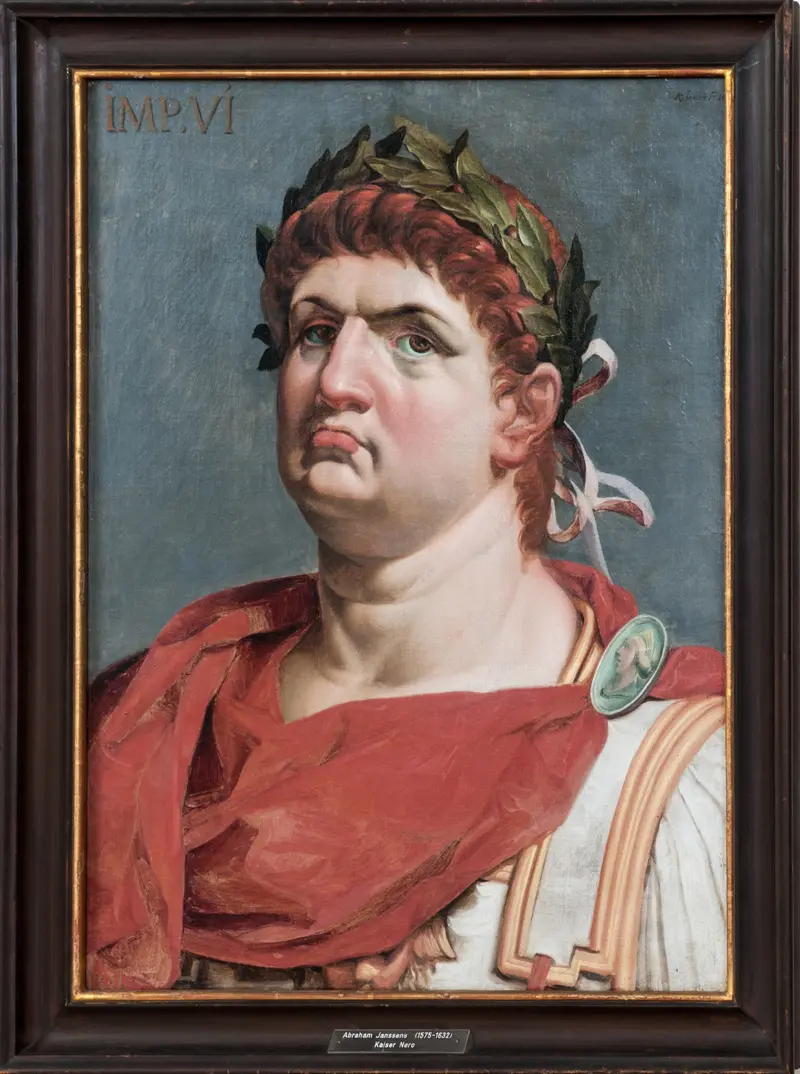
Nero
Abraham Janssens
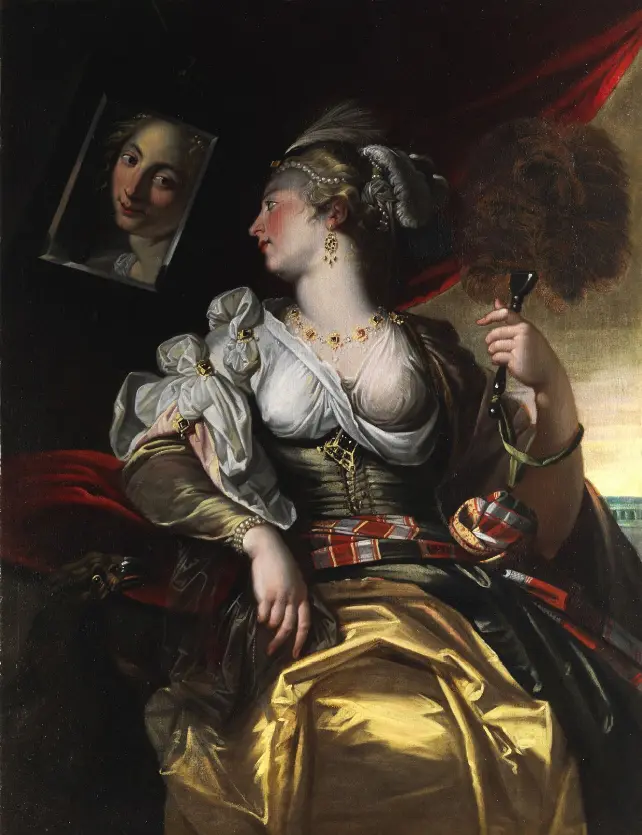
The Face
Abraham Janssens





