
In a Café in Paris — History & Facts
A masked woman sits beside a man in formal evening dress, their faces half-lit by the golden glow of café lamps, while a waiter leans in, tray poised, eyes fixed on the pair. The mask is the painting’s silent riddle: it hints at secrecy, play, or perhaps the thrill of Parisian nightlife in the late nineteenth century. The table’s sharp angle draws the viewer straight into the scene, where reflections shimmer in half-filled glasses and the plush red banquette suggests both comfort and spectacle.
Every brushstroke seems to vibrate with the hum of conversation and the clink of glass, while the swirl of light overhead signals the electric energy of a city that never quite sleeps. Painted in 1886, In a Café in Paris belongs to a world where artists from across Europe flocked to the French capital, eager to capture its modern rhythms and fleeting encounters. Cafés were the heart of this new urban life, places where boundaries blurred—between classes, between the public and the private, between the seen and the hidden. The loose, gestural handling of paint echoes the innovations of the era’s avant-garde, who sought to catch the pulse of the moment rather than polish every detail.
Though history has kept few traces of this particular work, its presence in the Hannu Miettinen collection today lets us peer through a window into the restless, glittering nights of Paris—inviting us to wonder what stories lie behind that mask.
More Artworks by Akseli Gallen-Kallela
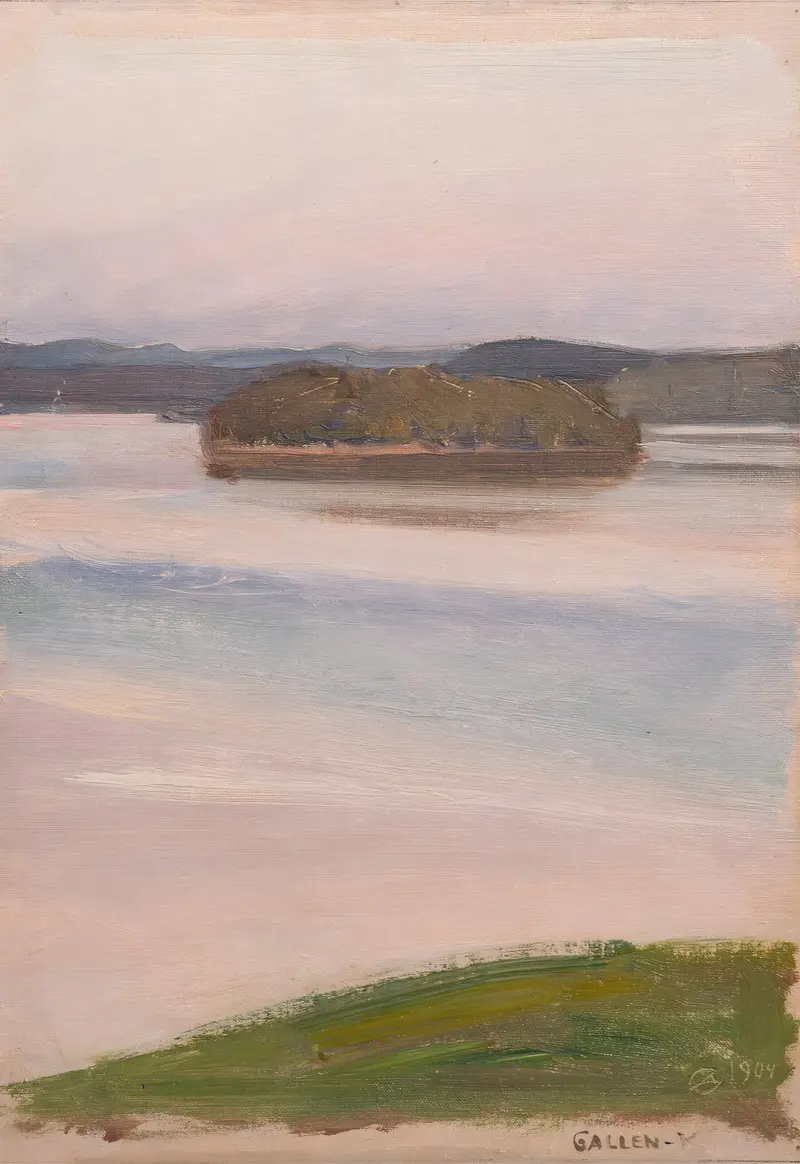
Lake Keitele
Akseli Gallen-Kallela
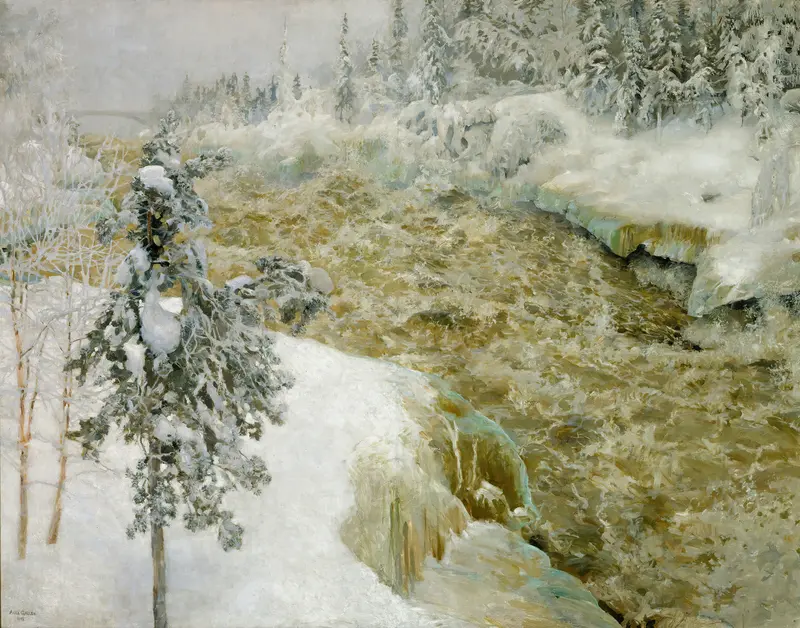
Imatra Falls in Snow ; Imatra in Winter
Akseli Gallen-Kallela
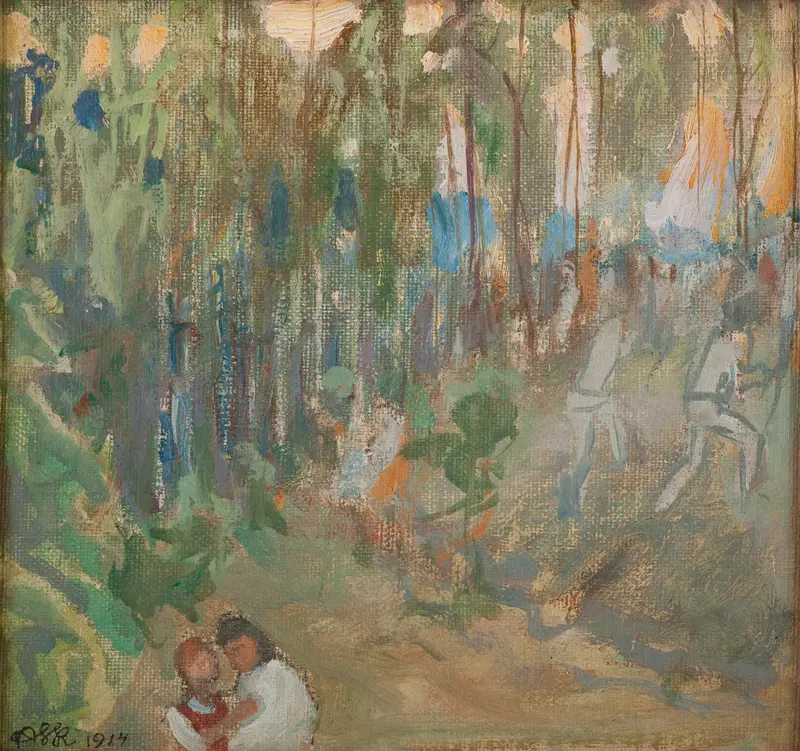
Vainovalkeat
Akseli Gallen-Kallela
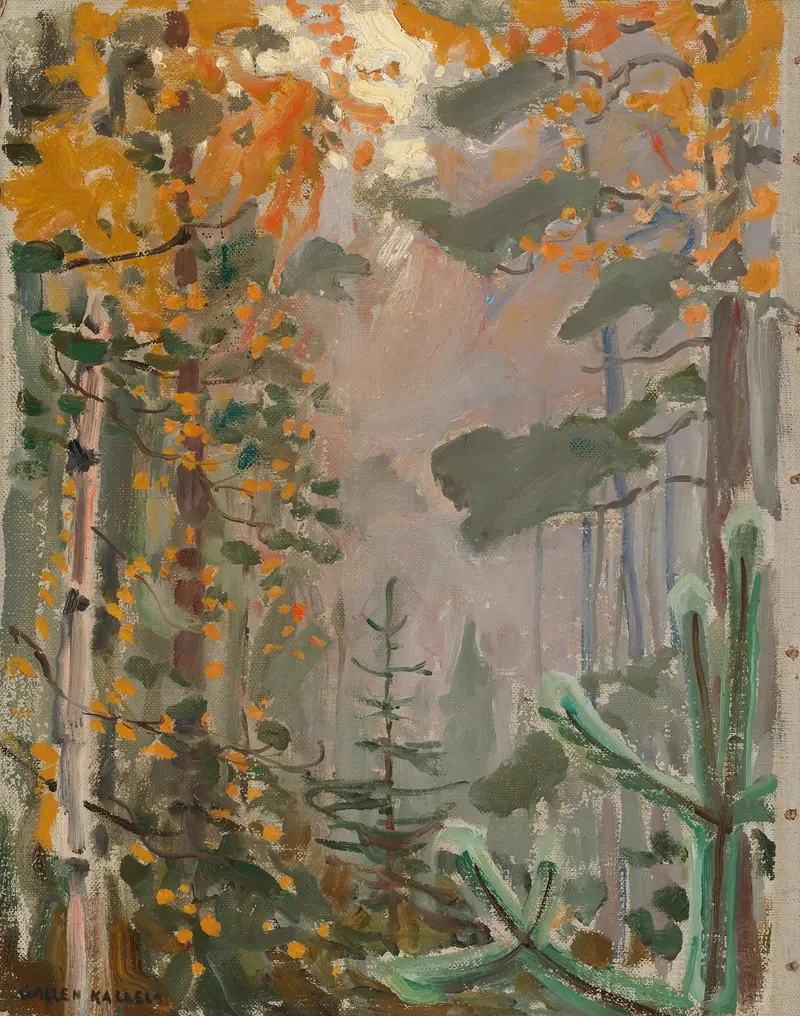
Autumn Landscape
Akseli Gallen-Kallela
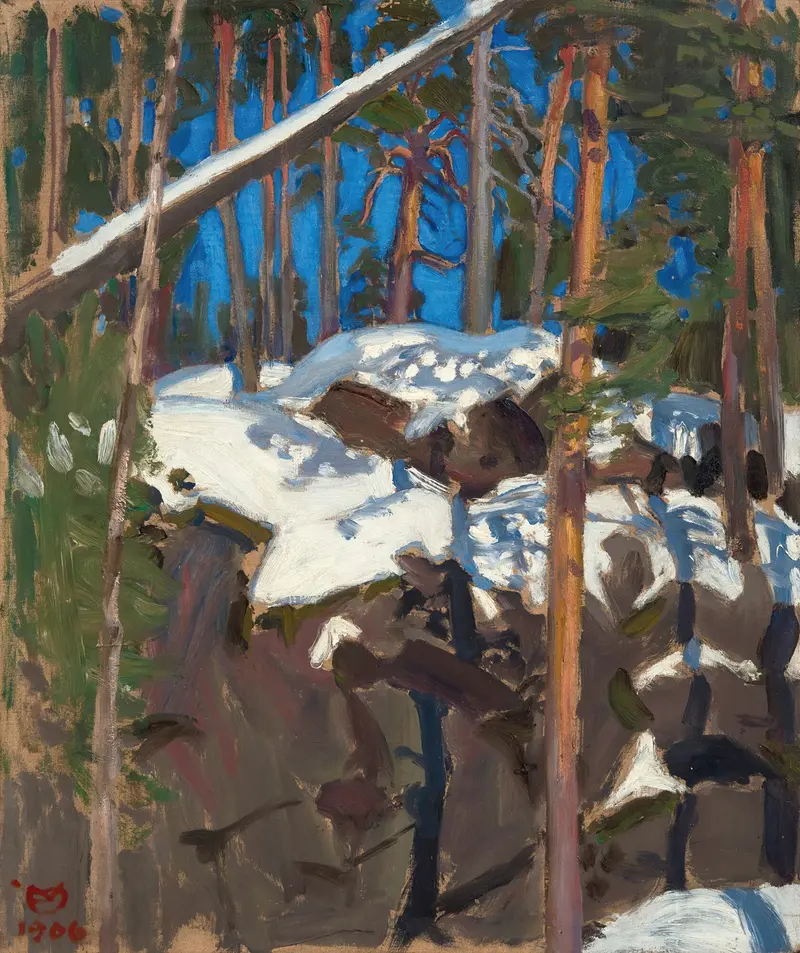
Spring Sun At Konginkangas
Akseli Gallen-Kallela
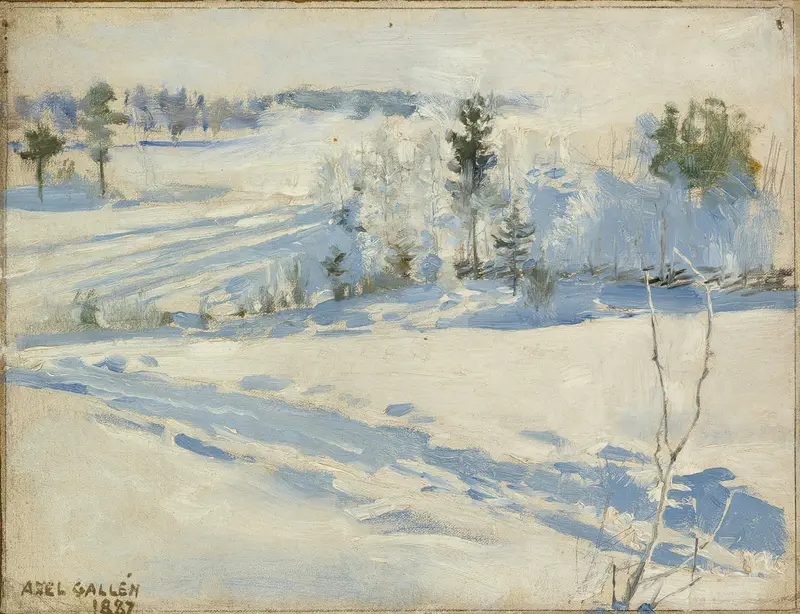
Winter Landscape
Akseli Gallen-Kallela

First Snow
Akseli Gallen-Kallela
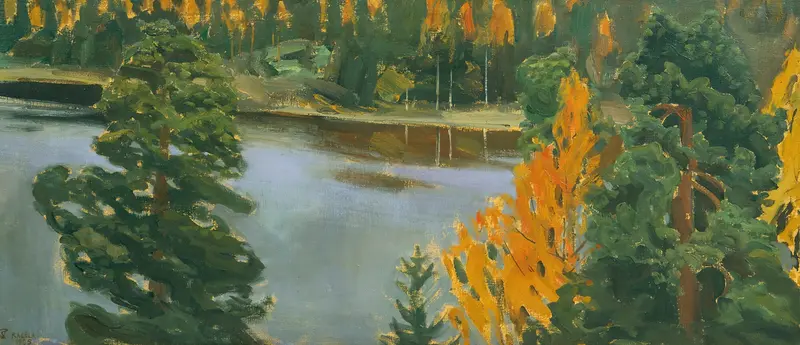
Lake View In Autumn
Akseli Gallen-Kallela
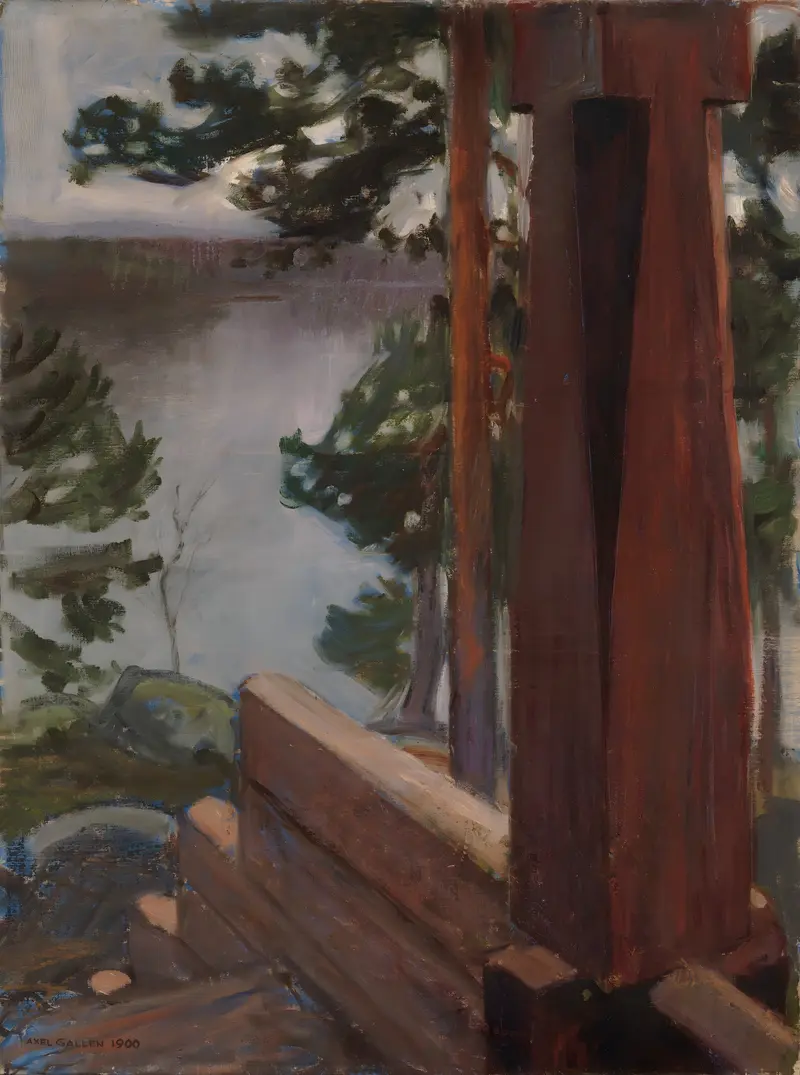
The Kalela Porch
Akseli Gallen-Kallela

Light Behind The Clouds
Akseli Gallen-Kallela
More Genre Scene Art

Banquet of the Officers of the St George Civic Guard
Frans Hals

Rembrandt and Saskia in the Scene of the Prodigal Son
Rembrandt van Rijn

Bal du moulin de la Galette
Pierre-Auguste Renoir

Quadrille at the Moulin Rouge
Henri de Toulouse-Lautrec

A Burial at Ornans
Gustave Courbet

When Will You Marry?
Paul Gauguin