
Intérieur du Marché des Enfants-Rouges, en 1907. 3ème arrondissement — History & Facts
In the bustling heart of Paris, destiny unfolds in the vibrant exchanges of life, each figure a thread woven into the tapestry of existence. Within this market scene, ordinary moments hold the weight of fate, revealing how the mundane can transform into something profound. Look to the foreground where vendors enthusiastically engage with customers, their gestures animated yet precise. Notice how the warm light filters through the market’s canopy, casting a golden glow on the fruits and vegetables, illuminating their vibrant hues.
The bustling arrangement of goods draws the eye in a circular motion, leading one through the intricate dance of commerce, while the architecture of the market envelopes the scene, creating a sense of intimacy amidst the chaos. Yet, behind the vivid colors lies a deeper story. The juxtaposition of the lively market and the uncertainty of the world outside hints at a collective yearning—an escape from the struggles of life. Each figure, while engaged in their daily tasks, carries an unspoken burden, expressing the poignancy of dreams intermingled with the harsh realities of existence.
This subtle tension serves as a reminder that amidst the vibrancy of life, shadows of destiny linger, shaping every interaction. In 1907, Frédéric Houbron painted this scene within the historic market space of Enfants-Rouges, located in Paris’s 3rd arrondissement. During this period, the city was undergoing significant changes, with the arts flourishing amid a backdrop of social and political upheaval. As a member of the vibrant Parisian art scene, Houbron skillfully captured the essence of daily life, inviting viewers to reflect on the beauty and complexity of the world around them.
More Artworks by Frédéric Houbron
Browse all →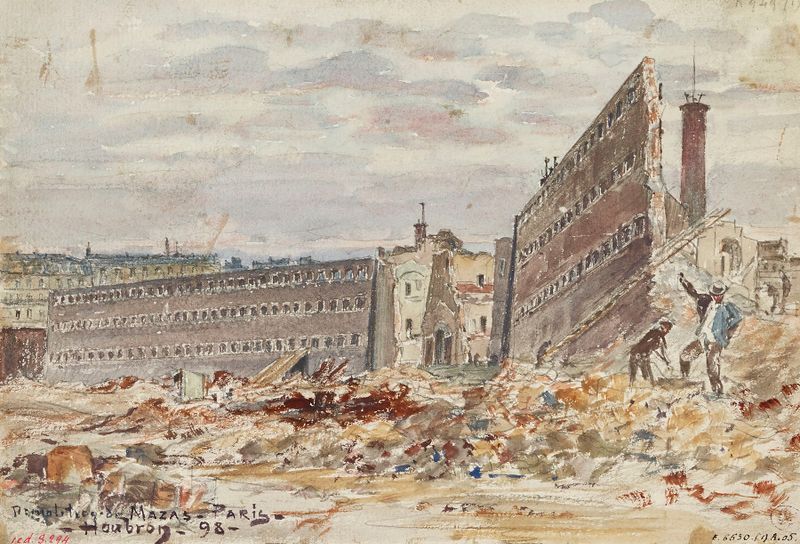
Démolition de la prison Mazas, 23, 25 boulevard Diderot (ancien boulevard Mazas)
Frédéric Houbron
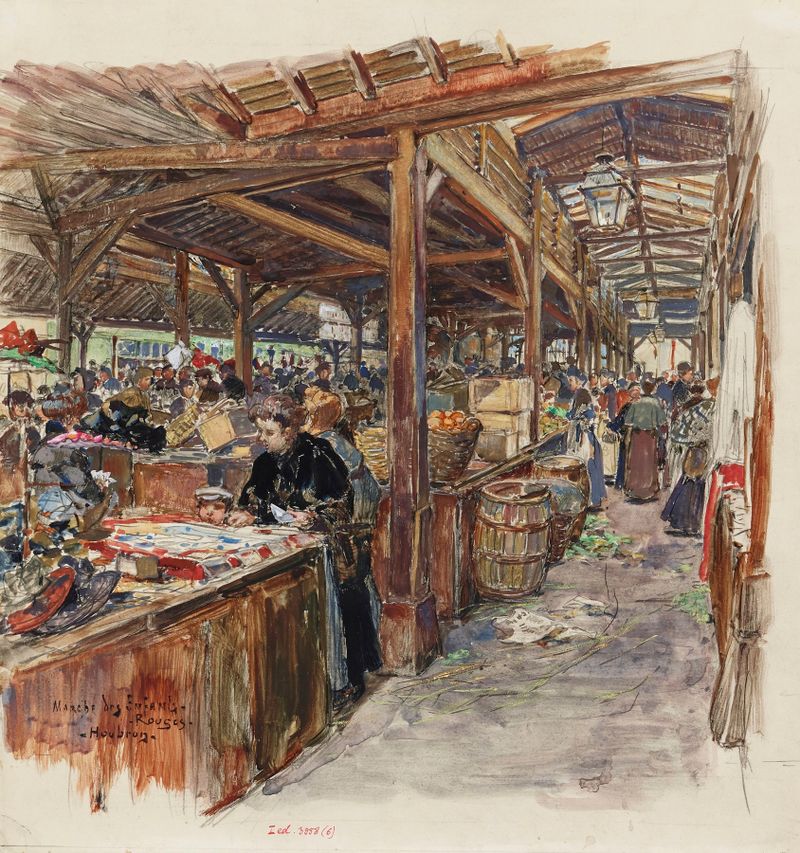
Intérieur du Marché des Enfants Rouges. 3ème arrondissement
Frédéric Houbron
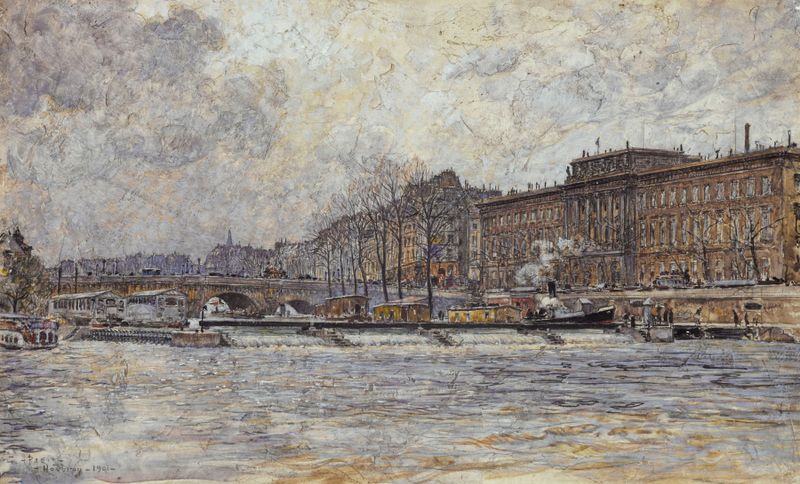
L’Hôtel de la Monnaie et le Pont-Neuf
Frédéric Houbron

Quai des Orfèvres. Paris. 1906
Frédéric Houbron
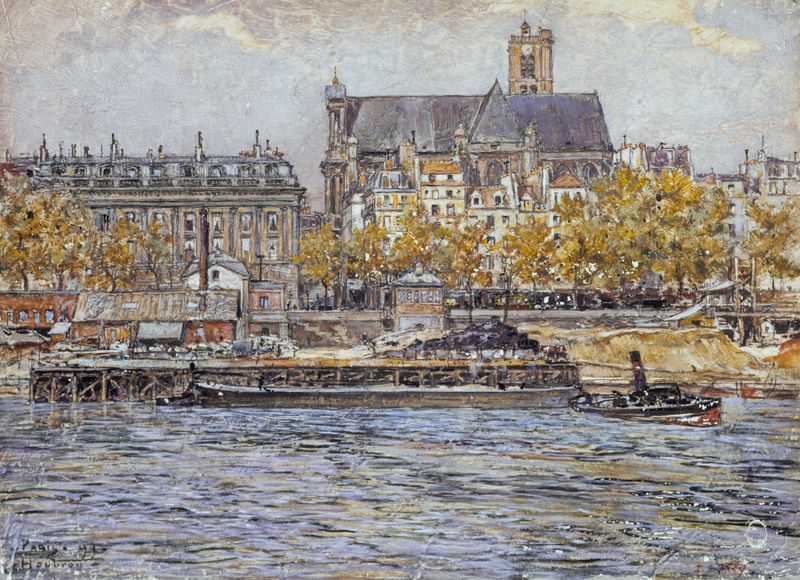
Le quai de l’Hôtel-de-Ville et l’église Saint-Gervais-Saint-Protais
Frédéric Houbron
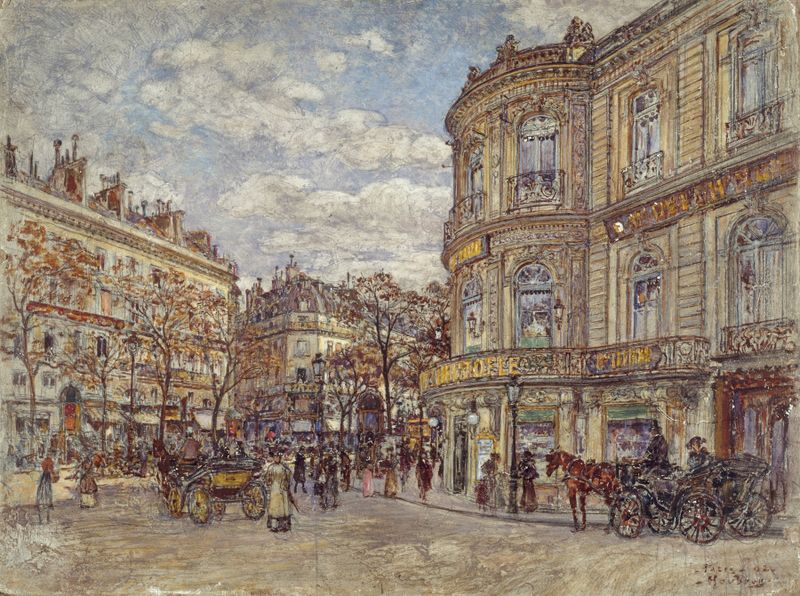
Le Pavillon de Hanovre, rue Louis-le-Grand
Frédéric Houbron

La rue du Chevalier-de-la-Barre, avec le Sacré-Cœur en construction
Frédéric Houbron
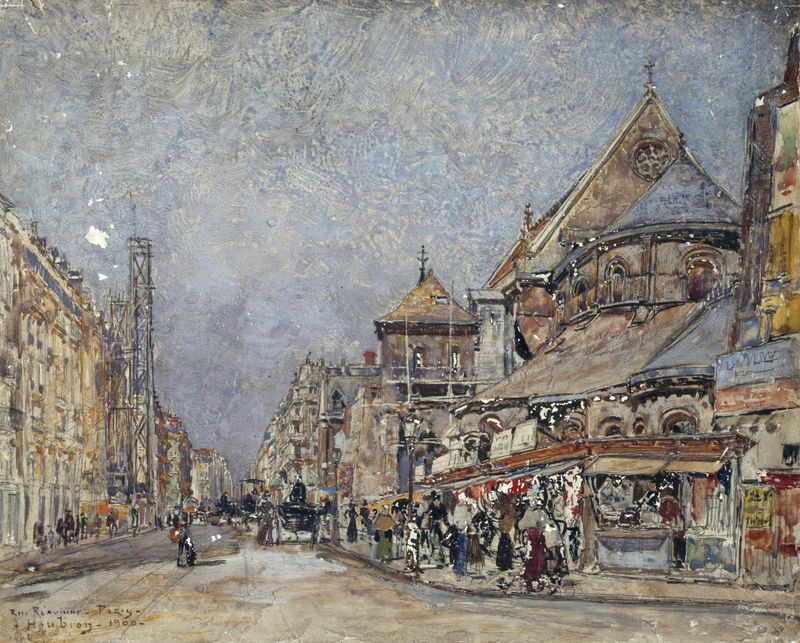
La rue Réaumur et le chevet de l’église Saint-Martin-des-Champs
Frédéric Houbron
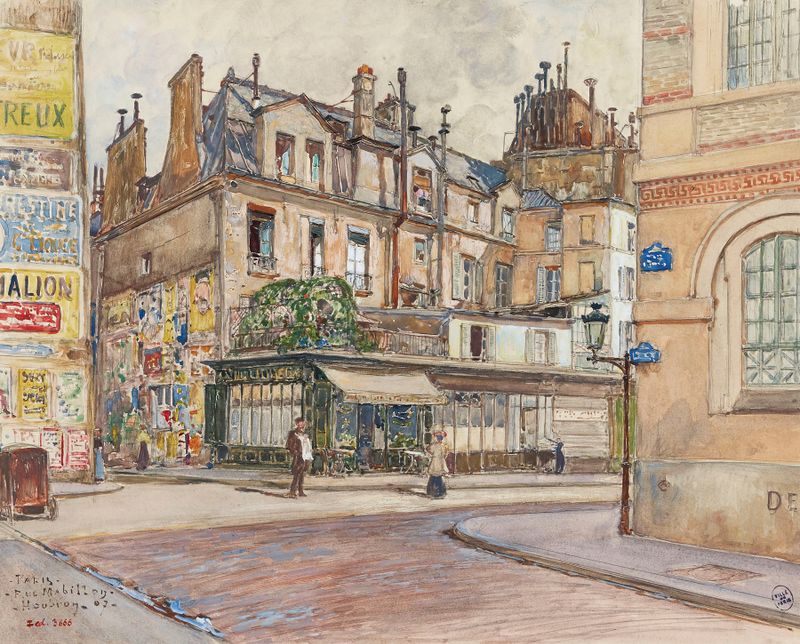
Angle rue Mabillon et rue Clément, en 1907. 5ème et 6ème arrondissements
Frédéric Houbron
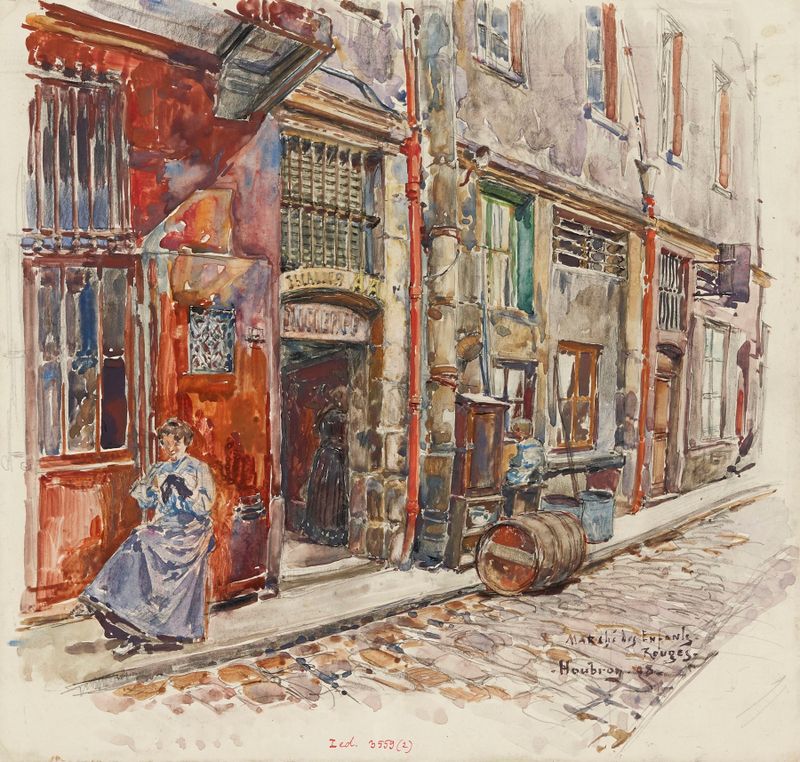
Entrée escalier A du Marché des Enfants-Rouges, en 1908. 3ème arrondissement
Frédéric Houbron





