Italian Ornament No. 3 — History & Facts
What first catches the eye in Italian Ornament No. 3 is the exuberant rhythm of line and color, as if the page itself is alive with a kind of ordered revelry. Each panel is a world of its own, yet together they form a visual symphony—scrolls, acanthus leaves, and fantastical creatures twisting and unfurling in precise symmetry.
The topmost frieze, with its playful blue and red masks peering through a garden of stylized foliage, draws the gaze upward, while the densely layered vertical bands below invite close inspection. The central motif, flanked by two mirrored dragons, pulses with energy, their wings and tails curling into the floral latticework. Every flourish seems purposeful, guiding the viewer’s attention from one intricate detail to the next, as if decoding a language of ornament. This chromolithograph belongs to a world where ornament was both a science and an art, a period when designers like Owen Jones sought to catalogue and revive the decorative traditions of past ages.
Published in the mid-nineteenth century and reissued in London in 1910, works like this were not merely for admiration—they served as pattern books for architects, craftsmen, and students eager to bring historical grandeur into modern design. The Italian Renaissance, with its love of classical forms and playful invention, is distilled here into a set of visual principles: repetition, symmetry, and the harmonious mingling of plant, animal, and abstract forms. While history has left few traces of how each page was used, the survival of this sheet in the Polona Digital Library lets us see ornament not as mere embellishment, but as a living grammar—one that still invites the eye to wander and wonder.
More Artworks by Owen Jones

Greek Ornament No. 1
Owen Jones
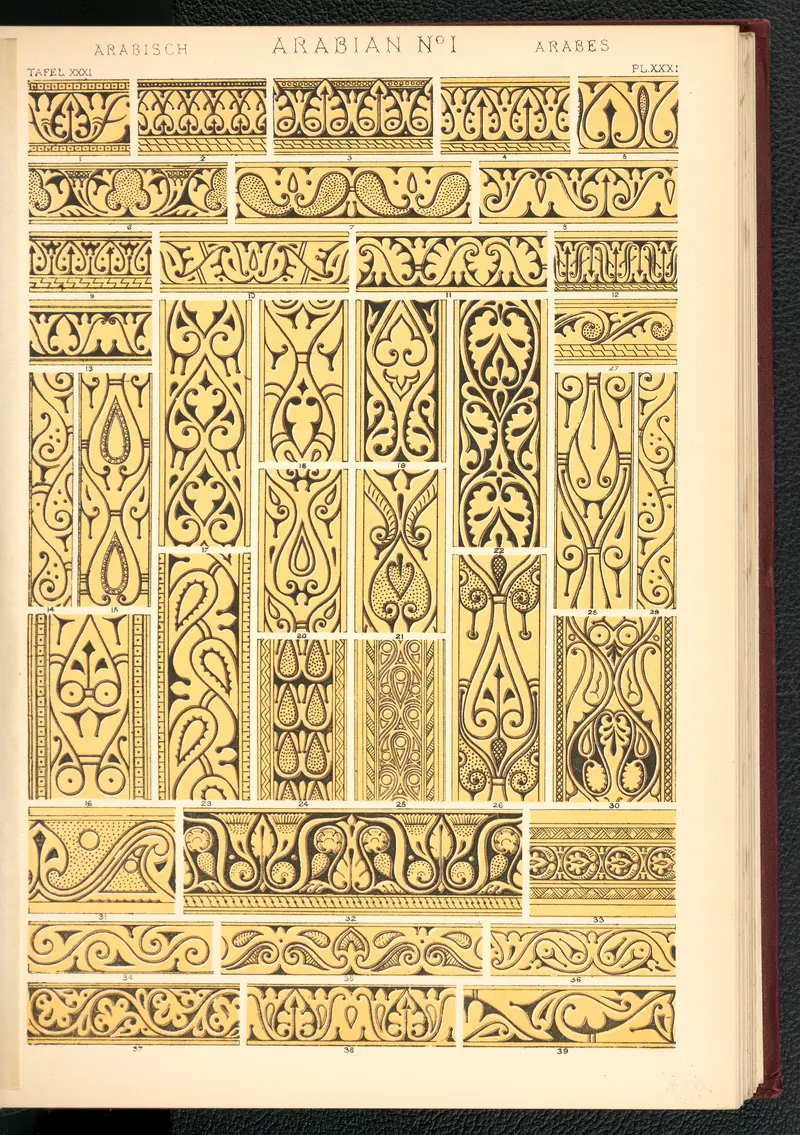
Arabian Ornament No. 1
Owen Jones
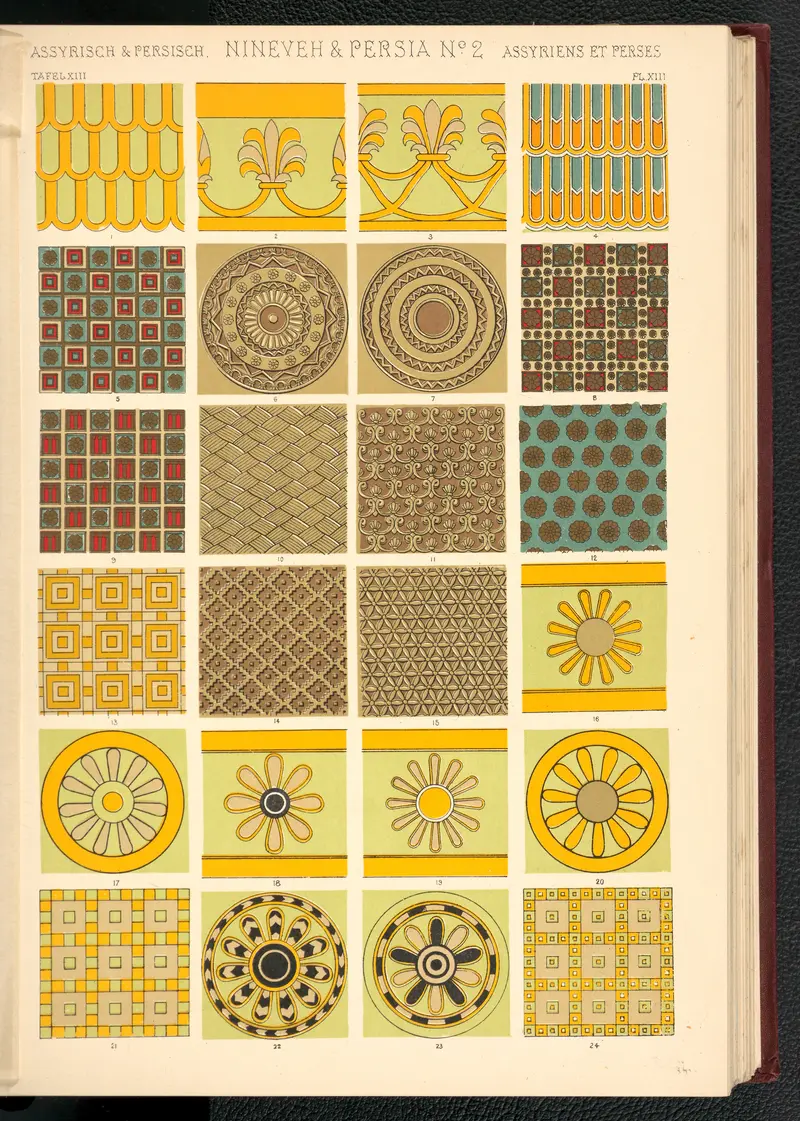
Assyrian Ornament No. 2
Owen Jones

Egyptian Ornament No. 3
Owen Jones
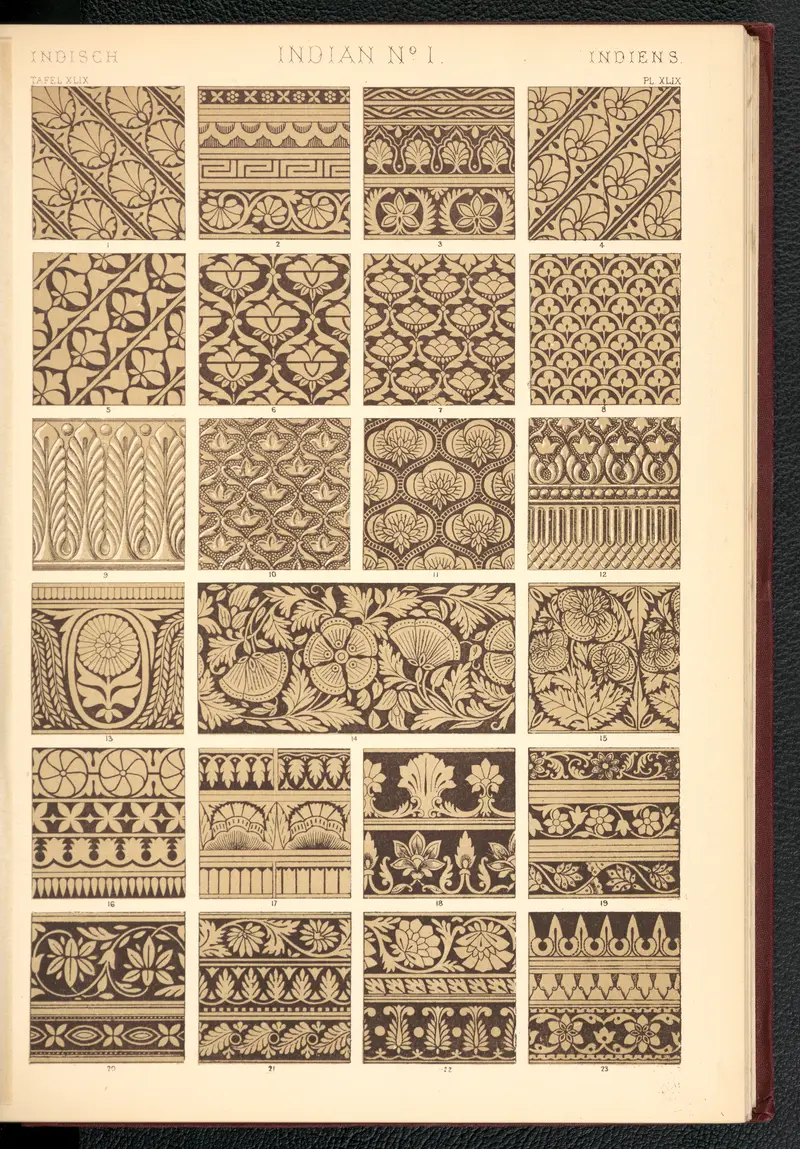
Indian Ornament No. 1
Owen Jones
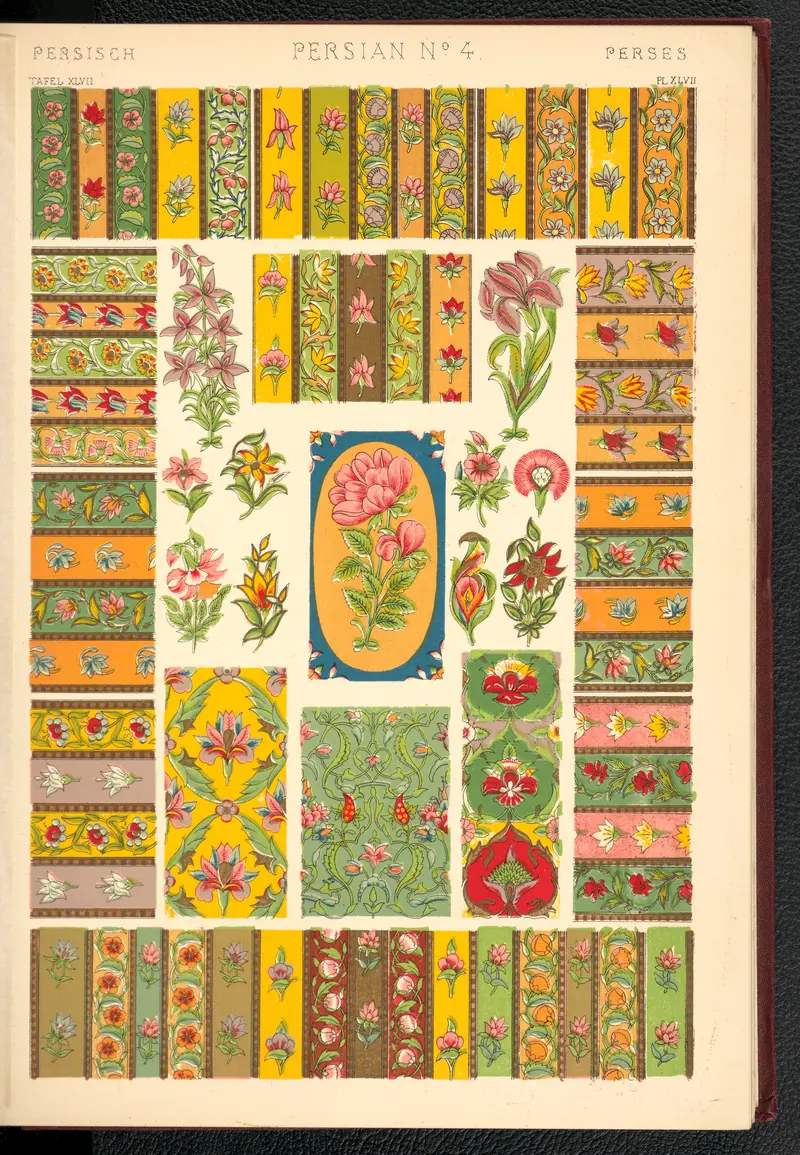
Persian Ornament No. 4
Owen Jones
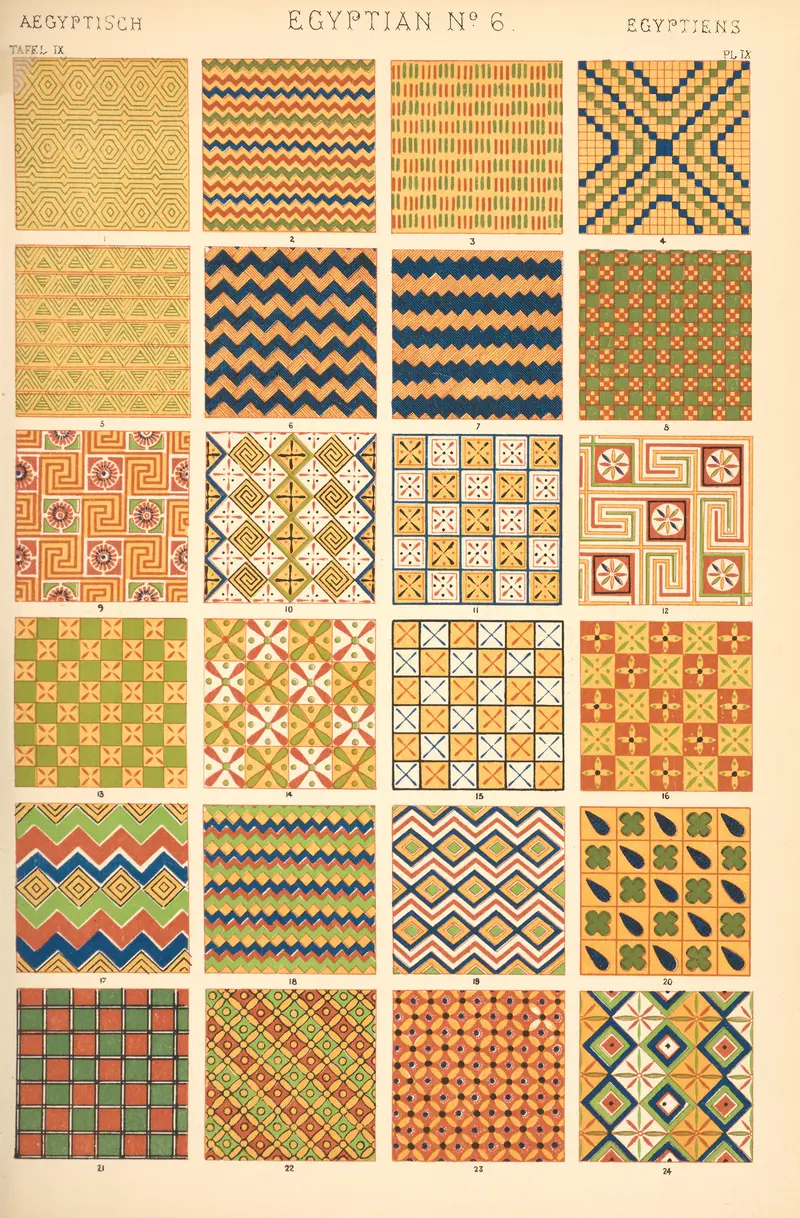
Egyptian Ornament No. 6
Owen Jones
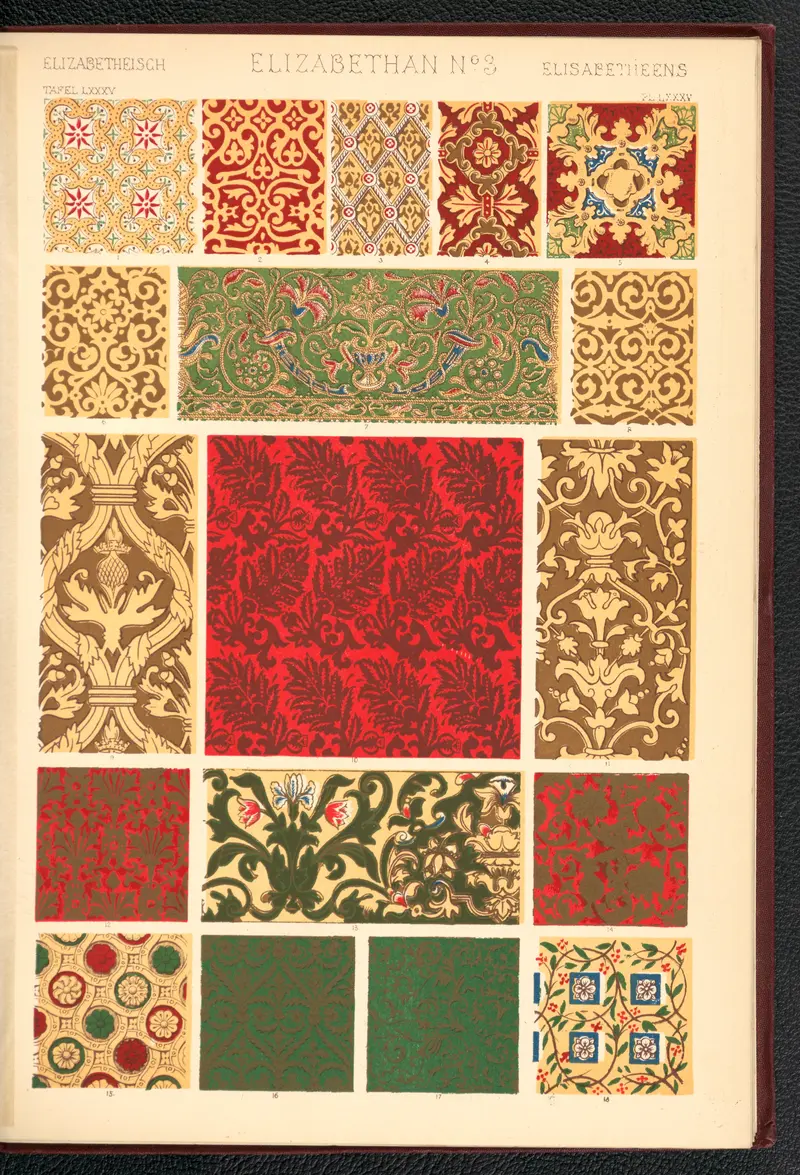
Elizabethan Ornament No. 3
Owen Jones
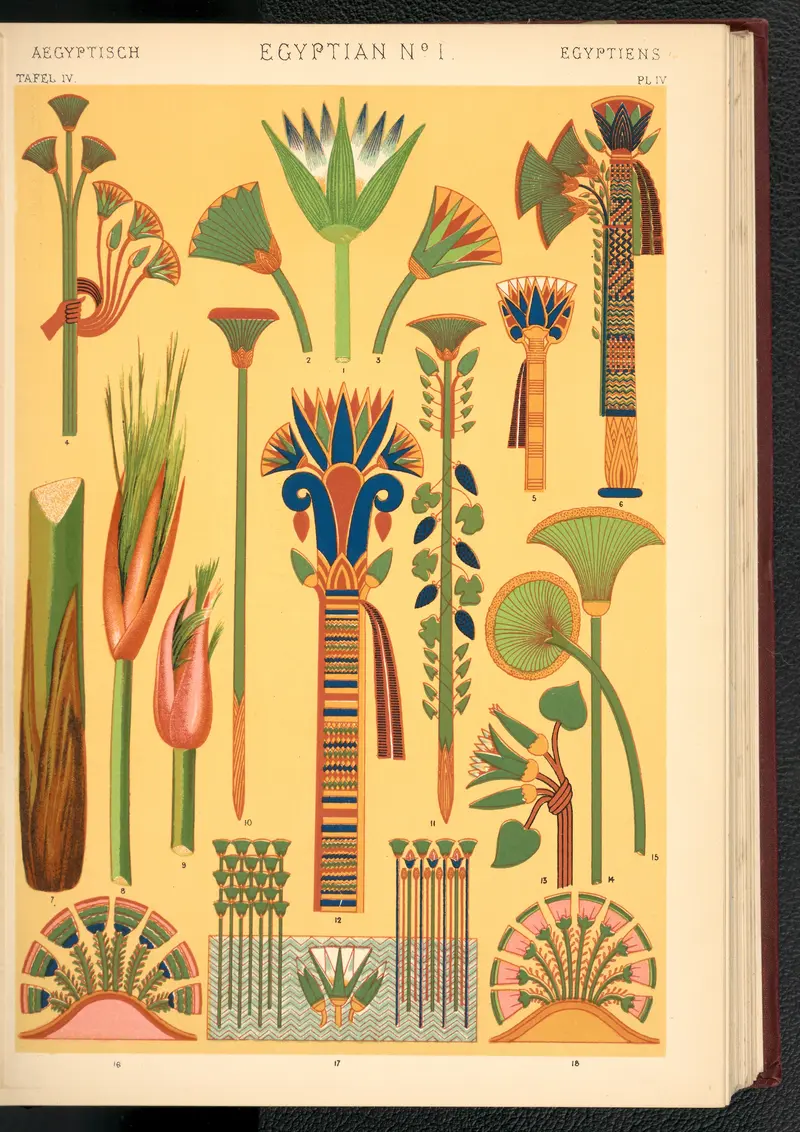
Egyptian Ornament No. 1
Owen Jones
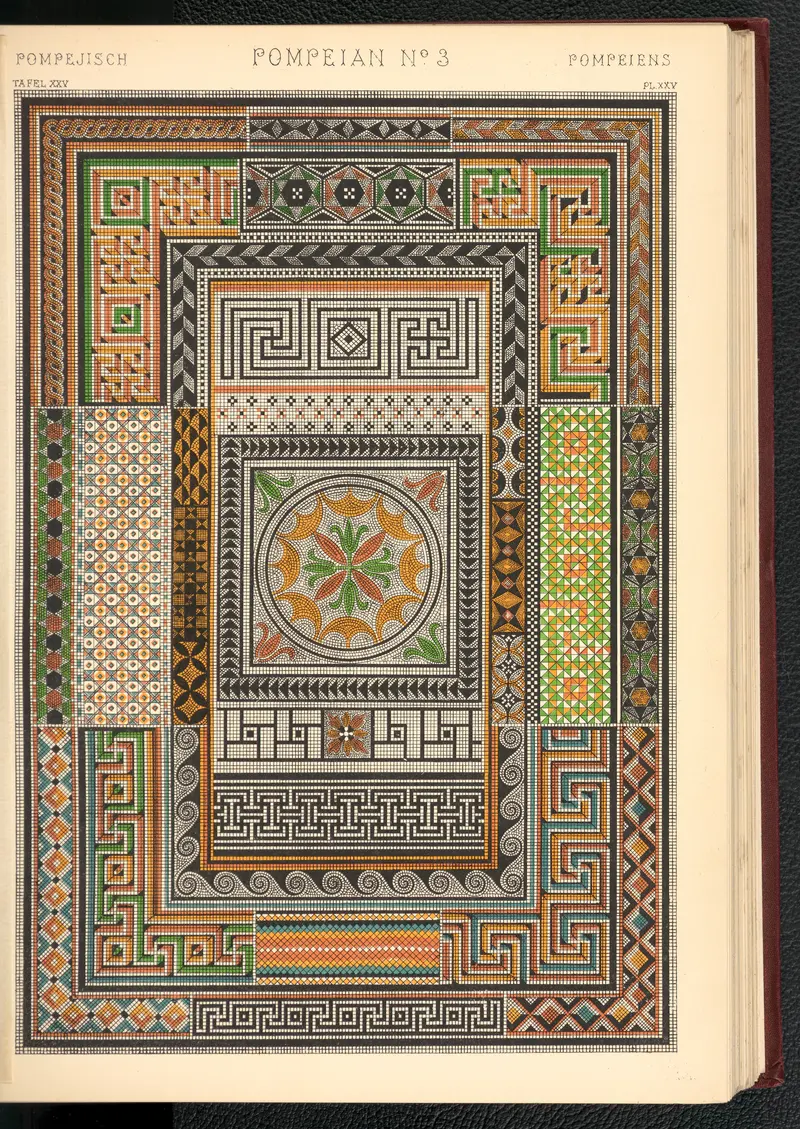
Pompeian Ornament No. 3
Owen Jones