
La Mère et l'Enfant (Chien sous la table) — History & Facts
What first catches the eye in La Mère et l'Enfant (Chien sous la table) is the way Fernand Léger turns a simple domestic scene into a world of bold geometry and color. The mother, rendered in a striking pink, stands with a plate in her hands, her form both monumental and mechanical, while the child approaches from the left, their body segmented into almost robotic volumes. The round table, sliced by vivid reds and yellows, anchors the composition, and beneath it, a dog curls in a shadowy cubist nest.
Léger’s palette is crisp, the colors flat and unmodulated, yet the space pulses with energy: each object and figure is outlined in black, as if the world has been rebuilt from blocks and cylinders. Light and shadow are less about realism than about rhythm, guiding the viewer’s gaze in a dance across the surface. Painted in 1920, this work emerges from a moment when artists like Léger were reimagining everyday life through the lens of modern industry and the machine age. In the wake of World War I, the world was being rebuilt, and so too was painting: forms became mechanical, color was liberated from naturalism, and the ordinary—mother, child, dog—became extraordinary.
Léger’s interest in the harmony between man and machine is visible here, yet the warmth of the scene remains: the family meal, the loyal animal, the sense of ritual. Now held in the Gabriele and Werner Merzbacher Collection, this painting stands as a vivid testament to a time when artists dared to see the future in the shapes of the present. The longer you look, the more the familiar transforms into something altogether new.
More Artworks by Fernand Léger

The Tugboat Bridge
Fernand Léger
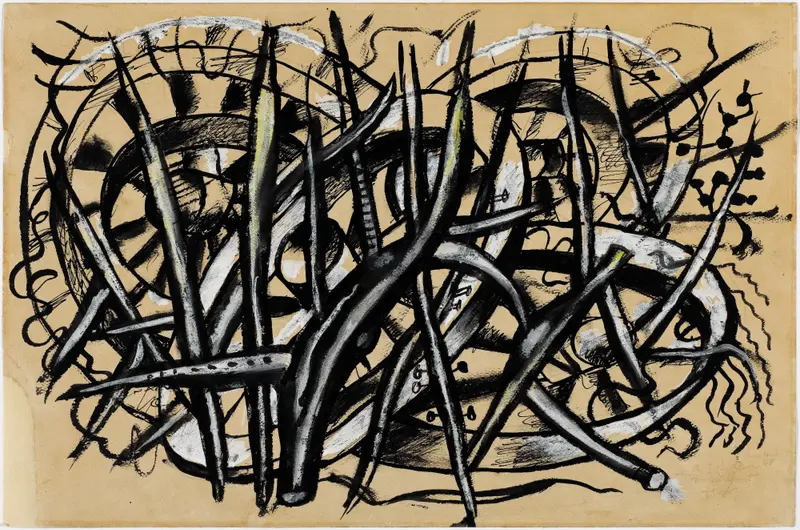
The Wheels
Fernand Léger

Le Cirque Médrano
Fernand Léger
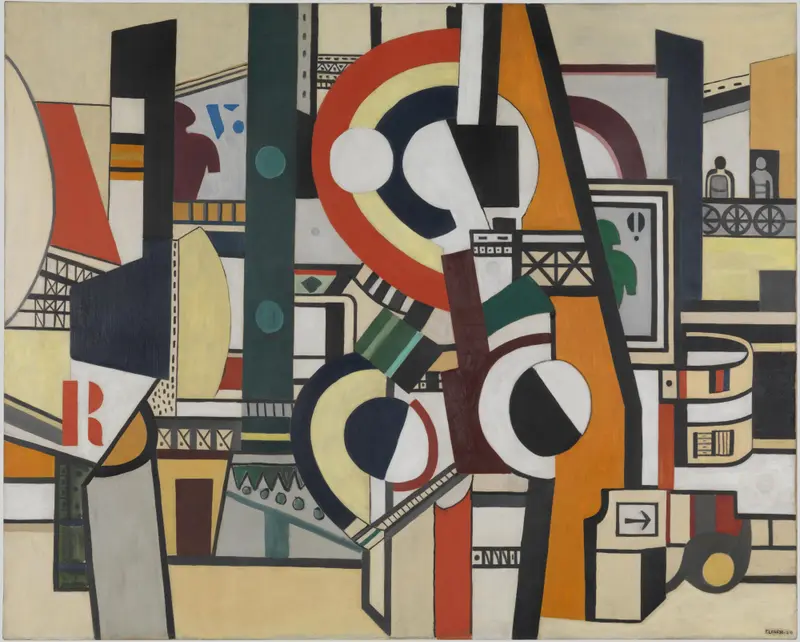
The Disks in the City
Fernand Léger
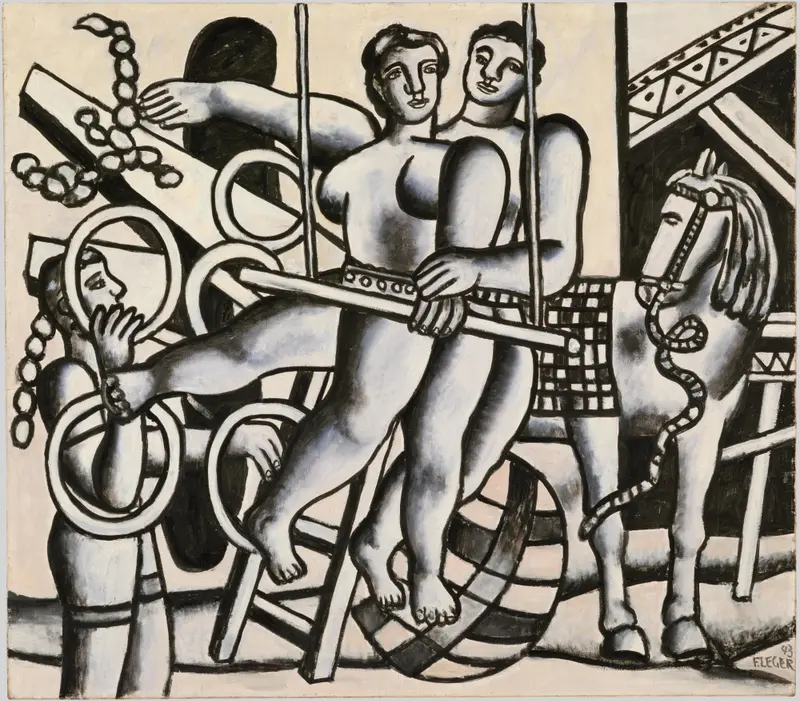
Le Jongleur et les acrobates
Fernand Léger
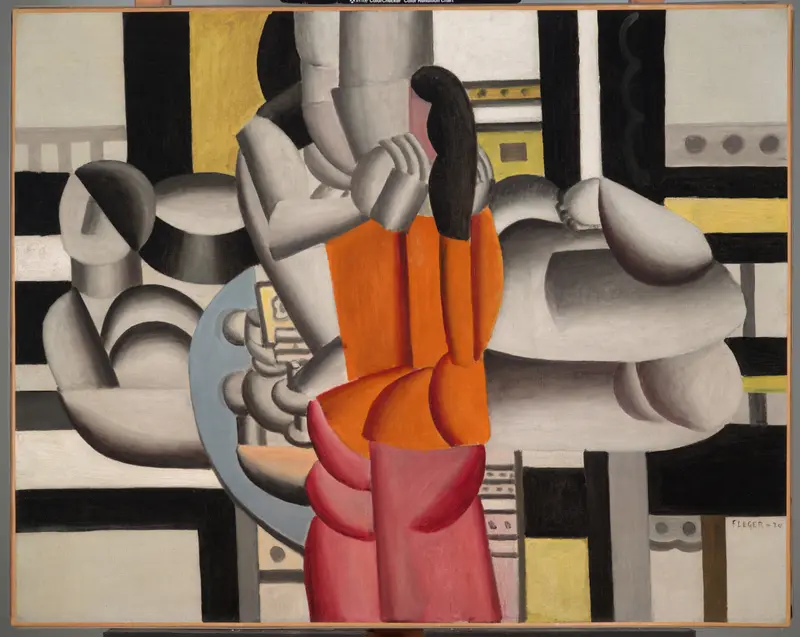
Three Women and Still Life (Déjeuner)
Fernand Léger
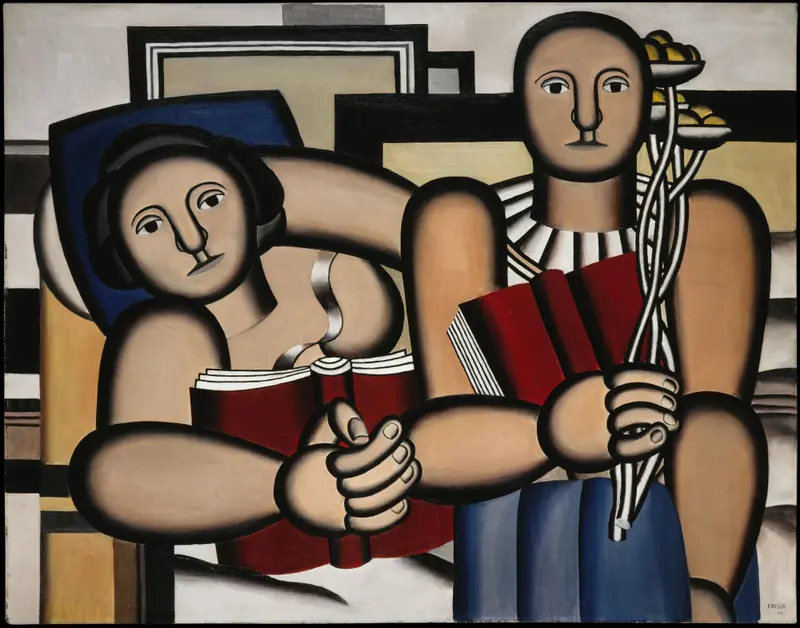
Reading
Fernand Léger
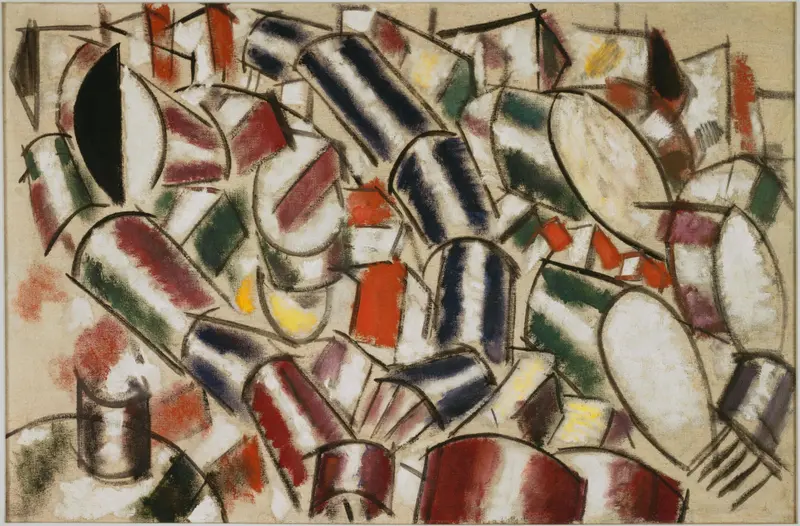
Femme couchée
Fernand Léger
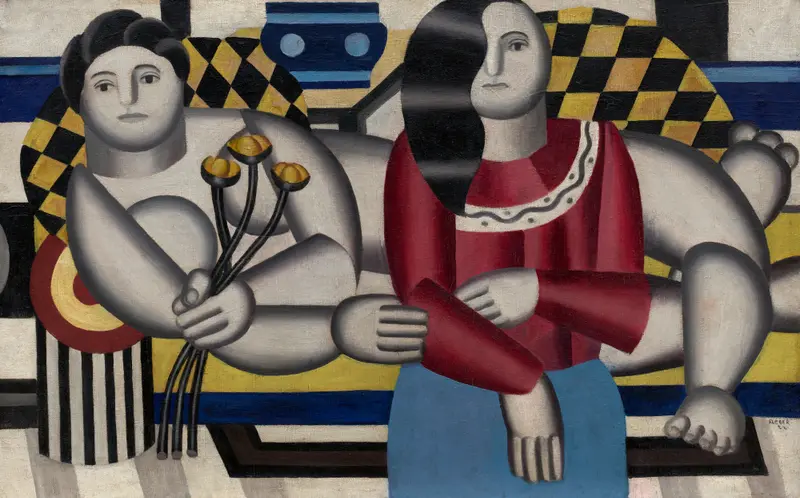
Woman holding flowers
Fernand Léger
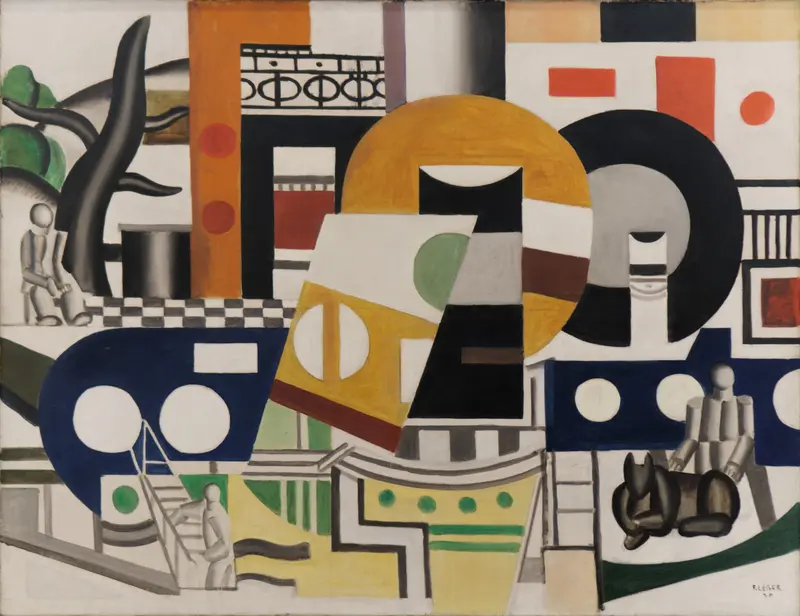
The Tug
Fernand Léger
More Genre Scene Art

Banquet of the Officers of the St George Civic Guard
Frans Hals

Rembrandt and Saskia in the Scene of the Prodigal Son
Rembrandt van Rijn

Bal du moulin de la Galette
Pierre-Auguste Renoir

Quadrille at the Moulin Rouge
Henri de Toulouse-Lautrec

A Burial at Ornans
Gustave Courbet

When Will You Marry?
Paul Gauguin