
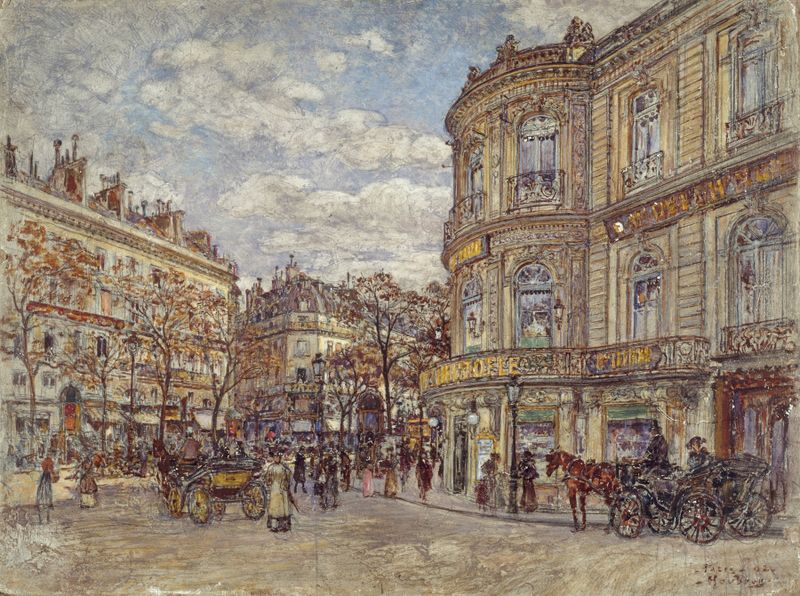
Le boulevard des Italiens, aspect du matin — History & Facts
Is this a mirror — or a memory? The essence of a bustling morning on the Boulevard des Italiens transcends time, inviting viewers into a moment that feels both intimately personal and universally shared. Look to the center, where the elegant figures of Parisians sweep across the canvas, their forms animated by subtle swirls of paint. The artist employs a delicate palette of pastels, with soft blues and warm yellows blending to evoke the gentle caress of dawn’s early light. Notice how the strokes create a sense of movement; the light dances through the scene, illuminating faces and casting elongated shadows that suggest life’s fleeting nature. Yet beneath this serene surface lies a tension — the juxtaposition of the vibrancy of urban life against the solitude of individual experience.
The distant figures appear lost in reverie, absorbed in their journeys, as if each is navigating a separate world despite their proximity. The interplay of light and shadow evokes a sense of both ecstasy and melancholy, hinting at the joy and isolation inherent in city life during this era. Created between 1902 and 1903, the work emerges from a period of significant transformation in Paris. Frédéric Houbron found inspiration in a city electrified by modernity, while grappling with the pressures of artistic innovation.
As the world embraced the avant-garde, Houbron’s impressionistic approach captured the essence of a shifting society, reflecting both the excitement and challenges of a rapidly evolving urban landscape.
More Artworks by Frédéric Houbron
Browse all →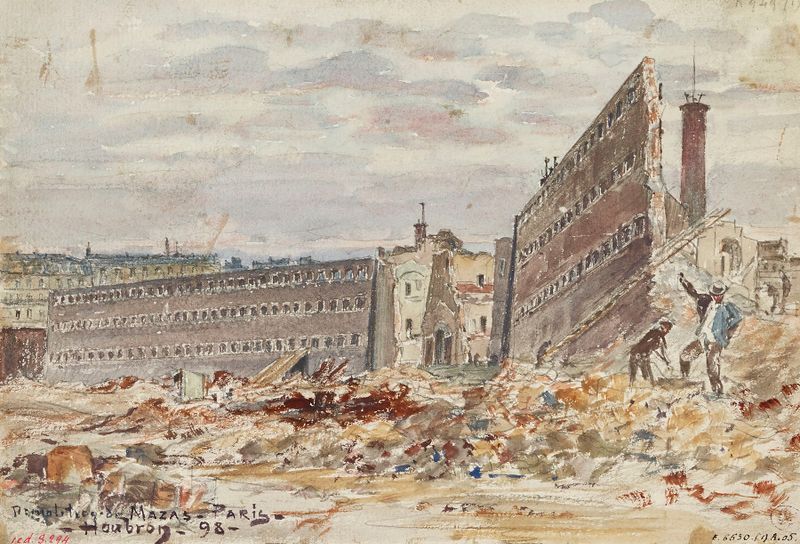
Démolition de la prison Mazas, 23, 25 boulevard Diderot (ancien boulevard Mazas)
Frédéric Houbron
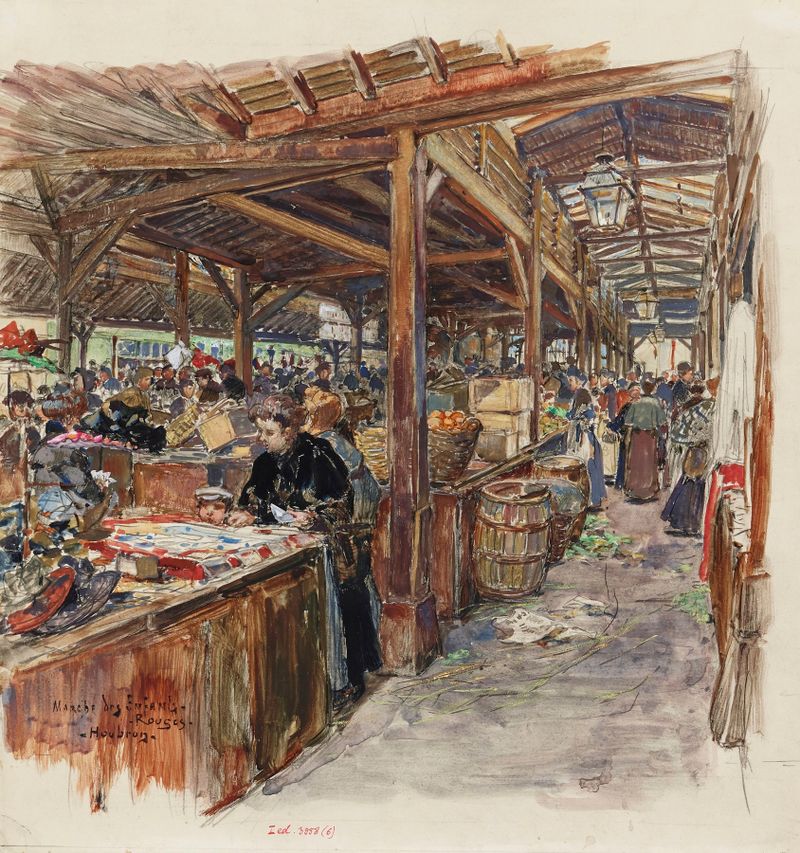
Intérieur du Marché des Enfants Rouges. 3ème arrondissement
Frédéric Houbron
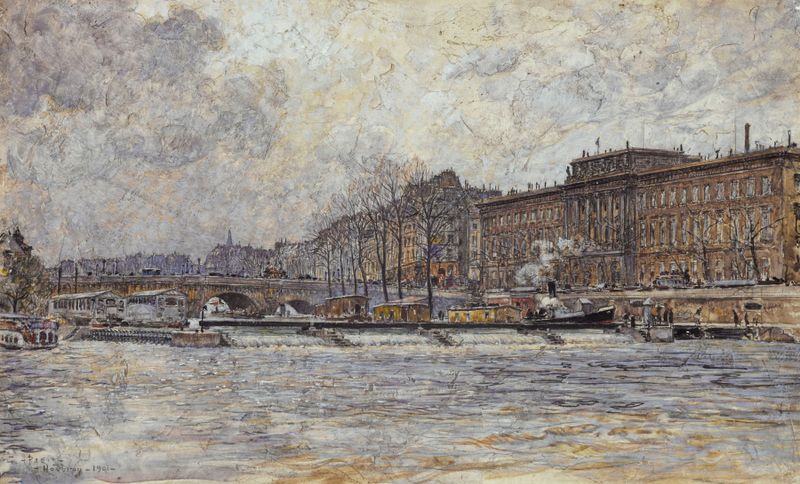
L’Hôtel de la Monnaie et le Pont-Neuf
Frédéric Houbron

Quai des Orfèvres. Paris. 1906
Frédéric Houbron
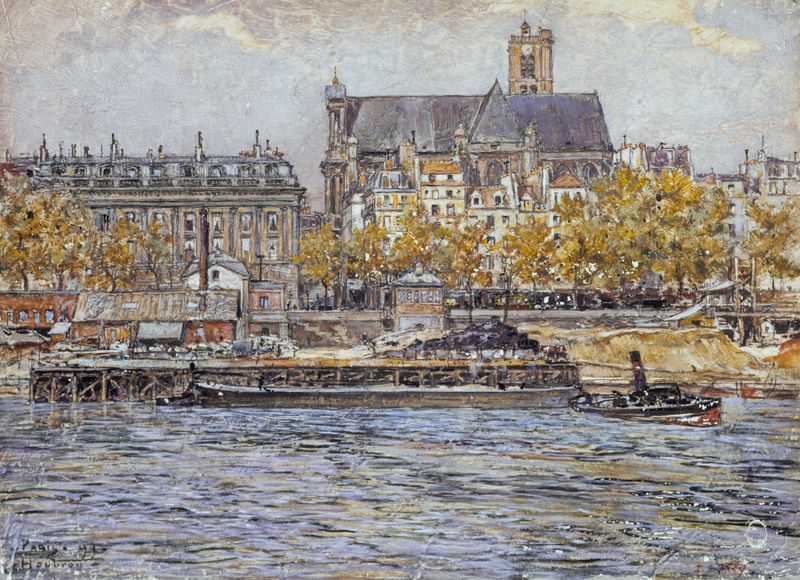
Le quai de l’Hôtel-de-Ville et l’église Saint-Gervais-Saint-Protais
Frédéric Houbron
Le Pavillon de Hanovre, rue Louis-le-Grand
Frédéric Houbron

La rue du Chevalier-de-la-Barre, avec le Sacré-Cœur en construction
Frédéric Houbron
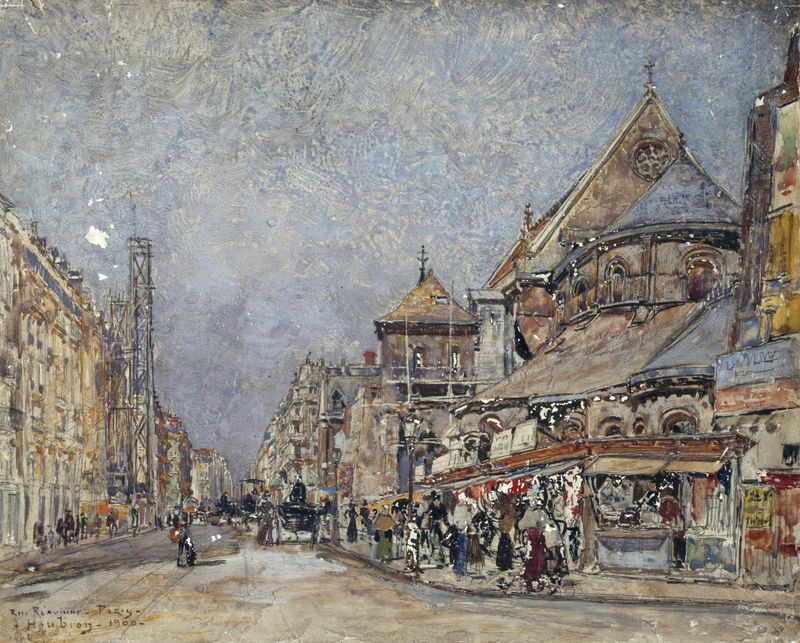
La rue Réaumur et le chevet de l’église Saint-Martin-des-Champs
Frédéric Houbron
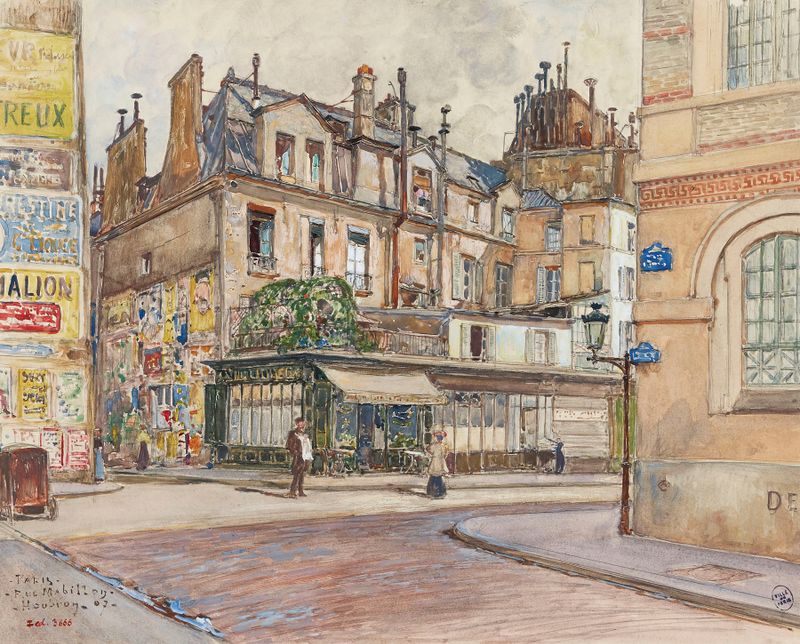
Angle rue Mabillon et rue Clément, en 1907. 5ème et 6ème arrondissements
Frédéric Houbron
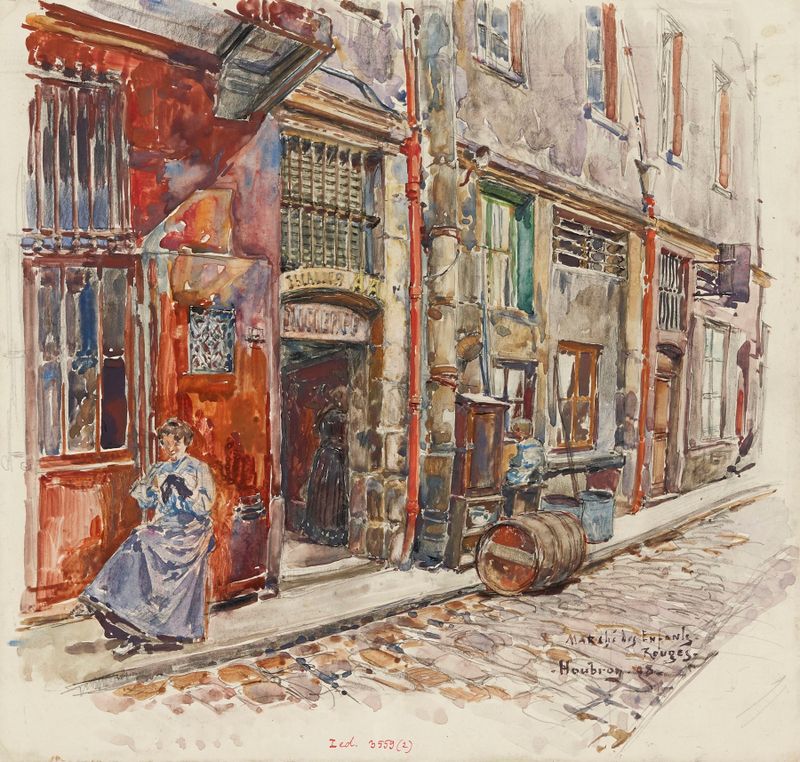
Entrée escalier A du Marché des Enfants-Rouges, en 1908. 3ème arrondissement
Frédéric Houbron





