
Le Chahut (Study I) — History & Facts
When Georges Seurat unveiled his monumental Le Chahut in 1890, critics and artists alike were struck by the radical precision of its technique and the modernity of its subject. Yet few realize that before the final painting, Seurat produced a series of studies, including Le Chahut (Study I), which reveal his painstaking process and evolving vision. This first study is particularly valuable: it marks the moment when Seurat shifted from the bustling nightlife of the Parisian café-concert to a rigorous experiment in composition and color theory.
The study has become a touchstone for scholars tracing the birth of Neo-Impressionism, and its existence helps illuminate the artist’s meticulous approach. In Le Chahut (Study I), Seurat captures the exuberant energy of the cancan dancers at the Moulin Rouge, freezing them mid-kick, their legs forming a rhythmic pattern that echoes the syncopated music of the era. The dancers’ raised limbs and tilted heads, rendered in delicate, dotted brushstrokes, create a sense of movement and sound, while the musicians at their feet anchor the composition. The use of pointillism—tiny dots of pure color—allows the eye to blend the hues, producing a luminous effect that was Seurat’s signature.
Unlike Degas, who often depicted dancers in moments of rest or introspection, Seurat’s study is all about the mechanical joy of performance, the strict geometry of entertainment. The upward thrust of the figures, repeated like a musical motif, suggests both the gaiety and the artificiality of Parisian nightlife. The precise provenance of Le Chahut (Study I) is less documented than that of the finished painting, but it is known that Seurat produced several preparatory works in 1889 as he refined his ideas. Studies like this one were rarely exhibited in his lifetime, remaining in the artist’s studio until after his untimely death in 1891.
Over the decades, Le Chahut (Study I) has been recognized as a vital link in Seurat’s artistic evolution, bridging the gap between his earlier A Sunday Afternoon on the Island of La Grande Jatte and his later, more abstract explorations. Today, the study is prized not only for its beauty but also for the window it offers into the disciplined imagination of one of Post-Impressionism’s most influential figures.
More Artworks by Georges Seurat
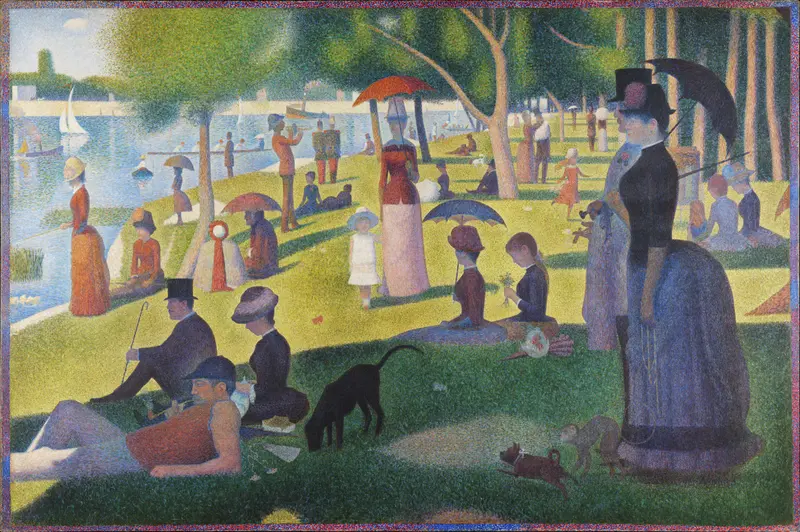
A Sunday Afternoon on the Island of La Grande Jatte
Georges Seurat
Port-en-Bessin, The Outer Harbor (Low Tide)
Georges Seurat
Étude pour ‘La Grande Jatte’ (Study for ‘La Grande Jatte’)
Georges Seurat
Seascape at Port-en-Bessin,Normandy
Georges Seurat
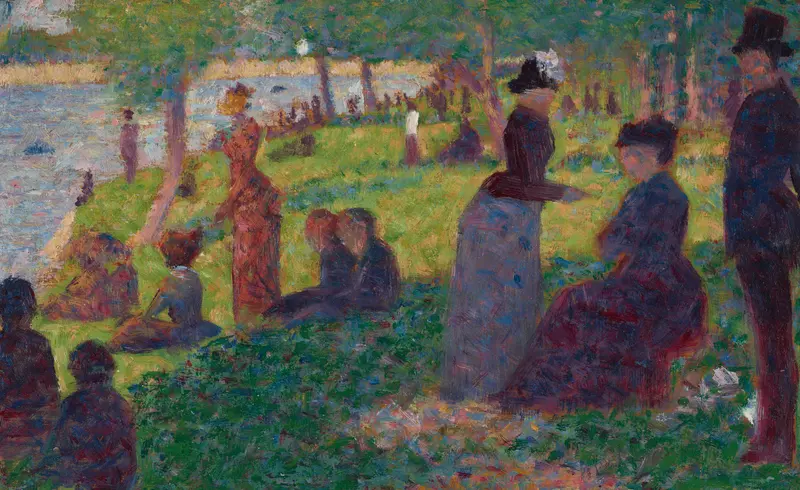
Oil Sketch for "A Sunday on La Grande Jatte — 1884"
Georges Seurat
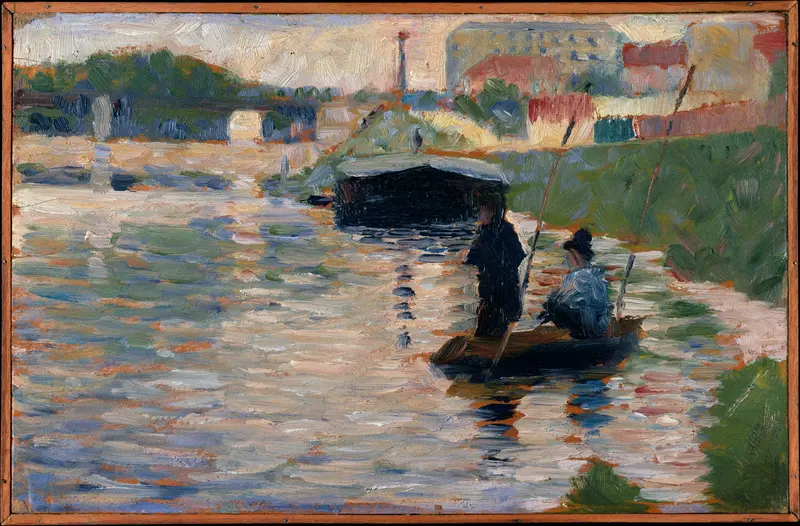
View of the Seine
Georges Seurat
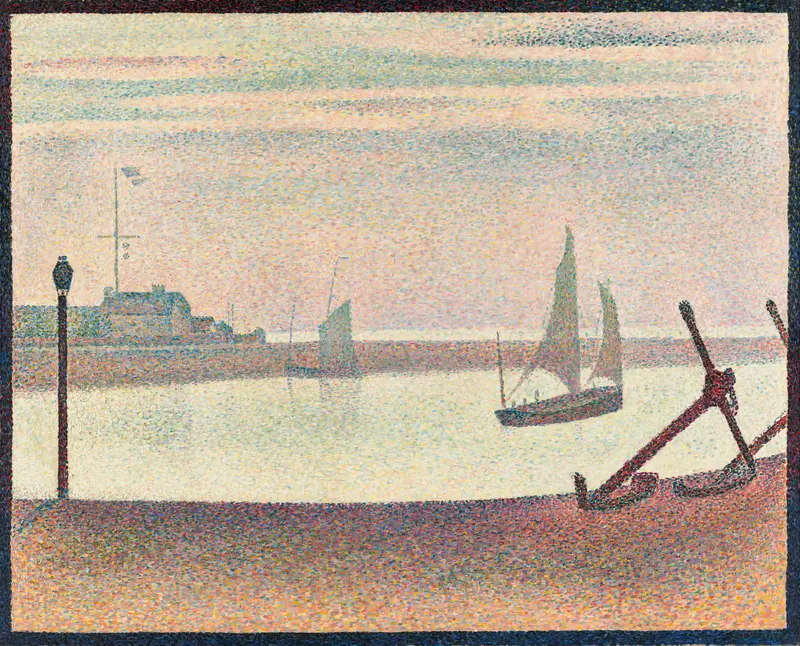
The Channel at Gravelines, Evening
Georges Seurat
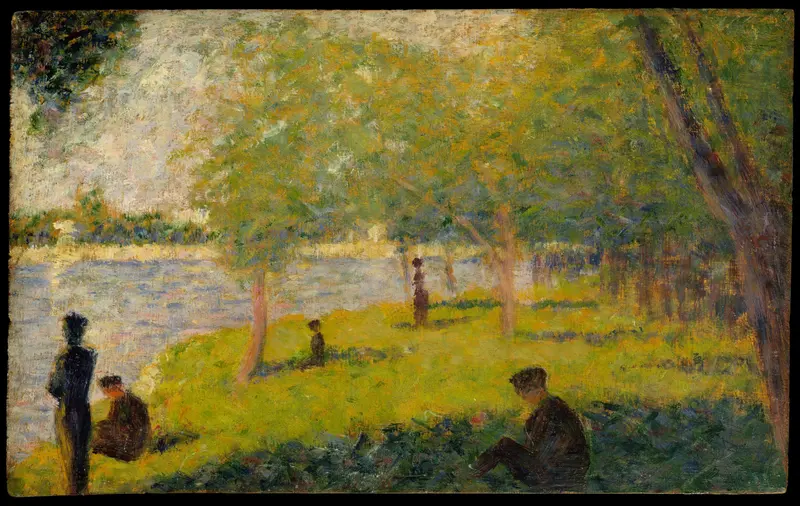
Study for ‘A Sunday on La Grande Jatte’
Georges Seurat
Study for A Sunday on La Grande Jatte
Georges Seurat
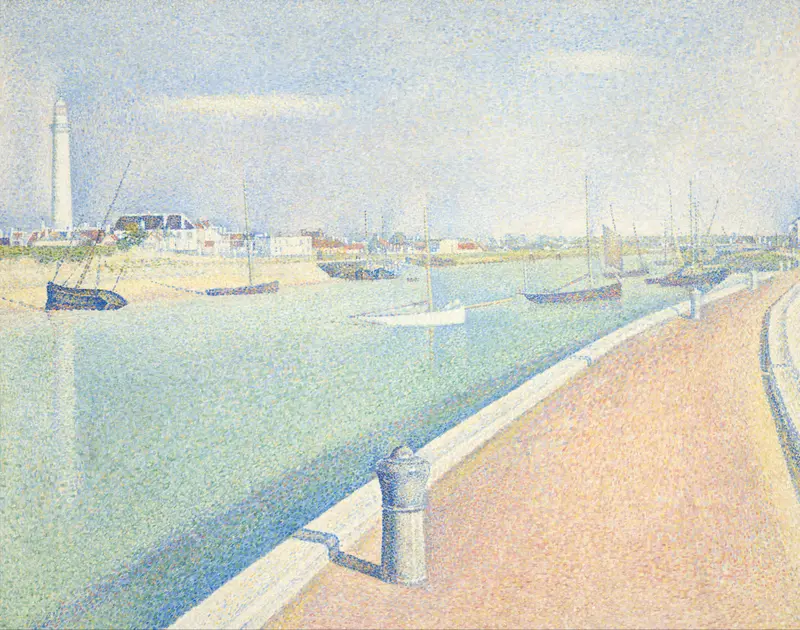
The Channel of Gravelines, Petit Fort Philippe
Georges Seurat
More Genre Scene Art

Banquet of the Officers of the St George Civic Guard
Frans Hals

Rembrandt and Saskia in the Scene of the Prodigal Son
Rembrandt van Rijn

Bal du moulin de la Galette
Pierre-Auguste Renoir

Quadrille at the Moulin Rouge
Henri de Toulouse-Lautrec

A Burial at Ornans
Gustave Courbet

When Will You Marry?
Paul Gauguin