
Lemminkäinen at the River of Fire — History & Facts
A man in white, sword at his side, stands at the very edge of the possible, his horse rearing back from a river that blazes with unnatural fire. The eye is pulled first to the enormous bird, wings outstretched, luminous and spectral, its form both guardian and threat above the writhing flames. The palette is all contrasts: the cool, pale blues and whites of the foreground set against the fierce, almost hallucinatory reds and oranges of the fire, while a band of green and blue land and sky presses at the horizon.
Every line in the composition tugs at the tension between advance and retreat—the man’s body braced, the horse’s head wrenched away, the bird’s gaze fixed and unyielding. Here, the drama is not in movement, but in the frozen instant of decision. Painted in 1920, Lemminkäinen at the River of Fire belongs to a world where myth and modernity collided in the imagination of artists like Akseli Gallen-Kallela. Early twentieth-century Finland saw a surge of interest in national identity, often expressed through scenes drawn from folklore and epic poetry.
Painters of this era, working in the wake of Symbolism and the Arts and Crafts movement, sought to make the old stories new—rendering ancient heroes with the urgency of contemporary painting. This work, documented in the pages of Pinx - maalaustaide Suomessa: Suuria kertomuksia, stands as a testament to that moment, when the fires of legend were kindled once more for a changing nation. The longer you look, the more the painting asks: what would you do at the edge of the impossible?
More Artworks by Akseli Gallen-Kallela
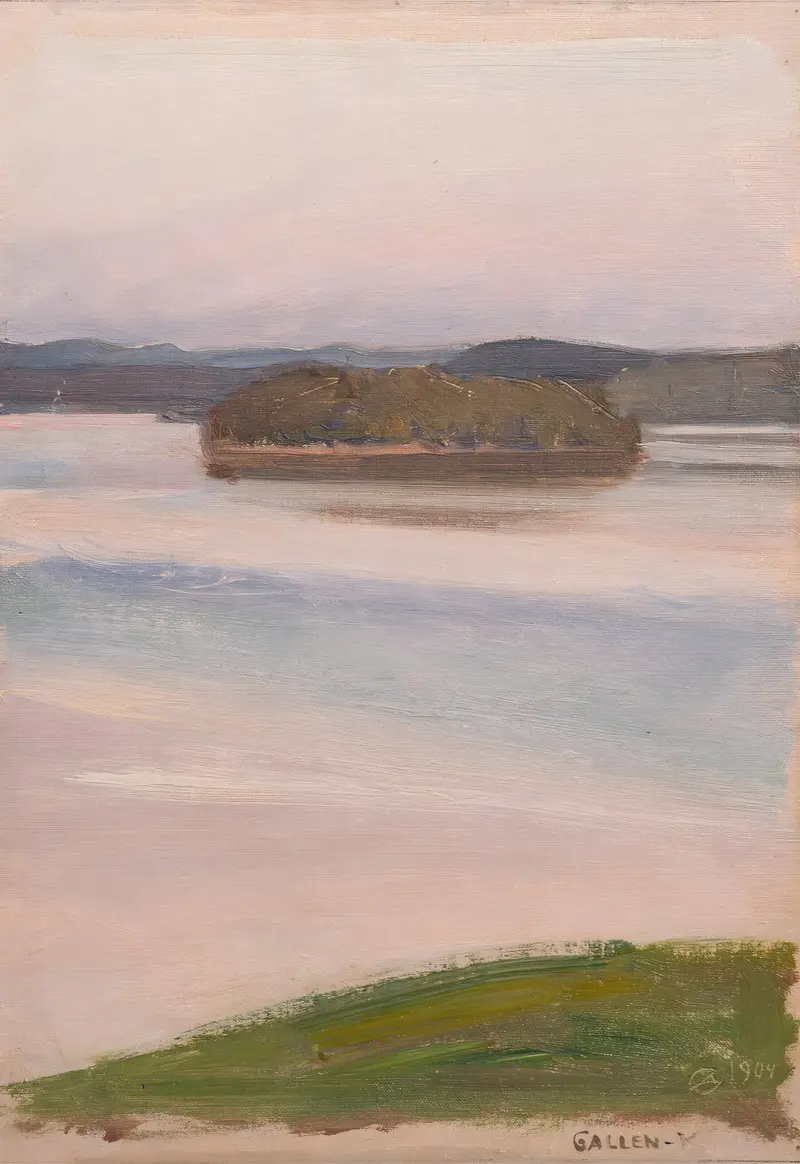
Lake Keitele
Akseli Gallen-Kallela
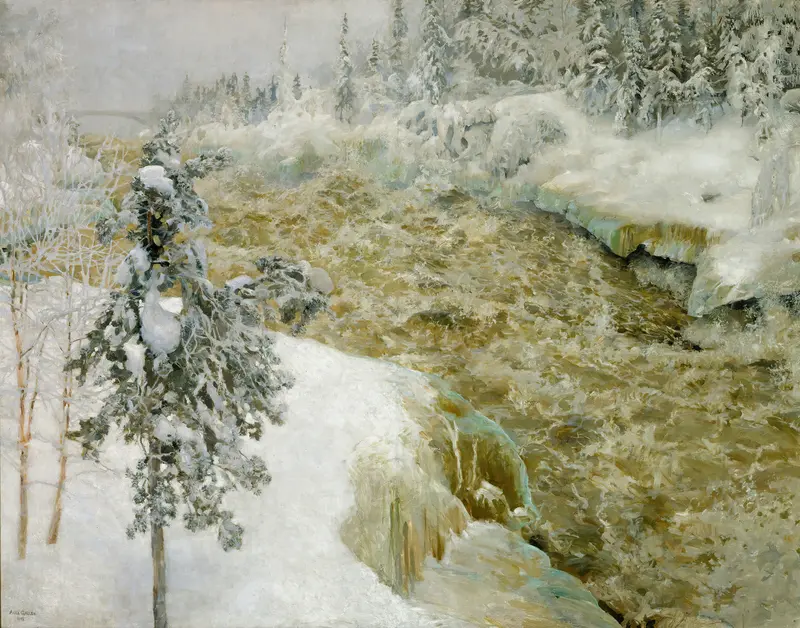
Imatra Falls in Snow ; Imatra in Winter
Akseli Gallen-Kallela
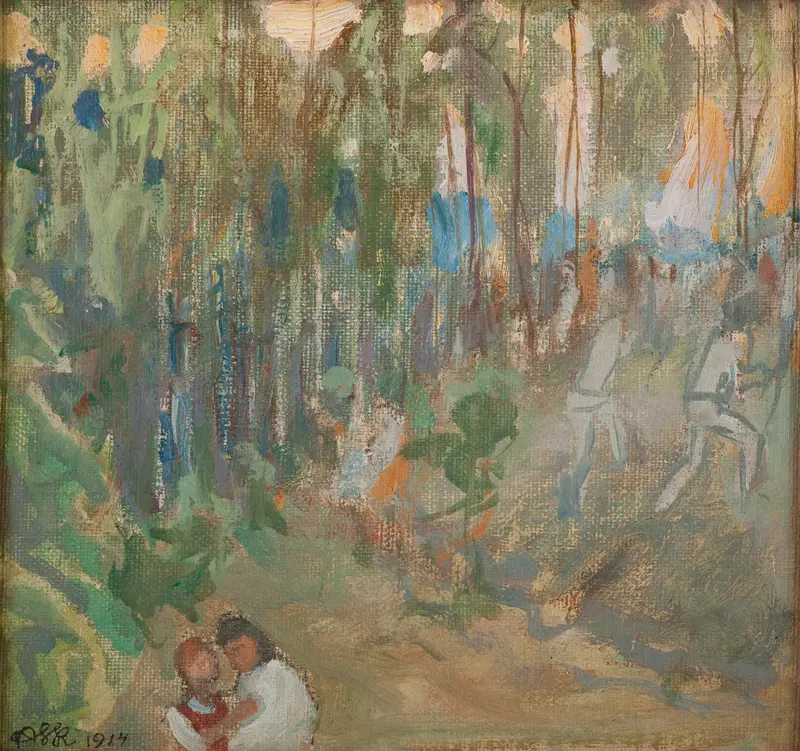
Vainovalkeat
Akseli Gallen-Kallela
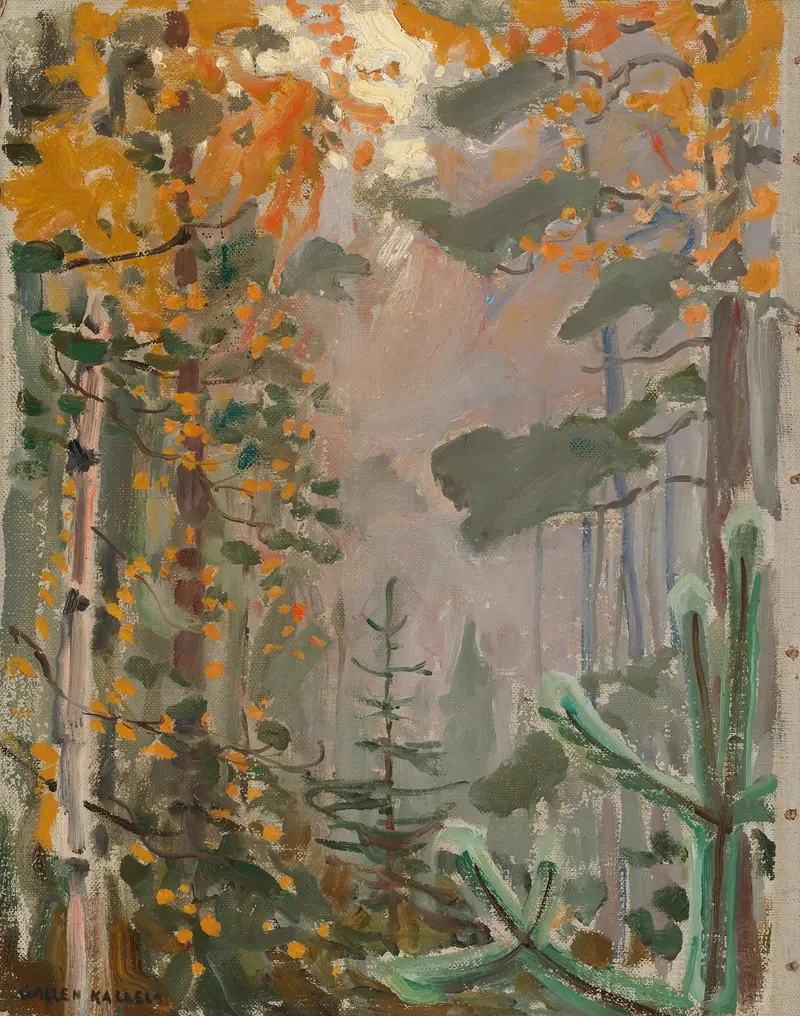
Autumn Landscape
Akseli Gallen-Kallela
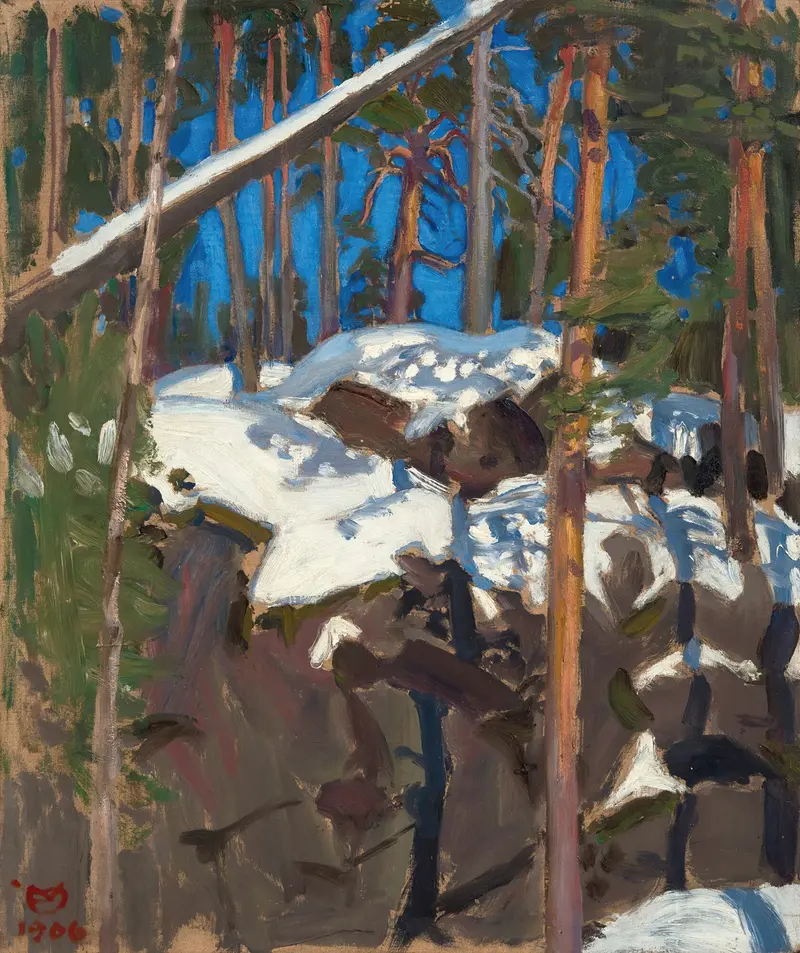
Spring Sun At Konginkangas
Akseli Gallen-Kallela
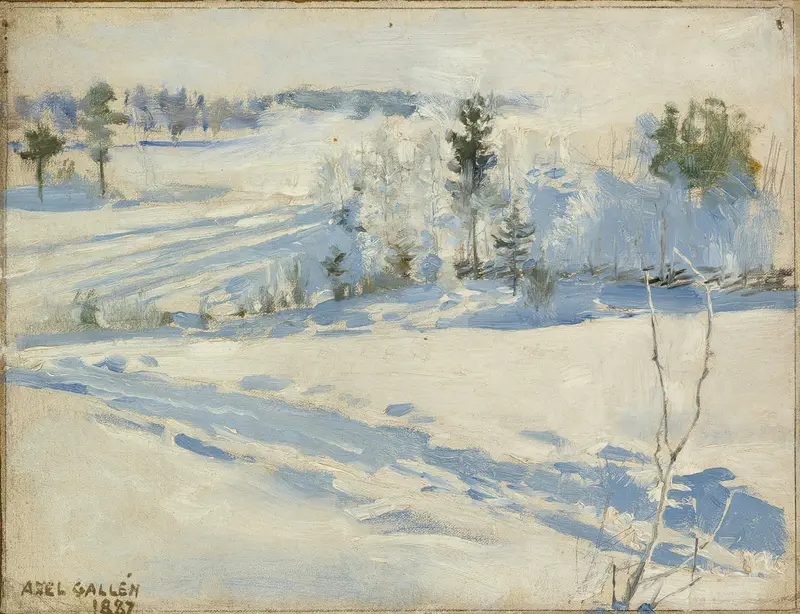
Winter Landscape
Akseli Gallen-Kallela

First Snow
Akseli Gallen-Kallela
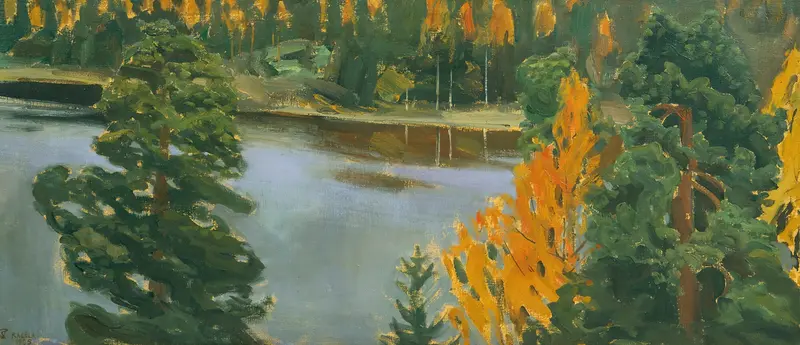
Lake View In Autumn
Akseli Gallen-Kallela
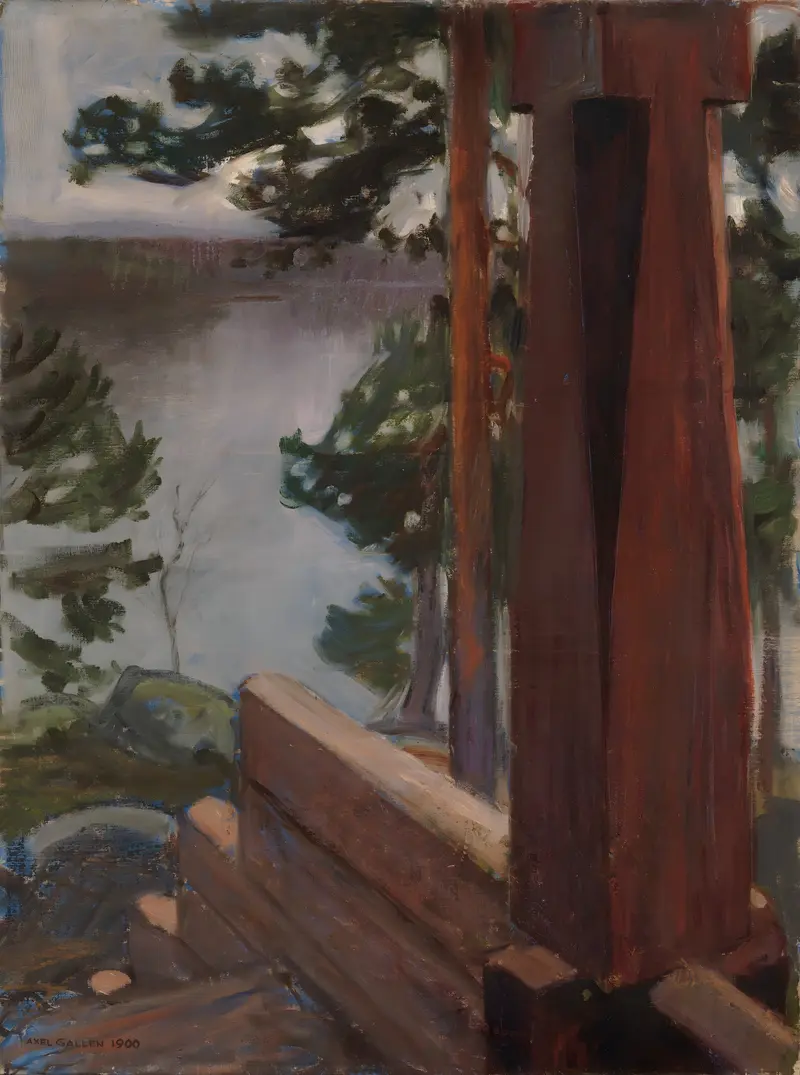
The Kalela Porch
Akseli Gallen-Kallela

Light Behind The Clouds
Akseli Gallen-Kallela





