
Lost — History & Facts
It is the girl's gaze that first seizes you—unyielding, almost defiant, as she sits barefoot and alone among the tangled undergrowth of the forest. Her posture is heavy, one hand clutching a scrap of cloth, the other splayed on the forest floor as if searching for purchase or comfort. The light falls unevenly across her face and blouse, drawing your eye to the sharp line of her collarbone and the tension in her jaw.
Around her, the forest is dense and chaotic, trunks and branches crowding in, making the space feel at once claustrophobic and wild. The blue of her skirt and the pale fabric of her shirt stand out against the earthy tangle, marking her as a figure both part of and apart from the landscape. Painted in 1886 by Akseli Gallen-Kallela, this work belongs to a moment when Finnish artists were turning their attention to the realities of rural life and the psychological depths of their subjects. The late nineteenth century was a time of searching for national identity in Finland, and painters like Gallen-Kallela often looked to the countryside and its people for inspiration.
Lost—now held by the Finnish National Gallery—captures not just a moment of physical disorientation, but a sense of inner turmoil that feels both personal and emblematic of its era. The painting’s frankness and intensity invite the viewer to linger, to wonder what brought the girl to this place, and to imagine what she might do next.
More Artworks by Akseli Gallen-Kallela
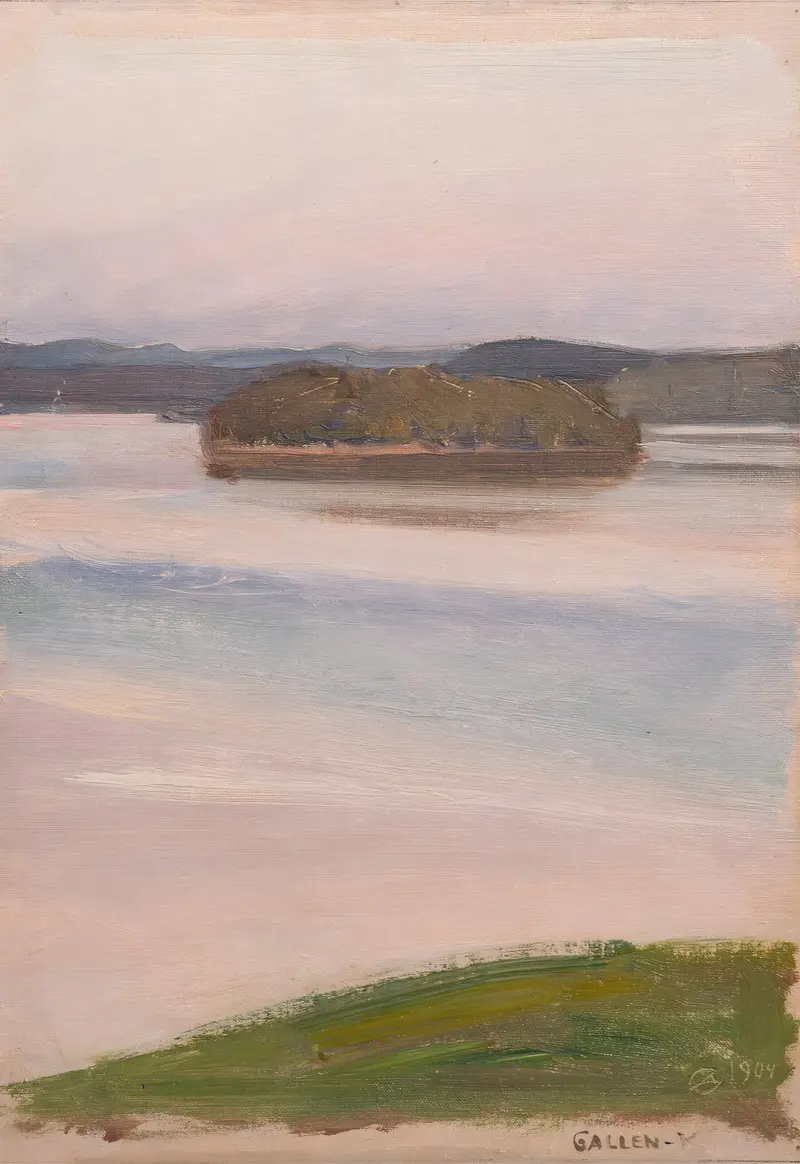
Lake Keitele
Akseli Gallen-Kallela
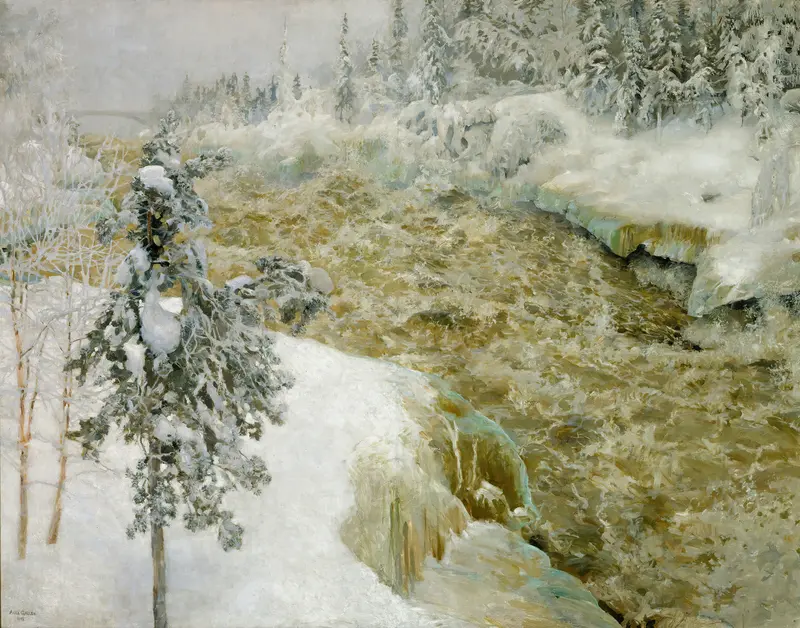
Imatra Falls in Snow ; Imatra in Winter
Akseli Gallen-Kallela
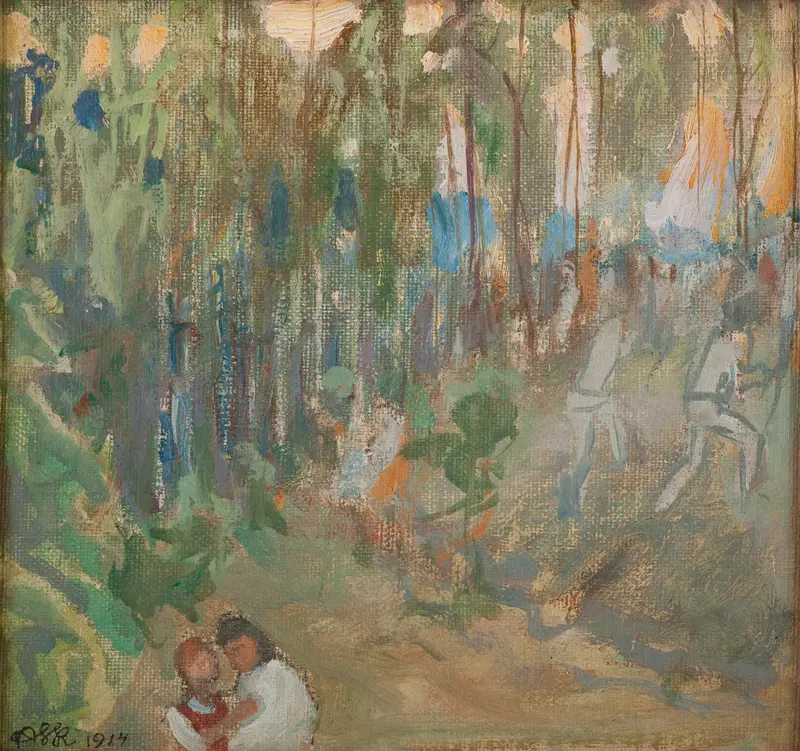
Vainovalkeat
Akseli Gallen-Kallela
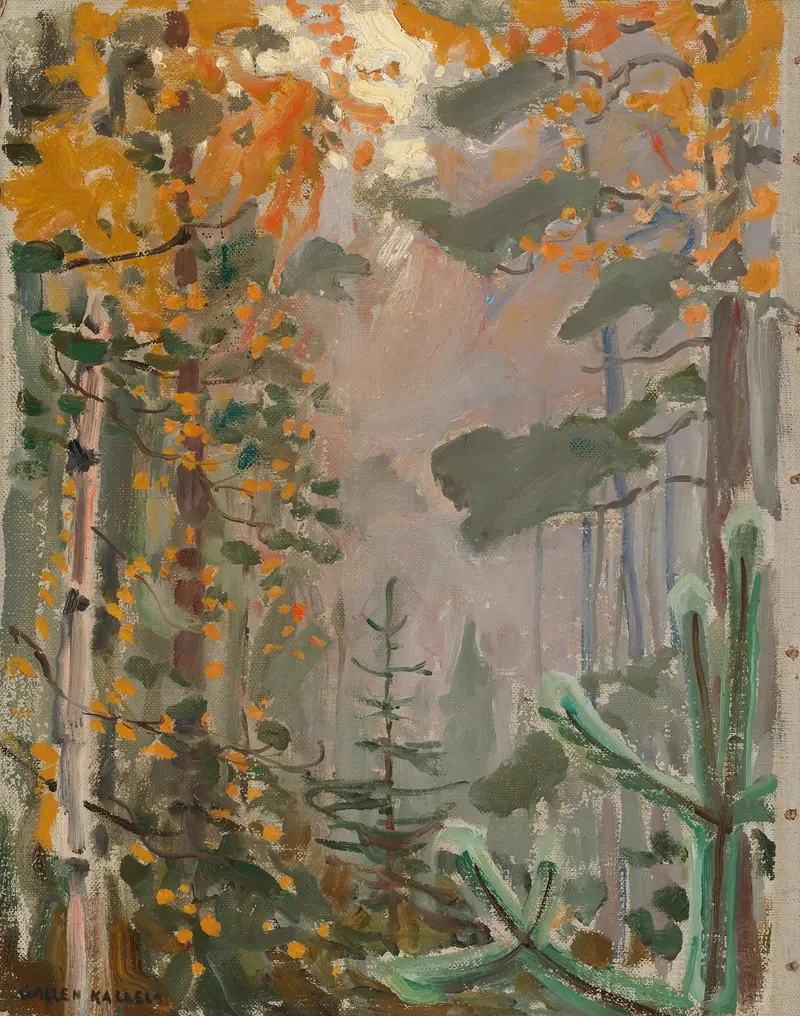
Autumn Landscape
Akseli Gallen-Kallela
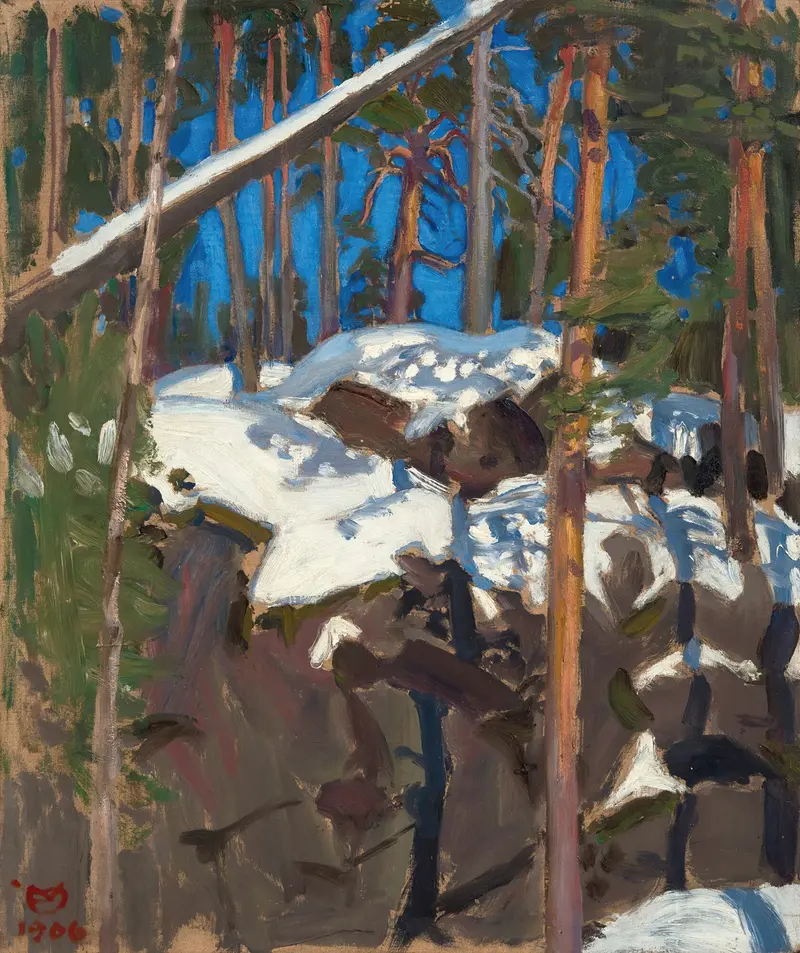
Spring Sun At Konginkangas
Akseli Gallen-Kallela
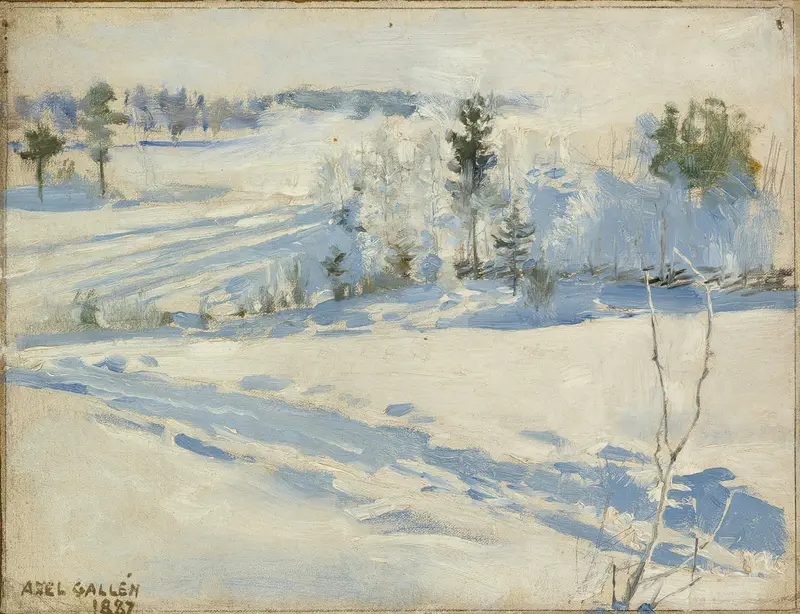
Winter Landscape
Akseli Gallen-Kallela

First Snow
Akseli Gallen-Kallela
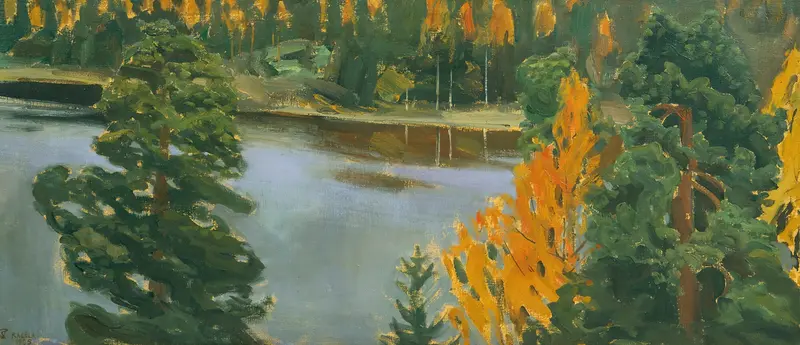
Lake View In Autumn
Akseli Gallen-Kallela
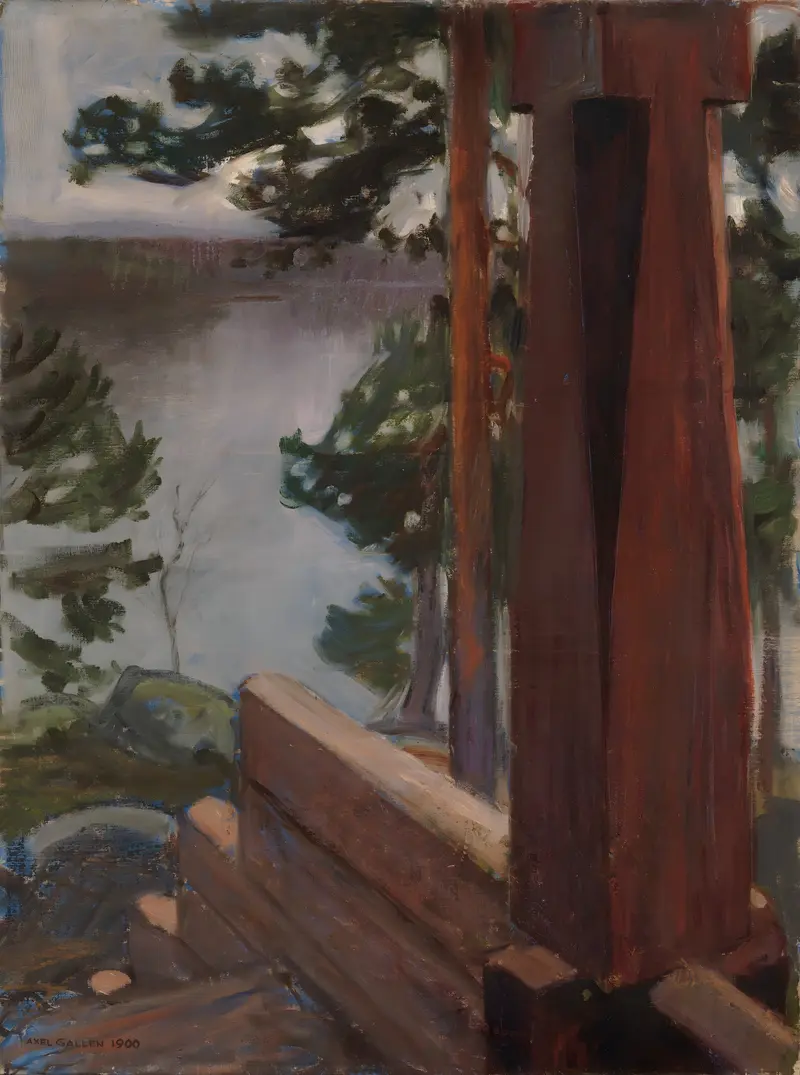
The Kalela Porch
Akseli Gallen-Kallela

Light Behind The Clouds
Akseli Gallen-Kallela
More Genre Scene Art

Banquet of the Officers of the St George Civic Guard
Frans Hals

Rembrandt and Saskia in the Scene of the Prodigal Son
Rembrandt van Rijn

Bal du moulin de la Galette
Pierre-Auguste Renoir

Quadrille at the Moulin Rouge
Henri de Toulouse-Lautrec

A Burial at Ornans
Gustave Courbet

When Will You Marry?
Paul Gauguin