
Madonna and Child with St. Peter and St. Sebastian — History & Facts
In the late 1470s and early 1480s, Giovanni Bellini was at the center of a quiet revolution in Venetian painting, and works like Madonna and Child with St. Peter and St. Sebastian capture this turning point.
This painting belongs to a group of Bellini’s so-called “sacra conversazione” altarpieces, where saints from different eras are gathered in a single, unified space—an innovation that would shape Venetian art for decades. The painting’s precise original location is lost to history, but its composition and scale suggest it was intended for private devotion, likely commissioned by a wealthy Venetian who wished to invoke the protection of both the Church (through St. Peter) and healing from plague (through St.
Sebastian). Bellini chooses a moment of serene intimacy: the Madonna, enthroned and luminous, gently supports the Christ Child, whose gaze meets the viewer’s with quiet gravity. To her left stands St. Peter, identifiable by his keys—symbols of his authority as the gatekeeper of Heaven—while on her right, the youthful, almost androgynous St.
Sebastian appears, his body marked by the arrows of his martyrdom, yet standing alive and unbowed. The landscape behind them opens into a soft, atmospheric distance, a hallmark of Bellini’s mature style, which brings a sense of calm and continuity between the holy figures and the world outside. Compared to Andrea Mantegna’s more sculptural and dramatic depictions of saints, Bellini’s approach is one of gentle harmony, the figures united by the golden light that bathes their forms. The subsequent journey of this painting is shrouded in some uncertainty, as is common with works from this period.
While the original patron is not recorded, the painting’s style and iconography firmly place it in the early phase of Bellini’s long career, before his later, grander altarpieces for Venetian churches. Over centuries, Madonna and Child with St. Peter and St.
Sebastian passed through private collections, surviving the turbulent shifts of taste and fortune that saw many Renaissance works scattered across Europe. Today, it is recognized as an important example of Bellini’s early mastery, bridging the devotional intimacy of the Quattrocento with the luminous color and atmosphere that would define the Venetian Renaissance.
More Artworks by Giovanni Bellini
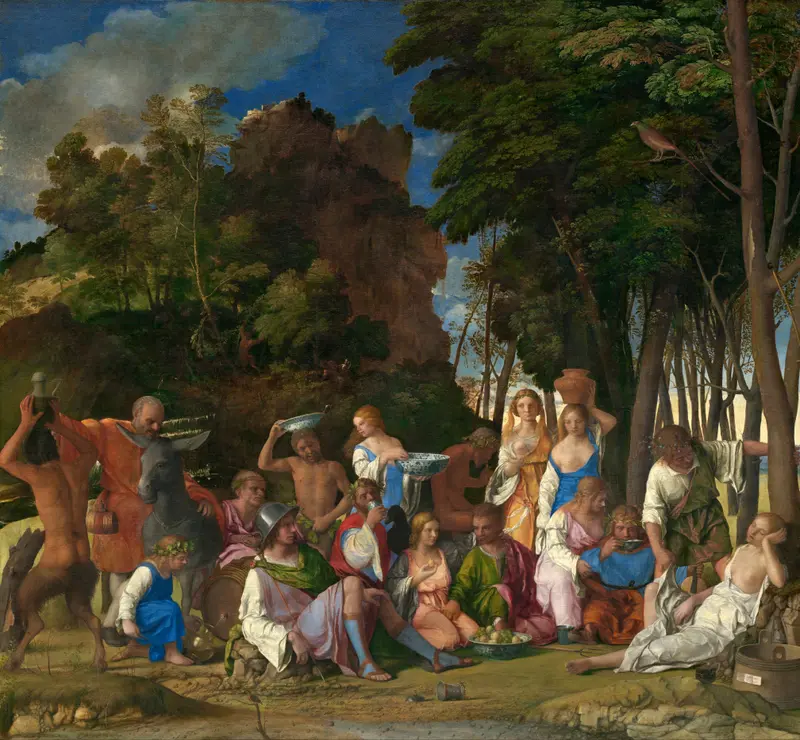
The Feast of the Gods
Giovanni Bellini

Madonna and Child enthroned with Saints and Angels
Giovanni Bellini
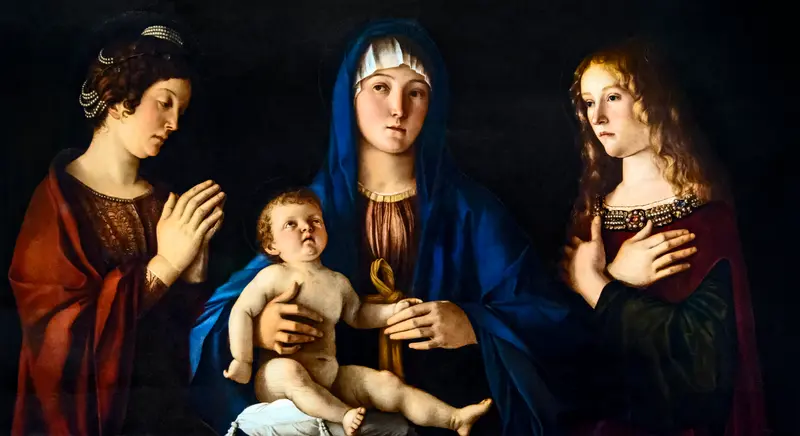
Madonna and Child between Saints Catherine and Mary Magdalene
Giovanni Bellini
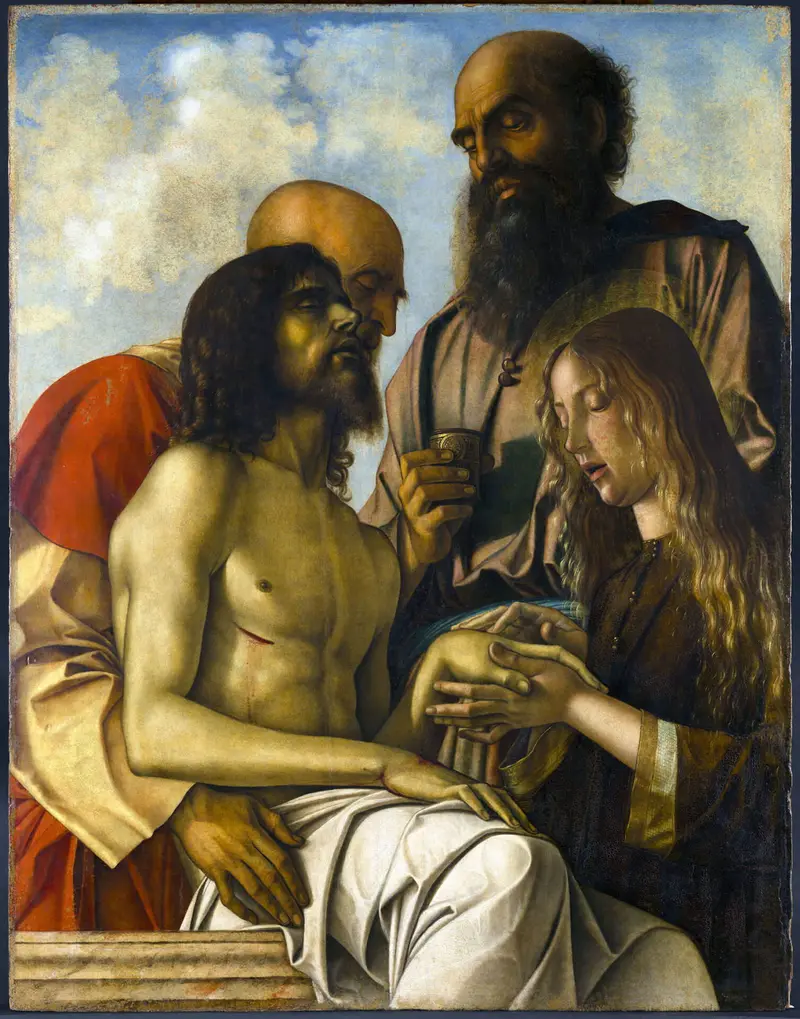
Lamentation over the Dead Christ
Giovanni Bellini
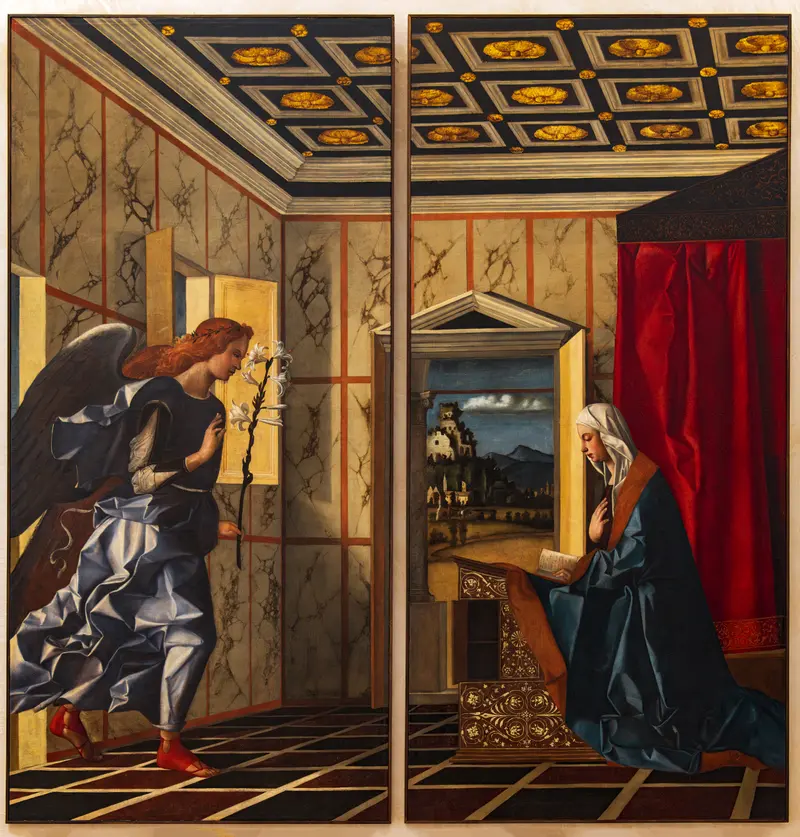
Annunciation
Giovanni Bellini
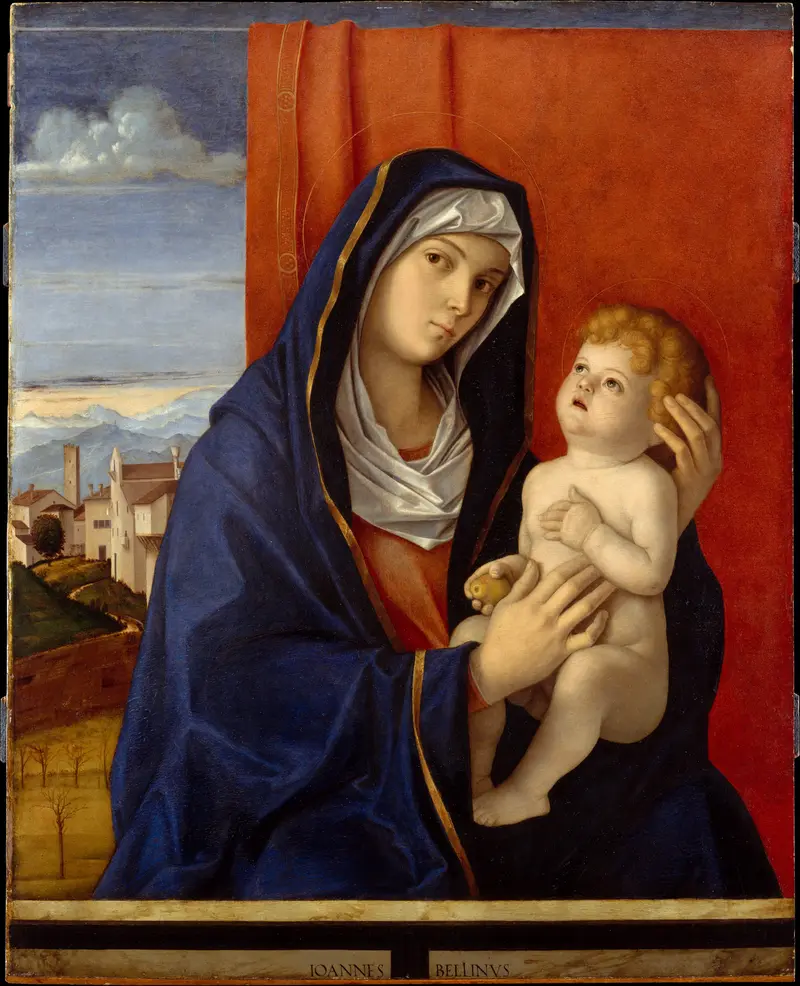
Madonna and Child
Giovanni Bellini
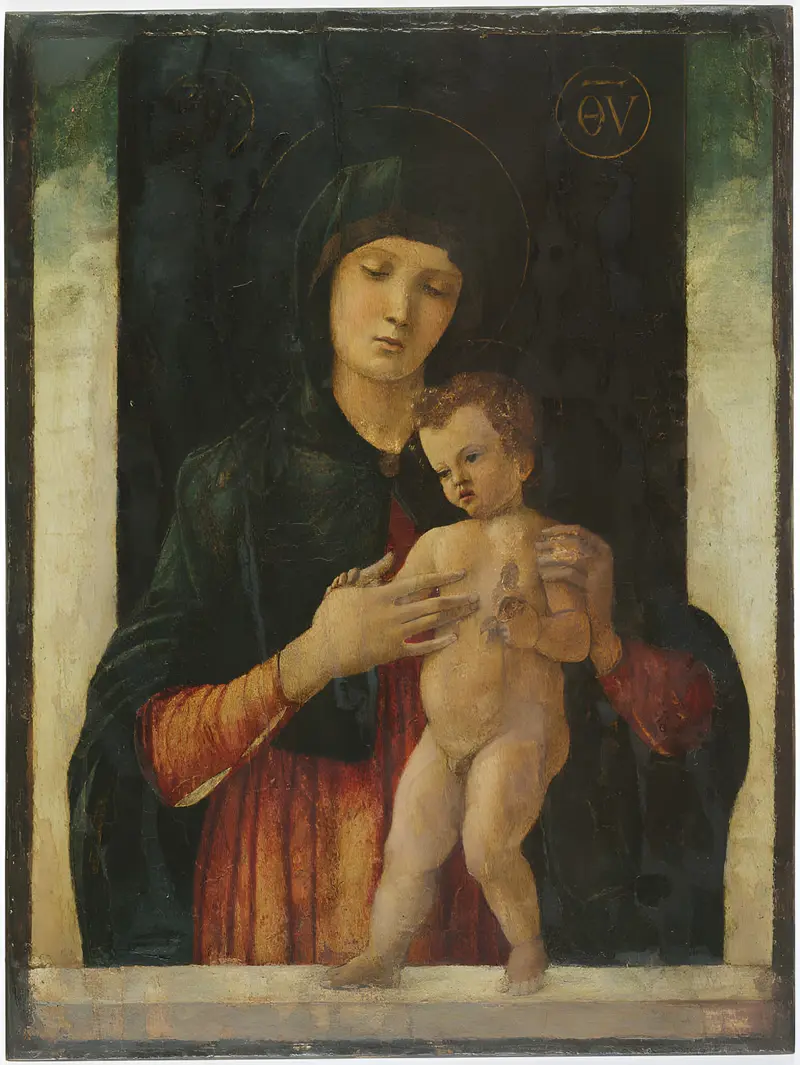
The Virgin and Child
Giovanni Bellini
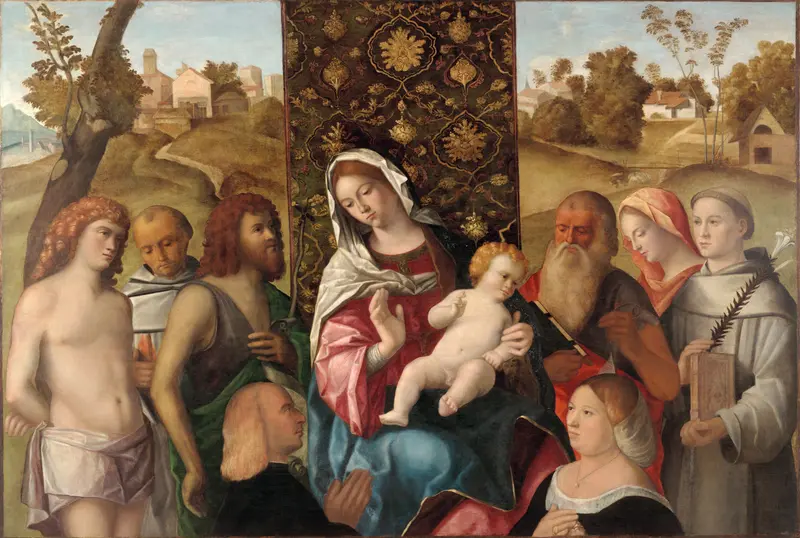
Virgin and Child with Saints Sebastian, Francis, John the Baptist, Jerome, an unidentified female saint, Saint Anthony of Padua and two donors
Giovanni Bellini
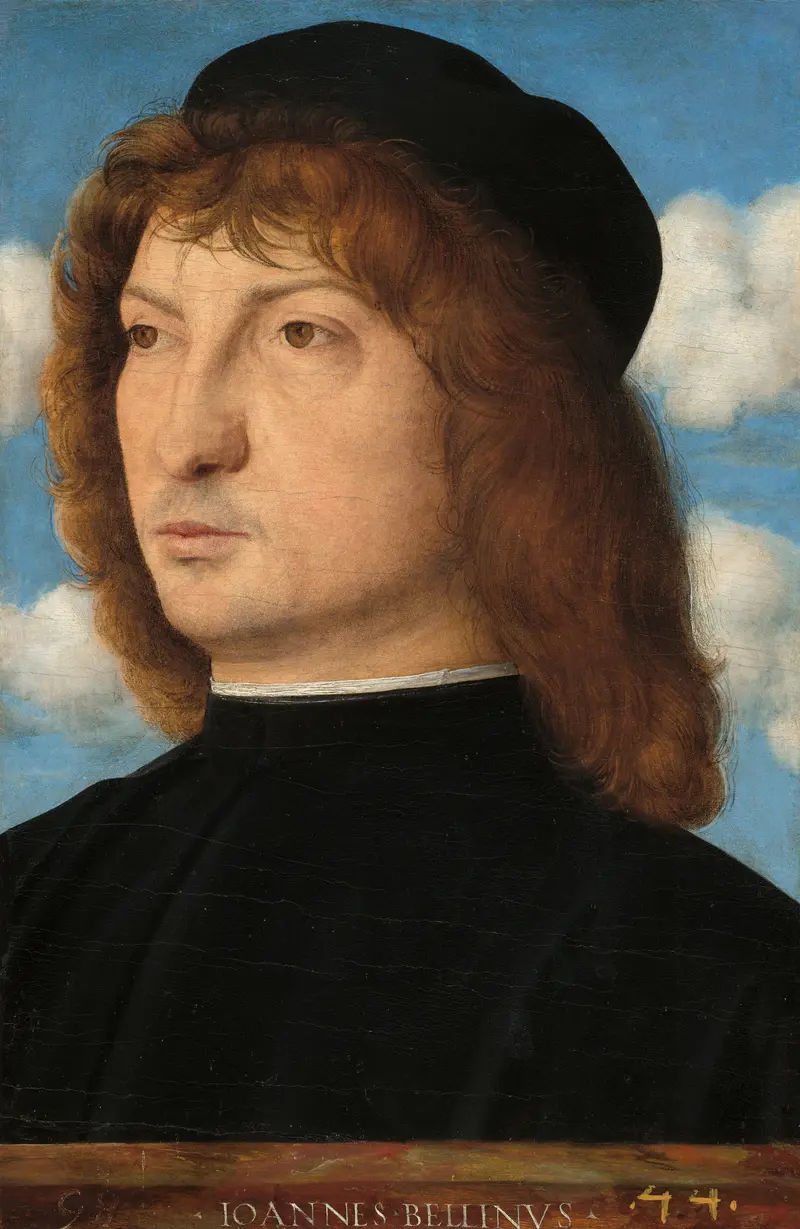
Portrait of a Venetian Gentleman
Giovanni Bellini
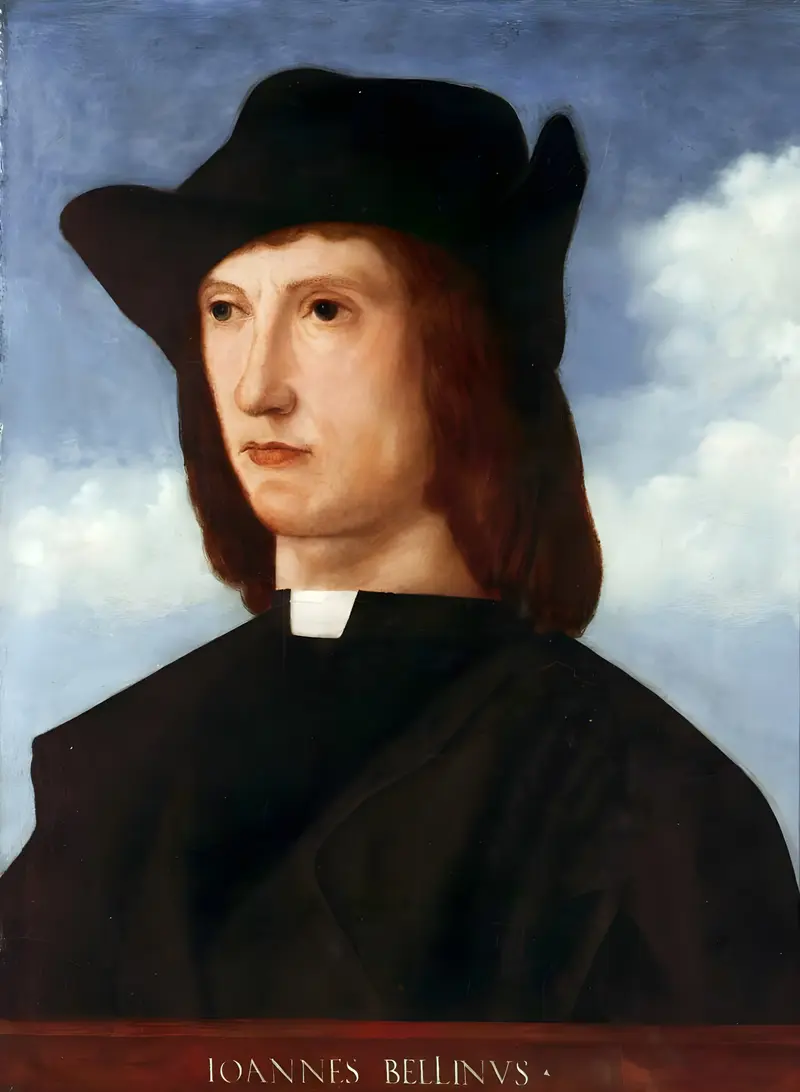
Portrait of a Young Man
Giovanni Bellini





