
Madonna and Child with the Infant St. John — History & Facts
Few paintings have provoked as much scholarly debate over their authorship and origin as Madonna and Child with the Infant St. John by Rosso Fiorentino. Long attributed variously to Andrea del Sarto and even Pontormo, the work’s true creator was only widely agreed upon in the twentieth century, as connoisseurs recognized the unmistakable energy and idiosyncratic features of Rosso Fiorentino.
The absence of a signature or precise documentation has left its date and commission shrouded in mystery, fueling ongoing discussion among art historians. What is certain is that the painting stands as a key example of the early Mannerist movement, with its restless forms and vivid emotional charge. At the heart of the scene, the Virgin Mary sits, her body twisting in a serpentine pose as she supports the Christ Child, who leans eagerly toward his cousin, the Infant St. John.
The children’s gestures—Christ’s hand raised in blessing, St. John’s clasped in prayer—capture a moment of innocent intimacy, yet the angularity of their limbs and the Virgin’s almost anxious gaze hint at the tension and complexity beneath. The sharp contrasts of light and shadow heighten the drama, while the bold, acidic colors set this work apart from the softer harmonies of Raphael’s treatments of the same subject.
Here, Rosso Fiorentino transforms a familiar theme into something more restless and psychologically charged. The painting’s early history remains obscure, with no surviving records of its original patron or intended location. Over time, it has passed through several private collections, often misattributed, before scholars in the modern era recognized its distinctive hand. Today, Madonna and Child with the Infant St.
John is valued as a significant example of Rosso Fiorentino’s contribution to Mannerism, revealing the artist’s experimental spirit and his departure from High Renaissance ideals. Its journey from obscurity to recognition mirrors the broader rediscovery of Rosso Fiorentino himself, whose bold innovations once puzzled his contemporaries but now command admiration.
More Artworks by Rosso Fiorentino
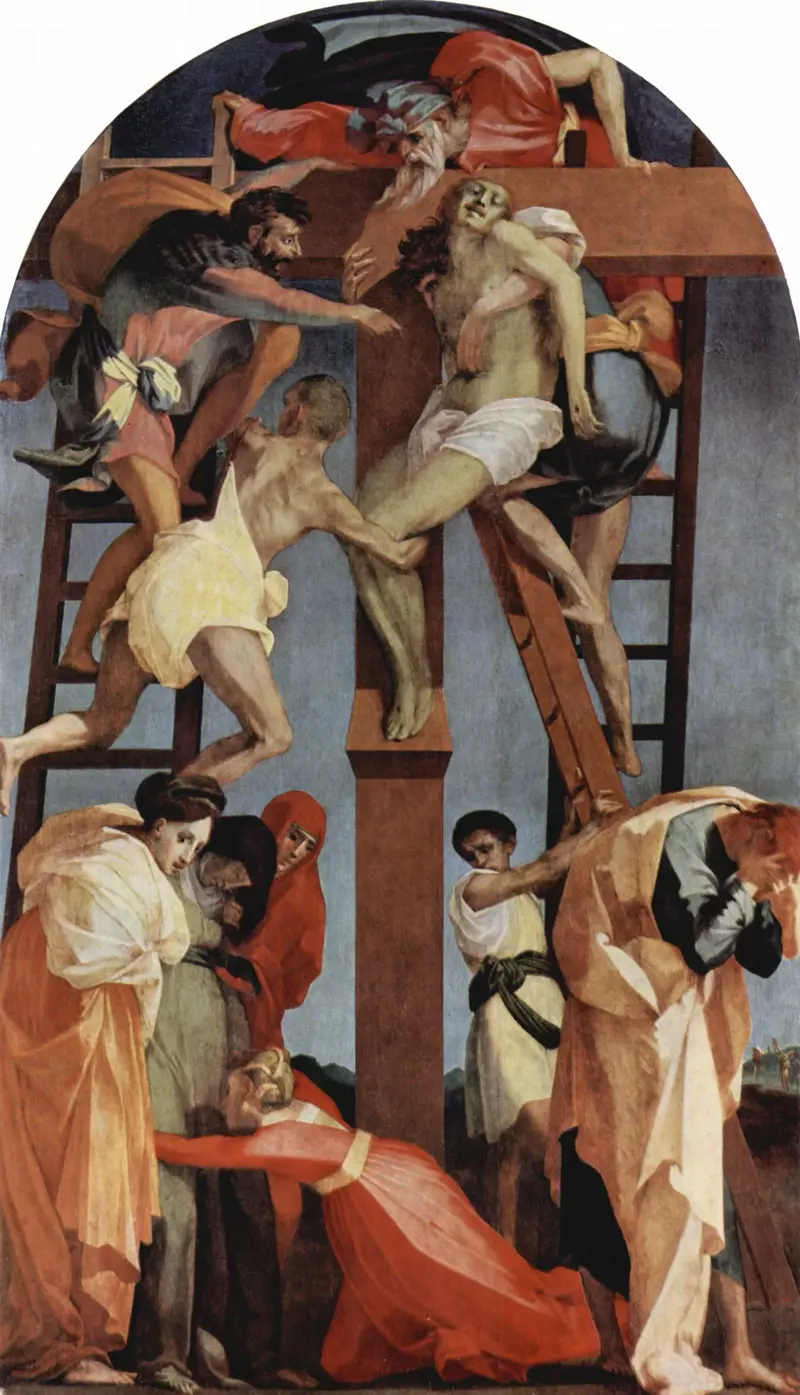
Deposition from the Cross
Rosso Fiorentino
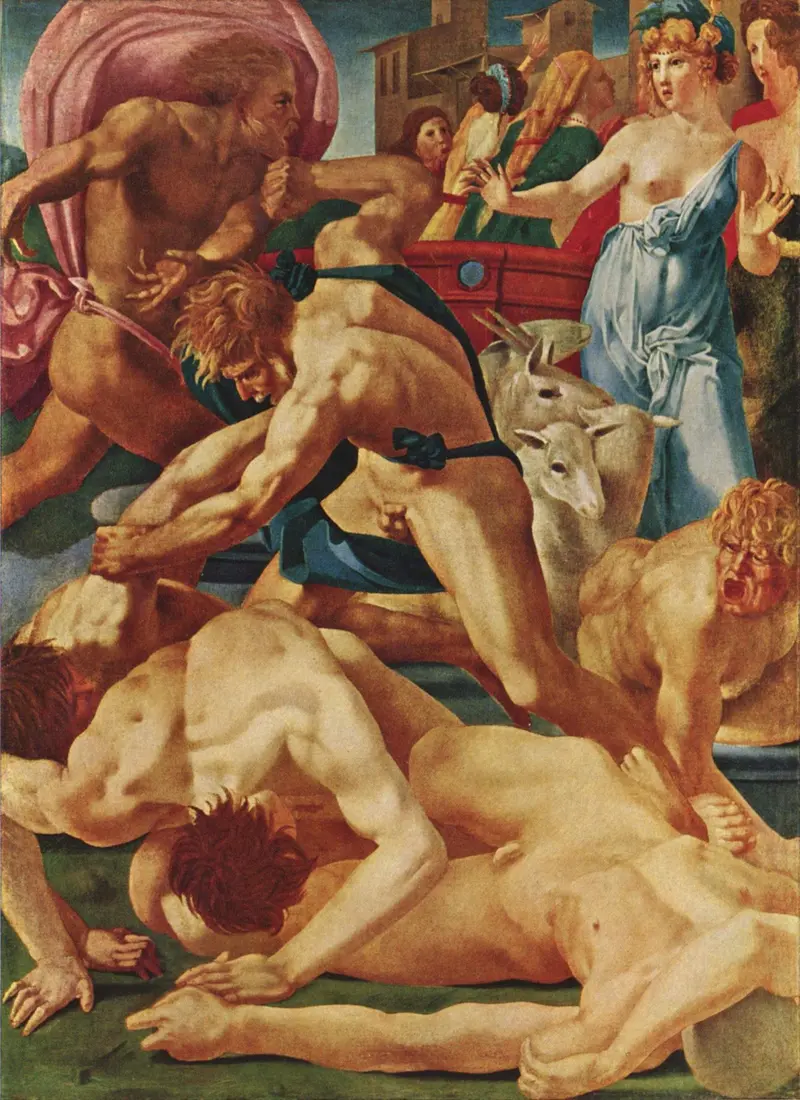
Moses Defending the Daughters of Jethro
Rosso Fiorentino

Judith with the Head of Holofernes
Rosso Fiorentino
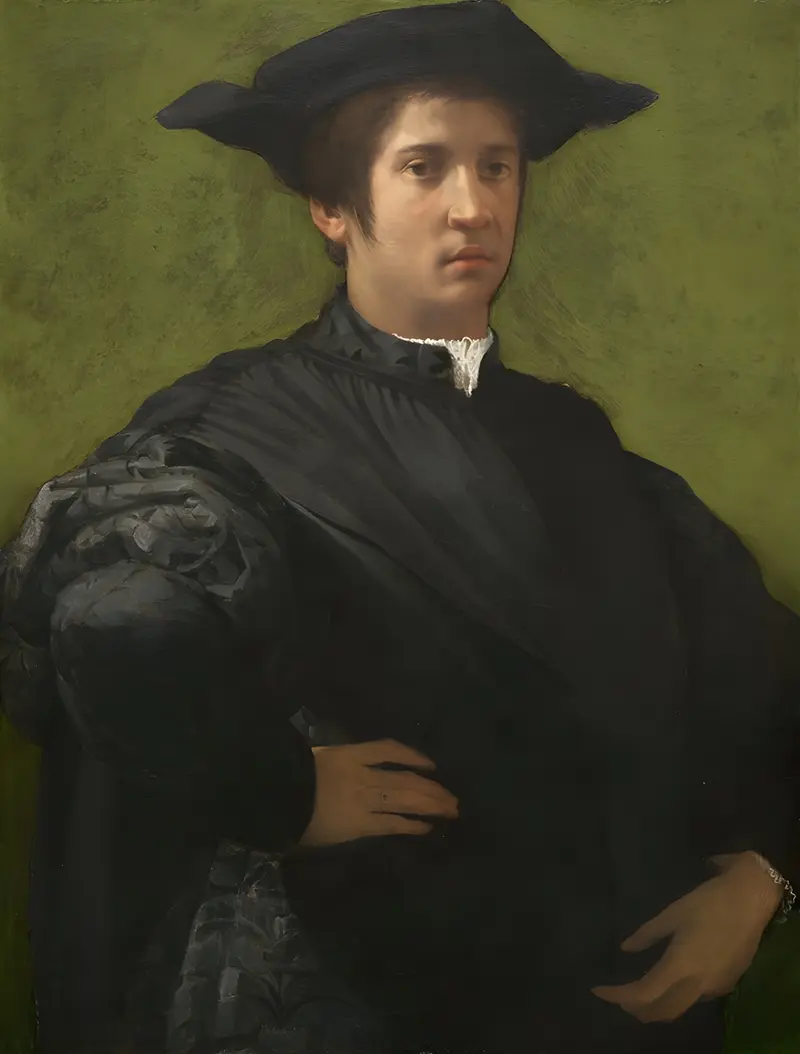
Portrait of a Man
Rosso Fiorentino
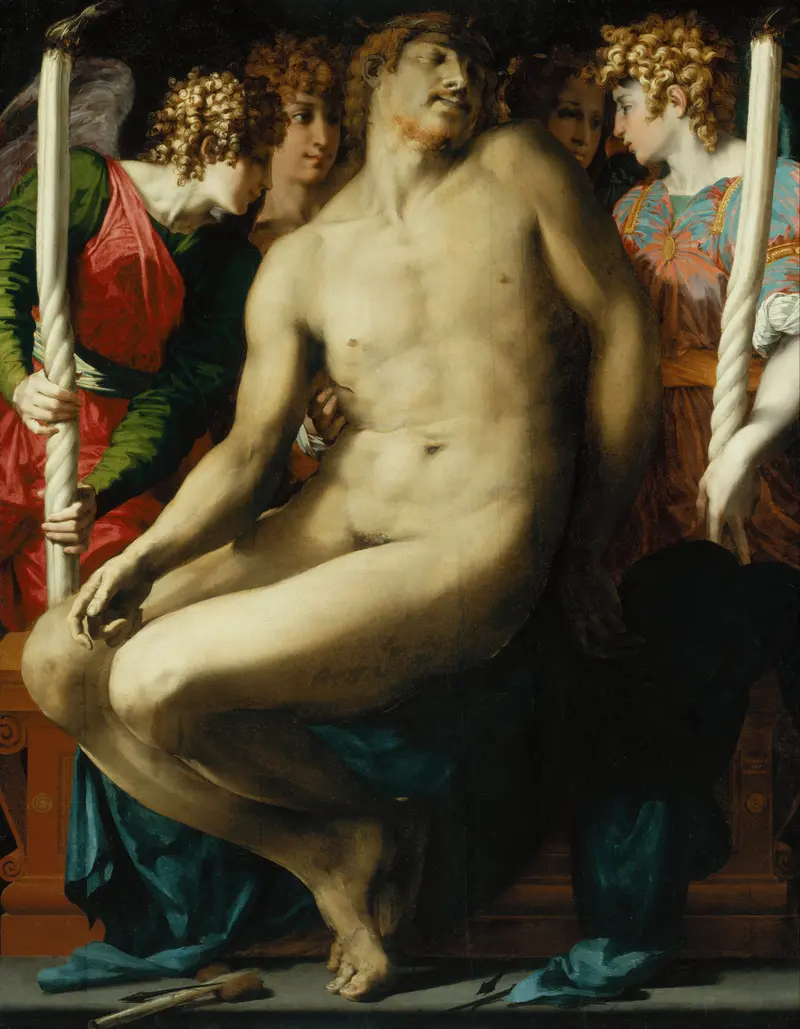
The Dead Christ with Angels
Rosso Fiorentino
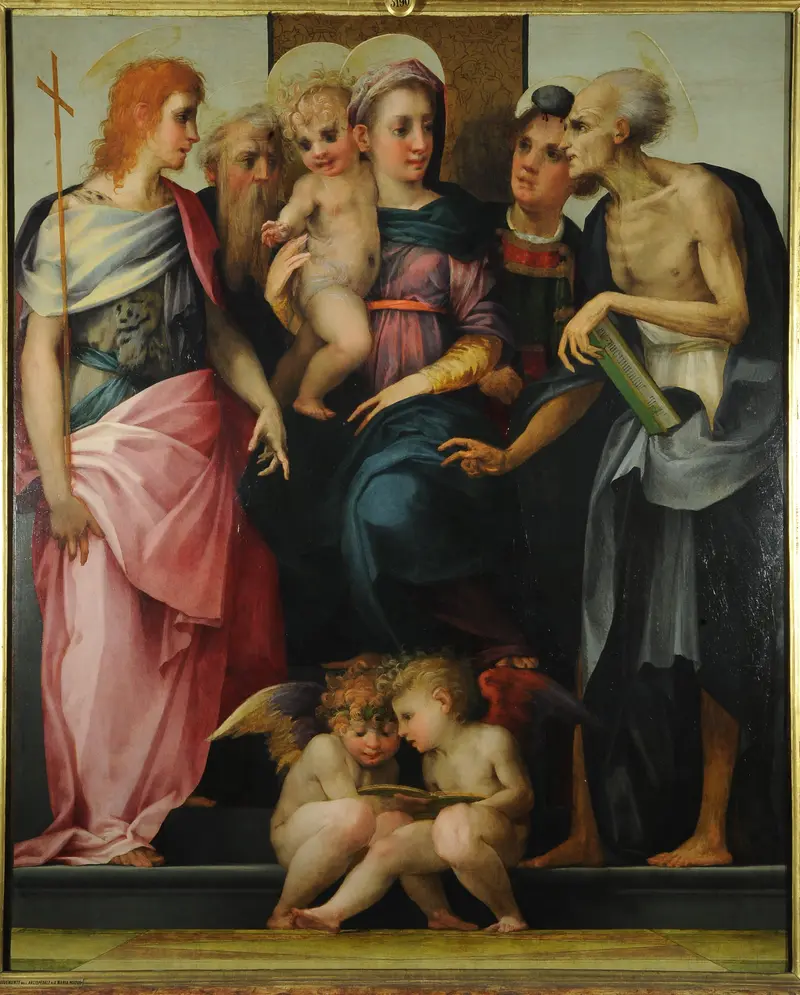
Sacred conversation with musical angels
Rosso Fiorentino
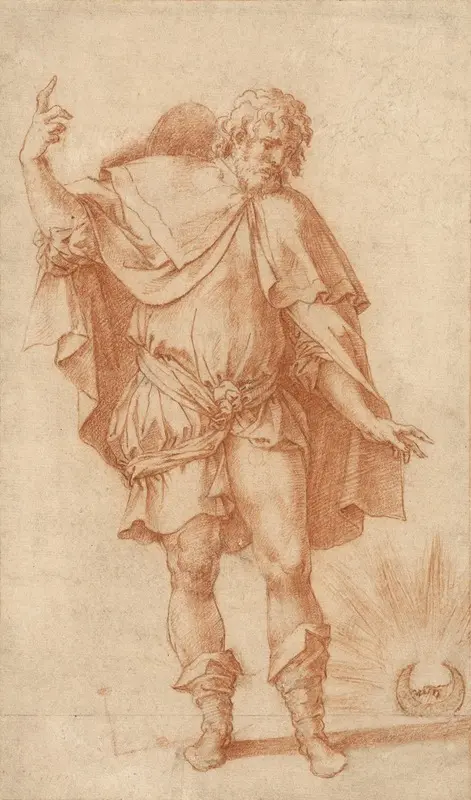
Study of a Male Figure (Empedocles or Saint Roch)
Rosso Fiorentino
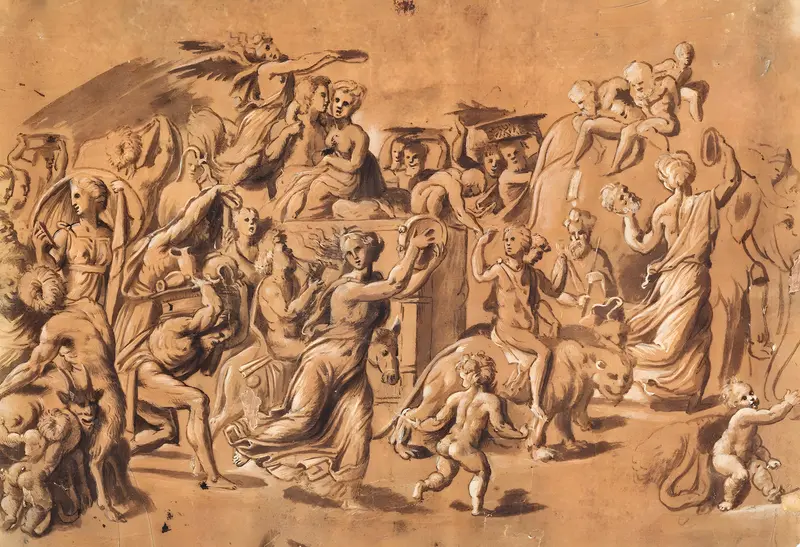
Bacchus’ triumf
Rosso Fiorentino
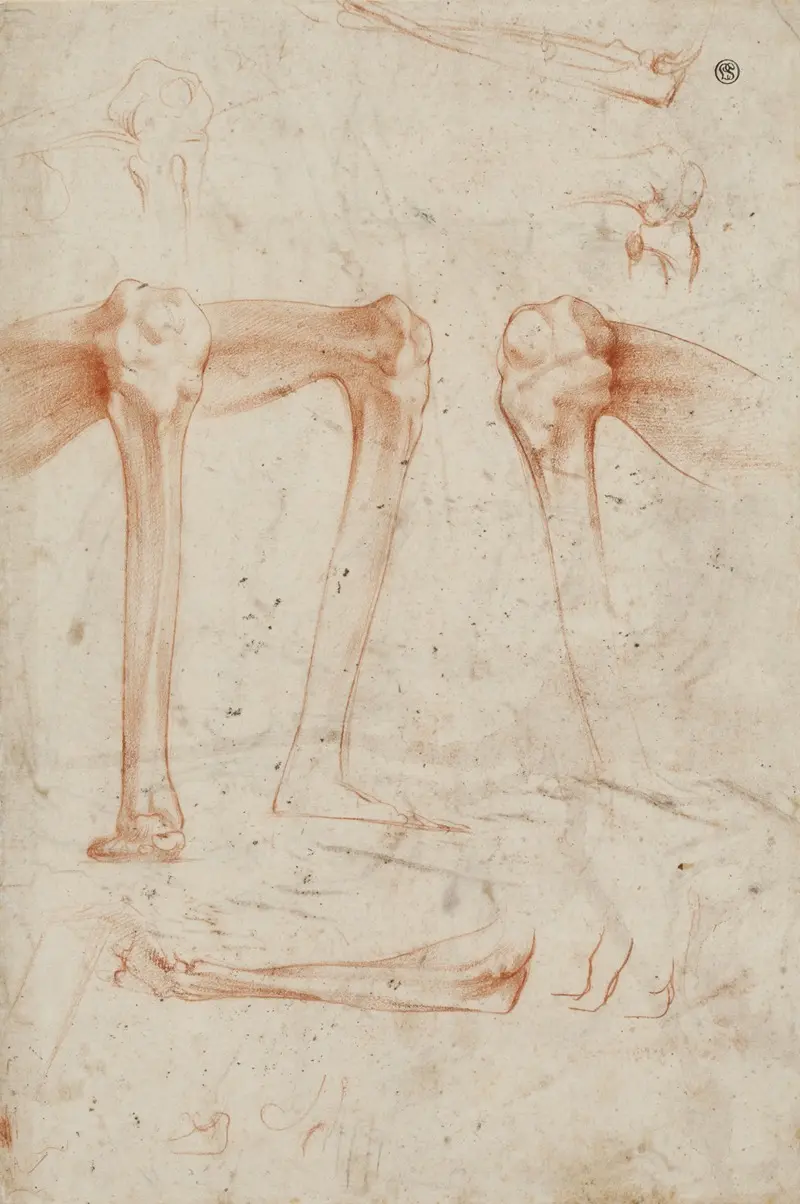
Studies of legs, knees and arms
Rosso Fiorentino
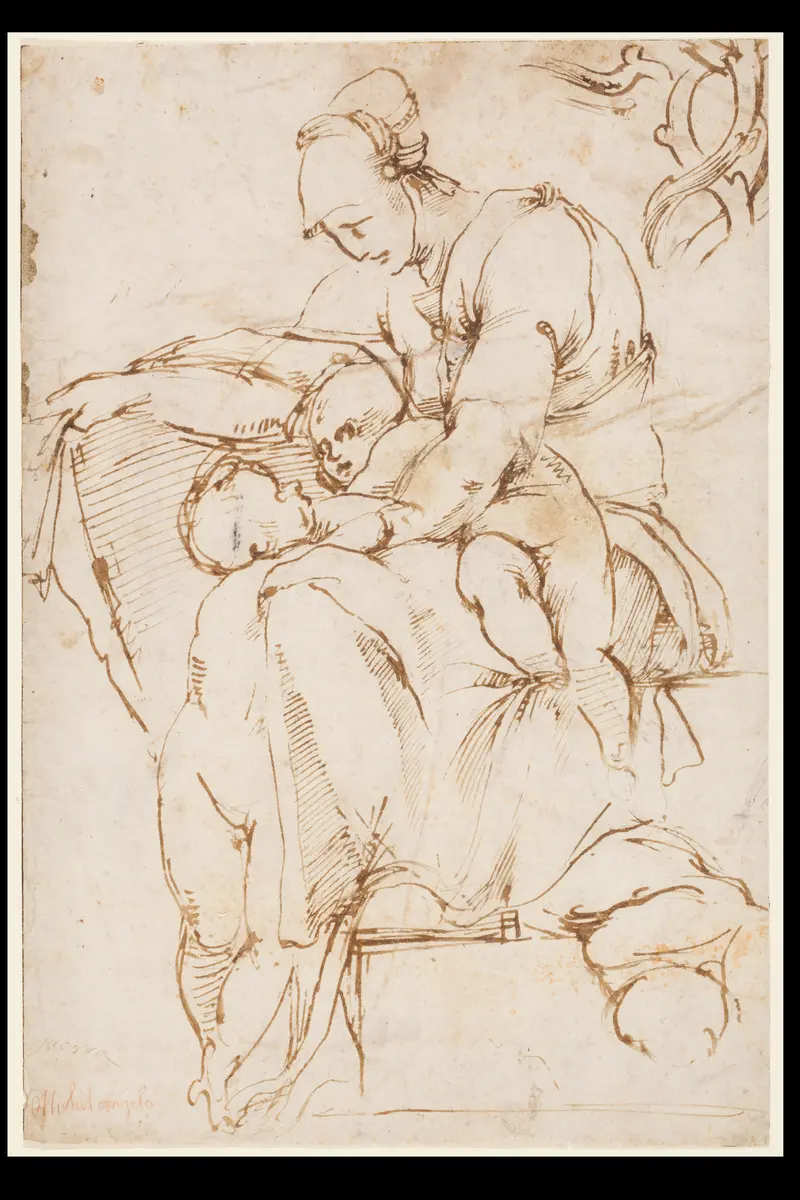
Seated Woman with Children (Caritas); branches at top right
Rosso Fiorentino





