Study of a Male Figure (Empedocles or Saint Roch) — History & Facts
Few drawings from the early sixteenth century have sparked as much debate as Study of a Male Figure (Empedocles or Saint Roch) by Rosso Fiorentino. The sitter’s identity remains a mystery: is this the doomed Greek philosopher Empedocles, or the plague saint Roch? This uncertainty has led scholars to pore over every detail, searching for clues in the figure’s pose and expression. The ambiguity is heightened by the lack of any surviving preparatory sketches or written records from Fiorentino himself, leaving the drawing’s purpose and subject tantalizingly open. The figure stands in a moment of intense focus, body twisted in a dynamic contrapposto, as if caught between movement and meditation.
If Empedocles, he is perhaps on the brink of his legendary leap into Mount Etna, seeking immortality through fire; if Saint Roch, he may be revealing the plague sore on his thigh, a gesture of both suffering and divine favor. The strong, almost sculptural modeling of the limbs recalls Michelangelo’s studies for the Sistine Chapel, yet Fiorentino’s line is more nervous, the anatomy exaggerated, the emotion raw. The absence of clear attributes—a staff, a dog, or a volcano—forces the viewer to search the face and hands for narrative, making the drawing as much about human vulnerability as about any specific legend. As with many works on paper from the Mannerist period, the history of Study of a Male Figure is fragmentary.
It likely began as a preparatory study for a larger altarpiece or fresco, a common practice for Fiorentino, who was known for his restless experimentation. Over the centuries, the drawing passed through the hands of collectors who prized its energy and ambiguity, but its attribution was not always secure; some early inventories listed it simply as “Tuscan school.” Today, it stands as a testament to Rosso Fiorentino’s inventive spirit, offering a rare glimpse into the artist’s process and the shifting boundaries between myth and sainthood in Renaissance art.
More Artworks by Rosso Fiorentino
Deposition from the Cross
Rosso Fiorentino
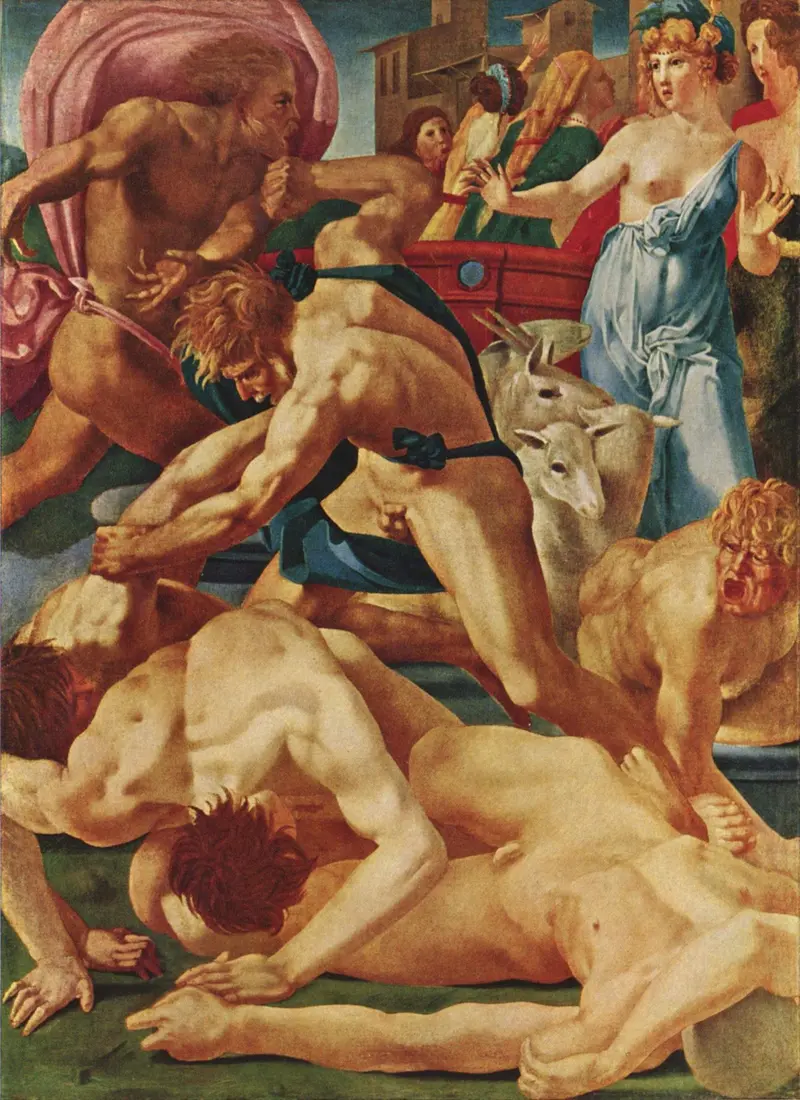
Moses Defending the Daughters of Jethro
Rosso Fiorentino

Judith with the Head of Holofernes
Rosso Fiorentino
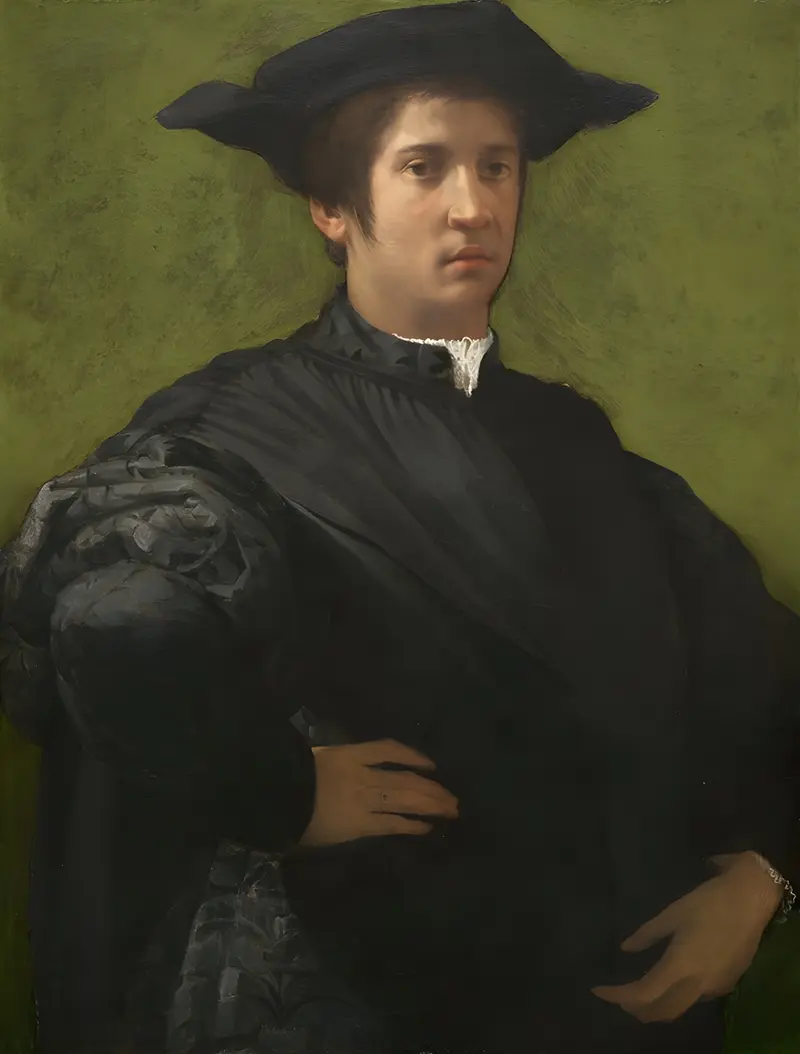
Portrait of a Man
Rosso Fiorentino
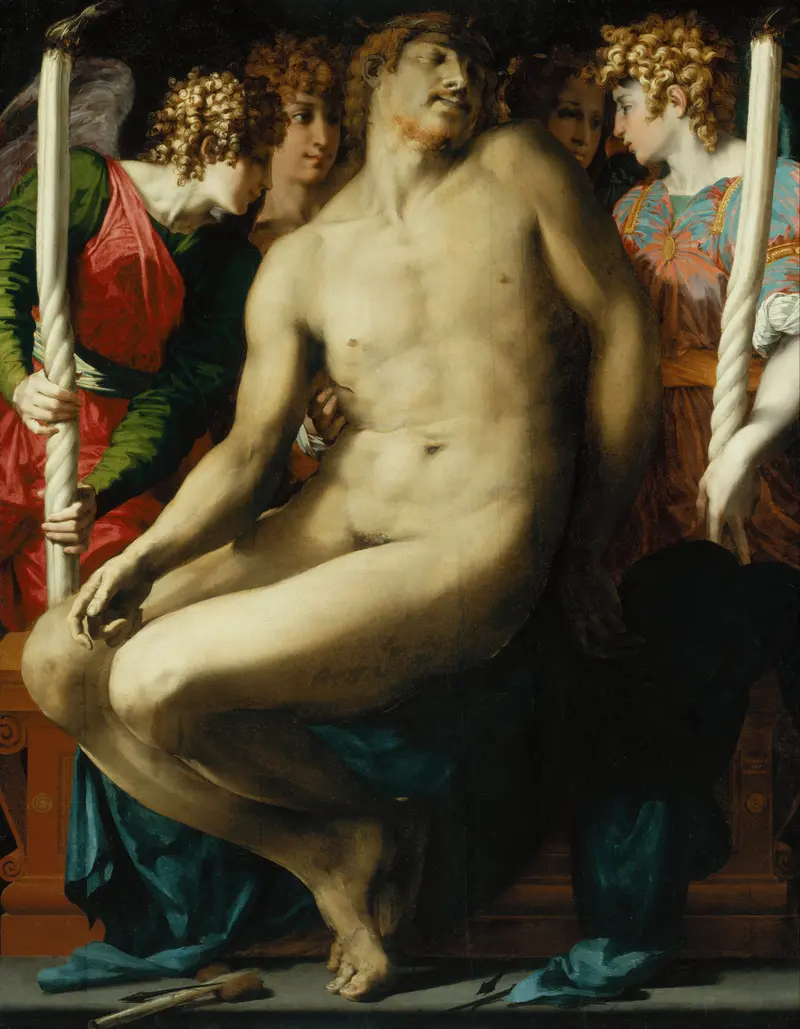
The Dead Christ with Angels
Rosso Fiorentino
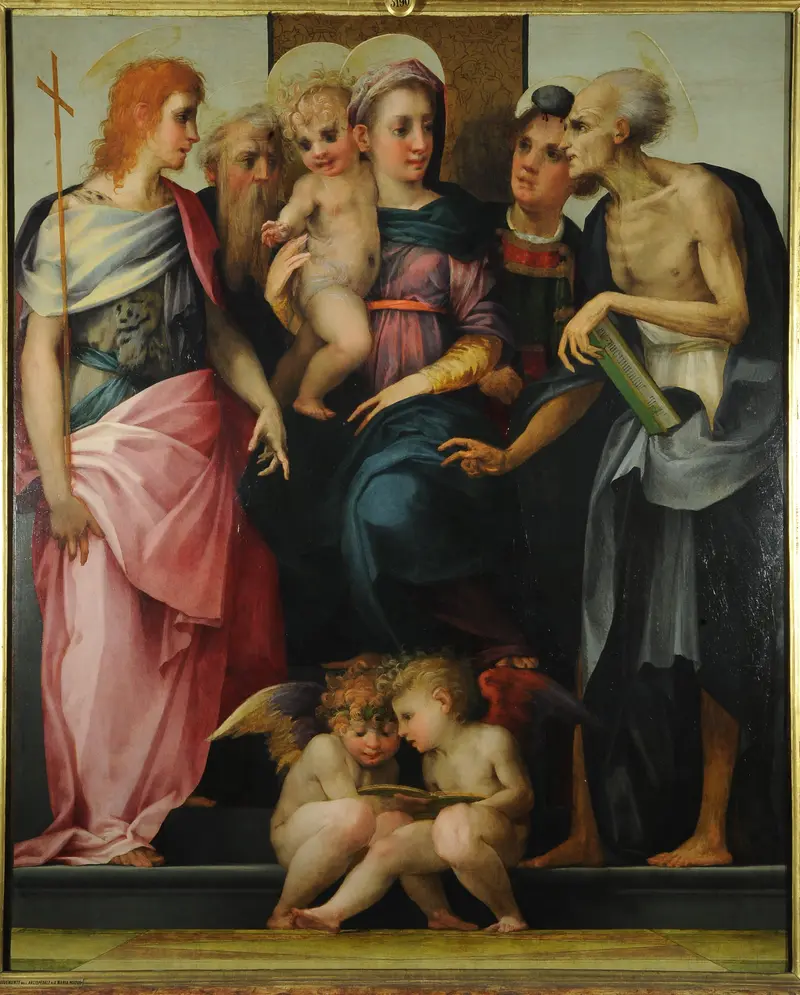
Sacred conversation with musical angels
Rosso Fiorentino
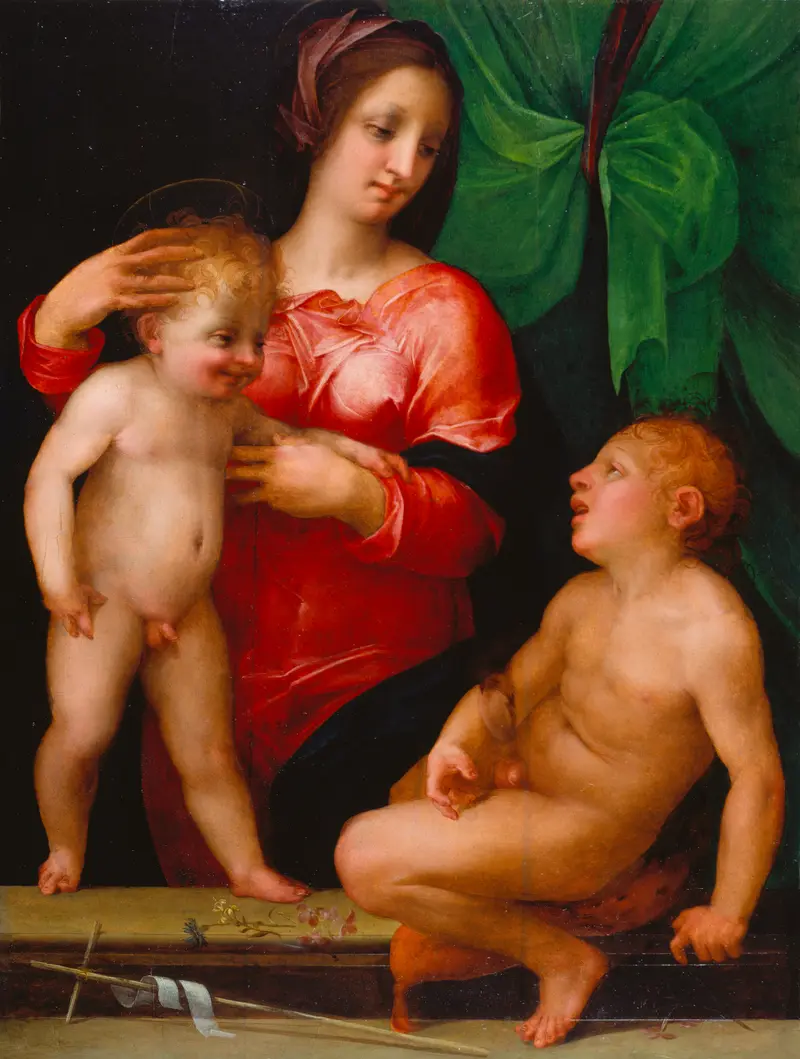
Madonna and Child with the Infant St. John
Rosso Fiorentino
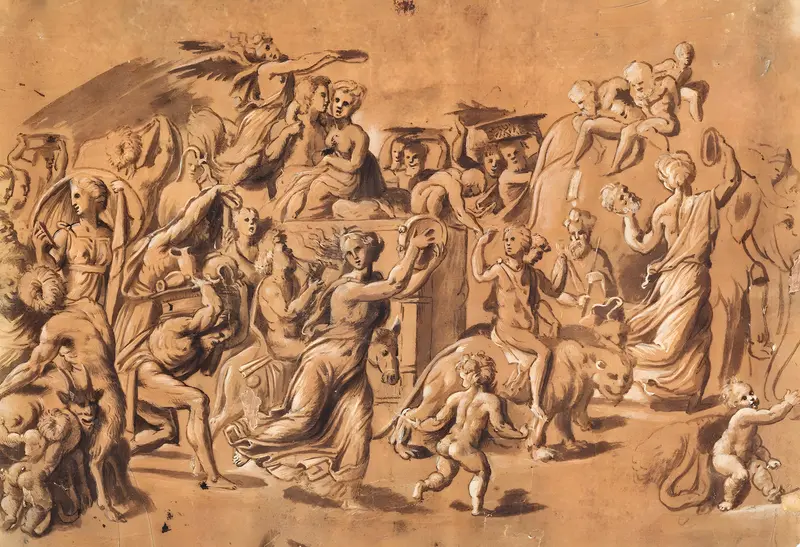
Bacchus’ triumf
Rosso Fiorentino
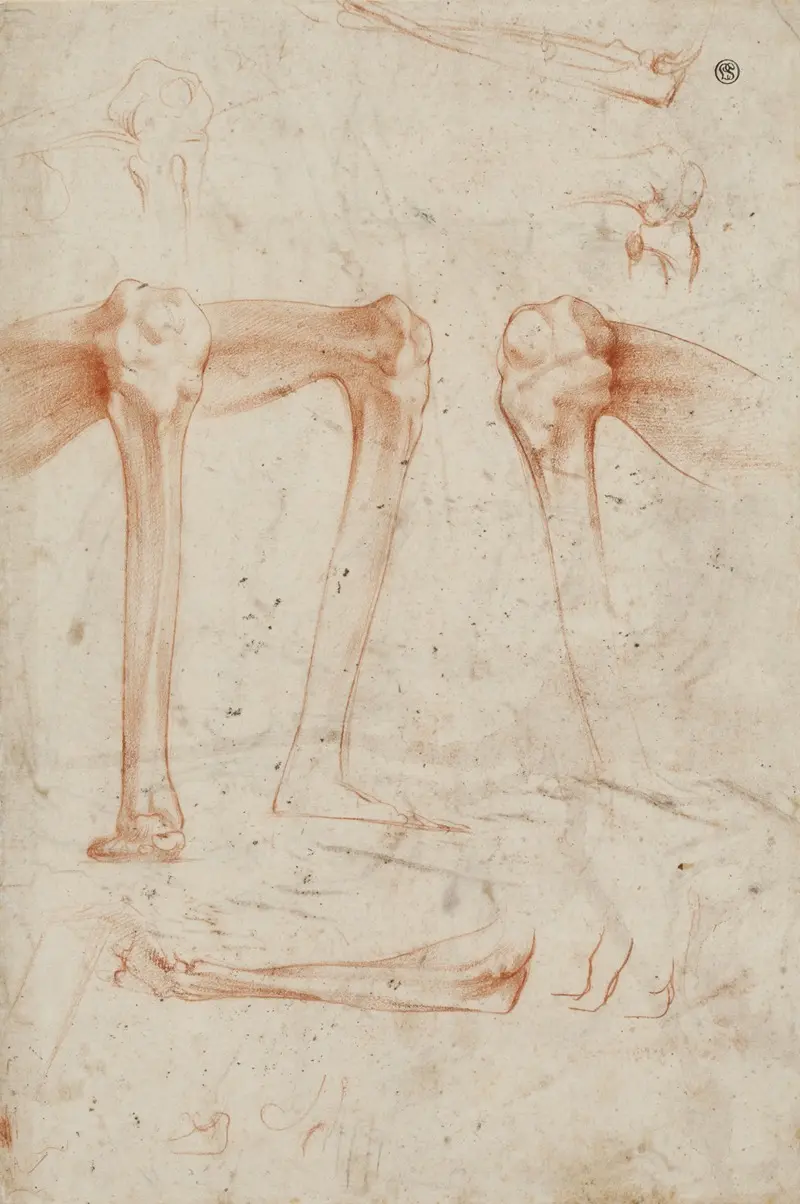
Studies of legs, knees and arms
Rosso Fiorentino
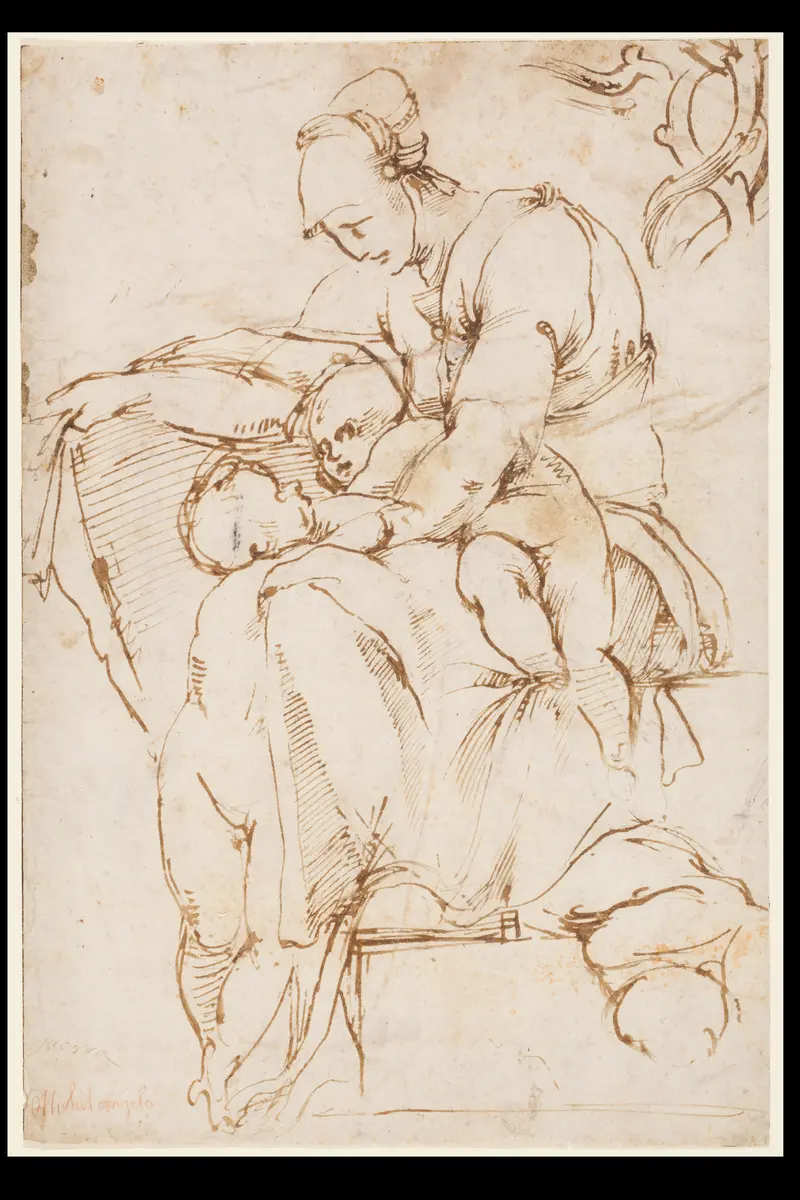
Seated Woman with Children (Caritas); branches at top right
Rosso Fiorentino