
Madonna delle Grazie — History & Facts
Few paintings by Sandro Botticelli are as shrouded in uncertainty as Madonna delle Grazie, created around 1470. The work's medium remains unknown, and its early history is elusive, fueling speculation among scholars. What is certain is that this Madonna became the center of local devotion in Florence, inspiring copies and imitations, yet the original's authorship was long debated.
Some even claimed it was the work of Botticelli’s teacher, Filippo Lippi, before stylistic analysis confirmed Botticelli’s hand. The painting stands at the threshold of Botticelli’s career, capturing his early search for a personal voice. At the heart of Madonna delle Grazie is a moment of quiet intimacy: the Virgin gently inclines her head toward the Christ Child, who in turn raises his hand in a gesture of blessing. The Madonna’s downcast eyes and tender expression evoke the humility and grace for which she is venerated, while the Christ Child’s chubby fingers and solemn gaze suggest both innocence and divinity.
The background, likely once gilded or painted with delicate ornament, would have set the figures apart from the world, focusing the viewer’s devotion. Botticelli’s approach here is more restrained than in his later, more decorative Madonnas, such as the Madonna of the Magnificat, emphasizing the humanity of his subjects over elaborate symbolism. The journey of Madonna delle Grazie as an object is marked by gaps and conjecture. Its original patron is unknown, and the painting’s early whereabouts are lost to history, though it likely adorned a private Florentine chapel.
Over the centuries, the work passed through various hands, at times misattributed or overshadowed by Botticelli’s more famous altarpieces. Today, it is recognized as a key early work, offering insight into Botticelli’s formation and the devotional art of Renaissance Florence, even as questions about its provenance and materials remain unresolved.
More Artworks by Sandro Botticelli

Virgin and Child
Sandro Botticelli

Madonna and Child and the Young St John the Baptist
Sandro Botticelli

Madonna and Child with six angels and Saint John the Baptist as Child
Sandro Botticelli

Adoration of the Magi
Sandro Botticelli

Virgin and Child with the Young Saint John the Baptist
Sandro Botticelli
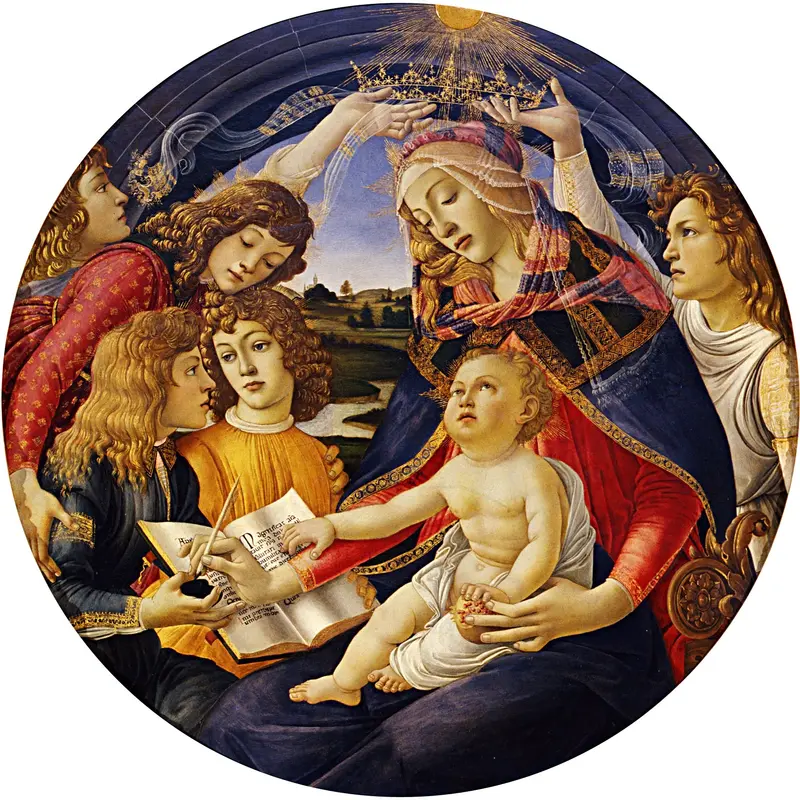
Madonna of the Magnificat
Sandro Botticelli
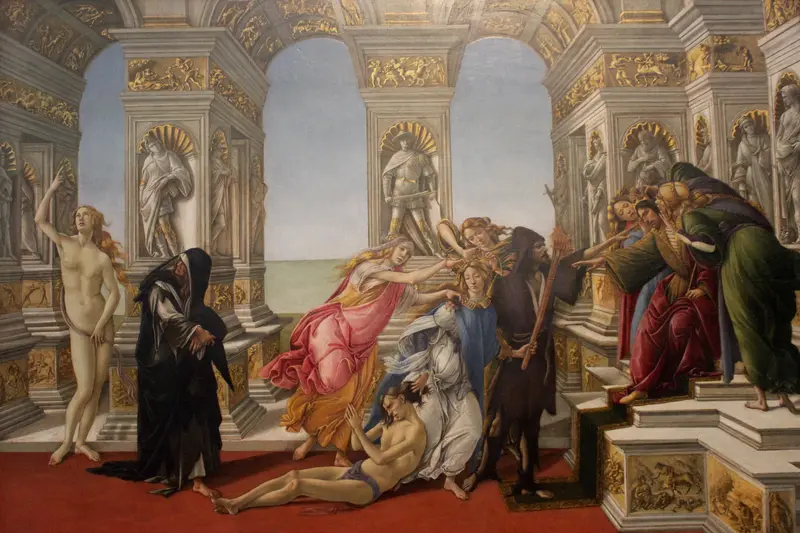
Calumny of Apelles
Sandro Botticelli

Portrait of a young man holding a roundel
Sandro Botticelli

The Trinity with Saint Mary Magdalene and Saint John the Baptist, the Archangel Raphael and Tobias
Sandro Botticelli

Idealized Portrait of a Lady (Portrait of Simonetta Vespucci as Nymph)
Sandro Botticelli





