Milking Time — History & Facts
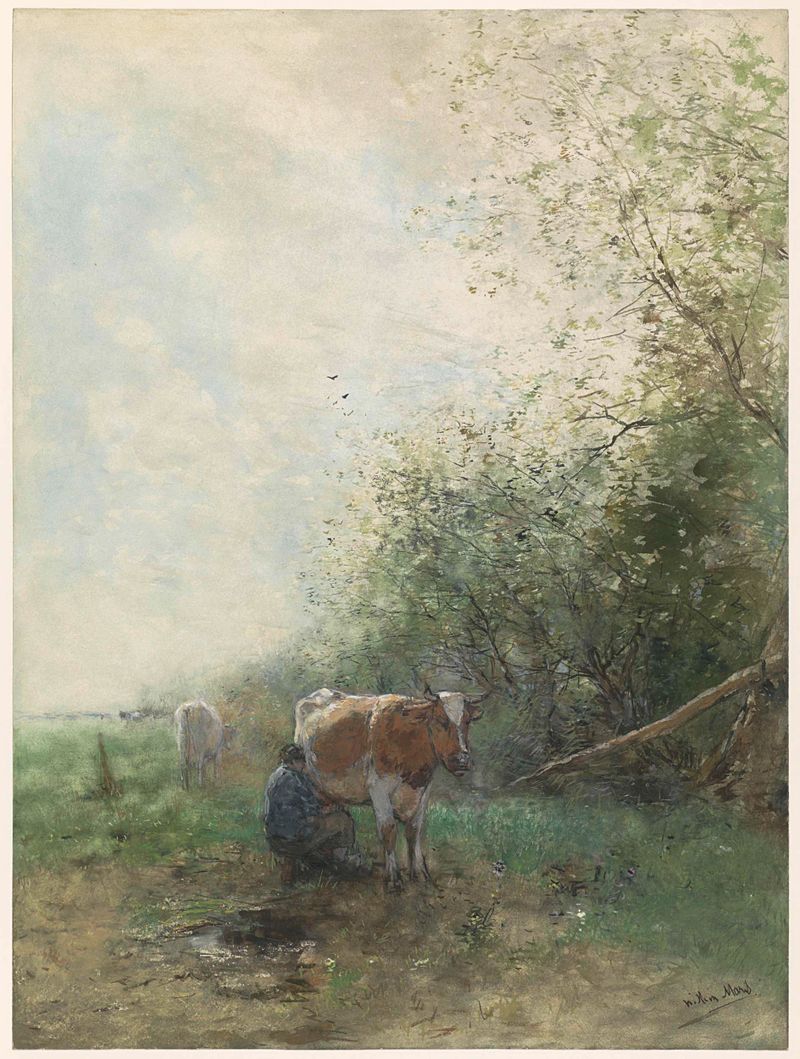
In the hushed, golden moments of dawn, life unfurls in quiet harmony as nature breathes anew. The act of milking, so simple yet profound, embodies the cyclical dance of birth and sustenance. It reminds us that in the routine of everyday life, we find the essence of existence. Look to the left at the gentle curve of the dairy cow, its robust form encapsulating strength and grace.
The warm, earthy palette envelops the scene, hues of deep browns and soft creams merging seamlessly. Notice how the light filters in, casting a serene glow on the farmer's weathered hands, each crease telling a story of toil and tenderness. This deliberate composition invites intimacy, drawing us closer to a moment that transcends time. As you explore further, consider the contrast between the stillness of the barn and the vitality of the animal.
The subtle interplay of shadow and light symbolizes the fragile balance between nature and nurture, the essence of rebirth. Each droplet of milk echoes the potential of new beginnings, while the quietude emphasizes the sacredness of this connection — a reminder that life flourishes in the most unassuming spaces. Willem Maris created this painting during the late 19th to early 20th century, a period marked by the rise of realism in art. His focus on rural life reflected both his personal background and the changing tides of society, as industrialization began to reshape the landscape of traditional farming.
Immersed in the countryside of the Netherlands, Maris captured the essence of pastoral life, intertwining his experiences with the broader narrative of humanity's bond with nature.